Steve's Blog Entry
This is my blog entry text. This is my blog entry text. This is my blog entry text. This is my blog entry text. This is my blog entry text. This is my blog entry text.


This is my blog entry text. This is my blog entry text. This is my blog entry text. This is my blog entry text. This is my blog entry text. This is my blog entry text.
As we <A HREF="http://www.stereophile.com/news/012907master/">reported</A> last January, <A HREF="http://www.tapeproject.com">The Tape Project</A>, a collaboration among mastering engineers Paul Stubblebine and Michael Romanowski, both of Paul Stubblebine Mastering, and Dan Schmalle of Bottlehead, plans to release 10 master-quality tapes per year. The Tape Project's inaugural outing, available now, is <I>The Number White</I> by jazz vocalist Jaqui Naylor.
Speaking of Carla Bley, her ex-husband, Paul Bley, has a new CD, <I>Solo in Mondsee</I> (ECM), and it’s quietly stunning. I’m a bit late with this—the album came out last summer—but then again, it was recorded in 2001, so who’s counting? Paul Bley has been one of the piano giants in jazz for over a half-century. He may be more famous for those he’s introduced to the jazz scene. He led, I think, the first jazz trio that featured Charles Mingus on bass. While house pianist at the Hillcrest Club in Los Angeles in 1958, he hired Ornette Coleman to play with him (when nobody else would); in fact, what became, a few months later, the first Ornette Coleman Quartet started out as the Paul Bley Quintet, minus Bley. Over the years, he’s frequently played with Ornette’s bassist, Charlie Haden, most recently in a night of riveting duets at the Blue Note in New York. (A couple decades ago, the Montreal Jazz Festival held a weeklong celebration in which Haden led a variety of ensembles; all the sessions were eventually released on CD by Verve; the best of the bunch was a trio session with Bley and Paul Motian.)

We're revamping our website infrastructure, so Huckleberry, Bagheera, and I will be taking the day off. Out guest cat-blogger in Mia, who is enjoying a special bonding moment with her human, Ayre's Steve Silberman.
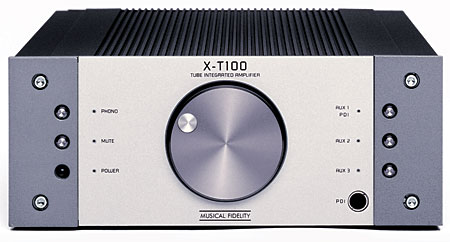
<I>Specialization</I> seems to be an inevitable consequence of progress: As the products of man and God become more and more complex, they're called on to do fewer things in more focused ways.
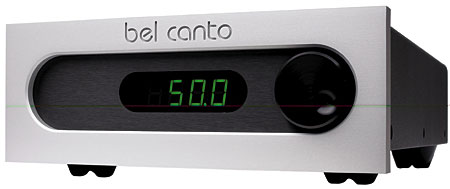
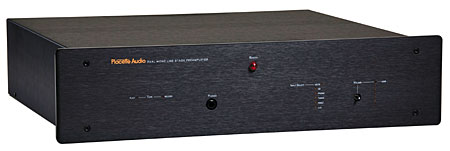
A friend once described my audio ethos as "records, tubes, big amplifiers, and really big speakers"—I always picked warmth and musicality over antiseptic neutrality, even if the former came with a few extra colors in the tonal palette. Had I listed my criteria for an audio component, <I>transparency</I> wouldn't have been near the top, and might not have been listed at all.
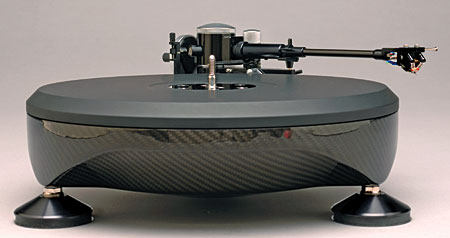
Conceptually audacious, elegantly designed, executed with space-age precision, and remarkably compact, Grand Prix Audio's direct-drive Monaco turntable ($19,500) aims to turn the tables on the belt-drive designs that have dominated analog playback for three decades.
Apparently they pay off.
A family in Wales went to the beach last July and discovered an intact P-38 that went down in 1942.