J. Gordon Holt

Hegeman Model 1 omnidirectional loudspeaker
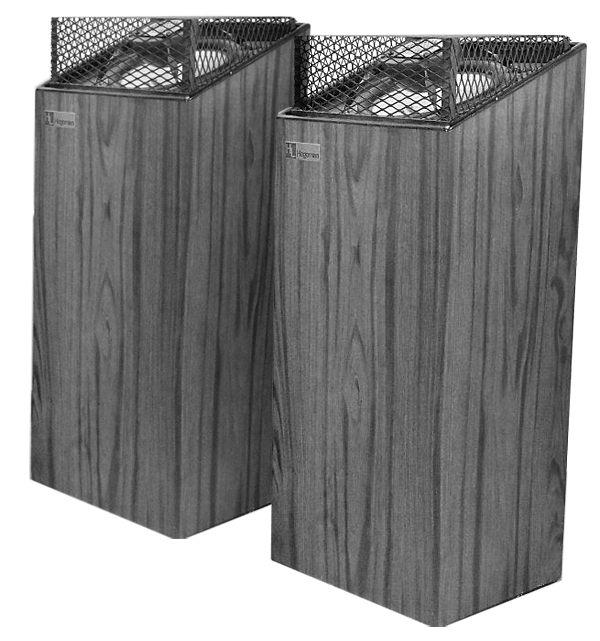
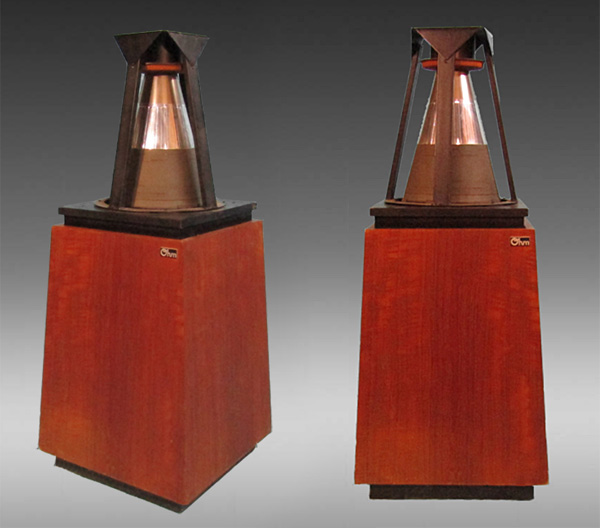
Ye Editor had his first exposure to a true omnidirectional speaker system 15 years ago, while he was employed as chief equipment tester for High Fidelity magazine. The speaker was a most unusual-looking device for its time, being roughly a foot square and standing 3 feet high, with a "cube" of grille cloth at the top like a cupola. Inside the cupola was an 8" woofer facing upwards. Directly above it was the weirdest-looking tweeter you ever saw.
Continue Reading »
Revox A-77 open-reel tape recorder

The Revox A-77 has extremely good speed regulation, vanishingly low wow and flutter, very low noise, superb tape handling, and the smoothest, widest-range frequency response of any recorder we have ever tested.

The portable version, with built-in monitor amps and speakers, is very compact for a machine with 10½ reel capacity, and is easily carried by one person. Now that the later version is equipped with a flutter-filtering tension arm, our only criticism of the A-77 is its use of three-circuit jacks for the micro phone inputs instead of the XLR-type receptacles that are considered to be "standard" in the US for on-location audio recording.

Continue Reading »

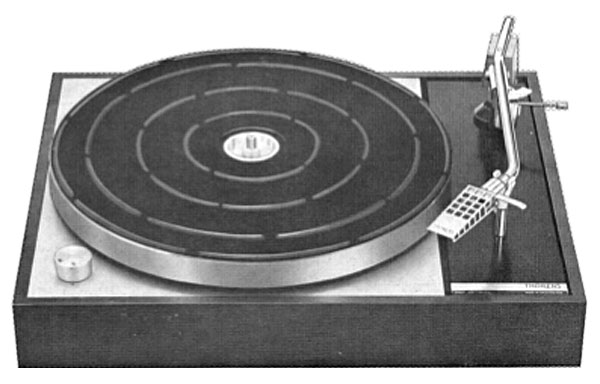
Garrard 301 & Thorens TD 124 turntables

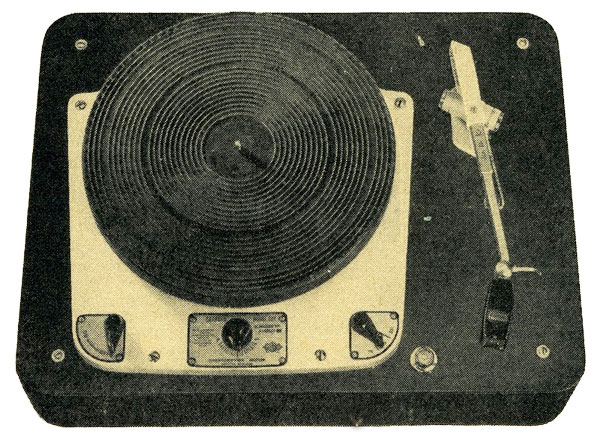
An editorial note: We recently republished Stereophile founder J. Gordon Holt's 1966 review of the Swiss Thorens TD-150AB turntable. This was the first high-end 'table I bought after leaving university and earning a wage. But as good as I felt the TD-150AB to be, with its belt drive and sprung suspension, it was sonically overshadowed both by Thorens's TD 124 turntable and by the English Garrard 301 turntable.
Continue Reading »

Audio & Design M9BA tonearm

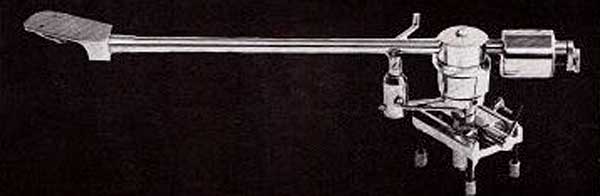
Back in the days of pre-stereo high fidelity, when a 6-gram phono pickup was considered to be "featherweight," the best universal-type tonearm we knew of was a bulky, very professional-looking device made by Gray Labs and designated the Model 108. One unusual thing about it was that, instead of using sleeve or cone-face bearings, it had a single up-ended needle—a so-called unipivot—for both the vertical and lateral modes of motion. The other unusual thing about it was that the pivot system was viscous-damped, and it was this, we suspect, that was largely responsible for the arm's ability to make any pickup sound somehow sweeter and cleaner than it did in any other arm.
Continue Reading »

Futterman H-3A power amplifier

It is not at all unusual these days to find manufacturers producing "matched" speakers and amplifiers that are designed specifically for one another. But it is very unusual to find this being done by an amplifier manufacturer who doesn't make loudspeakers. The Futterman H3-A is one of these rarities—an amplifier designed primarily to complement one of the best, and one of the hardest-to-drive loudspeakers on the market: the KLH Model Nine.
Continue Reading »

Audio Dynamics ADC-1 phono cartridge

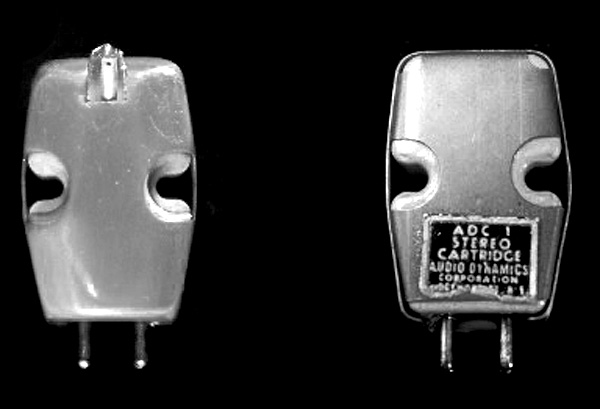
We tested two samples of the ADC-1 phono cartridge, both of which were taken from a dealer's stock. One was a demonstrator that had been in use for some months. The other was brand new, right off the shelf. Both were tested in an Empire 98 tonearm and in a Gray 108-C tonearm with its damping lightly adjusted, but results with both cartridges were for all intents and purposes identical in both arms.
Continue Reading »

Thorens TD-150AB turntable and tonearm

This is an integrated arm-and-turntable unit using single-belt drive from a stepped motor pulley to an inside platter (under the main one), and having a three-point suspension similar to that in the AR turntable for isolation from acoustic feedback and floorborne vibrations. Speed change is accomplished by a two-pronged "fork" which, actuated by the speed selector knob, throws the belt from one step of the motor pulley to the other. The motor is a special synchronous type that is actually two motors in a single case. Their speed is determined by the frequency of the AC supply, so there is no speed adjustment.
Continue Reading »

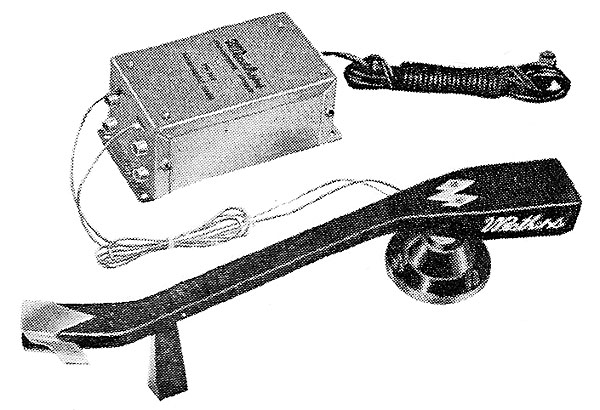
Weathers PS-11 Professional Stereo Pickup System

Editor's Note: This is the very first equipment report that was written by J. Gordon Holt for Stereophile, then called The Stereophile. The venerable JGH appended the following warning: The writer of this report was employed by Weathers Industries during the time when the product in question was undergoing development, so in view of this past association, and the doubt it may cast upon the writer's impartiality, this report probably should not be published, even though the writer left Weathers Industries over a year ago and is not bound by any obligations thereto.
Continue Reading »
Advertisement
Advertisement
Advertisement