John Atkinson

Totem's Elements

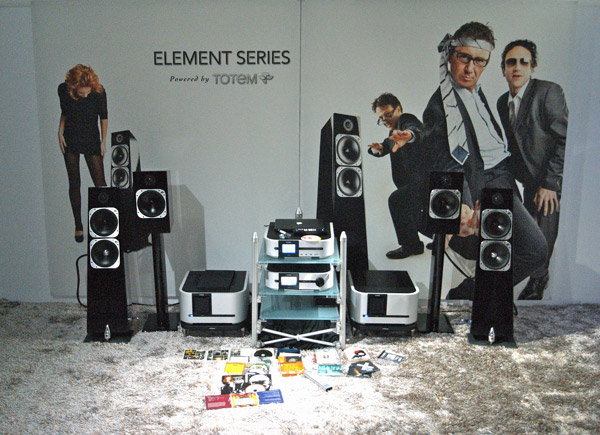
Totem was demonstrating its new Element series loudspeakers with the Classé CA-M600 600W monoblocks that I enthusiastically reviewed in the March issue of Stereophile. The three Element models—the Fire stand-mount at $5995/pair, the floorstanding Earth at $8995/pair, and Metal at $12,995/pair—all use a new 7" woofer designed and manufactured in-house. But what's with the tie around the guy's head in the wall-sized photo?
Continue Reading »

The Upward Price Spiral

On January 5, 2011, I was flying to Las Vegas for the Consumer Electronics Show (footnote 1). On January 5, 1914, Henry Ford announced that he would pay a minimum of $5 to eligible employees who worked an eight-hour day. (At that time, a good wage was $2.50 for a workday of 10 hours.) Ford was not being altruistic; he wanted to motivate his employees both to become more productive and to stay loyal to their employer. And there were strings attached: A Ford employee "must show himself to be sober, saving, steady, industrious and must satisfy . . . staff that his money will not be wasted in riotous living." But Ford also wanted his workers to be able to afford the products they made. It was Ford's action, I believe, that triggered the rise of the American middle class, and it was that middle class's combination of disposable income and increased leisure time that fueled the growth of high-end audio.
Continue Reading »

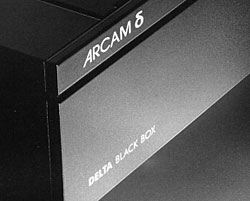
Arcam Delta Black Box D/A processor

As explained by Ken Kessler elsewhere in this issue, the English A&R Cambridge company made their name by producing one of the UK's most successful integrated amplifiers, the 40Wpc A60. This neatly styled model was in production for a decade or so and was the basis for a large number of good-sounding but inexpensive audio systems. These days, the company, whose products in the US sell under the Arcam banner, is a major British hi-fi manufacturer, with a product line that includes integrated amplifiers, tuners, loudspeakers, cartridges, and even a CD player. A&R was, I believe, the first UK manufacturer to obtain a player-manufacturing license from Philips, and with the product under review here, has broken new territory for a supposedly "audiophile" company in having a custom LSI chip manufactured to their own requirements.
Continue Reading »

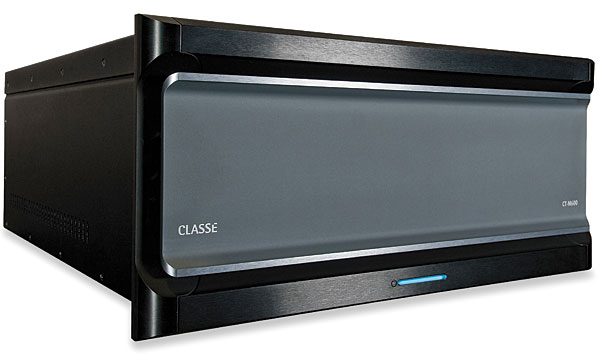
Classé CT-M600 & CA-M600 monoblock power amplifiers

On the face of it, the power amplifier has the simplest conceptual task of any audio component. Fed an audio signal at its input, all it has to do to satisfy the demands for current made by the loudspeaker is to modulate a high-voltage voltage supply with that signal. Yet power amplifiers vary enormously in their ability to perform that task without editorializing. As a result, when I find an amplifier that appears to step out of the way of the music in the manner I desire, I make the commitment, I buy it, and I stick with it.
Continue Reading »

Music Matters

I began writing these words on December 1, 2010, 13 years to the day that the magazine's website, www.stereophile.com, emerged from the digital darkness. That first, 1997 edition of our website was to a large extent the brainchild of one man, webmonkey Jon Iverson, who ever since has overseen its design and growth.
Continue Reading »

Esoteric D-07 D/A processor

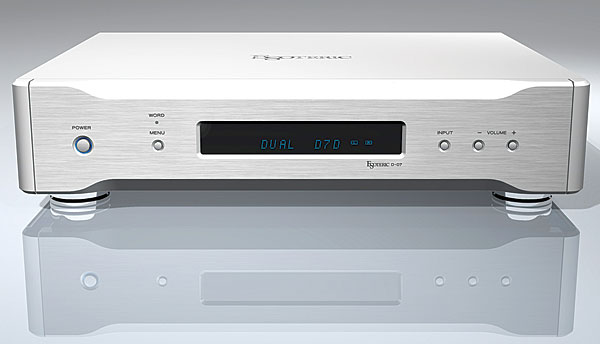
In November 2009, I took part in an intriguing comparison between live and recorded sound. I first recorded a live piano recital in 24-bit/96kHz digital, then allowed the audience to immediately hear the recording in the same room. (See my February 2010 thoughts on the comparison here.) For playback, I used two of the mono Esoteric D-01VU D/A converters locked to the ultra-high-precision Esoteric G-0Rb "atomic" master clock. I was very impressed by the sound of this cost-no-object digital system, so when I visited the Japanese company's room at the 2010 Consumer Electronics Show and saw their new, relatively affordable D-07 D/A processor ($4800), I asked for a review sample.
Continue Reading »
Advertisement
Advertisement
Advertisement