Brilliant Corners

Sort By: Post DateTitle Publish Date

Brilliant Corners #18: Adventures in Schwabylon, Ortofon Cadenza Mono Phono Cartridge

Meeting up at High End Munich: Grover Neville (left), a contributor to Stereophile's late headphone blog InnerFidelity, with his dad, Craig, a civil engineer from Chicago.


"Schwabing isn't a neighborhood, but a state of being," declared the Countess Fanny zu Reventlow, an early feminist who scandalized German society by parenting out of wedlock, carrying a revolver, and practicing what today tends to be called ethical nonmonogamy. Thomas Mann described the fellow denizens of this northern corner of Munich as "the most singular, the most delicate, the boldest exotic plants." At the turn of the last century, Schwabing was on its way to becoming the artistic epicenter of Europe, a laboratory for the most progressive social ideas, and arguably the birthplace of modernity. Kandinsky made Western art's first abstract painting while living there; local cafes once patronized by Lenin would soon host a young Adolf Hitler. Some called it Schwabylon.


These days, Schwabing's spotless, freshly paved streets are lined with the glass-and-steel facades of Hiltons and Marriotts. Its proximity to MOC, Munich's titanic convention center, has turned the neighborhood into a destination for business travelers from near and far.

Brilliant Corners #17: Monomania! The Miyajima Zero Mono phono cartridge

Stereo is the most successful audio gimmick of all time. While dashboard record players, quadraphonic LPs, and MQA have gone the way of Ron Popeil's hair-in-a-spray-can infomercials, stereo remains king. And I am guilty of loving it.


That old expression "men love with their eyes" applies to listening, too. Enabled by the advent of a second channel, the fanning out of musicians across a soundstage fills the room and gives the eyes—and not only the ears—something to do. And I happen to enjoy the soundstage. It may be an utterly artificial delight, but who doesn't love hearing a tambourine coming from 10' to the left of the left speaker? So when I came across an article in which someone likened mono to listening to music through a hole in a wall, the metaphor made sense. Why would anyone want their music congealed in a blob directly in front of them when they could hear it separated out in space?


As always, though, it turns out that things aren't quite so simple...

Brilliant Corners #16: The Gal Who Invented Kissin'

Country is a music of diverse pleasures: the bel canto balladry of George Jones and Tammy Wynette, the psychologically acute portraiture of Tom T. Hall, the politically rousing storytelling of Loretta Lynn, the self-deprecating mythmaking of Billy Joe Shaver, the bone-chilling spirituality of Ralph Stanley. It's also full of contradictions: Maligned by some as hackneyed and simplistic, its lyrics can attain a sophistication rarely encountered in other music. Dismissed for reactionary politics, it has consistently offered up fierce critiques of inequality, bigotry, and injustice (see Johnny Cash's Bitter Tears). And if during certain periods the country charts seem swamped with work of almost unimaginable ickiness and bathos, there are usually flashes of musical sublimity glimmering through.

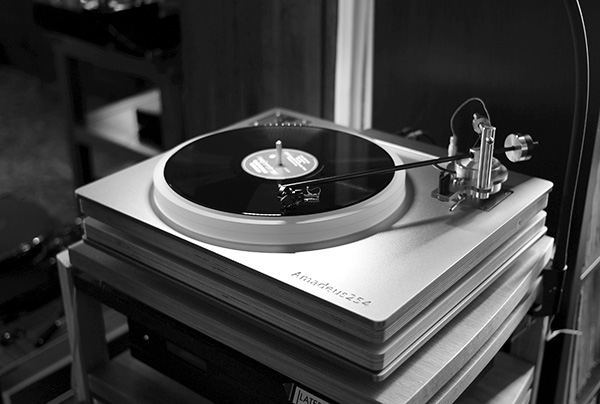
Brilliant Corners #15: Well Tempered Lab Amadeus 254 GT turntable

Photo by Michael Stephens


Last May, during a visit to High End Munich, I was ushered into an exhibitor's room with much ceremony. Other showgoers had been shooed out so that I, a reviewer at an important magazine, could listen to the hi-fi undisturbed. The room featured obelisk-shaped "statement" speakers, monoblocks with enough tubes to light a cafeteria, and a wedding cake–sized turntable, all connected with python-thick cables. The whole thing cost as much as a starter house in coastal Connecticut.


The room's proprietor asked me to choose from a small stack of LPs. I went for Cannonball Adderley's Somethin' Else, a wonderful Miles Davis record in all but name. I know it as well as any other piece of recorded music. When the system began to play, it was doing all the audiophile things expected of an expensive hi-fi. But while I recognized the notes, I struggled to recognize the music. Something was clearly, obviously amiss. The rhythmic emphases and stresses that convey music's meaning and emotion were landing in the wrong places.

Brilliant Corners #14: The Degritter Record Cleaning Machine and a New Vinyl Listening Space in Manhattan

I've always been a city dweller and can't lay claim to having owned boats, riding mowers, shotguns, basement refrigerators, golf clubs, or even patio furniture. When I moved to a loft from an apartment with a tiny backyard some 13 years ago, I even had to give up my Weber grill. This geographical fact has kept my possessions streamlined. My favorites include a handful of old waxed cotton coats, a couple dozen leather boots and shoes, a few mechanical watches, my Garrard 301 turntable, a roomful of books, and rather a lot of art, much of it made by friends. But without a doubt my fondest possessions are my records. At last count they numbered around 3500. Of course they are beautiful, both as objects and as conduits for music. But what I enjoy even more is the fact that I'm not really their owner, merely a custodian: Most of the records belonged to others before I bought them, and after I'm gone they'll find new owners who'll hopefully appreciate them as much as I do. So I feel I owe it to all of us to keep them in decent condition.

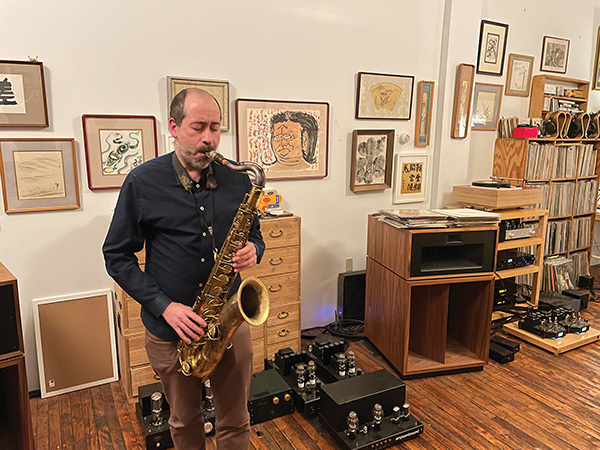
Brilliant Corners #13: The EM/IA Remote Autoformer and Listening with Master Jazzman Jerome Sabbagh

Ever notice that the language we use to talk about sound can be pretty aggressive? Reviewers often write about amplifiers "taking control" of a speaker, possibly "ironfisted control," especially if the amplifier in question happens to be a "juggernaut." In this particular linguistic trash fire, we also find "razor-sharp transients," "hair-raising dynamics," and that ickiest of descriptors, "bass slam." If words could smell like hair gel and drugstore cologne, these might.


All this verbiage is describing brute force, which we might use to push open a heavy door. But there's another kind of force that we encounter in the world, and consequently in audio, captured in the expression "life force." It denotes a sense of vitality and presence that isn't readily perceived by the senses—something lingering just out of reach of our rational minds. This force can be experienced in the terse saxophone solos of the young Sonny Rollins, the eerie abstract paintings of Mark Rothko and Pat Steir, and the deceptively quiet poems of Elizabeth Bishop. If you've ever been drawn in by one of the squat, gouged, lopsided jars made by a traditional Japanese potter, you know what I'm talking about.

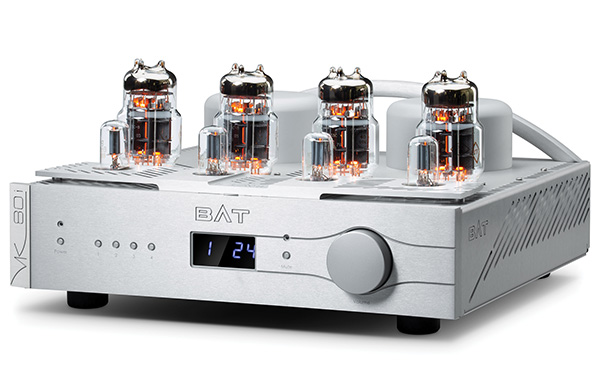
Brilliant Corners #12: Balanced Audio Technology VK-80i integrated amplifier, Ortofon Cadenza Bronze phono cartridge

In 1976, a Soviet fighter pilot named Viktor Belenko made an emergency landing in Hokkaido, Japan. He was flying a MiG-25 supersonic interceptor jet and, upon touching down, requested political asylum. This proved to be a stroke of brilliant luck for the Americans. The MiG-25 remains one of the fastest and highest-flying aircraft ever produced, and Belenko's defection allowed them to have a tantalizing look at the technology inside.


Among the top-secret loot found inside the Soviet jet was a large, heavy triode vacuum tube used as a regulator in the power supply of the MiG's radio. It was known as the 6C33C. (The enormous electromagnetic pulse caused by a nuclear explosion would fry a transistor. Tubes were used in military equipment with such an eventuality in mind.)

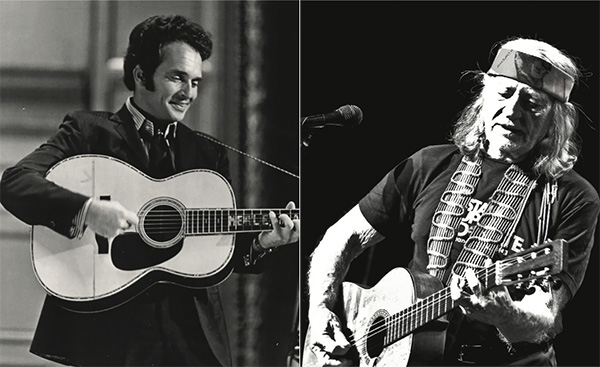
Brilliant Corners #11: Willie and Merle

I said to Hank Williams, how lonely does it get?

Hank Williams hasn't answered yet

But I hear him coughing all night long

Oh, a hundred floors above me in the tower of song


          —Leonard Cohen, "Tower of Song"


When I was a child growing up in Moscow in the 1970s, our pop-musical landscape was dominated by the so-called bards. They were Soviet counterparts to singer-songwriters from the West, and they sang literate, knowing lyrics while accompanying themselves on acoustic guitars. Even the word used to describe them—bard'i—was adapted from English. And because they sometimes sang about aspects of day-to-day life that were off limits in public, their music rarely appeared on records and was circulated mostly on fuzzy-sounding homemade tapes.


The best known among the bards were a Georgian-Armenian poet named Bulat Okudjava—who sang sentimental ballads about (chaste) romantic love, childhood friends, and The Great Patriotic War—and an altogether more daring performer named Vladimir Vysotsky.

Brilliant Corners #10: Tron Electric Convergence Signature & PrimaLuna EVO 100 phono stages

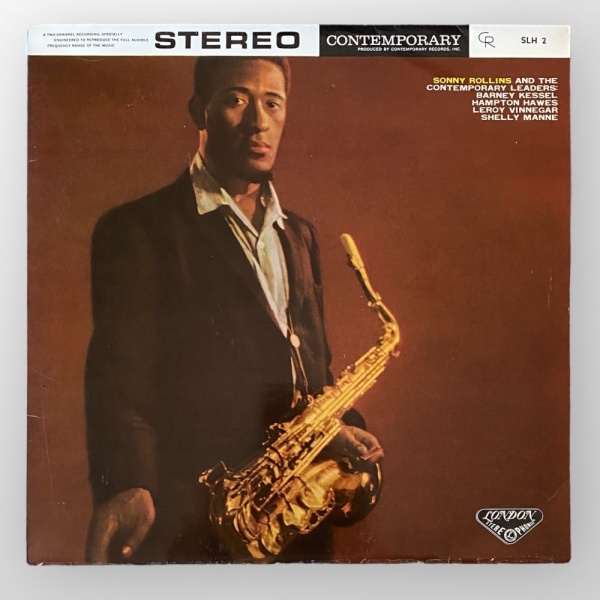
"The phonograph record is an art form itself," Lester Koenig wrote in March 1959, "and one of its advantages is the performance that exists uniquely of, by and for the record." Remarkably, when Koenig included this pronouncement in his liner notes to Sonny Rollins and the Contemporary Leaders, the 12" long-play record had been the dominant carrier of recorded music for less than a decade, and stereo discs had been mass-produced for just over a year.


For Koenig, this issue wasn't merely academic. Before making his name as head of Contemporary Records in Los Angeles, he had attended Yale Law School, worked as a screenwriter and producer at Paramount, and gotten blacklisted by the House Committee on Un-American Activities. At Contemporary, he set out to become a leading practitioner of the art of phonography.

Brilliant Corners #9: a DAC and a Streamer from France's Totaldac

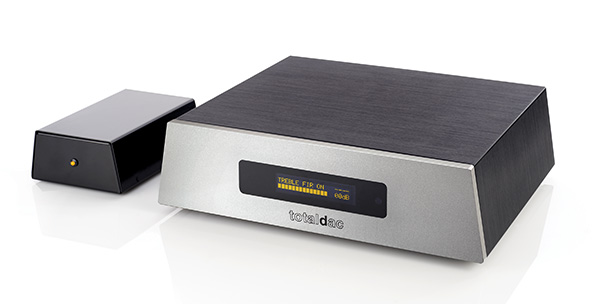
To misquote Morrissey, some knobs are better than others. The Manley Neo-Classic 300B amplifiers that I've been listening to, for example, have a knob marked "feedback" that goes from 0 to 10. I've learned so much from using it that I've come to believe that if your amp doesn't have such a knob, it should. You see, the higher you set this control, the better the amp will measure. Applying more global negative feedback to these amps lowers their nonlinear distortion and noisefloor, increases their bandwidth, renders them less sensitive to the speaker's impedance variations and otherwise makes them more stable and efficient. In fact, by applying lots of feedback to an amplifier, it's possible to reduce distortion to barely measurable levels.


So what's the problem? Well, a few turns of the knob suggest that negative feedback isn't as useful as it appears on paper.

Advertisement
Advertisement
Advertisement