Analog Corner

Sort By: Post DateTitle Publish Date

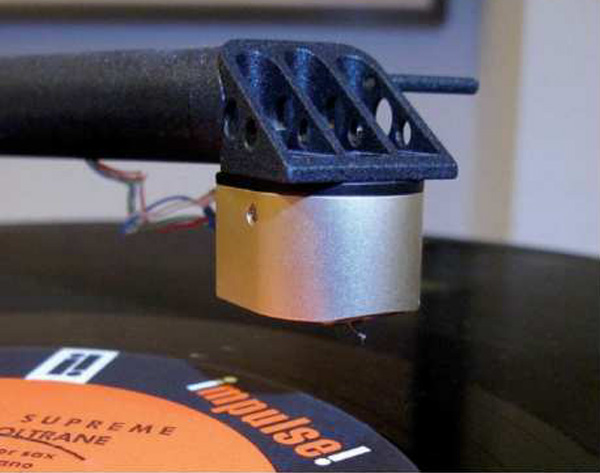
Analog Corner #254: Audio-Technica AT-ART1000 phono cartridge
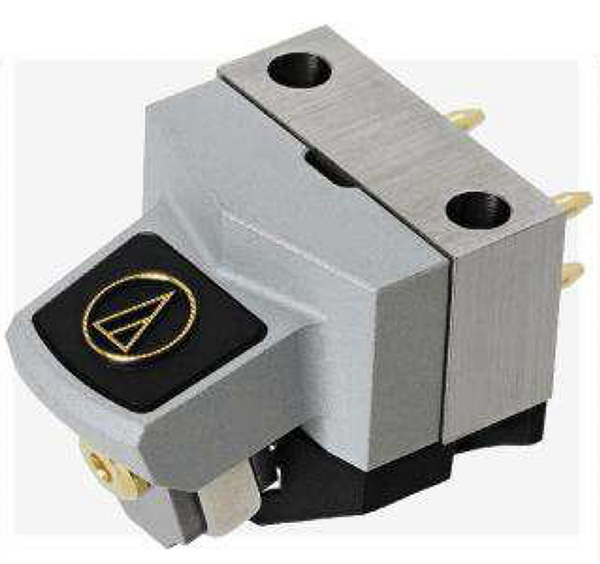
Recently, after 36 years at Audio-Technica, Mitsuo Miyata retired—by which time he'd run out of business cards. Nonetheless, when I met him in early July at A-T's headquarters, in Machida, Japan, he handed me a card. A line had been drawn through the original cardholder's name; under it, handwritten, was Miyata's name.


Japanese culture is so formal that there is a precise etiquette of how to offer one's business card: Hold the card lengthwise in both hands, gripping it between thumbs and index fingers, and present it with a slight bow. For someone with so long and distinguished a career and multiple patents to his name, Miyata's offering was casual. Later, an A-T staffer told me, with a laugh, that he'd never before seen Miyata in a tie and jacket, both of which he wore for our meeting.


Today, the inventor of Audio-Technica's new AT-ART1000 cartridge is better known around company headquarters as a gentleman farmer—a grower of legendary blueberries, Japanese eggplants, and corn. His home-built stereo system is also said to be pretty special. I had been invited to meet him, and to get an exclusive look at the challenges of assembling and testing the AT-ART1000.
Analog Corner #253: Mikey Gets Ortofon SPU'd

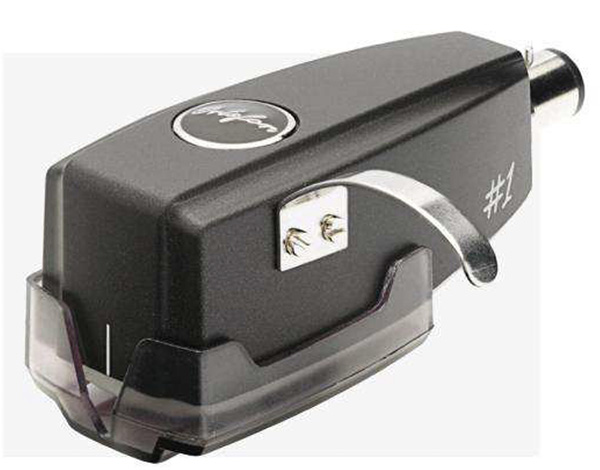
Last spring, at the High End show in Munich, I met with Leif Johannsen, R&D manager and chief designer of Ortofon, who walked me through the company's exhibition. Among the new products he showed me were two low-cost, low-output SPU (stereo pickup) moving-coil cartridges.


Leif Johannsen told me that Ortofon decided to produce two low-priced SPUs so that more people could afford them and enjoy their particular sound. Their new SPU #1 comes in two flavors: the SPU #1S with spherical stylus ($599), and the SPU #1E with elliptical stylus ($659)—hence the model names.

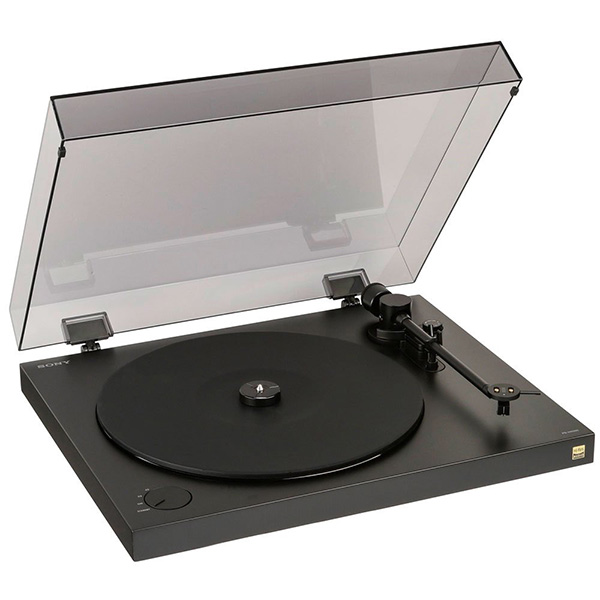
Analog Corner #252: Sony PS-HX500 USB turntable & GEM Dandy PolyTable

Recently, when a reader questioned my hearing acuity on account of my age—I'm 69—I didn't argue: I don't hear as well as I did when I was 40, or 50, or even 60, and it would be foolish to claim otherwise. However, while my hearing isn't what it once was, neither is my listening—which has never been better. Audio perception is a combination of what the ear delivers and what the brain does with it.


My upper-octave response still sounds to be all there. Are there some lumps and bumps below? Probably. And some tinnitus noise encroaching on very-low-level material? No denying it. But as far as I'm concerned, at least for now, I'm still quite capable of doing this job.

Analog Corner #251: ModWright PH 150 phono stage

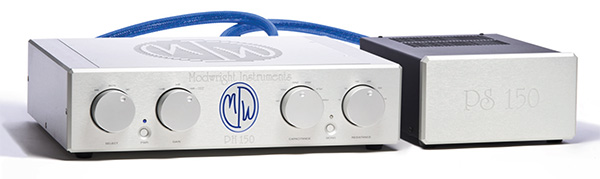
ModWright Instruments' PH 150 moving-coil/moving-magnet phono stage measures 17" wide by 5" high by 12" deep and weighs 19lb. Knobs on its front panel let you easily make adjustments that with some phono preamps require accessing the rear panel or going inside. Starting at the left, the Select knob offers settings for MC, MM, and Mute. The Gain knob offers levels of 0dB, –6dB, and –12dB. With MC selected, those settings would correspond with 72, 66, and 60dB of gain, respectively; with MM, the numbers would be 57, 51, and 45dB, the last being more typical of most MM stages.


First, let's talk about problems with grounding and hum...

Analog Corner #249: LKV Research Veros One phono preamp, Triangle Art Apollo MC cartridge

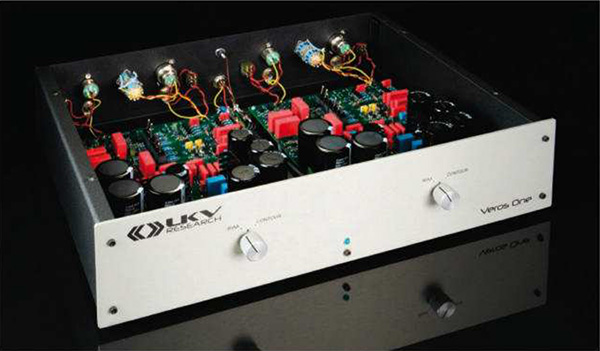
Designer Bill Hutchins, of LKV Research, builds the 2-SB moving-magnet/moving-coil phono preamplifier in North Conway, in the White Mountains of New Hampshire; he uses as many US-sourced parts as possible, and sells his products factory direct. I reviewed the 2-SB in March 2014, on AnalogPlanet.com: the 2-SB's sound was exceptionally fine—especially if you like refined, solid-state quiet and detail, and especially considering its then-price of $2500. Since that review's publication, the 2-SB has been upgraded with a version of the third gain stage from LKV's JFET-based Veros One phono preamp ($6500; see below), and its price has risen to a still-reasonable $3000.


In May 2014, Bill Hutchins introduced the Veros One phono preamplifier ($6500).

Analog Corner #248: Mørch DP-8, Reed 3P tonearms, TechDAS Air Force One turntable

"HOW MEASUREMENT FAILS DOCTORS AND TEACHERS" was the headline of a story in a recent issue of the New York Times's "Sunday Review" section (formerly called "News of the Week in Review," now rendered obsolete by the 24/7 news cycle created by and for the terminally self-absorbed). The writer, Robert M. Wachter, a professor and interim chairman of UC San Francisco's department of medicine and author of the book The Digital Doctor: Hope, Hype, and Harm at the Dawn of Medicine's Computer Age, said that healthcare and education "have become increasingly subjected to metrics and measurements," and that the focus on them has "gone too far."


To me, that headline screamed "Audio!" And the book that needs to be written is The Digital Recording Revolution: Hope, Hype, and Harm at the Dawn of Audio's Computer Age.

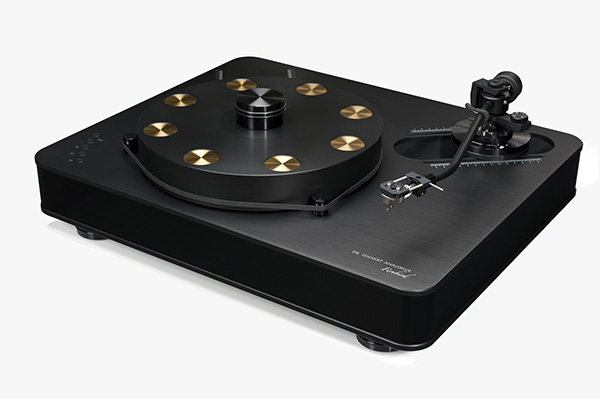
Analog Corner # 247: Dr. Feickert Firebird turntable, Viva Fono MC phono preamplifier, AcroLink and Fono Acustica interconnects

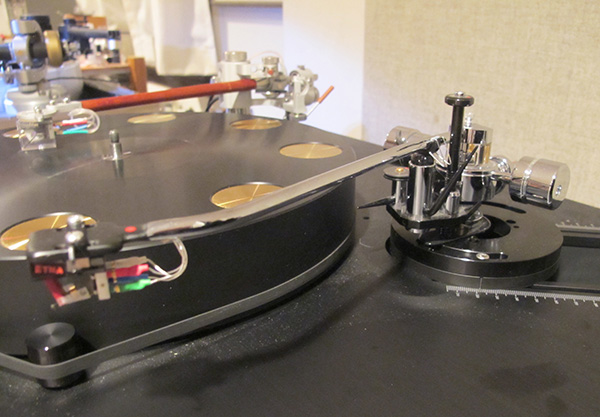
Dr. Feickert Analogue's top-of-the line turntable, the Firebird ($12,500), is a generously sized record player designed to easily accommodate two 12" tonearms. Its three brushless, three-phase DC motors, arranged around the platter in an equilateral triangle, are connected to a proprietary controller in a phase-locked loop (PLL); according to the Firebird's designer, Dr. Christian Feickert, a reference signal from just one of the motors drives all three—thus one motor is the master while the other two are slaves. (Man, today that is politically incorrect, however descriptively accurate.)

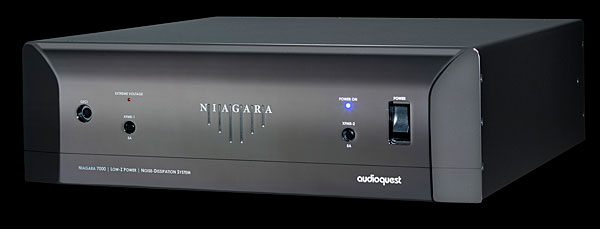
Analog #246: AudioQuest Niagara 7000 Low-Z Power Noise-Dissipation System

Are you old enough to remember when the wires connecting speakers to even the most expensive and sophisticated electronics were 16-gauge, multistrand lamp cord, and the terminals on speakers and amplifiers were just little screws? Sometimes those screws wouldn't even secure all of the wires' strands, but as long as loose strands from one screw didn't touch loose strands from the other, it was good enough . . . and back against the wall went your bookshelf speakers.

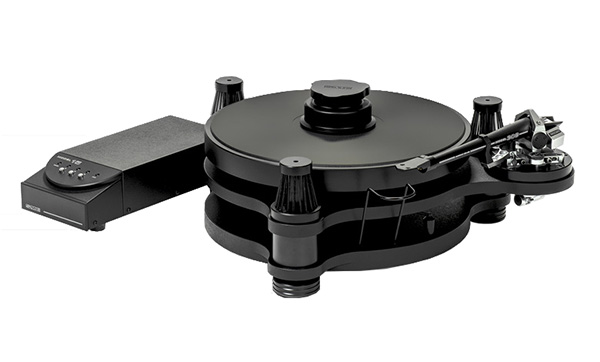
Analog Corner #245: SME Model 15 turntable, SME 309 SPD tonearm

In the April 2000 issue of Stereophile, I reviewed SME's Model 10, which was an attempt by that storied company to produce an "affordable" turntable. I described the Model 10's $5500 turntable-only price—about $7600 in today's dollars—as "stiff." (At the time, the Model 10 cost $5995 with SME's M10 arm, or $8250 with their IV.Vi arm.) But 16 years later, the same Model 10 costs only $5000 ($7000 with the more recent Model 10 arm, which is superior to the M10).
Advertisement
Advertisement
Advertisement