Tonearm Reviews

Sort By: Post DateTitle Publish Date

Formula 4 tonearm

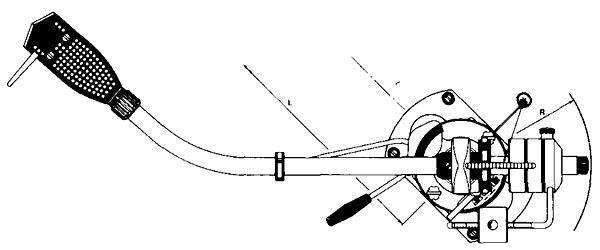
Not the easiest tonearm to set up (let your dealer do it if you aren't overly skilled at such things), this English-designed and Japanese-made device is the best pivoted tonearm we have tested to date, and at a very reasonable price at that. Polk Audio is importing them and distributing to dealers, most of whom sell them for around $130 to $140, and some buyers have managed to purchase them directly from stores in England for as little as $80. We received two samples of this for testing, one directly from the US distributor, Polk Audio, the other from Natural Sound, a Nebraska dealer and (naturally) one of our advertisers. Suffice it to say that both samples were identical in every perceptible manner.
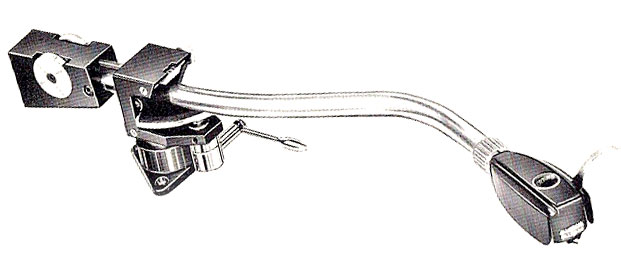
Transcriptors Vestigal tonearm

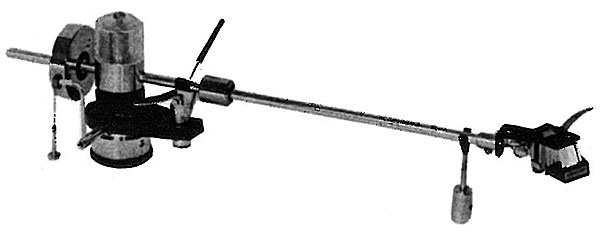
Because this is an unusual and controversial tonearm design, and has had astonishing claims made for its performance by the manufacturer, this in-depth report goes deeper and is longer than is usual for Stereophile. We will return to a reasonable balance of reportage in the next issue.


The manufacturer's initial advertisement for their mis-named "Vestigal" arm (footnote 1) was so laced with nonsense that we will admit to having been skeptical about the product from the outset.

Ortofon RS-212 tonearm

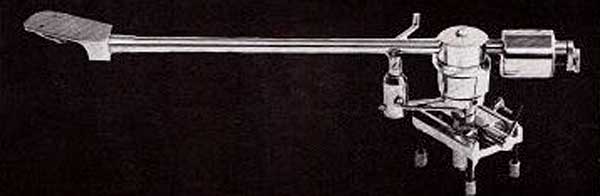
The RS-212 is one of the most impressive-looking tonearms we've seen in many a moon. Our first reaction to it, in fact, was much the same as our reaction to the first big, professional Ampex tape recorder we ever saw: it reminded us of one of those precision-engineered and cleanly styled electronic devices you see in hospitals and industrial laboratories—devices which make no attempt to cater to the current fashion in interior decorating or depth-researched consumer preferences, but which are designed simply to do a job neatly and efficiently. This arm, in short, is practically guaranteed to impress your Magnavox-oriented friends with the quality of your phono system, no matter how oblivious they may be to its actual sound.

Audio & Design M9BA tonearm

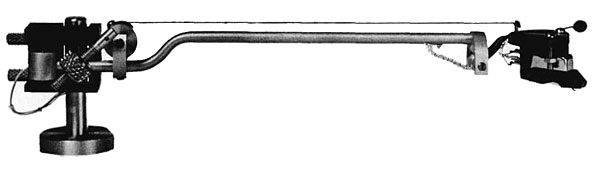
Back in the days of pre-stereo high fidelity, when a 6-gram phono pickup was considered to be "featherweight," the best universal-type tonearm we knew of was a bulky, very professional-looking device made by Gray Labs and designated the Model 108. One unusual thing about it was that, instead of using sleeve or cone-face bearings, it had a single up-ended needle—a so-called unipivot—for both the vertical and lateral modes of motion. The other unusual thing about it was that the pivot system was viscous-damped, and it was this, we suspect, that was largely responsible for the arm's ability to make any pickup sound somehow sweeter and cleaner than it did in any other arm.
Advertisement
Advertisement