Phono Preamp Reviews

Sort By: Post DateTitle Publish Date

Analog Corner #286: Channel D Lino C 2.0 phono preamplifier
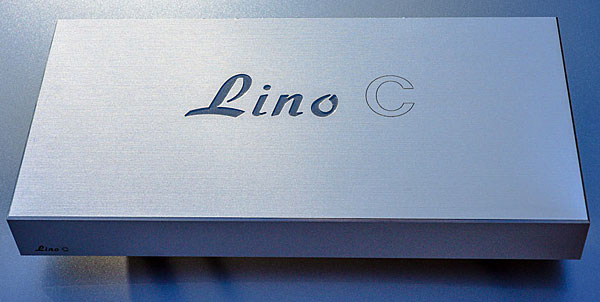
Install a new component in your system and there's usually a period of adjustment as you get used to the difference in sound—especially if the new product costs much less than your reference. Channel D's new Lino C 2.0 balanced phono preamplifier costs $2499, yet my ears instantly accepted its combination of drop-dead, noise-free backgrounds and lack of obvious colorations or sonic personality. I didn't hear it—I heard only my Ortofon A95 cartridge, with which I'm well familiar, as amplified by far more costly phono preamps.
Heed Audio Quasar phono preamplifier

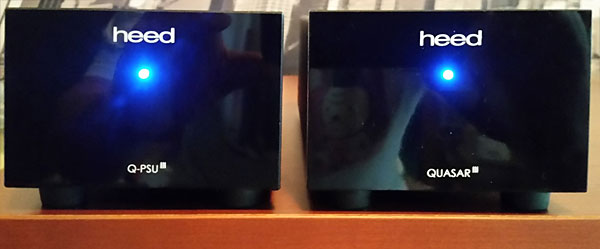
As a kid growing up in Milford, Michigan, my big brother always had the classiest clothes, latest records, and sharpest gear. He danced in Cuban-heeled leather boots, I climbed trees in lace-up Keds. He spun Rolling Stones vinyl on a fabric-wrapped Zenith portable with detachable speakers, I blasted the Beatles from a tinny transistor radio. Ten years my senior, big bro drove a Buick bomb (which, late one night, mysteriously caught fire in the garage) and had a girlfriend, Gail, whose plump cheeks and smart clothes embodied modern mid-century Midwestern appeal. I like to think that my brother and I have both aged gracefully. And lately, he's taken to high-end hi-fi with a passion.

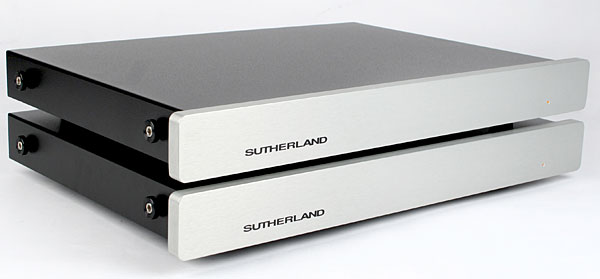
Sutherland Engineering Duo phono preamplifier

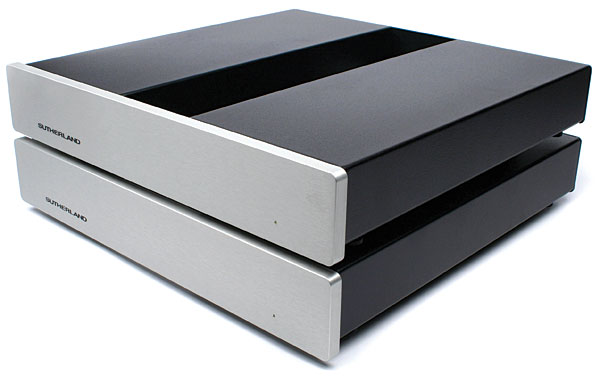
"Saying that Sutherland Engineering builds a nice line of phono stages is like saying that the Porsche 911 Carrera is a nice line of sports cars." So began my review of Sutherland's PhonoBlock in the January 2012 issue. I went on to note that similar philosophies underpin both product lines, and to link the cost-no-object PhonoBlock ($10,000/pair) with the GT2 RS ($245,000), then the pinnacle of Porsche's 911 family. It's now 2017, and though Sutherland and Porsche have both gone through a complete development cycle and replaced their flagship models, the analogy still holds true.

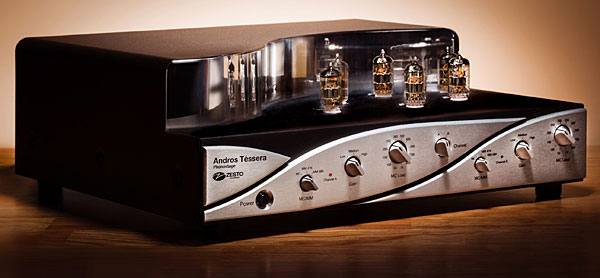
Zesto Audio Andros Téssera phono preamplifier

Maybe you've seen the widely circulated New Yorker cartoon: Two guys stand in front of a nicely drawn, tubed audio system, under which are shelves full of LPs. One guy says, "The two things that really drew me to vinyl were the expense and the inconvenience."


If you can't laugh at that, you've lost your sense of humor—even acknowledging that, oddly, convenience is the raison d'etre of some recent phono preamplifiers—including Dan D'Agostino Audio's Momentum and the CH Precision P1, both of which offer multiple, switchable, configurable inputs saved in memory. Today's well-heeled vinyl enthusiast might have two or more tonearms mounted on a single turntable—or even two turntables, each with two arms. Zesto Audio's new Andros Téssera tubed phono preamplifier takes aim at that market segment.

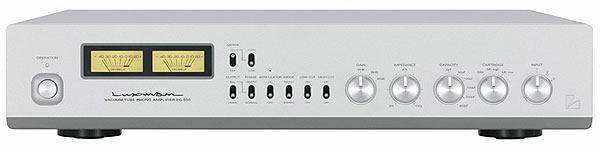
Luxman EQ-500 phono preamplifier

I still remember how difficult it was for me to transition from mass-market to high-end audio. The former, for all its flaws, gave me things to do: switches to flip, buttons to push, knobs to turn, meters to watch. I was in control—and if my attention happened to stray from the music or the liner notes, I still had something to keep me busy. By contrast, the first perfectionist-quality amplifier I bought—an Amber Series 70—was an oblong box with an on/off switch. Where's the fun in that?

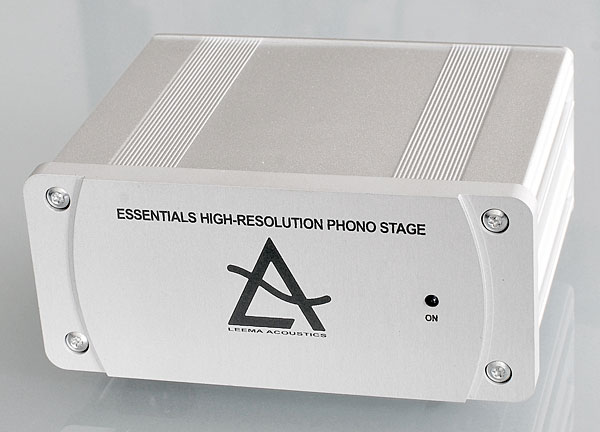
Leema Acoustics Essentials phono preamplifier

"The way that young people will get into high-end audio is not through streaming: It's through the LP."


When that observation was offered during a recent phone conversation, I wrote it down word for word—not just because I agree with it, but because it was so remarkable: The audio-industry veteran who offered it owns a digital front end worth tens of thousands of dollars, and hasn't owned a turntable for at least a dozen years. Nevertheless, as became clear during the remainder of our conversation, he understands the dynamic that keeps vinyl at the top: a confluence of marketing psychology and genuine sonic goodness.

Sentec EQ11 phono preamplifier

With quiet elegance, the Sentec EQ11 phono stage and equalizer entered my expanding world of gramophone dreams. The EQ11 ($2500) is a modestly sized, tubed phono stage with the industry-standard RIAA phono equalization and five other EQ curves. These additional curves are for records pressed by companies that did not fully or promptly comply with the new, supposedly global industry standard introduced by the Recording Industry Association of America (RIAA) in 1954.

Sutherland Engineering Phono Block monoblock phono preamplifier

Saying that Sutherland Engineering builds a nice line of phono stages is like saying that the Porsche 911 Carrera is a nice line of sports car. The Sutherlands all share common design philosophies, features, and sonic attributes—but just as ramping up from Porsche's classic Carrera Coupe ($78,000) to the GT3 ($115,000) or the Turbo S Cabriolet ($172,000) increases the level of performance and distills the Porsche experience down to its essence, ascending the Sutherland line from the PH3D ($1000) to the 20/20 ($2200) to the Hubble ($3800) buys more of what Ron Sutherland is all about.

Leben RS-30EQ phono preamplifier

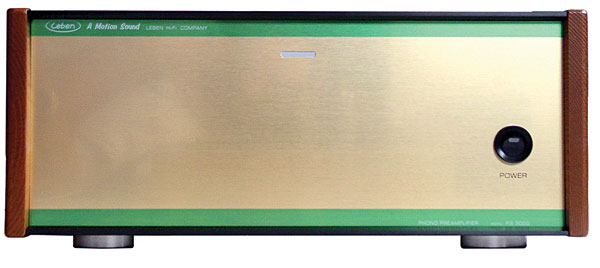
The Leben RS-30EQ phono preamplifier ($2695) incorporates a pair of common dual-triode tubes (12AT7) for phono gain, but breaks with tradition by using a CR-type equalization circuit rather than the more common negative-feedback type. Total gain is specified as 23.5dB, which is sufficient for moving-magnet pickups; an external transformer is recommended for use with moving-coil types. A silicon full-wave rectifier supplies heater voltage, while the rail is supplied by a 6X5GT rectifier tube.
Advertisement
Advertisement
Advertisement