Budget Component Reviews

Sort By: Post DateTitle Publish Date

NAD Monitor Series 1300 preamplifier
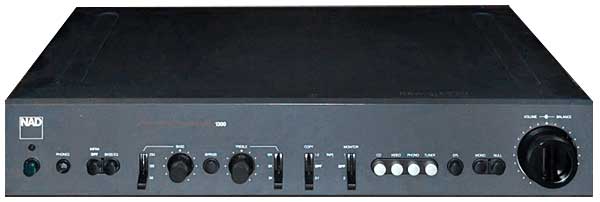
By far the most complicated of the three preamps i review in this issue in terms of facilities offered, NAD's "Monitor Series" 1300 ($398) provides two buffered tape loops, an external processor loop (which can also be used as a third tape-recorder loop), a headphone output, a "null" switch, switchable bass equalization to extend the low-frequency range of small loudspeakers, and treble and bass controls, each with a choice of three turnover frequencies: 3kHz, 6kHz, 12kHz, and 50Hz, 125Hz, 250Hz, respectively.

Rotel RC-850 preamplifier

A few issues back, in my review of the Mark Levinson No.26 and No.20 (May 1988, Vol.11 No.5), I mused on the fact that the preamplifier, being the heart of a system, had a more significant effect on sound quality in the long term than, say, the loudspeakers. It was worth spending more on a preamplifier, therefore, than on loudspeakers. Needless to say, this viewpoint was regarded by many readers as dangerously heretical. I decided, therefore, to investigate the sonic possibilities of budget-priced preamps in this issue, even the most expensive being less than one-tenth the price of the Mark Levinson.

Image Concept 200 loudspeaker

I like reviewing loudspeakers. The more you become familiar with the art, the greater the sense of anticipation as you open up a pair of cartons. A visual inspection of the speaker always reveals a challenging mixture of the familiar and the new. The size of the cabinet is always the first clue—has sensitivity been a design priority or was low-frequency extension uppermost in the designer's thoughts? You espy a known drive-unit—has this tweeter's propensity for upper-presence sizzle been tamed? You find a reflex port on the rear panel—has the temptation to go for a "commercial," under-damped bass alignment been successfully resisted? You spot factors which intuitively seem wrong for precise stereo—a wide baffle lacking any kind of absorbent covering for diffraction control; a grille frame which puts acoustic obstacles in the way of the wavefront emerging from the tweeter.


Plateau Camber 3.5 loudspeaker

The loudspeaker coming under the microscope this month emanates from north of the border. The Canadian loudspeaker industry has benefited enormously in the last few years from having the measurement, testing, and listening facilities of Canada's National Research Council in Ottawa made available to it on a commercial basis. Unlike the US or even the UK, where a new speaker designer has pretty much to rely on his own resources, having to invent his own test procedure as well as design the product, the Canadian equivalent can have his loudspeaker tested under standard conditions, quickly indicating whether he is on the right track or not. (He still, of course, has to rely on his own talent to get on the right track in the first place or to get back on it if it appears that something is amiss.)


Plateau Camber 3.5 loudspeaker RH's 1990 System

The loudspeaker coming under the microscope this month emanates from north of the border. The Canadian loudspeaker industry has benefited enormously in the last few years from having the measurement, testing, and listening facilities of Canada's National Research Council in Ottawa made available to it on a commercial basis. Unlike the US or even the UK, where a new speaker designer has pretty much to rely on his own resources, having to invent his own test procedure as well as design the product, the Canadian equivalent can have his loudspeaker tested under standard conditions, quickly indicating whether he is on the right track or not. (He still, of course, has to rely on his own talent to get on the right track in the first place or to get back on it if it appears that something is amiss.)


Adcom GFA-535 power amplifier

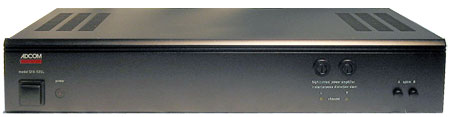
Sometimes products are too cheap for their own good, and people don't take them seriously: the Superphon Revelation Basic Dual Mono preamp, Rega">http://www.stereophile.com/turntables/184rega">Rega RB300 arm, AR ES-1 turntable, Shure V15-V MR cartridge, and the B&K">http://www.stereophile.com/solidpoweramps/675">B&K ST-140 power amp. They can't be any good because they cost so little, right?


Hafler XL-280 power amplifier

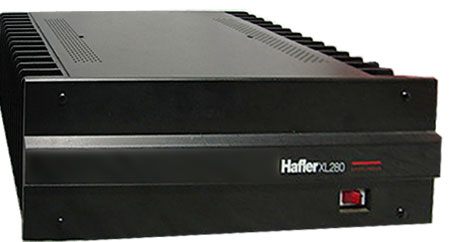
Some time ago in these pages, Anthony H. Cordesman observed rather ungraciously that the whole line of Hafler electronics "could do with reworking." This was interpreted by many readers—including the good people at the David Hafler Company—as meaning that AHC felt the entire Hafler line to be mediocre. In fact, he does not. (He had given a Hafler product a positive review a few issues previously.) Tony's comment, however, did express a sentiment that most of us at Stereophile have shared for some time: a feeling that Hafler products had slipped from the position of sonic preeminence which they enjoyed during the 1960s and '70s to one of mere excellence in a field where only preeminence is acclaimed.


Altec Lansing 301 loudspeaker

One of the oldest names in US audio, Altec Lansing was building speakers for theaters and recording studios long before the introduction of the microgroove LP in 1948 (which date many see as marking the inception of high fidelity). Started in 1931 under the name All-Technical Services ~Corp., the firm later purchased another audio firm called Lansing Engineering, and merged the names. Altec's Model 604, one of the first true coaxial speakers, was adopted for home use by many early hi-fi buffs and, several permutations later, is still widely used for monitoring in disc-cutting rooms.

Siefert Maxim III loudspeaker

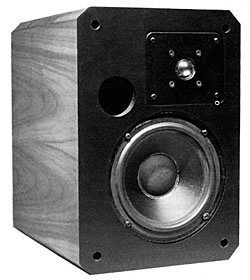
While it is not quite accurate to say that $500/pair loudspeakers are a dime a dozen, they are by no means unusual. And since this is a price area where major design compromises are mandatory (footnote 1), the sound of such loudspeakers tends to vary all over the map, from pretty good to godawful—depending on what performance areas the designer chose to compromise and by how much.


I approached this latest half-grander with little enthusiasm, despite Siefert's persuasive literature, I have, after all, been reading such self-congratulatory hype abiout new products for longer than most Stereophile readers have been counting birthdays. This, I must admit, was ho-humsville.

Advertisement
Advertisement
Advertisement