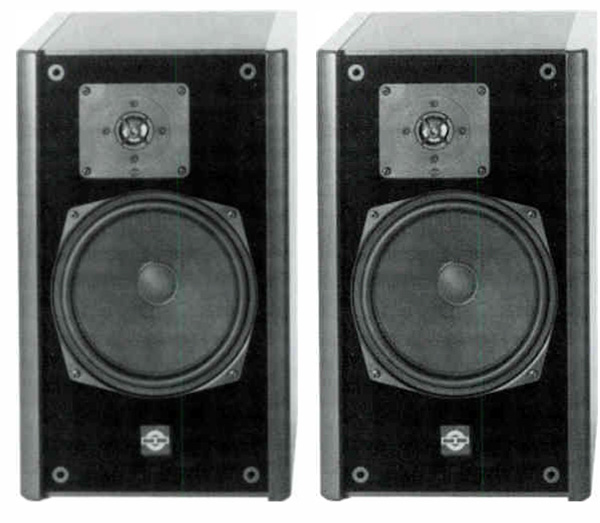
Cambridge SoundWorks Ambiance loudspeaker
According to the conventional wisdom, companies selling consumer products fall into two categories: those whose sales are "marketing-led" and those whose sales are "product-led." Marketing-led companies tend to sell mature products into a mature market where there are no real differences between competing products—soap powder, mass-market beer, or cigarettes, for example—whereas product-led companies tend to sell new technologies, such as personal computers and high-end hi-fi components. In the audio separates market, conventional wisdom would have a hard time categorizing any individual company: no matter which you choose, it would be simplistic to say that it is either product- or marketing-led. No matter how good the product, without good marketing the manufacturer stands little chance of success; a poor product superbly marketed may make a company successful overnight, but that success will have hit the end stops by the following night.
 In recent years, Adcom has carved an enviable niche for themselves in the entry-level category of high-end audio. Their excellent GTP-400 tuner/preamplifier, which I reviewed in September 1989 (Vol.12 No.9), has further enhanced their reputation for musically satisfying sound at affordable prices. The GFP-565 is Adcom's newest preamplifier and their most expensive to date. The GFP-565 was designed to offer more than simply excellent performance for the price asked. This new arrival is Adcom's attempt at manufacturing a preamplifier which can compare favorably to the most expensive state-of-the-art products offered by other high-end manufacturers. As such, its $798 price tag is still reasonable, especially when the 565 is compared with other preamps in the under-$1000 price range.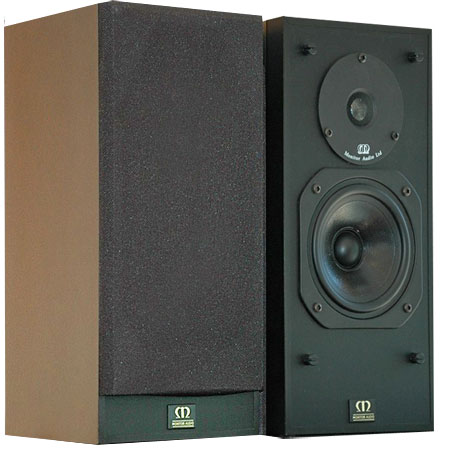

 "Why does John Atkinson devote so much of his time to loudspeakers selling for under a [sic] $1000?" wrote a correspondent to The Audiophile Network bulletin board in August, there being a clear implication in this question that "more expensive" always equates with "better" when it comes to loudspeakers. While it is true that the best-sounding, most neutral loudspeakers possessing the most extended low-frequency responses are always expensive, in my experience this most definitely does not mean that there is an automatic correlation between price and performance. I have heard many, many expensive loudspeakers whose higher prices merely buy grosser sets of tonal aberrations. For those on modest budgets, provided they have good turntables or CD players, a good pair of under-$1000 loudspeakers, coupled with good amplification, will always give a more musical sound than twice-the-price speakers driven by indifferent amplification and a compromised front end.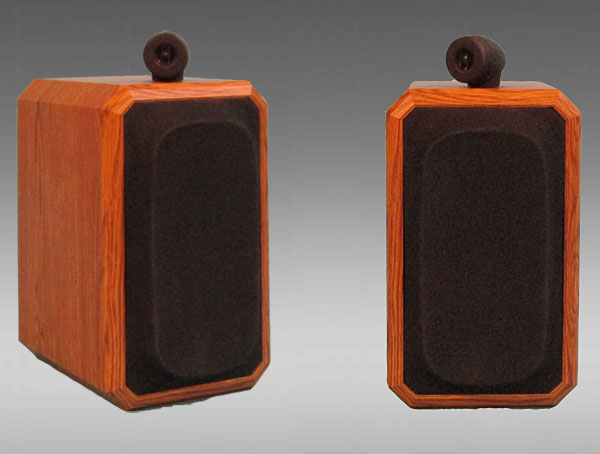
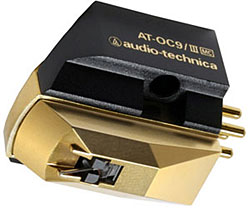 While the AT-OC9 bears the Audio-Technica logo, you won't find a sample of this moving-coil cartridge at your friendly Audio-Technica dealership. The US distributor of Audio-Technica products has apparently decided that their market does not include high-end cartridges. A quick perusal of the latest Audio directory issue (October 1988) lists the most expensive AT cartridge at $295, with no moving-coils in sight. When I first heard of the AT-OC9, the only reasonably accessible source, short of Japan, was Audio-Technica in the UK. A quick phone call and follow-up letter resulted in a review sample. Since that time, Music Hall in the US importers of the Epos loudspeakers, among other items) has begun importing the AT-OC9 (along with the less-expensive AT-F5). Mail-order company Lyle Cartridges also stock it, I believe.