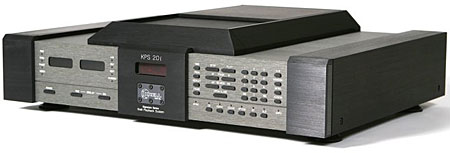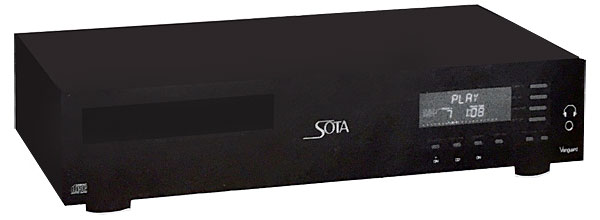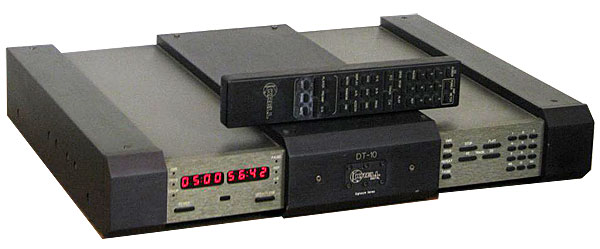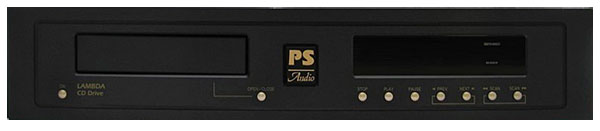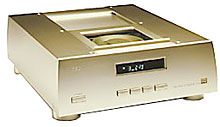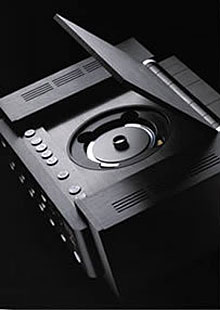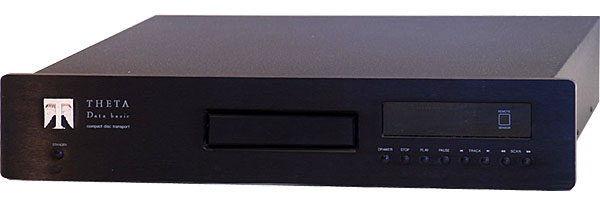
It seems to me that it should be possible to make a perfectly jitter-free CD transport without resorting to elaborate, expensive mechanical structures. This idealized transport would ignore all mechanical considerations of disc playbackvibration damping and isolation, for exampleand simply put a jitter-free electrical driver at the transport output. If such a circuit could be made, it wouldn't care about how bad the signal recovered from the disc was (provided the recovered data were error-free). The circuit would just output a perfect, jitter-free S/PDIF signal. The result would be the sound quality of the $8500
Mark Levinson No.31 Reference CD transport in $200 machines. Such a scheme would provide an electrical solution to what has been considered largely a mechanical problem.
But back in the real world there's no doubt that attention to mechanical aspects of transport design affects sound quality. Examples abound: listening to Nakamichi's 1000 CD transport with its Acoustic Isolation door open and closed; playing the Mark Levinson No.31 with the top open; and putting any transport on isolation platforms or feet are only a few of the dozens of experiences I have had that suggest that mechanical design is of utmost importance.