Tube Power Amp Reviews

Sort By: Post DateTitle Publish Date

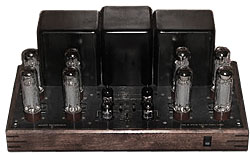
Dynaco Stereo 70 II power amplifier

I dig tube amps. When all's said and done, good tube amps seem to sound more like real life than most solid-state gear; even after listening to and enjoying the hell out of musical solid-state designs like the Audio Research D-240 II and the Muse Model One Hundred, once I hook up the big VTL Deluxe 225s again it's just like going home. I could go on about timbral accuracy and clearer midrange textures, but the bottom line is, music just plain sounds better when you shoot it through good tubes, and once most people experience that magic, they're hooked.
Nobis Cantabile power amplifier

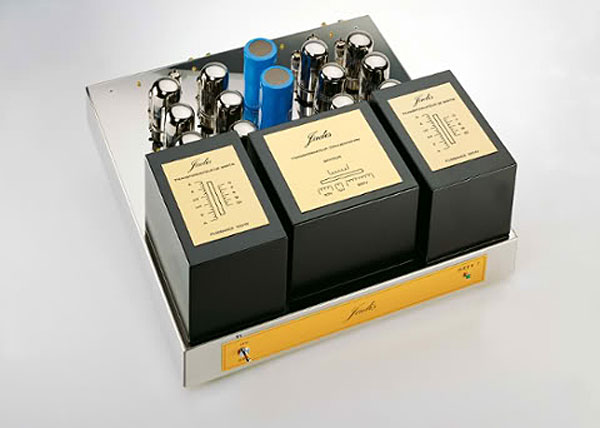
I dig tube amps. When all's said and done, good tube amps seem to sound more like real life than most solid-state gear; even after listening to and enjoying the hell out of musical solid-state designs like the Audio Research D-240 II and the Muse Model One Hundred, once I hook up the big VTL Deluxe 225s again it's just like going home. I could go on about timbral accuracy and clearer midrange textures, but the bottom line is, music just plain sounds better when you shoot it through good tubes, and once most people experience that magic, they're hooked.


Jadis Defy 7, Quicksilver KT88, VAC PA90 tubed power amplifiers

"It's the difference between a stuffed dog and the real thing," said Gunter (George) Bischoff, of Melos Audio, on the difference between solid-state gear and tubes. "The real dog may piss on the rug, needs visits to the vet, gets fleas, has to be walked, but it's a living thing—a real dog. The stuffed dog requires no care, needs no maintenance, but has no life."

VTL Compact 160 monoblock power amplifier

891vtl160.250.jpgWhen I reviewed VTL's 25W Tiny Triodes in April 1991, I found them to be incredibly fun little suckers to play with, but got frustrated with their inability to drive my Spica Angeluses to reasonable levels with most of my recordings. I loved what I was hearing, but there wasn't nearly enough of it! As it turns out, John Atkinson was listening; not just to my plea, but also to the new VTL Compact 160 monoblocks in preparation for a full review. However, while all this was going on, David Manley decided that the power-supply voltages in the 160 weren't beefy enough to exploit his new KT90 output tubes; back the amps went for a transformerectomy.
VTL Tiny Triode monoblock power amplifier

During the time of the Native-American Comanches, a young brave had to undergo many trials by fire before he earned the respect of the tribe's adults. He was violently beaten by the men, humiliated by the women, and forced to endure physical torture such as the slow flaying of the foreskin with smoldering pine saplings drawn from the fire. Alienated from the tribe, exiled until he proved his manhood, he had to survive on wriggling cream-colored larvae and infrequent rainwater. Legend speaks of these Indian youths, dehydrated and disoriented, crawling around on their hands and knees and baying like wolves at the moon.


VTL/Manley Reference 350 power amplifier

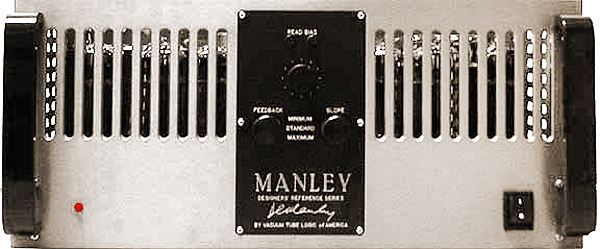
Manley is not a new company; it's the last name of the president and chief designer of VTL, David Manley, whose Model 300 has been my reference standard power amp for the past two years. In fact, Manley is not even a new brand name; it's the name of VTL's "deluxe" line of electronics, built (ostensibly) to industrial standards of ruggedness and reliability.


It's customary to think of "the tube sound" as being warm, rich, weak through the deep bass, fat through the midbass, forward through the midrange, bright through the middle highs, and soft at the extreme top, with superb rendition of depth and spaciousness. The "solid-state sound," by contrast, is generally thought to be cool, detailed, and pristine, with powerful deep bass, controlled midbass, rather reticent (laid-back) midrange and mid-highs, and a somewhat crisp high end, with variable (roulette-style) reproduction of depth and spatiality.

Audio Research Classic 60 power amplifier

"The only tubes that I want to see in my household are...the picture tube in my TV and the magnetron in the microwave oven," a Glendale, CA, reader recently wrote, and I guess his feelings reflect those of many when confronted by a supposedly "obsolete" audio technology. Forty years after the invention of the transistor and 20 after the widespread introduction of solid-state amplifiers (footnote 1), it must come as a shock to readers of the mass-market "slicks" that not only do a number of American manufacturers manufacture amplifiers and preamplifiers using tubes, but some of those companies—Counterpoint and Audio Research in particular—are among the more successful. It is the Classic 60 power amplifier from Minnesota-based Audio Research that is the subject of this month's lead-off equipment review.


VTL 225W Deluxe monoblock power amplifier

The VTL 225W DeLuxe monoblocks are very similar to the 300W monoblocks that received such an enthusiastic reception from J. Gordon Holt a year or so ago (in Vol.11 No.10) and, ultimately, most of the audiophile community. Technically, they differ only in output tubes and transformer: the 225W uses EL34s, the 300W uses 6550s. The 225Ws, at $4200/pair, cost $700 less than their more powerful brothers. The question may be raised: Why have two models so close in price and performance? According to David Manley, the 225Ws were built on special order for audiophiles who preferred the sound of EL34s to the 300Ws' 6550s. Demand was so great for the EL34 version that he decided to add it to the line. They look almost identical, the only difference being the smaller output transformer on the 225W and an additional filter capacitor on the 300W's top chassis.

Music Reference RM-9 power amplifier

666rm9amp.jpgDo you believe in beginner's luck? If so, some of your personality traits should be quite predictable. Let's see. You're very likely an optimist with a "bull-market" mentality, play the lottery, and, most important, bought a CD player within a year of its introduction, or a solid-state amp in the '60s. You're apt to mail in a profusion of bingo cards (you know, the kind Stereo Review is full of) and spend hours perusing specifications in the hope of finding a kernel of truth in all of that chaff. You'd particularly be appalled at that fellow I ran into the other day, who had bought an AR-1 in 1956 and waited another decade before buying another speaker—just to make sure stereo wasn't a fad. Hey, relax, I won't turn you in; the mere fact that you're reading Stereophile is sufficient reason for redemption.
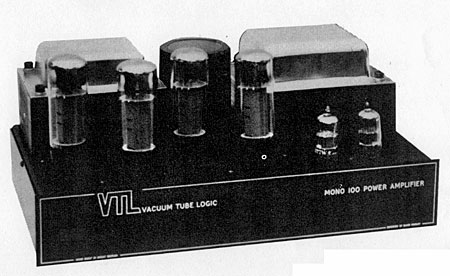
VTL 100W Compact monoblock power amplifier

The last time I was in England, I happened to be rummaging through some boxes in my mother's garage, boxes containing photographs, my old school books, concert programs, diaries, postcards—all the bric-a-brac you collect throughout your life that you'll never have a need for and can never discard. If anything, such rubbish is perhaps the nearest thing to roots that anyone can have these days. Among the boxes was an amplifier that had been an everyday companion of mine for many years, the vintage Vox AC100 I had used to amplify my Fender bass when on the road.
Advertisement
Advertisement
Advertisement