Music and Recording Features

Sort By: Post DateTitle Publish Date

Manfred Eicher: A Magnificent Obsession
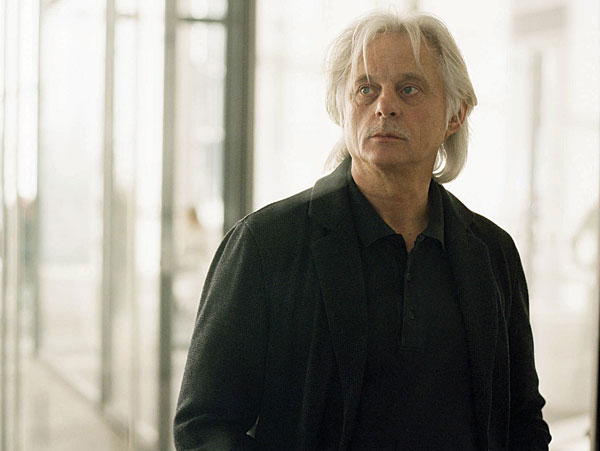
At a time when the heads of most record labels barely know how to play a record, let alone make one, Manfred Eicher—owner, founder, and inspiration of ECM Records, which celebrated its 40th anniversary in 2010—has been intimately involved in the making of nearly 1200 of them. How many, though, can he actually remember working on?


"When I listen back to them, I know the story of every record," he says without a smile or a moment's hesitation. "There is never an easy record. Every record needs a lot of input and concentration and dedication and passion to be made, that's clear. Create an atmosphere that is a productive search for music, and when this is the case, you have very memorable records."
The Fifth Element #61

The phrase "the mystic chords of memory" comes from Abraham Lincoln's First Inaugural Address. Of course, larger issues than those addressed in this column occupied most peoples' minds just then. But it is nonetheless worthwhile for us to spend a moment or two thinking about how differently people experienced music in 1861, compared to how things are today.


The Fifth Element #59

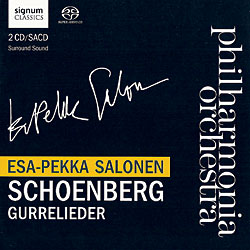
There's a fantastic new two-SACD/CD set of a demonstration-quality live recording of a rather obscure work you really should get to know, not only for its own merits, but also for what I believe is its underappreciated but major influence on music and on popular culture. The piece is by 20th-century composer Arnold Schoenberg, but trust me—it's more than "listenable." It (or, at least, the music on the first disc) is beyond engaging; it is compelling—a revelation, even. The work is Gurrelieder (Songs of Gurre), Gurre being a castle in medieval Denmark that was the setting of a real-life doomed love triangle, the story of which has since loomed large in the moodily brooding artistic consciousness of Danes. The 19th-century Danish poet Jens Peter Jacobsen wrote a collection of poems based on medieval legends, including this one, and a German translation by Robert Franz Arnold provided Schoenberg's dramatic texts.


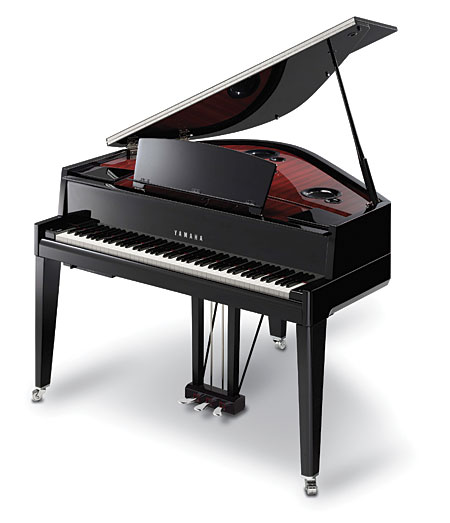
Yamaha’s Revolutionary AvantGrand Piano

As a musician who has studied of all forms of acoustic and electric keyboard instruments, I have played the gamut of keyboards, from gems to disasters. I think the most significant keyboard developments of the 20th century were the Hammond organ, the Fender Rhodes electric piano, and the Moog synthesizer. These instruments were notable not for their ability to replicate the sound of acoustic instruments, but for the new timbres and textures possible with them, which have since become permanent parts of our musical vocabulary. I have now played an instrument that may prove one of the most significant keyboard designs of the 21st century: the Yamaha AvantGrand N3.


Classic Arturo Delmoni Gold CD Available Again

Back when there was still something called the "classical music industry," one of Stereophile's favorite small labels was John Marks Records, masterminded by the magazine's "The Fifth Element" columnist, John Marks. In fact, it was his recordings that first brought John to the magazine's attention. JMR had a phenomenal run of releases, among them Arturo Delmoni and Meg Bachman Vas's Songs My Mother Taught Me, Nathaniel Rosen's cycle of J.S. Bach's Suites for Solo Cello, Delmoni and Rosen's Music for a Glass Bead Game, and the three Rejoice recordings of Christmas music for string quartet (also featuring Delmoni and Rosen). That's a pretty solid run for a label that released fewer than 20 recordings.

Listening #81

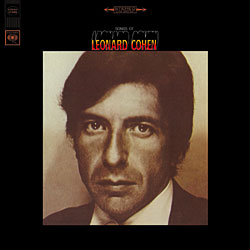
For an artform in which sound is everything, popular music has been blessed with strangely little poetry: There may be no other genre where high-mindedness falls with such a thud. Leonard Cohen remains the most striking exception, not just for the genuine seriousness of his music or the adulation of his audience, but for the ability of the former to survive the latter.


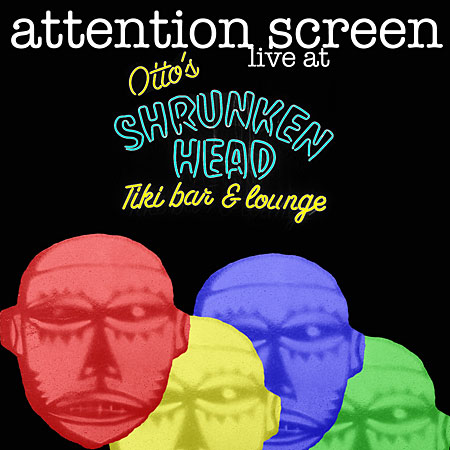
Live at Otto's: a New Stereophile Jazz CD

Released in July, Live at Otto's Shrunken Head (STPH020-2) is the latest Stereophile CD from reviewer Bob Reina's jazz quartet, Attention Screen. Unlike the group's first CD, Live">http://www.stereophile.com/musicrecordings/907att">Live at Merkin Hall (STPH018-2, released in 2007), which was recorded with multiple microphones, I captured the eight improvisations on Live at Otto's using a single pair of mikes.


The Fifth Element #54

Back when there were bricks-and-mortar retail record stores to speak of in tenses other than past, I used to participate in new-release conferences. Retail-store buyers—the people who decided whether consumers would see your CDs as they browsed in the stores—would gather at a nice destination, such as Lake George, New York. The various labels would then make presentations about their upcoming new releases.


Zappa Returns!

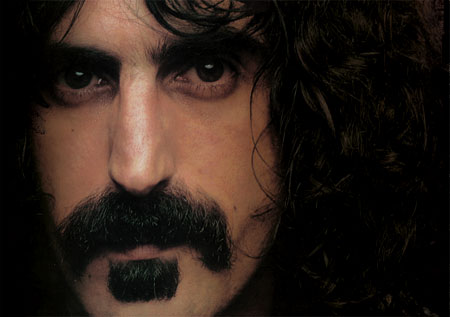
Frank Zappa was well known for a lot of things—his sharp satiric wit, his virtuoso guitar improvisations, his excellence as a bandleader, his fearlessness in combating hostile political forces and crooked record-industry executives. But Zappa is all too rarely given credit for his status as one of the most creative musical imaginations of the 20th century, regardless of genre.


Advertisement
Advertisement
Advertisement