Solid State Power Amp Reviews

Sort By: Post DateTitle Publish Date

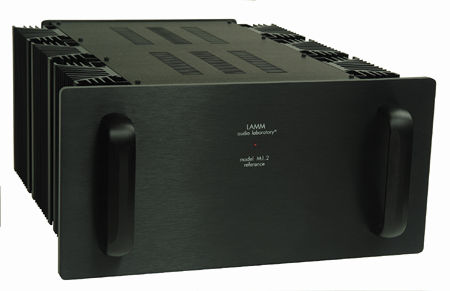
Lamm Industries M1.2 Reference monoblock amplifier

The "Reference" designation is thrown around a lot in the world of perfectionist audio. It's most often used to elevate the top of the line to a higher perceived status. Occasionally, as in the case of the VTL TL-7.5 line stage that I reviewed in October 2003, it genuinely denominates a component that is clearly superior to its competition in most aspects of performance.

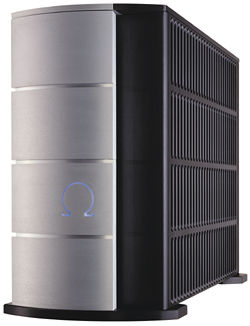
Classé Omega Omicron monoblock power amplifier

Non-audiophile friends and relatives raised their eyebrows when they saw the Classé Omega Omicron monoblocks. Not only is the Omicron more expensive than any other amp I've used; at 108 lbs, it's heavier than some of the speakers I've used. The Omicron is Class&#233's next-to-top-of-the-line amp in its Omega series, but is still definitely a "statement" product. Brian Damkroger reviewed the Omicron's big brother, the Omega Mono, in the July 2003 Stereophile. I refer you to that">http://www.stereophile.com/amplificationreviews/878">that review for a more detailed description of the Omicron's basic circuitry.


Halcro dm38 power amplifier

One of the highlights of recent Consumer Electronics and Home Entertainment shows has been the demonstrations of sound quality put on by Australian amplifier manufacturer Halcro with Wilson Audio loudspeakers. At my first exposure to one of these demos—described in my April 2002 "As">http://www.stereophile.com/asweseeit/557">As We See It"—enormous dynamic range was coupled with a grain-free presentation and almost holographic stereo imaging to produce a breathtaking sweep of sound. Paul Bolin reviewed Halcro's dm58">http://www.stereophile.com/amplificationreviews/683">dm58 monoblock in October 2002, and that amplifier was subsequently voted this magazine's "Amplification">http://www.stereophile.com/features/724/index2.html">Amplification Component of 2002" by our reviewers.


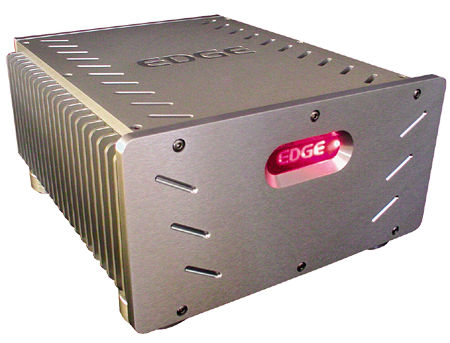
Edge NL-12 power amplifier

Consider the plight of solid-state muscle amps. Often derided as brutes lacking sophistication or subtlety, particularly by the SET set (ie, fans of single-ended triodes), these powerhouses are taken for granted and often, like Rodney Dangerfield, they get no respect. And once upon a time, the stereotypes were true. Every veteran audiophile has at some time heard an immensely powerful transistor amp that had the soft sonic allure of a sheet of sandpaper, a lumbering oaf of a component with nothing whatsoever to recommend it save for a bulging set of mighty moose muscles.


Theta Digital Enterprise monoblock power amplifier

Monoblock power amplifiers seem to be moving in and out of my listening room faster than green-onion salsa from Chi-Chi's. Over the past six months I've had the Parasound">http://www.stereophile.com/amplificationreviews/774">Parasound Halo JC-1, the Halcro dm68, the Pass">http://www.stereophile.com/amplificationreviews/1103pass">Pass XA-160, the Musical">http://www.stereophile.com/amplificationreviews/104mf">Musical Fidelity kW, and now these 300W (into 8 ohms), $4500-each beauties from Theta Digital. All of these amps sounded as different as they looked, which was no surprise; too bad the "measures the same, sounds the same" dogmatists remain open for business.


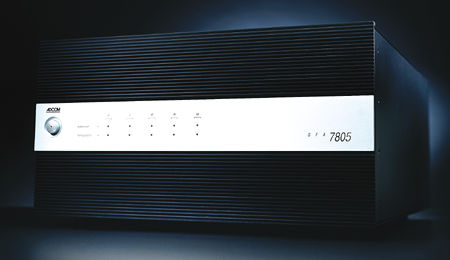
Adcom GFA-7805 five-channel power amplifier

For me, the iconic Adcom power amplifier was the GFA-555. As an aspiring audiophile, I was deeply impressed with Tony">http://www.stereophile.com/amplificationreviews/678">Tony Cordesman's review in Stereophile in 1985 (Vol.8 No.4). That did it! After years of kit-building and doing it myself, the '555 was the first factory-built amp that I wanted and could afford. Over the years, I changed speakers several times, and even added a fully regulated power supply to the '555, but it never balked. At the end of its tenure at my house, it had been demoted to my third-string backup; today it's making someone else tap his toes.


Advertisement
Advertisement
Advertisement