Stand Loudspeaker Reviews

Sort By: Post DateTitle Publish Date

Monitor Audio Studio 6 loudspeaker

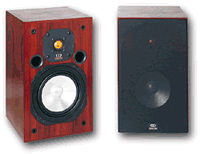
Back in the summer of 1968, I bought a secondhand pre-CBS Fender Precision Bass guitar for the grand sum of £35 (then about $75) (footnote 1). It was so cheap because the previous owner had pretty much scratched the sunburst finish to ribbons. The P-Bass may have looked like roadkill but it played like a dream, so I decided to refinish its body. Paint stripper removed the remains of the original nitrocelloluse lacquer, leaving me with a white wood body—ash, I understand—which I carefully sanded and stained. Contrary to what you might expect, the finish of an electric guitar does have an effect on the sound, so I thought long and hard about how I was going to varnish the body. I ended up applying thinned gloss-finish polyurethane, which I then sanded, repeating this process some five or six times, using finer and finer sandpaper, until the application of a final coat of varnish gave as close to a mirror-smooth finish as I could get...which wasn't anything near as perfect as the piano-lacquer rosewood finish on the samples of the Monitor Audio Studio 6 loudspeaker that Monitor Audio USA sent for review!


NHT SuperZero loudspeaker & SW2 subwoofer

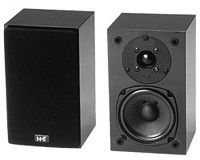
What makes someone a good hi-fi reviewer? A fine critical sensibility? A good technical background? Ears? Eyes? Nose? Throat? So many different people are reviewing audio gear these days that it's downright impossible to characterize a good reviewer. But I do know that Beavis and Butt-head would make killer hi-fi reviewers!


Rogers Studio 3 loudspeaker

Back in the early 1970s, the BBC needed a physically unobtrusive, nearfield monitor loudspeaker for use in outside-broadcast trucks. Accordingly, they instructed their design department, which at that time featured such luminaries as Dudley Harwood (the "father" of the polypropylene cone, who went on to found Harbeth) and the late Spencer Hughes (the "father" of the Bextrene cone, who went on to found Spendor), to produce such a model. Thus, not only was what was then probably the finest collection of British speaker-design talent involved in its development, there were no commercial constraints placed on the design. The only limitations were intended to be those arising from the necessarily small enclosure and the absence of the need for a wide dynamic range under close monitoring conditions.


Harbeth HL-P3 loudspeaker

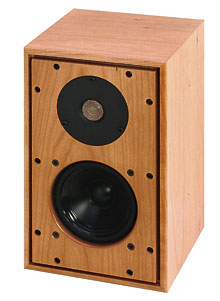
Back in the early 1970s, the BBC needed a physically unobtrusive, nearfield monitor loudspeaker for use in outside-broadcast trucks. Accordingly, they instructed their design department, which at that time featured such luminaries as Dudley Harwood (the "father" of the polypropylene cone, who went on to found Harbeth) and the late Spencer Hughes (the "father" of the Bextrene cone, who went on to found Spendor), to produce such a model. Thus, not only was what was then probably the finest collection of British speaker-design talent involved in its development, there were no commercial constraints placed on the design. The only limitations were intended to be those arising from the necessarily small enclosure and the absence of the need for a wide dynamic range under close monitoring conditions.


B&W Matrix 805 loudspeaker

This compact, $1600/pair monitor employs many of the same design features found in the company's highly rated Matrix 801 system. Although the price is high for a two-way minimonitor, the 805 fits right into a growing high-end marketplace for such designs, one which emphasizes high quality in a small enclosure which will fit into most living-room environments without calling much attention to itself.

Sonus Faber Minima FM2 loudspeaker

Imaging, imaging, imaging. That's what I thought when I first heard the Sonus Faber Electa Amators reviewed by Jack English last October. How could such small speakers create such a wide, deep soundfield? John Hunter, president of Sumiko, Ltd. and importer of Sonus Faber products, was amused but not surprised at my reaction. I did the natural thing and begged for a review pair.


Totem Acoustic Model 1 loudspeaker

The word totem is powerful in its own right. Totems have conscious and unconscious meanings, depicting powerful supernatural forces in nature and within us. Native Americans of the Northwest Coast tribes, starting with the Chippewa, or Ojibwa, used the term for the animals or birds associated with their clans. Tall wooden columns were carved with the clan totem, which could be a bird, fish, animal, or plant. Later, the Kwakiutls of the Pacific Northwest held feasts called Potlatches, during which poles carved with family and clan emblems were erected. Totems were also involved in worship and rites of passage. So elemental were the forces depicted by these symbols that Freud used totem to depict basic cultural laws, both spoken and unspoken, that guide daily behavior and proscribe what remains forbidden. It is fitting that the Totem loudspeaker reviewed here comes from Canada, the home of the enduring Kwakiutl Potlatch, where totems were so powerful.
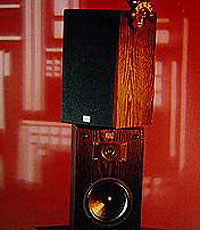

Sonus Faber Electa Amator loudspeaker

Solamente una faccia bella?
At first glance, the Sonus Faber (pronounced Fah-bear) Electa Amator appears to be a typical minimonitor: a small vented box with two drivers. The speaker is significantly better-looking than Franco Serblin's first speaker system, the Snail, a subwoofer with two satellites attached via arms (see photograph in Vol.11 No.3, p.34). And, like the Oracle Delphi turntable or Goldmund Apologue speakers (the latter also an Italian design), the Amator's appearance has received at least as much attention as its performance. But is it just another pretty face?


Advertisement
Advertisement
Advertisement