Stand Loudspeaker Reviews

Sort By: Post DateTitle Publish Date

Monitor Audio R300/MD loudspeaker
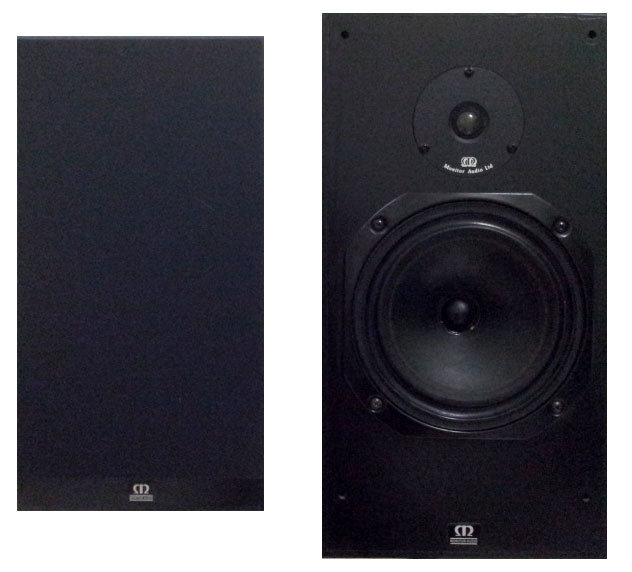
The Monitor Audio R300/MD ($669/pair) debuted at the 1988 SCES in Chicago. English company Monitor Audio is one of the pioneers in spreading the use of metal-dome tweeters in relatively low-cost loudspeaker systems. The tweeters they have designed in conjunction with SEAS and British manufacturer Elac may have now found their ways into a number of designs from competing manufacturers, but there is no doubt that Monitor leads the way. The new R300/MD features a new ¾" version of the SEAS 1" aluminum-dome unit Monitor introduced with their R652/MD (reviewed in Vol.10 No.5), in conjunction with an 8" doped paper-cone woofer.
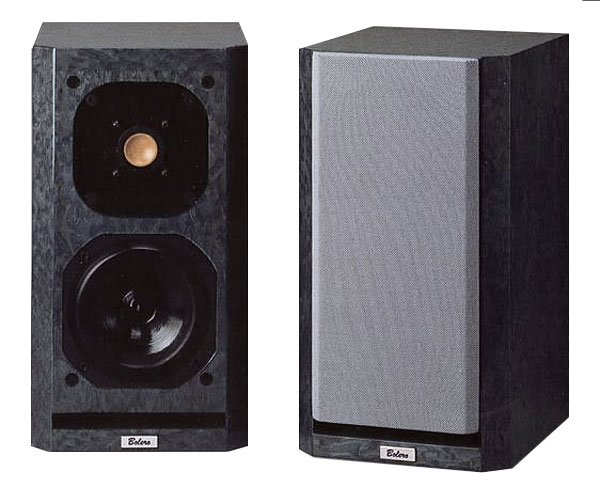
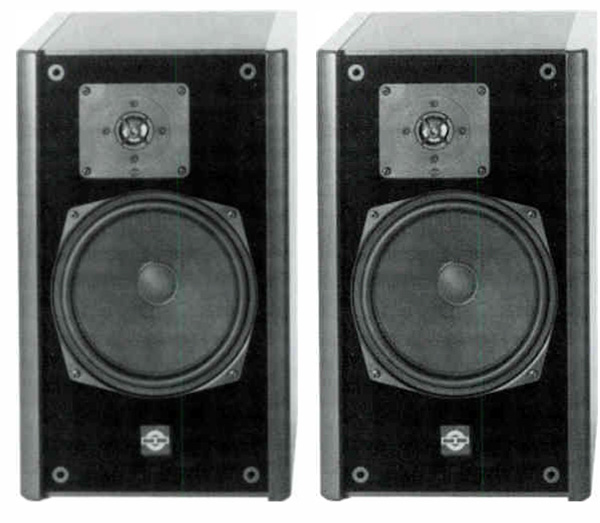
Acustik-Lab SR Bolero loudspeaker & Forte woofer

The Acustik-Lab SR Bolero loudspeaker ($1580/pair) debuted at the 1988 SCES in Chicago. I must own up right from the outset that I know nothing about the Swiss SR Trade (Acustik-Lab) company. I do know, however, that Audio Advancements' Hart Huschens was getting an intensely musical sound from their little Bolero speakers, driven by the German Klimo Kent tube amplifiers, at the 1988 Summer CES. I immediately asked for a pair for review; in addition, Mr. Huschens sent along a pair of the matching Bolero Forte woofers ($920/pair).

MB Quart MB 280 loudspeaker

A new name to me, West German company MB Quart GmbH is, in fact, the reincarnation of the Peerless loudspeaker company that until 1983 used to be owned by New York–based Electro Audio Dynamics (EAD). The company has been in existence for over 20 years and under either name has an excellent reputation for its drive-unit technology, MB being one of the first manufacturers to offer an OEM metal-dome tweeter. Their 1" titanium-dome unit, for example, was featured in Dick Olsher's Dahlia-Debra DIY design (footnote 1), and I became quite enamored of the effortlessly clean nature of that speaker's treble.

Wharfedale 507.2 loudspeaker

Probably best-known in recent years for their best-selling "baby" speaker, the Diamond, Wharfedale is one of the UK's oldest manufacturers of loudspeakers. The company was the subject of a management buyout earlier this year, following a rather unsettled period when it changed hands several times. Now with American distribution as of 1989 by Vector Research (footnote 1), the brand is reinventing itself in the US with two new ranges of loudspeakers, the 507.2 being one of the "audiophile" models. Both drive-units are made in-house; the first generation of Wharfedale loudspeakers to feature this 19mm aluminum-dome tweeter—the 506, 508, and 708—appeared in early 1985.

Celestion SL700 loudspeaker

"Who Stole The Bass?" asked Anthony H. Cordesman, writing about minimonitors in the April/May 1987 Stereophile (Vol.10 No.3). And for the designer of a box loudspeaker, the fundamental design decision, at any price level, is how much bass extension to aim for. It will always be possible to design a speaker with extension down to 20Hz, but will the result be musically and commercially successful? Will the designer end up with a speaker hypertrophied in that one area at the expense of every other? Will, indeed, the result be feasible technically? For example, for a given cabinet volume, gains in low-frequency extension have to be balanced against corresponding drops in sensitivity, and it is quite possible that to go for 20Hz extension will result in a 60dB/W/m sensitivity, equating with a speaker that only plays extremely quietly, and thus of no use to anyone.

Acoustic Energy AE1 loudspeaker

"Who">http://www.Stereophile.com//features/44/">Who Stole The Bass?" asked Anthony H. Cordesman, writing about minimonitors in the April/May 1987 Stereophile (Vol.10 No.3). And for the designer of a box loudspeaker, the fundamental design decision, at any price level, is how much bass extension to aim for. It will always be possible to design a speaker with extension down to 20Hz, but will the result be musically and commercially successful? Will the designer end up with a speaker hypertrophied in that one area at the expense of every other? Will, indeed, the result be feasible technically? For example, for a given cabinet volume, gains in low-frequency extension have to be balanced against corresponding drops in sensitivity, and it is quite possible that to go for 20Hz extension will result in a 60dB/W/m sensitivity, equating with a speaker that only plays extremely quietly, and thus of no use to anyone.


Plateau Camber 3.5 loudspeaker

The loudspeaker coming under the microscope this month emanates from north of the border. The Canadian loudspeaker industry has benefited enormously in the last few years from having the measurement, testing, and listening facilities of Canada's National Research Council in Ottawa made available to it on a commercial basis. Unlike the US or even the UK, where a new speaker designer has pretty much to rely on his own resources, having to invent his own test procedure as well as design the product, the Canadian equivalent can have his loudspeaker tested under standard conditions, quickly indicating whether he is on the right track or not. (He still, of course, has to rely on his own talent to get on the right track in the first place or to get back on it if it appears that something is amiss.)


Plateau Camber 3.5 loudspeaker RH's 1990 System

The loudspeaker coming under the microscope this month emanates from north of the border. The Canadian loudspeaker industry has benefited enormously in the last few years from having the measurement, testing, and listening facilities of Canada's National Research Council in Ottawa made available to it on a commercial basis. Unlike the US or even the UK, where a new speaker designer has pretty much to rely on his own resources, having to invent his own test procedure as well as design the product, the Canadian equivalent can have his loudspeaker tested under standard conditions, quickly indicating whether he is on the right track or not. (He still, of course, has to rely on his own talent to get on the right track in the first place or to get back on it if it appears that something is amiss.)


Epos ES 14 loudspeaker

Americans might be forgiven if they haven't heard of Epos. A small, British specialist loudspeaker manufacturer, it was founded in 1983 by its designer, Robin Marshall—an ex-BBC engineer and a onetime consultant to Monitor Audio, according to Roy Hall of Epos's US importer, Music Hall. Their first model, the ES 20, didn't make it to the US, and was apparently a bit too pricey in the UK to make much of a splash there (about £700, $1300 at the current rate of exchange—a mint in a country with the patent on sub-$500/pair (UK prices!) two-ways). In 1986 or thereabouts, the new, smaller ES 14 was introduced, using updated versions of the same drivers in a smaller, ported cabinet. Music Hall only recently began importing the Epos into the US.

Wilson WATT loudspeaker

Landmarks in speaker design have been few and far between. There are a few certain contenders: in the UK, the original Quad Electrostatic and the ESL-63 qualify, while the Celestion SL600 scored a big point for all small monitors; the Spendor BC1 changed forever the notion that cone speakers were always colored and that big boxes were essential for good sound. In the States, Apogee has taught us much with their surprising mid-treble ribbon-based designs. Other technologies have shown promise but have not achieved real commercial success.
Advertisement
Advertisement
Advertisement