

Spin Doctor #38: the Sorane ZA-12 tonearm and Parks Audio Waxwing phono preamp
In 1936, the great blues pioneer Robert Johnson recorded his song "Cross Road Blues," which many interpret as his telling the story of how he went to a crossroads and fell to his knees to make a deal with the devil, selling his soul in exchange for musical genius.
Spin Doctor #39: The History of the Technics SL-1200 Turntable
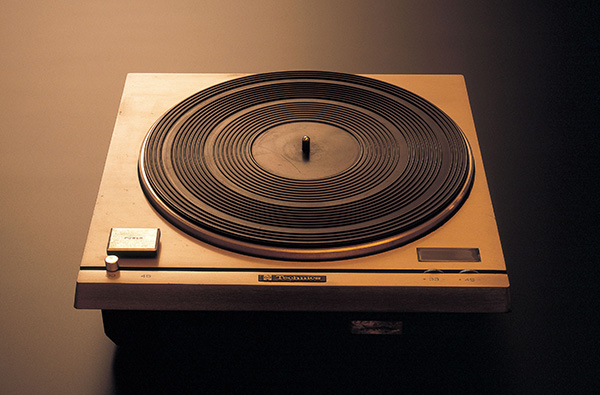
Technics introduced the world's first direct-drive turntable, the SP-10 (above), in 1970. It was aimed squarely at professional facilities like radio stations and not at deejays for club use. The SP-10 was a "motor unit"—just a spinning platter with no plinth or tonearm, which the user was expected to source elsewhere.
Spin Doctor #4: Platter Mats, Clamps, Weights & the Timerette
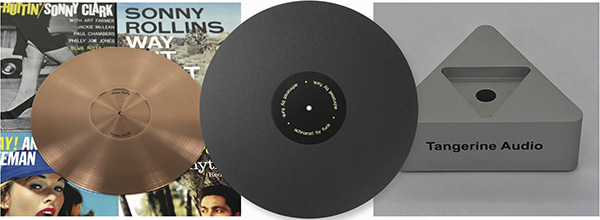
The next time you're preparing to play a record, try doing a little experiment. Once you have the record mounted and spinning but before you lower the stylus into the groove, lower your gaze to just below record level and look for a gap between the platter and the record. It helps if there's a light source or a brightly colored wall behind the platter. You may discover a gapthat very little of the record's playing area is making true contact with the platter mat or (if there is no mat) the platter. Another way to test this is to take a record you don't care much about, put it on the platter, then tap with your finger in the groove area listening for a click as your finger pushes the record down and it contacts the platter surface.
Warps obviously lead to such problems, but even records that appear flat make scant contact with the supporting surface. Turntable and aftermarket accessory designers have recognized this problem for decades.
Spin Doctor #40: Turntable Drive Mechanisms & the Esoteric T1 turntable
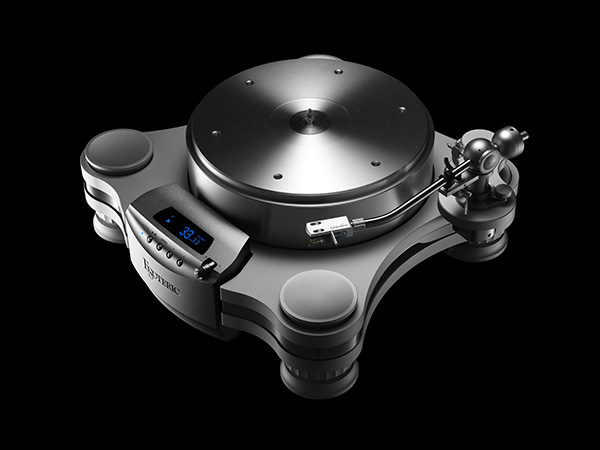
Making a turntable's platter spin at exactly 331/3 rotations per minute sounds like it should be an easy task, but in fact it's hard to do precisely. Just getting the platter to turn is easy enough, but there are two forces trying to stop the platter that you need to overcome: friction from the bearing that supports the platter, and friction from the stylus riding in the groove.
Spin Doctor #41: Diamonds are Forever, the Ortofon Vertex Cartridge
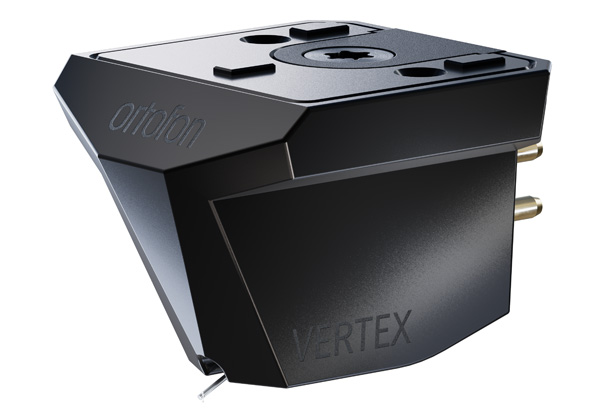
I'm far too disorganized to have kept an accurate count, but I'm pretty sure that at this point in my life I have installed or adjusted well over 5000 phono cartridges. These days I work on three or four turntables in a typical week and have been doing that consistently for the last 40 years.
Spin Doctor #5: Vertere DG-1S record player & Playing 7" Records the Right Way
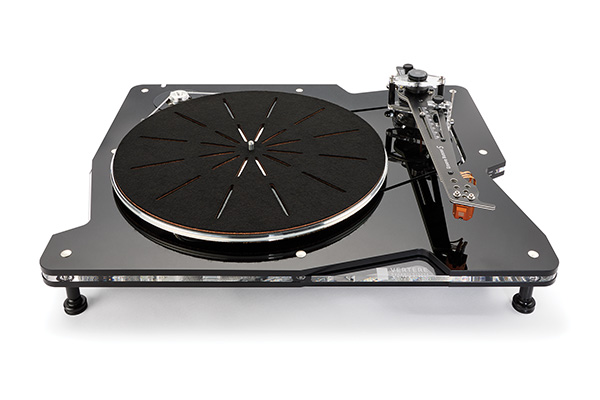
I have found that turntable designers typically fall into one of two camps. First are what I call the obsessive machinists. These are the people with impressive manufacturing chops and a sharp eye for fine detail and precision. For them, making a better turntable usually involves taking what we already know and simply doing it better.
Whether it's a thicker chassis, more powerful motor, more precise bearing, more effective isolation system, or something else, the emphasis is always on stepping things up a notch or two, rather than reinventing the wheel. This obsession can result in some impressive 'tablessome of the most impressive in the world, with awesome attention to detail. But are they the best sounding?
The other camp is what I call the deep thinkers. They approach the task of playing a record from a theoretical perspective and leverage their knowledge of physics to come up with fresh and innovative designs. The results may look unconventional, or even odd at first glance, but when such lateral thinking clicks, it can really push the boundaries of what's possible.
Spin Doctor #6: Rega Planar 3 50th Anniversary Edition turntable
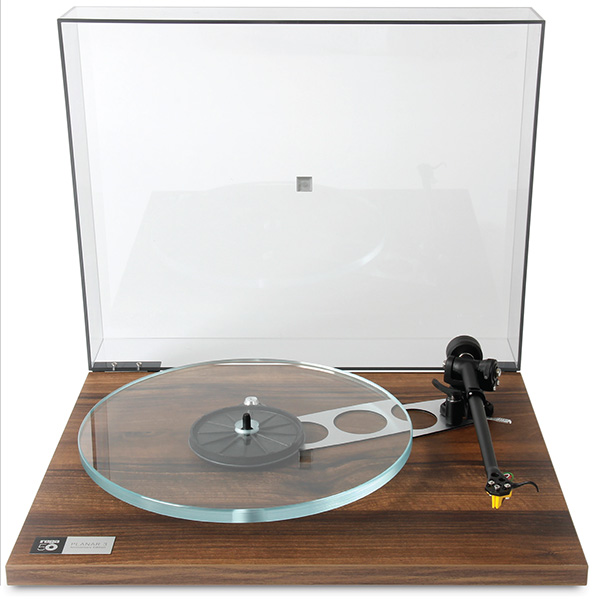
When I think about landmark years in the history of British hi-fi, 1973 sticks out. Three companies got their start in the first half of that year that went on to become cornerstones of the British audio scene: Linn Products, Naim Audio, and Rega Research. That means they're all celebrating their 50th anniversaries in 2023.
Spin Doctor #7: Korf Audio TA-SF9R tonearm, Zu Audio DL-103 Mk.II Rev B phono cartridge, Gates CB100 transcription turntable
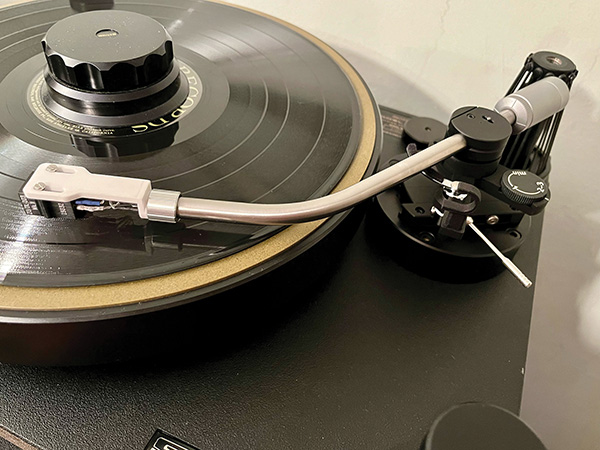
About four years ago, the stand-alone tonearm market went through a bit of a crisis. First, in December 2019, SME announced that it would stop selling tonearms separately, effective immediately. From that point on, SME tonearms would be available only in combination with SME turntables. . .
Five months later, in May 2020, we received the second blow in this double whammy of bad tonearm news. That's when the Ichikawa Jewel Company of Japan, maker of Jelco tonearms, announced without warning that they were shutting down operations, closing their doors for good. They blamed a combination of an aging workforce, worn-out tooling that needed to be replaced, and the coronavirus pandemic. . .
We lost two key players all at once, but it's not as if we suddenly had nowhere to turn for tonearms. Turntable manufacturers like Acoustic Signature, Clearaudio, Origin Live, Pro-Ject, Rega, and VPI all sell their tonearms separately . . . A number of smaller tonearm specialists have popped up in recent decades: Acoustical Systems, Graham, GrooveMaster, Kuzma, Reed, Schick, Schröder, and at the ultrahigh end, Swedish Analog Technologies. Now we can add Korf Audio to the list.
Spin Doctor #8: The Wand 14-4 turntable, and a Visit to SME
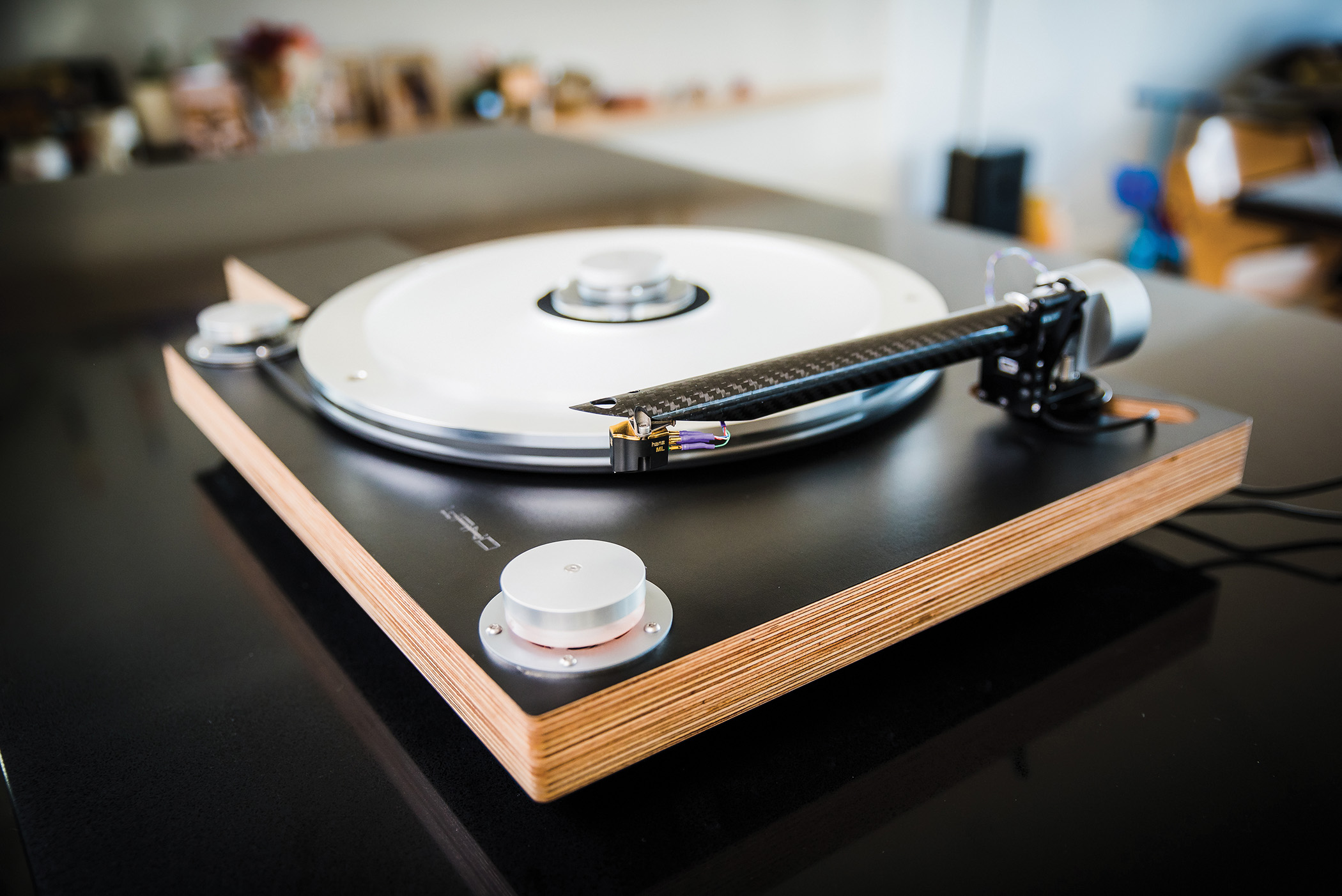
Photo by Himanshu Ratnaka
In prior screeds, I have discussed the category of turntable designers I like to call deep thinkers, who twist their brains to come up with fresh thinking about how to approach the task of playing a vinyl record. If there is a poster boy for deep thinkers, it's got to be Simon Brown.
Brown is based on the South Island of New Zealand. I'm thinking that being in such a far-flung part of the world must have given his head plenty of space to get creative. First, in 2011 he created The Wand tonearm, a striking unipivot design that features a fat carbon-fiber armtube nearly 1" in diameter (below). Art Dudley wrote about The Wand in 2019, and I highly recommend that you read his thoughts, especially about his struggles to set up The Wand.Spin Doctor #9: Soviet-era Hi-Fi & 2 Aidas phono cartridges
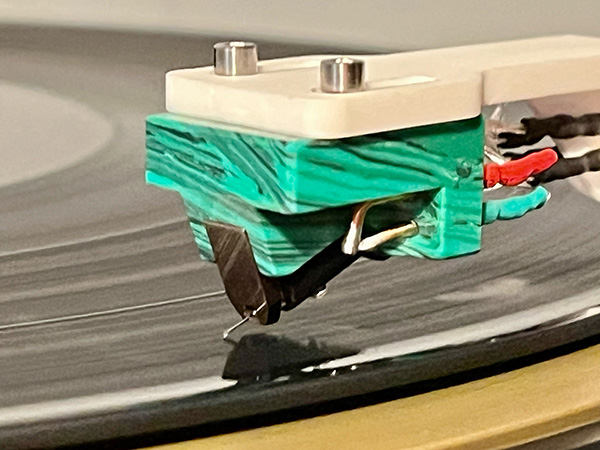
In 1985, I visited what was then known as Soviet Estonia with my family. My paternal grandparents, Mimi and Pop, had emigrated to the US from this small Baltic country in 1929. Fifty-six years later, after more than a decade of rejection, the family was granted permission by the Soviet authorities to visit our ancestral homeland, and the whole family, including Mimi, made the trek. (Pop died in 1962.)
Once we were there, we were more or less free to move around in the capital city Tallinn, but leaving the city was strictly forbidden, except as part of a planned group excursion with our KGB minderser, "Intourist guides."