

Analog Corner #288: I've Been Everywhere
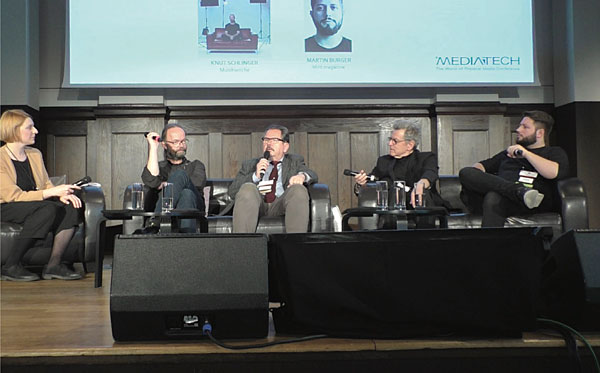
I went everywhere!
Attending the two-day Making Vinyl Berlin B2B conference on May 2 and 3, 2019 was an obvious decision for me, even if Day 1's "Physical Media World Conference" panel discussion was more about optical digital media than it was about analog vinyl.
Analog Corner #289: Ortofon Anna Diamond MC phono cartridge
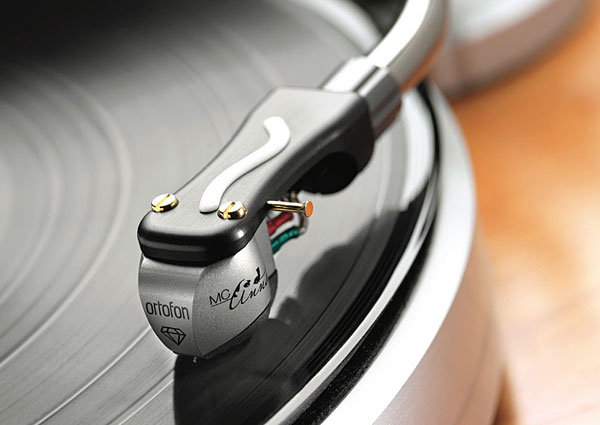
As I was doing a final edit on this column, I received very sad news from Leif Johannsen, the chief officer of acoustics and technology for cartridge manufacturer Ortofon A/S: Kim Petersen, described by Johannsen as his "right hand and new cartridge design and listening partner" and the company's "top cartridge expert," passed away suddenly at age 52.
Analog Corner #290: The Haniwa LP Playback System
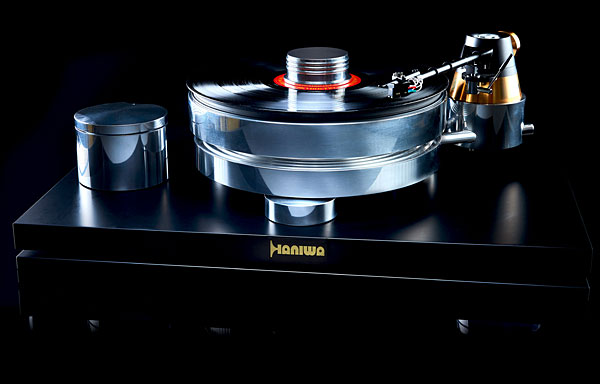
Haniwa's Dr. Tetsuo Kubo is an interesting fellow. If you go to shows, domestic or overseas, you've possibly encountered him in his room a space known for being strewn, shrine-like, with LPs that once belonged to The Absolute Sound's founder, the late Harry Pearson: Dr. Kubo was a fan.
Analog Corner #291: SME Synergy LP player, Boulder 508 phono preamplifier
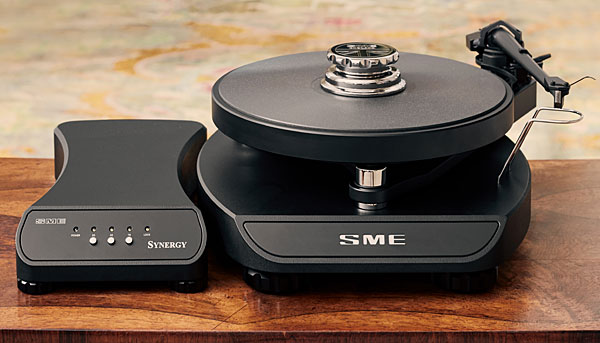
Since acquiring SME in late 2016, Ajay Shirke's Cadence Group has moved cautiously. First, it revamped and cleaned up the company's somewhat chaotic worldwide distribution. More recently, the new owners eliminated from the bottom of the line the SME Model 10 turntable, introduced in 2000.
Analog Corner #292: AVM R 2.3 turntable, Miyajima Destiny phono cartridge, Sutherland Phono Loco phono preamplifier
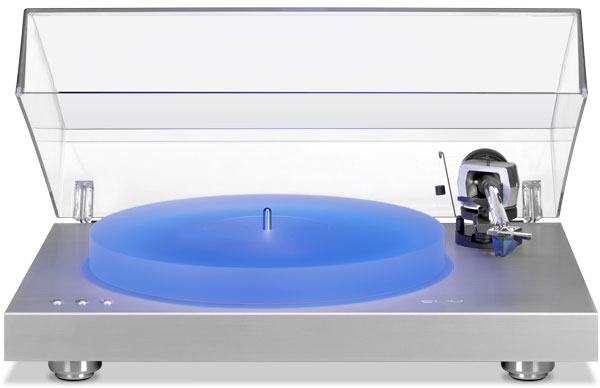
AVM Audio, which has been in business since 1986 (footnote 1), chose last year to enter the turntable market with two models that reflect the company's brushed-aluminum/blue LED visual aesthetics.
It doesn't take a forensic turntable scientist to figure out who manufactures both of those turntable models. Clearly, Pro-Ject does (footnote 2)although some audiophiles might recognize only a few key parts. Other elements, especially the two different tonearm models, may appear unique to AVM, having been built to their specs.
Analog Corner #293: VPI HW-40 40th Anniversary Edition turntable & FatBoy tonearm
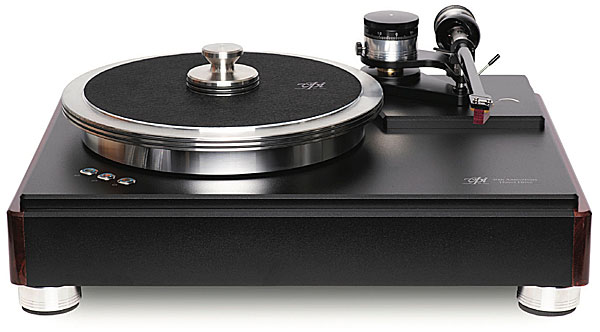
Judging by VPI's new HW-40 direct-drive turntable, middle age well suits the company that Harry and Sheila Weisfeld started 40 years ago in their Howard Beach, Long Island, basement.
Analog Corner #294: TechDAS Air Force One Premium turntable & Graham Engineering Elite tonearm
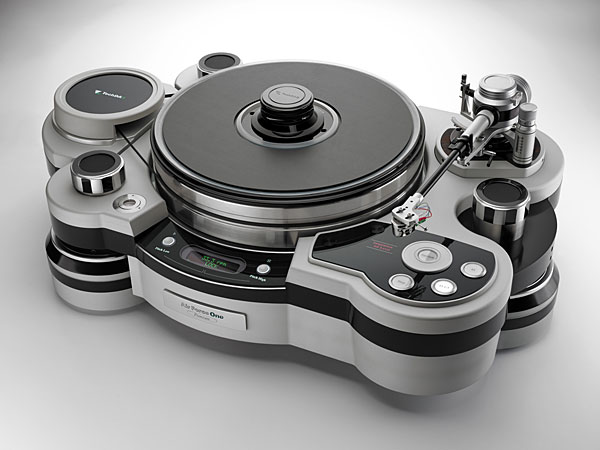
In 2013, when I first wrote about it (footnote 1), the TechDAS Air Force One ($105,000) was that company's best and most expensive turntable; it joined the handful of products that have earned an A+ in our semiannual Recommended Components featurea rating that remained in place for six years. But too much time has passed since the Air Force One was auditioned by a Stereophile writer, so it has now fallen from that list.
Analog Corner #296: Grado Epoch3, Lyra Atlas Lambda SL, Ortofon MC A Mono phono cartridges
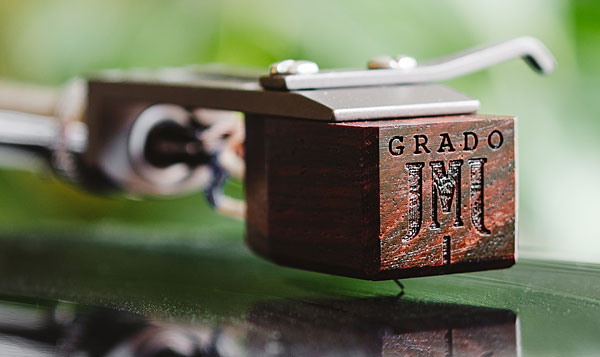
We're 30 years into a cartridge design revolution, particularly at the top end of the market, where manufacturers charge upward of $10,000 for their best efforts: prices that well-off consumers have amply proved they are willing to pay. There doesn't seem to be an innovation end in sight.
Analog Corner #297: van den Hul The Grail SE+ phono preamplifier & SAEC WE-4700 tonearm
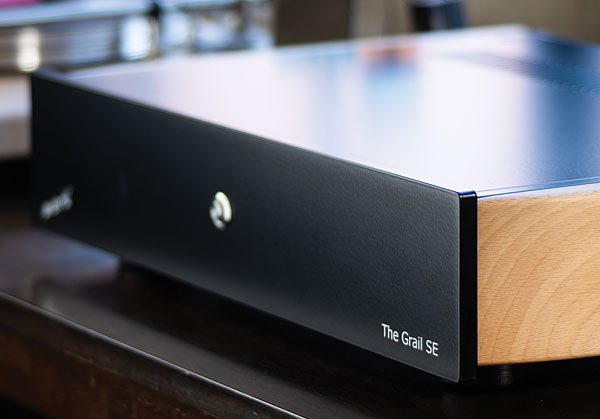
The catastrophic February 6 fire at the factory where Apollo Masters produced LP-mastering lacquersflat aluminum discs covered with nitrocellulose lacquerwill be old news by the time this column gets to you, but the repercussions of the loss will be ongoing for at least the next year and probably beyond.
Analog Corner #298: Reed Muse 1C turntable and 5T tonearm
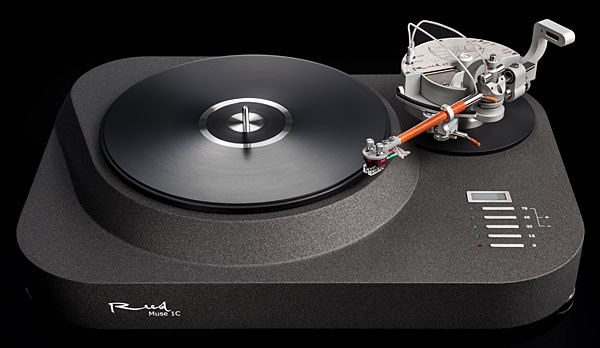
At the 2017 Hong Kong High End Audio/Video Show, I found myself sitting next to a turntable manufacturer who shall remain anonymous. A Reed Muse 3C turntable ($20,000) with 3P tonearm sat on a display table across from us.