

Miles of Miles and Ella
I’ve published two music articles elsewhere in the past couple weeks.
Miles on MoFi (45rpm)
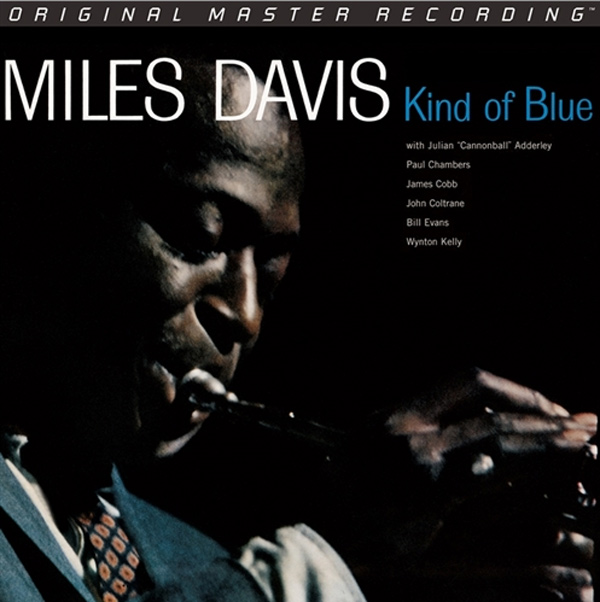
Mobile Fidelity's two-LP, 45rpm reissue of Miles Davis' Kind of Blue is one of the most eagerly awaited audiophile jazz reissues, which may seem strange given how many reissues already exist. Yet the 1959 album is that rare thing in any art form: an accessible, popular work (it's the best-selling jazz album of all time and continues to sell thousands of copies a year) and also an artistic breakthrough (marking a shift from harmonies based on chord changes at set intervals to those loosely patterned on scales). And Columbia's original six-eyes stereo pressing, miked by Fred Plaut, stands as one of the greatest-sounding studio jazz albums too.
Mingus & Pepper
I have a http://www.nytimes.com/2007/07/29/arts/music/29kapl.html?_r=1&ref=arts&…; story in the Arts & Leisure section of today’s New York Sunday Times about Charles Mingus and Art Pepper—specifically about the happy accident that these two famously self-absorbed jazz legends married women who became equally absorbed in preserving their legacies.
Mingus on DVD
I haven’t watched all seven of Naxos’ Jazz Icons discs—a DVD box-set of televised European concerts by great jazz musicians in the 1960s—but one of them, Charles Mingus: Live in ’64, is a must-have: two hours of music, videotaped in Belgium, Norway, and Sweden in April 1964, featuring one of Mingus’ most electrifying sextets, including Eric Dolphy, Clifford Jordan, Johnny Coles, Dannie Richmond, and Jaki Byard.
Moaning over Moanin'
Be careful, the old saw has it, what you wish for. For a long time now, many of us boomers have wished that the mainstream record companies would rediscover the glories of the vinyl LP. Now, a few of them are doing just that. Sony has released new 33-1/3 rpm slabs of vinyl from Columbia’s classic jazz catalogue—Charles Mingus’ Ah Um and a bonus LP as part of the deluxe box commemorating the 50th anniversary of Miles Davis’ Kind of Blue. Blue Note has gone further still, reissuing a dozen of its old titles in vinyl, packing both a CD and an LP inside the 12” record jackets, presumably so you can hear a comparison.
Monk Day
I forgot to note Thelonious Monk’s 90th birthday on Oct. 10. Some advice for a lifetime: If you come across people who doubt his mastery as not only a composer but also a pianist, don’t trust their judgment on anything. Linked below, from the early-to-mid ‘60s, is an especially Monkish clip.
Moran, Potter, Grenadier, Harland
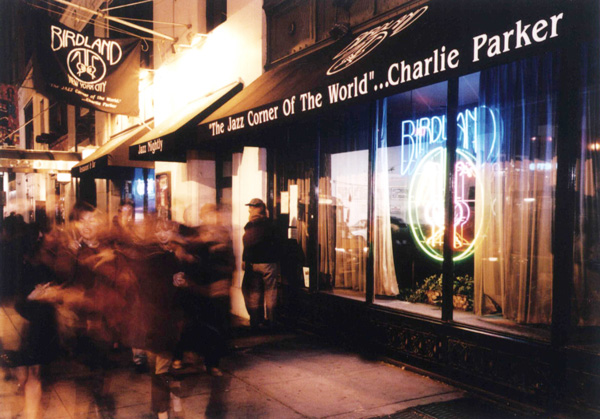
Photo: Michael Black | BLACKSUN©.
If you’re in New York City and don’t mind the snow (which resumed Friday), go to Birdland in midtown and see the Overtone Quartet, which features Jason Moran, Chris Potter, Larry Grenadier, and Eric Harland. They’re as good as you might expect, better even. They play through Sunday night.
Mosaic's Complete Ahmad Jamal Trio
I’ve never been crazy about Ahmad Jamal. His piano style has struck me as patio-cocktails jazz—nice harmonies and rhythm, but soft-spoken, too precious, de-sensualized.
Motian the Magician
I don’t know what Paul Motian’s doing, I don’t understand how he’s doing it, all I know is that it’s wonderful. I’ve just returned from seeing the Motian 3 at the Village Vanguard, a high-powered trio that consists of Motian, Jason Moran, and Chris Potter (and no bassist to hold the anchor). Moran, just shy of 33, is, as I’ve written many times, the most extraordinary jazz pianist around. Potter, 37, as I’ve noted a couple times, is a tenor saxophonist with a galvanic tone and fleet agility. But Motian, at 76 (older than both of his trio mates combined, playing topnotch jazz since his days with the Bill Evans trio a half-century ago, and more combustive now than ever), is the heart-racer.
Motian-Lovano-Frisell
The trio of Paul Motian, Joe Lovano and Bill Frisell finishes a two-week gig at the Village Vanguard this Sunday, and if you’re in the New York area, you should drop in (though call ahead for tickets, as nearly every set, including the one I saw last night, has been packed). Here are three of the most creative jazz musicians around, each playing at the top of his game, a combination that doesn’t always make for the most coherent combos (think of the many “all-star bands” of yore that amounted to little more than blowing contests), but this trio is that rare thing, a truly equilateral triangle: no player consistently dominate, all parts are equal.