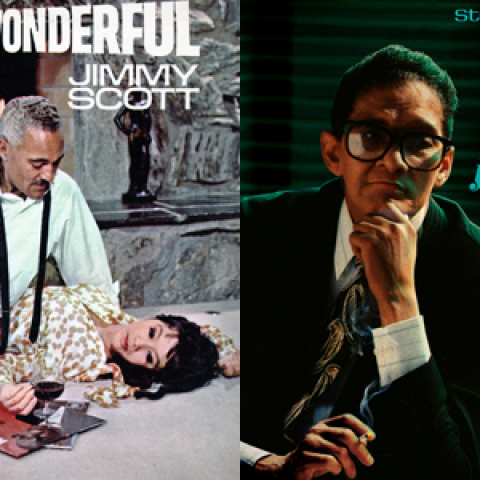
Be careful, the old saw has it, what you wish for. For a long time now, many of us boomers have wished that the mainstream record companies would rediscover the glories of the vinyl LP. Now, a few of them are doing just that. Sony has released new 33-1/3 rpm slabs of vinyl from Columbia’s classic jazz catalogue—Charles Mingus’ Ah Um and a bonus LP as part of the deluxe box commemorating the 50th anniversary of Miles Davis’ Kind of Blue. Blue Note has gone further still, reissuing a dozen of its old titles in vinyl, packing both a CD and an LP inside the 12” record jackets, presumably so you can hear a comparison.
In all cases, the LPs were remastered form the original analogue tapes. Good people were involved in the work. So why do the albums sound so blah?
They don’t sound bad, just entirely uneventful. The Blue Note LPs sound hardly different from the accompanying CDs, and I don’t mean this as praise for the CDs. They sound two-dimensional: no harmonic richness, no depth, none of the you-are-there magic that one hears in the original pressings of these albums or in several previous reissues by the audiophile labels, especially Classic Records or Analogue Productions. So one must ask: What’s the point? Why did the producers bother embarking on these projects? More dismaying, why would any consumer, listening to both the CD and the LP, get the slightest bit excited about vinyl?
Are the record companies just engaged in trend-spotting? Several mainstream newspapers and magazines have run stories in the past several months about a resurgence in vinyl, but the reporters have tended to cover the phenomenon as another instance of retro cool, like Mad Men or the return of Che Guevara T-shirts. There has been little assessment of the claim that—a quarter-century into the digital era, for all the vast improvements in CDs and CD players—a really well-made LP still sounds better.
I’m one of those who make this claim, though, I must confess, I spend a lot more time spinning aluminum than vinyl (especially to hear new music); I love the sound of vinyl, I don’t have a fetish for the object. If someone were to digitize my LPs without sacrificing any sound quality, I’d unload them in a minute. (Don’t worry, Fremer; I’d call you first.)
By coincidence, one of the Blue Note titles—Moanin’ by Art Blakey and the Jazz Messengers—was also reissued on LP, around the same time, by Analogue Productions, and the comparison…well, there is no comparison. Granted, the AP pressing is mastered at 45 rpm and laid out on two slabs of 180-gram vinyl (it also costs twice as much as the EMI/Blue Note reissue and doesn’t come with a bonus CD), but the difference is vaster than even the technology might suggest. In fact, Moanin’ is the best-sounding title I’ve yet heard in AP’s series of Blue Note 45s. The horns are 3D, the trapset is crisp, the bass sounds like wood, there’s air everywhere, you’re in the room. And it also happens to feature the best Jazz Messengers that Blakey ever assembled, including Lee Morgan on trumpet, Benny Golson on tenor sax, and Bobby Timmons on piano.
If you want to hear what “the Blue Note” sound sounded like, get this Moanin’. That goes for the corporate guys at modern-day Blue Note, too.
PS: I don't mean to suggest that only bona fide audiophile companies are capable of mastering a good LP (though the art does stand in danger of becoming a lost one). European branches of major labels, such as Warner Bros., have been putting out excellent-sounding LPs for several years. Some rock bands, such as Radiohead, release their new albums on vinyl as well as CD, with terrific results. So Sony, Blue Note: What's up?