

VPI–AudioQuest Event in New Jersey Friday
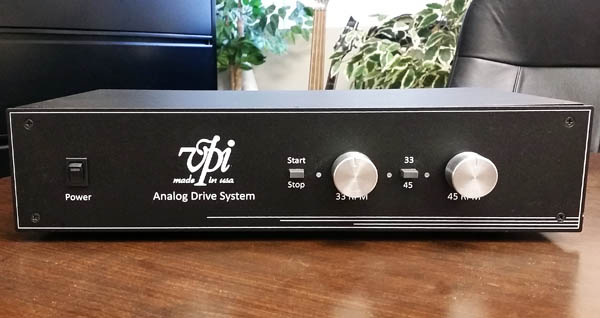
Friday May 20, from 2-10pm, Hi-Fi Sales (1732 Route 70 East, Cherry Hill, NJ 08003) is hosting an event in which audiophiles can get their first look at VPI's brand new ADS (Analog Drive System) speed controller
VQF Digital Audio Format Enjoying Renewed Interest
Fans of Macintosh computers and Betamax videotape are fond of pointing out that in the free market, the best technologies don't necessarily win. That scenario may be playing out again in the case of VQFhttp://www.vqf.com/">VQF;, a digital audio transfer and storage technology originally developed several years ago by Nippon Telegraph and Telephone.
VSAC 2008 For Everyone
After a four-year hiatus, the Vacuum">http://www.vsac2008.com">Vacuum State of the Art Conference and Show has been resurrected. Scheduled for next weekend, May 24–26, at the Hilton Hotel in Vancouver, Washington, just across the river from Portland, Oregon, VSAC owes its renewal to audio enthusiasts and software company owners Carolyn S. and Michael Kilfoil, who have taken over from founders Dan and Eileen Schmalle.
VTL Siegfried II monoblocks, Wilson Alexx V, Nordost QNet Switch, and more
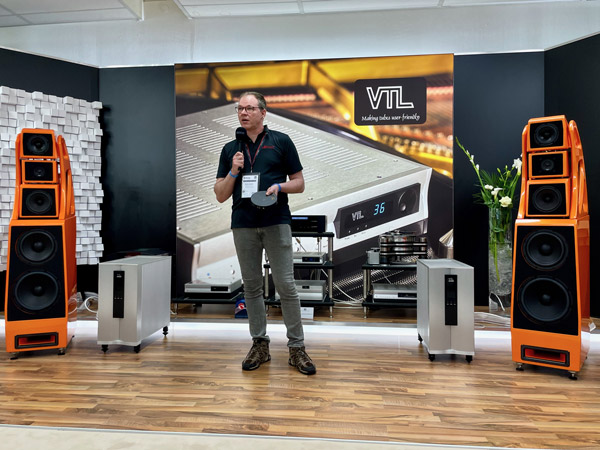
New components in Wilson's other eye-candy exhibit may have been limited to the new Nordost QNet 5-port internet switch and QSource Linear Power Supply, but that didn't prevent a miracle from happening. In a room that D'Agostino's Bill McKiegan had warned me rarely delivered good sound, VTL's Siegfried II Series II monoblocks and top-level line TL 7.5 Series III and TP 6.5 Series II preamplifiers, seen here with Nordost’s Dennis Bonotto, sounded extremely musical and inviting.
VTL/Wilson/Transparent at Innovative Audio: Selling “Happy”
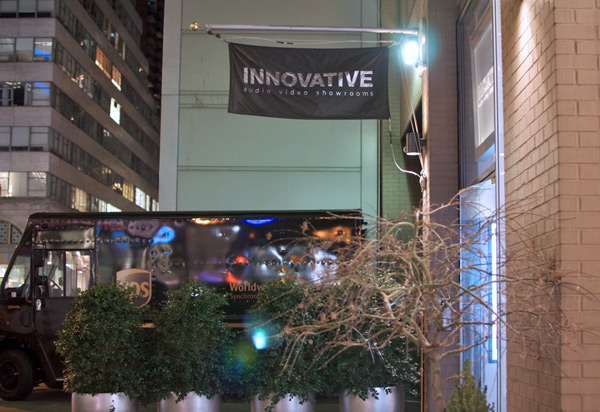
Photo: Jim Austin
"'Happy' is our primary product," Elliot Fishkin, the proprietor of Innovative Audio, which is entering its 45th year of business, told visitors early Thursday evening, January 21. "We want you to be able to be connected to the music in profound ways." A small crowd was gathered in the lobby outside Innovative's newly renovated showrooms, in an expansive underground space on the east side of Manhattan, to hear amplifiers by VTL, cables by Transparent, and loudspeakers by Wilson Audio.Wadax at AXPONA 2026
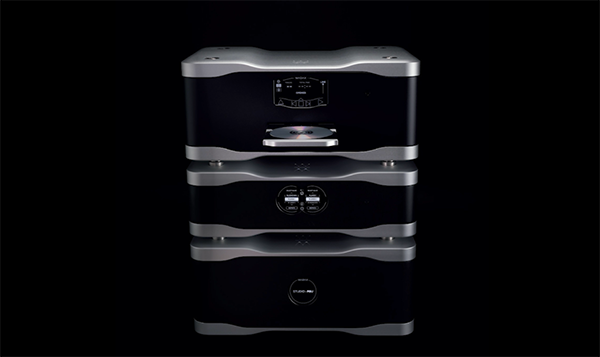
In the first of his two bonus AXPONA 2026 videos, Ken Micallef speaks with Wadax Director of Sales and Marketing Brandon Lauer about the company's Studio Player Collection, which includes the Studio Player SACD/CD player, DAC, and streamer; Studio Clock; and Studio PSU.
Wadia Announces Launch of iPod Dock with S/PDIF Output
Wadia Digital, Inc. announced that it will debut the $349 iTransport iPod dock in Las Vegas at the Consumer Electronics Show (CES) January 7, 2008. Certified by Apple as "Made for iPod®," the iTransport bypasses the iPod's internal D/A conversion to output an S/PDIF signal, "providing CD-quality resolution from full-resolution from file formats such as .WAV and [Apple Lossless]."
Wadia Auction Postponed for Two Weeks
The public auction of the assets of Wadia">http://www.wadia.com/">Wadia Digital Corporation has been postponed for at least two weeks, according to an employee of the Minneapolis law firm Siegel, Brill, Greupner, Duffy & Foster, P.A., which is handling the liquidation.
Wadia Digital and Hales Design Group Join Forces
Merger mania in high-end land: Loudspeaker manufacturer Hales">http://www.halesdesigngroup.com/">Hales Design Group and digital audio manufacturer Wadia">http://www.wadia.com/">Wadia Digital Corporation are joining forces to create what the companies' executives are calling "new digital products for the new millennium." The announcement was made February 14 at Wadia headquarters in River Falls, Wisconsin.
Wadia Returns as Division of Audio Video Research
Briefly gonehttp://www.stereophile.com/news/10843/">gone; but not forgotten, Wadia Digital will return as a division of Audio Video Research, Inc. (AVR) of Ann Arbor, Michigan, a new company formed in December, 2000 by combining the assets of Wadia and Digital Imaging Corporation. Wadia products, including the 861 and 831 CD players and 27ix processor, will be shown at CES in January, 2001.