

Remembering Kurt Sanderling

Kurt Sanderling died on September 17 in Berlin, just two days shy of his 99th birthdayof "old age," according to his eldest son Stefan. Sanderling was the last of a generation of conductors displaced by Hitleran exodus that included Otto Klemperer, Josef Krips, Sir George Solti, Erich Leinsdorf, Bruno Walter, who all went West. (Never mind that Klemperer had converted to Catholicism and that Krips was half-Jewish.) Sanderling fled East, to the Soviet Union.
Remembering Record Producer James Mallinson
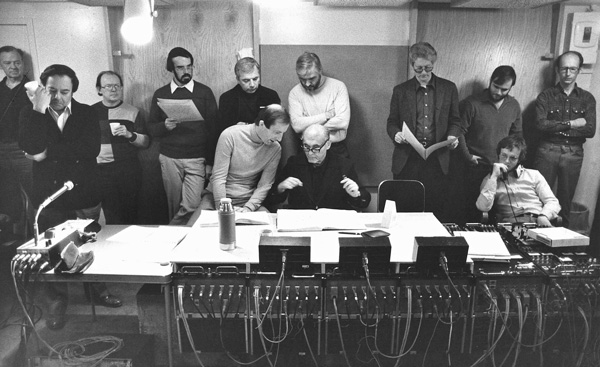
James Mallinson confers with Sir Georg Solti during playbacks for Mahler's Symphony No.3 in Chicago's Orchestra Hall in November 1982, from the CSO Archives
Legendary British record producer James Mallinson, whose close to five decades of work with Decca/London, Telarc, and the labels of the major orchestras in London, Chicago and St. Petersburg, died unexpectedly on Friday night, August 24. He leaves behind, in addition to his beloved wife and son, an estimable recorded legacy that earned him no less than 16 Grammy Awards and 49 Grammy nominations.Remembering Vern Credille of Wilson Audio Specialties
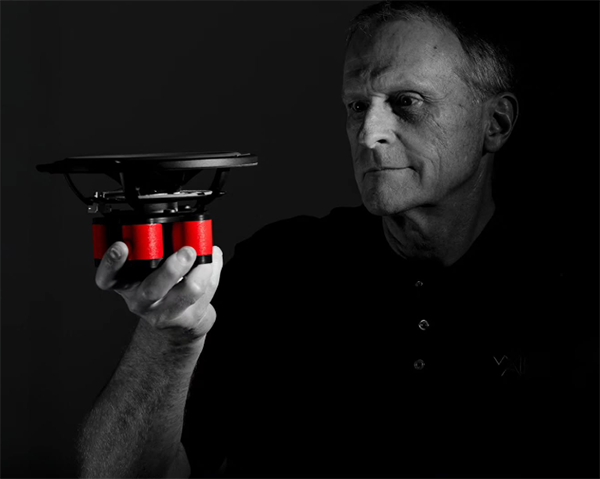
Electrical engineer Vern Credille, 65, who spent more than three decades working alongside Wilson Audio founder Dave Wilson and, later in his career, Daryl Wilson, Dave's son and successor, died of cancer on Friday, June 12.
Remembering Yoshiaki Sugano
The creator of Koetsu phono cartridges passed away on Sunday, January 20, 2002, just a couple of months short of reaching the age of 95. A wake was held in Chiba, Japan on January 22; the funeral took place on the following day.
ReQuest Unveils Home Stereo MP3 Unit at MP3 Summit99
The MP3 audio format has been rapidly gaining a solid reputation in the last several months. Portable products such as Diamond">http://www.diamondmm.com/">Diamond Multimedia's Rio have hit the market, and websites (typified by MP3.com) have gained financial success. (See related">http://www.stereophile.com/news/10358/">related story.) But one area that has so far lagged is MP3-based playback and recording equipment for using the files at home without moving a computer next to the stereo.
Requiem For a Record Store
On Friday, January 20, five different friends forwarded Chris Morris' The Hollywood Reporter column on the closing of LA's Westwood Boulevard Rhino Records store. Established in 1973, the record store closed its doors on January 19 (although it staged a parking lot sale on January 21 and 22). Rhino owner Richard Foos blamed the store's demise on a number of factors, including pricing competition from national chains, the lack of demand for "a physical product," and "too many other things to do and too many ways to get your music without paying $18 for a CD."
Resistance is Futile
As any major college dude will tell you, the file-sharing genie can never be put back into the digital audio bottle. But that hasn't stopped the music business from pursuing its scorched-market policy while simultaneously applying various use-restriction technologies to every digital audio format in sight.
Resolution AV Debuts Fyne Audio in Red Hook, Brooklyn, NYC
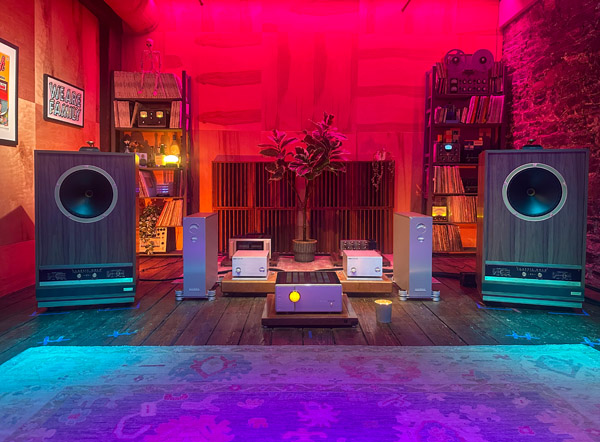
On Thursday January 30th, the frigid landscape of Red Hook, Brooklyn, was the site of several audio-focused debuts. Adam Wexler's Resolution AV, a purveyor of high-end audio, celebrated its grand reopening, showcasing new products from Fyne Audio. Fyne Audio CEO Max Maud and Harmonia Distribution Vice President Jesse Luna were on hand to introduce the new products and answer questions.
Restricting CDs, Version 5
The digital audio genie was released two decades ago, before the music industry imagined any need to restrict how music files on a compact disc might be used. The last few years, however, have seen myriad attempts to redesign the digital audio bottle, and then shove the genie back in—with limited success.
Retail Bouncing Back?
Retail may be bouncing back. Best Buy, North America's number one electronics chain, reported an 18% gain in total sales for its third quarter ended November 29. The Richfield, MN–based operation posted $6.03 billion in total sales, with same-store sales up 8.6%.