

Listening Party: The Capital Audiofest and DCAudioDIY

Saturday, February 23, 16pm: The Capital Audiofest and DCAudioDIY will hold a listening party at Capital Audiofest founder Gary Gill’s home, in Fells Point, Baltimore.
ListenUp's Music Matters in Denver Wednesday & Thursday

Wednesday April 24 and Thursday, April 25, starting at 5pm, Denver high-end audio retailer ListenUp (685 South Pearl Street, Denver, CO 80209, (303) 778-0780) is presenting its Music Matters 2019. Titled "Mastering the Art of Sound," the event will celebrate what's next in sound and the keynote speaker will be Stereophile's erstwhile Editor and now Technical Editor John Atkinson.
Live Web Streaming Wednesday of Jazz in the New Harmonic
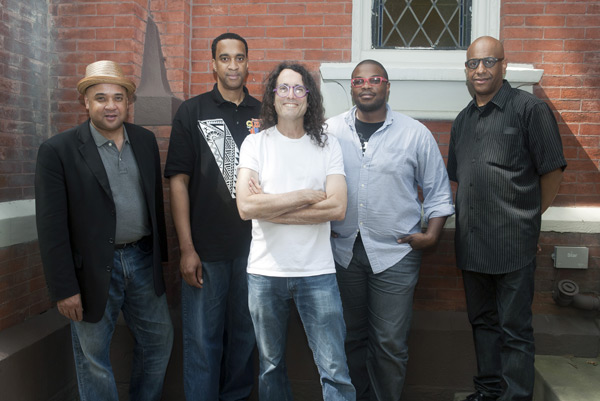
Come Wednesday evening, October 1, at 7:30pm EDT, jazz lovers throughout the greater New York City environsthat includes Brooklynwill flock to Jazz at Lincoln Center to groove to triple Grammy-nominated composer/pianist David Chesky's quintet, Jazz in the New Harmonic. Folks unable to join Stereophile editor John Atkinson and others in the audience for the first show, or the second at 9:30pm, can listen to a live stream of the initial set here.
Living Stereo Goes Social and Streaming

In a definite sign of the times, Sony Classical is poised to bring the 60-year old classic RCA Victor Living Stereo series to streaming, hi-rez download, and social media platforms. Beginning on Friday April 27, and lasting for two months, Living Stereo playlistsLiving Stereo Spectaculars, Living Stereo Top 50, and Living Stereo Deep Cuts among themwill stream on Apple Music, Spotify, and Deezer.
Location: New stereos living in In Living Stereo's new location

Late last month, New York City's In Living Stereo underwent two major changes: They made a short move, from a modestly sized storefront to a much larger one2 Great Jones Street in the East Villageand they went from being a hi-fi shop to being a hi-fi and record shop. On a recent visit to their new digs I was impressed with the latter: While some hi-fi shops limit their music commitment to just a few racks of 200-gram LPscommendable in and of itself, of courseIn Living Stereo has built an entire record loft and filled it with hundreds of well-chosen new and used LPs. (I took it upon myself to lighten their inventory while I was there.)
Locking Down the Optical Disc
Both Macrovision and Sunncomm have been releasing technologies aimed at restricting how consumers can use their legally purchased music and movies. Add Dynamic">http://www.dmsNT.com/">Dynamic Media Solutions to the pack.
Logitech Acquires Slim Devices
Logitech International, the Swiss computer'n'communications peripherals manufacturer, announced on October 19 that it had acquired Slim Devices, Inc., the home-network-music-systems pioneer that manufactures the Squeezeboxhttp://stereophile.com/digitalprocessors/906slim/">Squeezebox; and Transporterhttp://www.stereophile.com/news/073106transporter/">Transporter;.
Logitech to Acquire Ultimate Ears
On August 14, Logitech International announced that it intended to acquire privately held Ultimate Ears for $34 million in cash. "Ultimate Ears is a perfect fit for Logitech and our audio business," said Gerald P. Quindlen, Logitech's president and CEO. "Since its inception, Ultimate Ears has been driven by innovation, close ties to its customers, and the desire to enable an immersive audio experience. Logitech's success has been built on using a deep understanding of our customers to create products that let people immerse themselves in their pursuits."
Long Island Technics Dem Thursday

Retailer Audio Den (pictured above, 2845 Middle Country Rd, Lake Grove, NY 11755) is holding an open house Thursday, March 31, from 6pmpm, to preview the iconic Technics SL-1200GAE turntable. Representatives from Technics will be hand and attendees can enter a raffle to win an Okki Nokki record cleaning machine. More details from Audio Den: (631) 585-5600.
Long Live Classical Music!
Last week, Reference">http://www.referencerecordings.com">Reference Recordings, of San Francisco, announced that it is planning five new symphonic projects to be recorded by "Prof." Keith Johnson in 88.2kHz, HDCD, 5-channel discrete surround sound. These will be released on standard two-channel CD in the coming year, and eventually on DVD-Audio disc. According to RR, with these ambitious plans, the company hopes to reverse the industry-wide decline in new recordings of classical orchestral music.