

Marantz Model 40n integrated amplifier
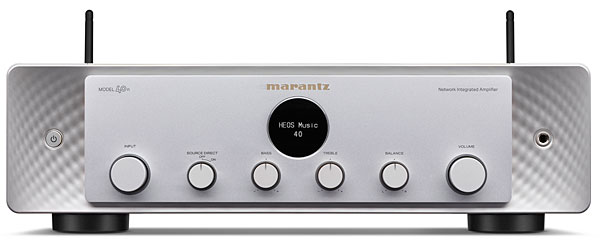
On a cold, clear February morning, I attended my first in-person press event since the beginning of the pandemic. Marantz had invited me to a small group session in a suite at the Equinox Hotel at Hudson Yards but gave no indication of what was in store. After two years without live press events or audio shows, I was not going to spurn the offer no matter what would be presented: I was hungry for hi-fi. Upon arrival, I learned that Marantz would be featuring just one new product, a streaming integrated amplifier, the Marantz Model 40n ($2499). Sure, I'm in.
Marantz Reference NA-11S1 Network Audio Player/DAC
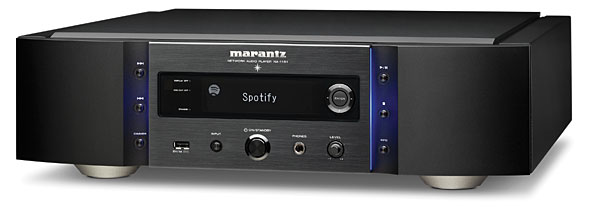
In March, to celebrate Marantz's 60th anniversary, the company launched the subject of this review, the Reference NA-11S1 network player ($3499), which Ken Ishiwata described to me as "a new start, a new era" for Marantz. Michael Fremer attended the European press conference announcing the NA-11S1, and I subsequently talked to Ishiwata via Skype.
McIntosh MS750 music server
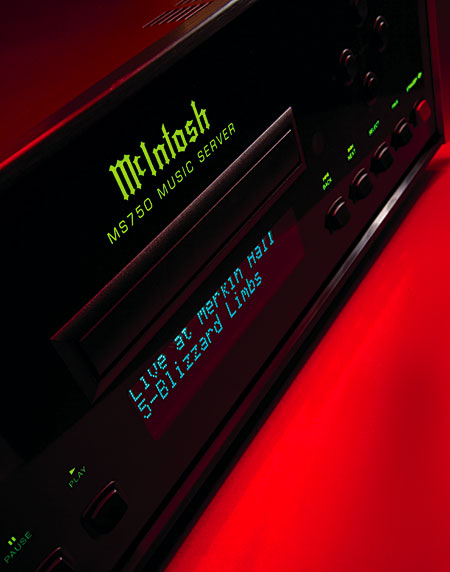
It has a fan, it won't work without a monitor, and it contains a 750GB hard drive—for some audiophiles, that's a trifecta of reasons not to buy the McIntosh MS750 music server ($6000).
Melco N50 Digital Music Library
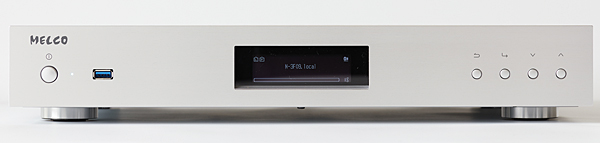
Melco, the Japanese maker of the N50 Music Library featured in this review, is not a household name among US audiophiles. Veterans may recall the Melco 3560 turntable, which was considered extravagant at its 1978 launch, in part because it supported three tonearms. Confusingly, several subsidiaries of the giant keiretsu Mitsubishi are called MELCO (for "Mitsubishi Electric Corporation"), but the maker of the N50 is not one of those MELCOs. This "Melco" is, rather, short for "Maki Engineering Laboratory Company," and though it got its start in hi-fi, these days its best-known products are network-attached RAID arrays made by Melco's American division, Buffalo Americas.
Music in the Round #68
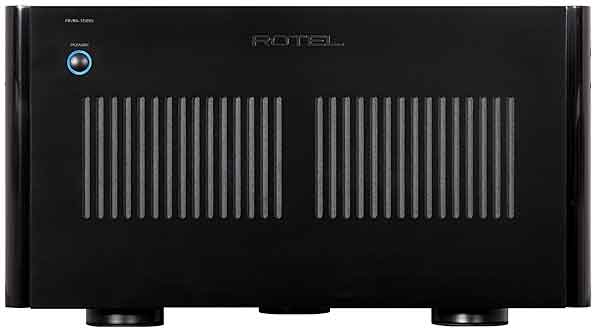
Power amplifiers are unglamorous but essential. In theory, they have only one task. But, according to audio sage Yogi Berra, "in theory, theory and practice are the same. In practice, they are not." Amplifiers must take a voltage input signal and provide an output of somewhat higher voltage but of substantially higher current, the product of which is power. The task is complex in that this output must be applied to electrical interfaces whose characteristics vary widely from speaker to speakeracross the audioband and, for some, even at different power levels. There are no control mechanisms or feedback signals to help. The power amp must just stand and deliver.
Music in the Round #85: Nimitra, exaSound, Baetis, Roon
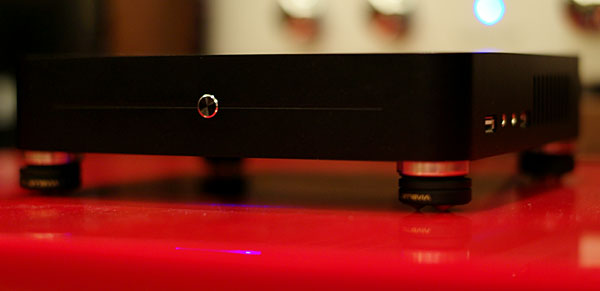
It's been going on for a while now: Despite support for multichannel in audio/video receivers and A/V processors priced from as little as $200 to $30,000, there are still very few offerings that cater to the music listener. They may offer stereo-only streaming features through their USB or Ethernet inputs, but these inputs don't see your multichannel files. To handle such files, they would require you to add a music server with HDMI output. However, I know of no turnkey music servers that will output multichannel audio via HDMI.
Music in the Round #86: Playback Designs & AudioQuest
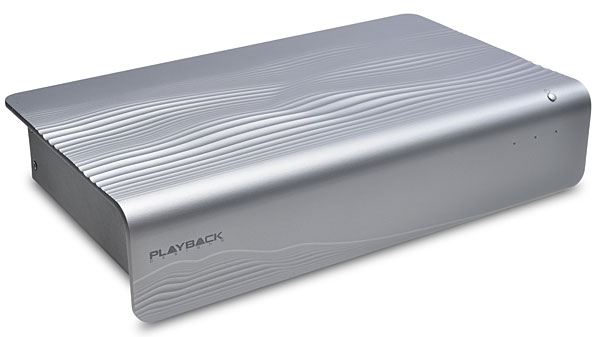
It's time to fulfill my promise to write about Playback Designs' Sonoma Syrah music server and Sonoma Merlot DAC. It all began when I asked Playback's founder and CEO, engineer Andreas Koch, when he plans to produce a multichannel digital-to-analog convertera question I've put to so many other manufacturers. He said that he already had a multichannel system on the drawing board, and not just a DAC. Our e-mail exchange culminated in his announcement of the Playback Designs USB-XIII Digital Interface, to be used between a USB source component and as many as three DACs via PLink, Playback's proprietary fiber-optic connection.
Music in the Round #92: Digibit Aria Piccolo +
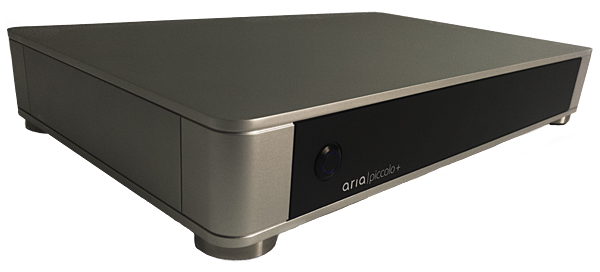
Lovers of high-resolution multichannel sound still don't have it easy. While the two-channel market is replete with snazzy, efficient music servers in stylish boxes, the only multichannel equivalents are Merging Technologies' Merging+Player Multichannel-8, and a handful of stereo devices that are rumored to do multichannel, though no such claims are made in print. To be candid, the latter will play multichannel tracks via USB, Ethernet, or HDMI outputs to suitable DACs (but that's another story), but because they're aimed at the two-channel market, they tend to skimp on the CPU horsepower and RAM needed to handle higher-resolution multichannel files. Even the Merging+Player Multichannel-8 ($13,500), with its Intel i3 CPU running Roon, couldn't entirely keep up with everything in my library.
Music in the Round #95: Wolf & NAD
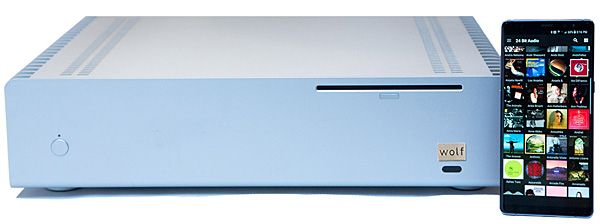
Although I no longer attend the audio pageant that was once the annual Consumer Electronics Show, I now seem to be traveling more, in hopes of recapturing the excitement CES had once provided. Last May I attended High End, in Munich, and found that while it was entirely as advertised, there was, alas, not enough emphasis on the playback of high-resolution files, and hardly any attention paid to multichannel music.
Music in the Round #96: Roon & Dolby Atmos
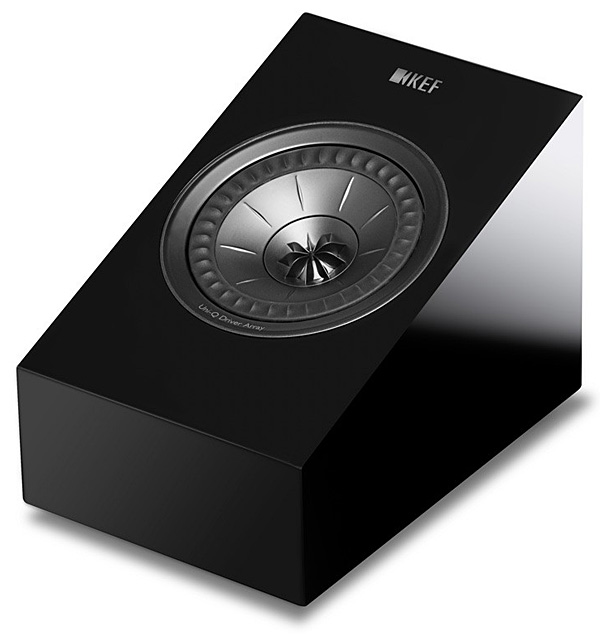
One of the recurring themes of this column has been my search for servers that will support the playback of high-resolution multichannel files with DSP for speaker/room equalization (EQ), as well as the format conversion and downsampling that are often part of those processes. Because most EQ software is PCM-based, format comversion is needed to convert DSD files to PCM. In addition, because most EQ products work within a limited range of sampling rates, PCM files sampled at high rates may have to be downsampled before being subjected to EQ. Those of us who use home-theater preamplifier-processors and audio/video receivers (AVRs) should be familiar with such constraints.