

Listening #63
I'm old enough to remember my family's first table radio that was made out of plastic. It was cream-colored, and it sat on the rearmost edge of our kitchen table: a less-than-timeless design in its own right, destined to be discarded at the end of one era and treasured again at the dawn of another, for more or less the same reason. But in 1958, a cream-colored plastic radio looked fresh, clean, and right, and its cheap wooden predecessor seemed dowdy and sad by comparison. That would all change in later years, of course. Then it would all change again.
Listening #80
I used to be with it, but then they changed what it was. Now what I'm with isn't it, and what's it seems scary and weird. It'll happen to you.—Abraham Simpson
Listening #84
She responds as expected to the only sound: hysterical voices!—Brian Eno
MIT CVT Terminator 2 interconnect & speaker cable
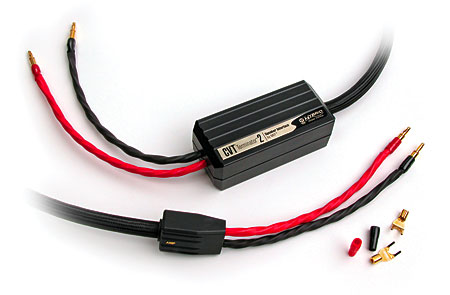
These are the first interconnects and speaker cables I have reviewed for Stereophile. Each of us has his little niche, and editor John Atkinson likes us to play in the sandboxes we most enjoy. For me, that has usually meant inexpensive speakers and expensive tube electronics. But there's another reason I've tended to shy away from cables.
MIT MI-330 Proline Shotgun interconnects & MH-750 Shotgun speaker cables
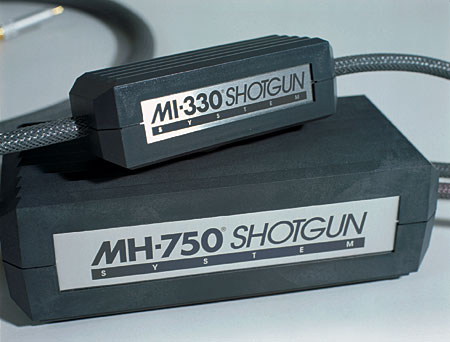
In the last year I've written about several components of a truly engaging system: the VPI TNT Mk.IV turntable and JMW Memorial 12" tonearm (February '99), Grado Reference cartridge; the Wadia">http://www.stereophile.com/cdplayers/156">Wadia 830 CD player (October 1999); and Thiel's">http://www.stereophile.com/floorloudspeakers/216">Thiel's CS7.2 loudspeakers (February 2000). I've recounted the evolution of my listening-room setup as well, and described its optimization using ASC">http://www.stereophile.com/roomtreatments/215">ASC Tube Traps and Art Noxon's MATT test in the February issue. The final piece of the puzzle, and the one I'll tackle here, was the cable package from MIT: the MI-330 Shotgun Proline interconnects and the MH-750 shotgun speaker cables.
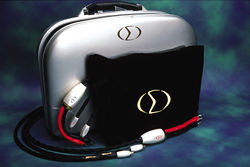
Monster Cable Sigma Retro Gold speaker cables & interconnects
I've been in a nostalgic funk of late. What started it was visiting Golden, Colorado, where I spent my graduate-school days, and seeing all of the changes, not to mention the lecture halls full of kids who couldn't be a day over 12. When I commented on how young the freshmen looked, our host—a colleague of mine from grad school, now a professor—responded, "Those are seniors, Brian." I felt a little old.
Music in the Round #90: Merging+Player PL8
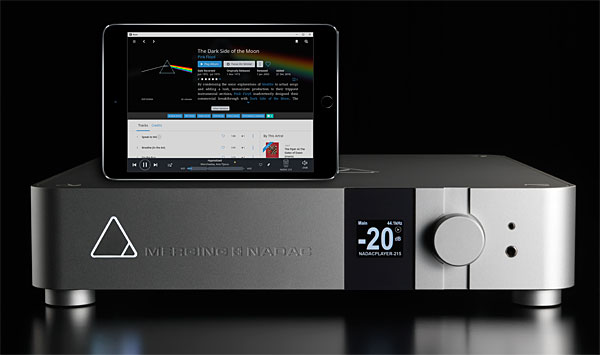
Merging Technologies' original NADAC Multichannel-8 ($11,500) is an impressive device. (NADAC is an acronym for network-attached digital-to-analog converter.) It has eight channels of high-resolution D/A conversion, and two more for its front-panel headphone jack; a cutting-edge Ravenna Ethernet input (based on the AES67 Audio over Internet Protocol, or AoIP); and, to my delight, a real volume-control knob on the front.
Nirvana Audio S-X Ltd. loudspeaker cable
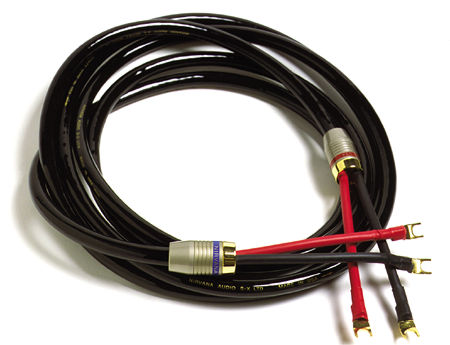
Nirvana Audio's cables have long been fixtures in my audio system: first the SL interconnects and speaker cables, and, after their debut in 1998, the S-X Ltd. interconnect. In 2002, after a long development process, designer Stephen Creamer introduced the companion S-X Ltd. speaker cable ($2780/2.5m pair, add $50/pair for biwire configuration). He explored a wide range of options, including dramatically different structures and materials, but always returned to the elements he'd used before—and ended up with a design that combined elements of his two existing speaker cables, the SL and the entry-level Royale. At its core, the S-X Ltd. has the Royale's two conductors, each a symmetrical Litz element consisting of 285 isolated strands of high-purity copper of several different gauges. In the S-X Ltd., the conductors are spaced slightly apart to minimize capacitance, wound into a twisted pair, and wrapped in FEP insulation.
Nirvana S-X Ltd. interconnect
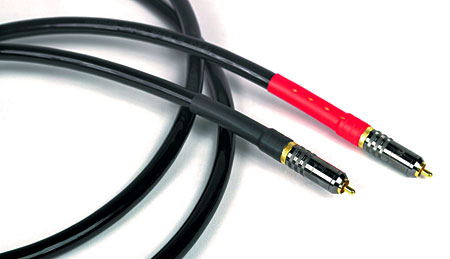
Recently, I caught myself smiling at a tiny ad for Nirvana cables that proclaimed them to be "the quiet cable." My smile wasn't because the claim was outlandish, which it wasn't, but because it was so typical of Nirvana Audio Products—small, understated, and all too easy to miss. The ad could just have easily and just as accurately have read "Nirvana...the quiet company."
Nordost Heimdall interconnect & speaker cable
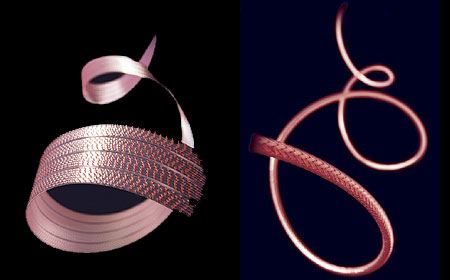
The good news: Domestic audio has survived its first half century and continues to live above ground. The bad news: At an age when most hobbies can enjoy the luxury of splintering into smaller factions that hate each other with impunity, ours isn't big enough. There are too few audiophiles on Earth to indulge that kind of specialization, let alone support the very different magazines that would ensue—so we'll never get to enjoy such promising titles as Liberal Tube Lover (not that I didn't try), The Elderly Skeptic, or, of particular interest, Cable Hating for People Who are Barely Audiophiles in the First Place.