

PSB Alpha A/V loudspeaker
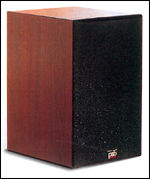
The original PSB Alpha was reviewed for Stereophile by Jack English in July 1992 (Vol.15 No.7). A modest-looking two-way priced at just $199/pair, it combined a reflex-loaded 6.5" woofer using a plastic-doped paper cone with a 0.5" plastic-dome tweeter. JE summed up the Alpha by saying it "is simply one of the best buys in audio, providing a musically satisfying sound...a sensational audio bargain." It went on to become one of the best-selling audiophile speakers ever, with over 50,000 pairs sold.
PSB Alpha B loudspeaker
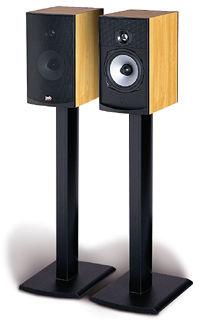
Paul Barton is a legend in the speaker business. For 25 years this musician and engineer has dedicated his life to providing speaker purchasers with higher levels of sonic realism at lower prices. Barton is a frugal perfectionist, and his obsession with psychoacoustics is evident in all his designs. I was mightily impressed with his midpriced Image 4T (Stereophile, February 2001), which was, like all Barton designs, designed with the assistance of the facilities of Canada's National Research Council.
PSB Alpha B1 loudspeaker
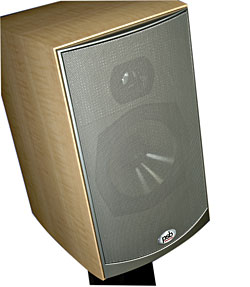
When audiophiles speak of the "Golden Age" of audio components, they almost always are talking about amplifiers and preamplifiers, not loudspeakers. While a very few speaker models have stood the test of time—among them the BBC">http://www.stereophile.com/standloudspeakers/361">BBC LS3/5a, the Vandersteen">http://www.stereophile.com/floorloudspeakers/914">Vandersteen 2, the original">http://www.stereophile.com/artdudleylistening/706listening">original Quad electrostatic and the Quad">http://www.stereophile.com/floorloudspeakers/416">Quad ESL-63, some of the Magnepans, and the Klipschorn—almost no one would disagree that, taken en masse, the speakers of today outperform not just those of the 1960s and 1970s but even those of the 1980s and 1990s. The advent of low-cost, computerized test equipment, high-quality, inexpensive measuring microphones, and persuasive research into what measured parameters matter most to listeners who are listening for a neutral-sounding, uncolored loudspeaker (footnote 1), has led to an almost across-the-board improvement in speaker sound quality (footnote 2).
PSB Alpha P5 loudspeaker
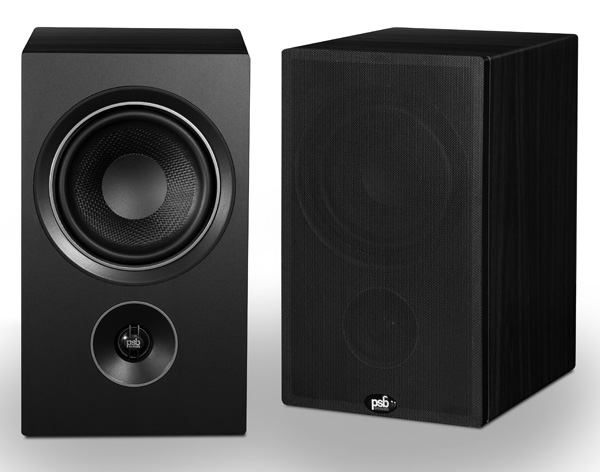
It is said that while any competent engineer can design a superb loudspeaker if allowed an unlimited bill of materials, the true test is being able to produce a great-sounding, budget-priced speaker out of parts that cost a mere handful of dollars. With PSB's Alpha series of bookshelf speakers, Canadian engineer Paul Barton has illustrated this truism many times over the years.
PSB Image 4T loudspeaker
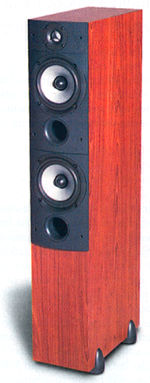
I have a passion for great speaker designs at affordable prices, and with modern driver, crossover, and cabinet technologies making innovative strides, many serious high-end speaker designers are turning their attentions to coming up with the next great budget speaker. All audiophiles need affordable speakers, whether to recommend to friends to lure them into our hobby or to set up multiple, less costly systems in our own houses. I currently run a main reference system, a vacation-house system, a recording-studio system, a computer system, a portable system I take to parties, a car system, and an office system. I insist on having music playing constantly, wherever I am, unless my wife or son tells me to turn it off—which happens increasingly often these days.
PSB Image B25 loudspeaker
Paul">http://www.stereophile.com/interviews/231">Paul Barton, founder of PSB Speakers International, is an icon of the North American speaker industry. A talented designer who has for many years produced innovative and cost-effective designs at a range of prices, Barton does not let time stand still, constantly updating and revising his designs. But what makes him unique, in my view, is that, unlike the designers at most North American speaker companies, whose successful affordable designs are trickled down from their more expensive models, Barton, like the British designers, seems to get most of his excitement from his budget lines. His original PSB">http://www.stereophile.com/loudspeakerreviews/241">PSB Alpha was, in its day, the most significant entry-level speaker made in North America since the original Advents of the 1970s.
PSB Image B6 loudspeaker
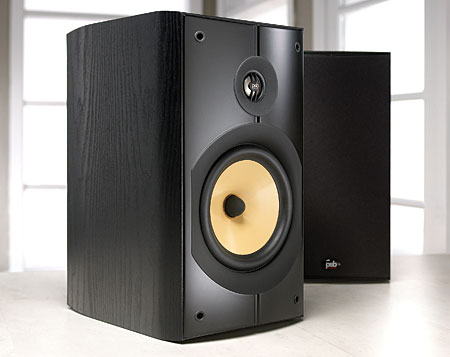
Readers frequently ask me how Stereophile's writers select equipment for review. More often than not, a writer comes up with a review candidate because he's heard it or heard about it, and then suggests it to editor John Atkinson for possible review. JA encourages this behavior—a writer excited about reviewing a component is more likely to produce an article that's interesting and informative. That said, occasionally a review candidate surfaces at Stereophile HQ; in such cases, JA assigns it to one of us.
PSB Image T6 loudspeaker
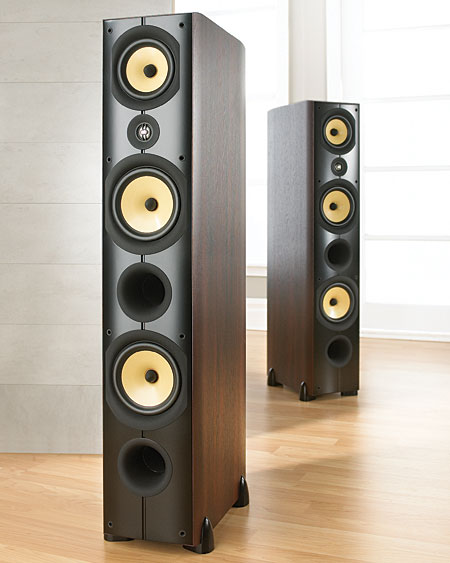
For the past few years, PSB Speakers International has been replacing its older lines with new models designed in Canada, and assembled in China from Chinese-made components. Judging from the reception here of PSB's Synchrony">http://www.stereophile.com/floorloudspeakers/408psb">Synchrony One and Imagine">http://www.stereophile.com/floorloudspeakers/psb_imagine_t_loudspeaker"… T, it's clear that the new models combine advanced performance with true economy. Now, with the new Image line, we see the result of trickling all this down to less expensive products.
PSB Imagine B loudspeaker
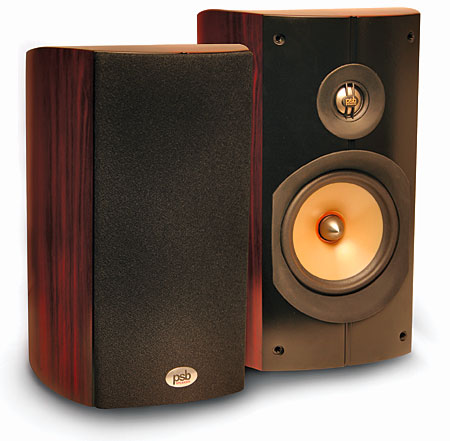
I've been chipping away for some time at the task of trying to put together a music lover's stereo system for about half the money of my last such effort: $2500 to $3750 now, vs around $7500 back in 2005. My timing was good: CD and DVD receivers are a hot product category, with several attractive new entries at various prices.
PSB Imagine Mini loudspeaker
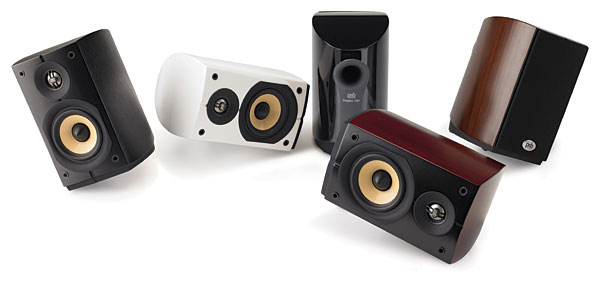
The first loudspeaker I heard from the Canadian company PSB was the Stratus, an affordably priced ($1400/pair), two-way tower with a soft-dome tweeter and an 8" woofer. The Stratus had benefited from designer Paul Barton's being able to use the anechoic chamber at the Canadian government's National Research Center, in Ottawa. The Stratus was reviewed for Stereophile by J. Gordon Holt in our May 1988 issue; he described the speaker as "eminently listenable," though Gordon also felt that it was "a little lacking in guts and liveliness." I had sat in on some of his listening sessions and had been impressed by what I heard.