

GoldenEar BRX (Bookshelf Reference X) loudspeaker
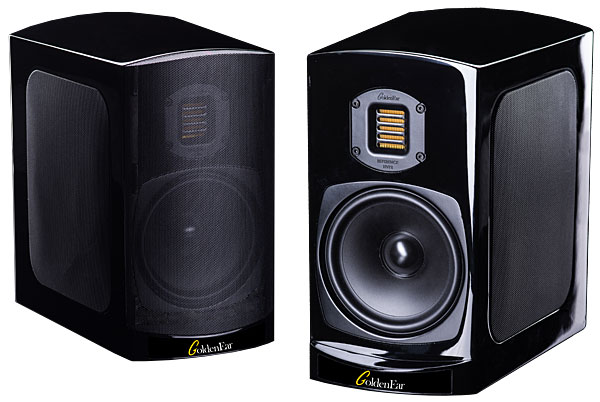
Loudspeaker manufacturer GoldenEar Technology was founded in 2010 by a team led by Sandy Gross, who over the decades was responsible for a succession of affordable high-performance loudspeakers from Polk and Definitive Technology (footnote 1). Gross continued that tradition with GoldenEar: Even the company's flagship, the Triton Reference, which I favorably reviewed in January 2018, was priced a couple of dollars short of $8500/pair. (GoldenEar was acquired by The Quest Group, the parent company of cable company AudioQuest, in January 2020; Gross continued with the brand as president emeritus.)
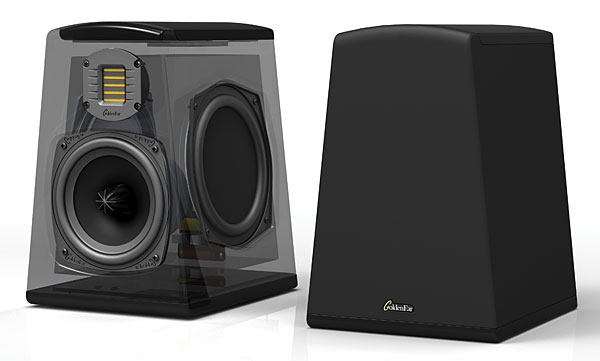
GoldenEar Technology Aon 2 loudspeaker
I was introduced to audiophilia by my friend Gary Gustavsen. Although I'd known Gary since I was 13, I didn't discover his passion for music until that day in high school physics lab when I blurted out an obscure line from the Doors' "The Soft Parade," and Gary bounced back immediately with the next line. It turns out I shared my friend's passions for the Doors and Frank Zappa, but not for Mahler. Before long, Gary was dragging me to every audio store in our area to listen to potential speakers for his first high-end audio system. At the beginning of each trip he'd say, "Right now I'm partial to the Rectilinear 3s." Although I heard him say that many times, I never actually got to hear a pair of Rectilinear 3s.
GoldenEar Triton Five loudspeaker
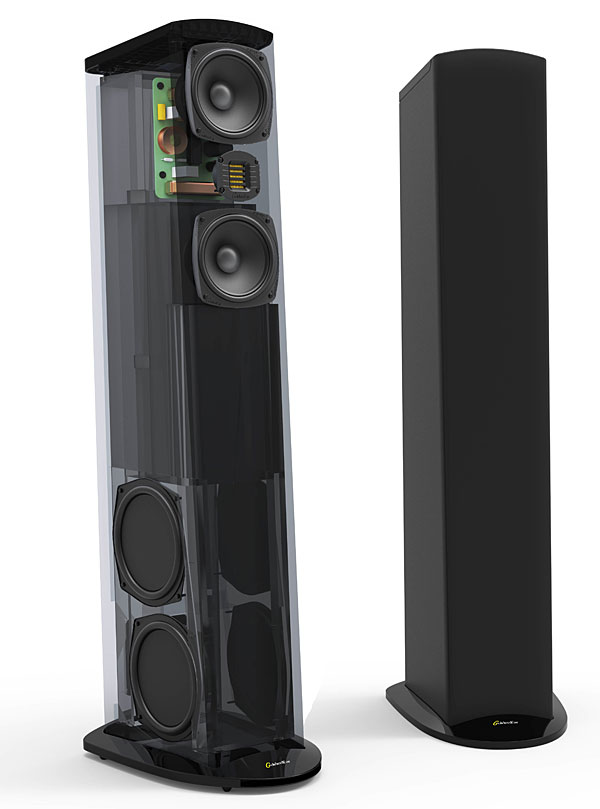
With each review I've written for Stereophile, I've redoubled my efforts to choose my adjectives prudentlyto curb my penchant for overstatement. I've been feeling a need to speak more concisely and maturely about what my ears, mind, and heart experience while listening to music through a component that's new to me. So today, at the start of this review, I ask myself: What adjectives must I use to describe the character of GoldenEar Technology's new Triton Five tower loudspeaker ($1999.98/pair)? Which words will best use our shared audiophile lexicon to give you a working vision of what I experienced?
Grado Laboratories SR 125 headphones
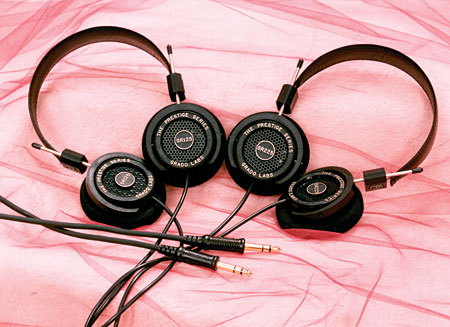
For many years I have used three sets of headphones, all from Grado Laboratories: the Reference">http://www.stereophile.com/headphones/796grado">Reference RS-1 ($695), the SR-125 ($125), and the SR-60http://www.stereophile.com/headphones/532">SR-60; ($60). I've always favored Grado headphones because the minimal-resonance design philosophy that I feel is responsible for the uncolored midrange of their moving-iron cartridges extends throughout their headphone range as well. Recently, however, I've achieved a new perspective regarding the SR-125 'phones that I felt would be of interest to Stereophile readers.
Grado Prestige Gold1 phono cartridge

In the early to mid-1980s, I read every high-end hi-fi magazine I could get my hands on. Among the consequences was my discovery that the Grado Signature Seven phono cartridge—which was better and cheaper than the Signatures One through Six—was the cartridge that God wanted me to have. So I cut back on all manner of luxuries, saved every dollar I could save, and a few months later brought a walletful of cash to Harvey Sound in midtown Manhattan, where an unpleasant man with a bad comb-over handed me a little pill bottle of a plastic tube.
Grado SR60 headphones
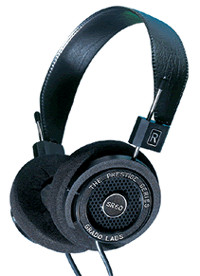
What the hell is going on with headphones these days?!
Grado SR60i headphones
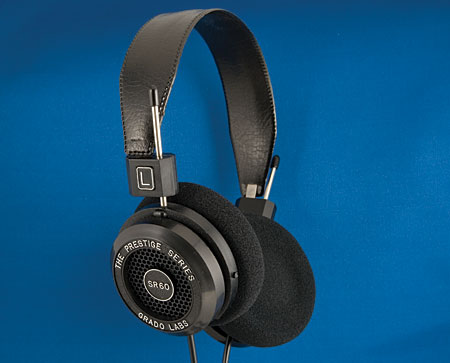
Here's a question for a Stereophile.com poll: What's the best hi-fi value of the last 15 years? I'd bet that, 16 years after its introduction, Grado Laboratories' SR60 headphones would get more than a few votes.
Graham Audio Era Gold Mk.V phono stage
I don't know Gram Slee from Gram Parsons, or which House he was in at Harry Potter's Hogwarts School, but let me tell you: If you'd just been listening to a bunch of budget phono preamps, as I had, then came upon the GSP Audio Era Gold Mk.V, you'd think someone had switched out not just the phono preamp but your entire system. You might think you were listening to a different pressing or a different cartridge. How can this be?
Gramophone Dreams #14: Rega Planar 3
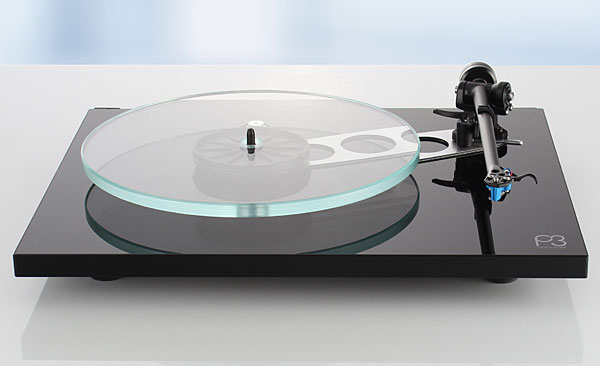
UK, 1976: Upon its release, Rega Research's original Planar 3 turntable became the poor man's Linn Sondek LP12. It opened a gateway of affordability to the exotic world of high-quality British record players. Forty years later, the new Planar 3 turntable and its "light and rigid" engineering aesthetic, as conceived by Rega founder Roy Gandy, still occupy an admirably working-class, pro-music position in an audio world increasingly populated by gold-plated tonearms and quarter-ton turntables.
Gramophone Dreams #2
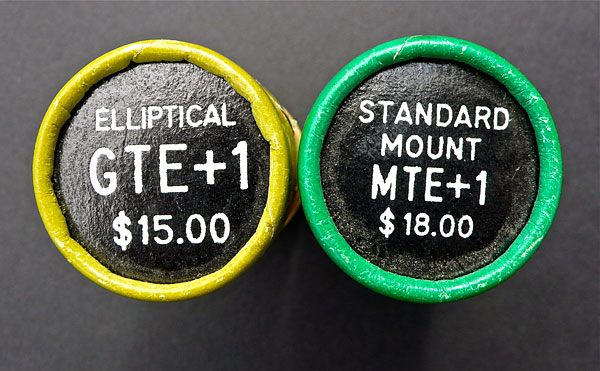
1947: General Electric introduces a variable-reluctance phono cartridge with a 0.3mil sapphire stylus and 11mV output.
1948: Brook Electronics Inc. (Elizabeth, New Jersey) introduces the 12A audio amplifier and 12A3 preamplifier, beginning the era of high-fidelity audio separates.
Since hi-fi's postwar beginnings, hundreds of high-quality audio inventions for the home have thrilled and satisfied music lovers worldwide. But inevitably, no more than a few score companies, and maybe a dozen or so engineer-designers, have defined audio's most creative and enduring achievements.