

Recording of February 1984: Beethoven/Enescu Violin Sonatas
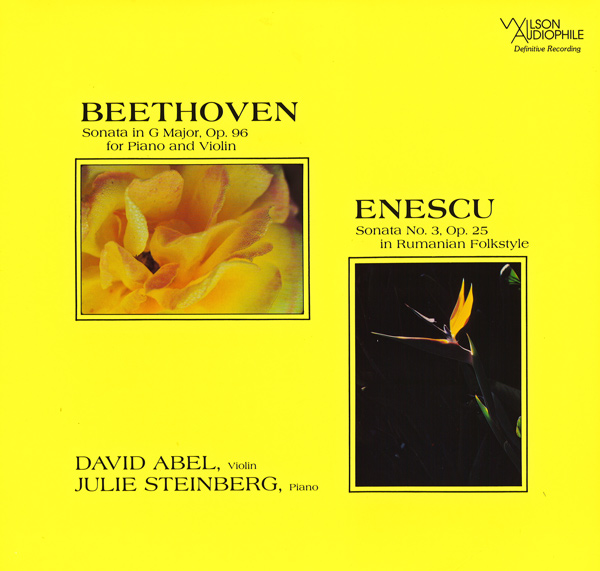
BEETHOVEN: Violin Sonata in G, Op.96
ENESCU: Violin Sonata No.3, Op.25 (In Rumanian Style)
David Abel, violin, Julie Steinberg, piano
Wilson Audio W-8315 (LP). David Wilson, prod., eng. AAA. Oh, what a breath of fresh air this is! An audiophile recording of real music that isn't bombastic, overblown, or high-powered. Imagine, if you can, a private recital in your own home by two consummate artists who play these works for their own delight as much as for yours. Imagine sound so completely and disarmingly natural that after 30 seconds you're unaware it's reproduced. That's what this record is all about. I could rhapsodize endlessly about this record, but I won't. Suffice it to say that if you think there's even a remote chance you'll like this music, you will be positively mesmerized by this recording of it . . .
ENESCU: Violin Sonata No.3, Op.25 (In Rumanian Style)
David Abel, violin, Julie Steinberg, piano
Wilson Audio W-8315 (LP). David Wilson, prod., eng. AAA. Oh, what a breath of fresh air this is! An audiophile recording of real music that isn't bombastic, overblown, or high-powered. Imagine, if you can, a private recital in your own home by two consummate artists who play these works for their own delight as much as for yours. Imagine sound so completely and disarmingly natural that after 30 seconds you're unaware it's reproduced. That's what this record is all about. I could rhapsodize endlessly about this record, but I won't. Suffice it to say that if you think there's even a remote chance you'll like this music, you will be positively mesmerized by this recording of it . . .
Recording of January 1984: Debussy: Three Nocturnes; Jeux
 Debussy: Three Nocturnes; Jeux
Concertgebouw Orchestra of Amsterdam, Bernard Haitink conducting.
Philips ACD 400-023-2 (CD). This is the first classical CD I have heard that was originally mastered on analog tape, and the sound is quite different from what I'm accustomed to hearing from the silver discs. I had read so many critics' complaints about excessive background (tape) hiss from analog-mastered CDs that I was fully prepared to be appalled. I wasn't. Perhaps my speakers (Watkins WE-1s as of now) are smoother than what some other critics listen to, perhaps I prefer a more subdued high end than some, but I did not find hiss to be a problem with this Philips disc. Yes, it is audible at high listening levels, but it is not a ssss, it is a hhhh, like the sound of a very gentle rain far off in the background. I have heard worse hiss from microphone preamps.
Recording of January 1985: Works for Piano
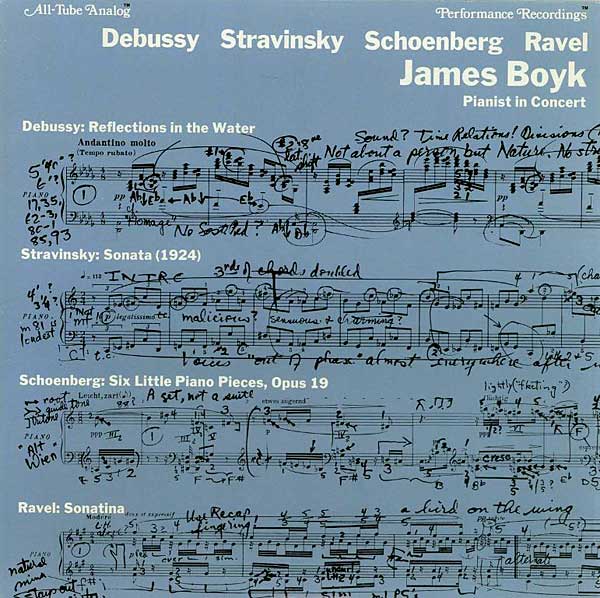
Performance Recordings is the closest thing to a one-man label. James Boyk is president, A&R director, musical director, recording engineer, production manager, jacket notes author, and the star performer. He is also Artist in Residence and lecturer in music and engineering (specifically sound recording and reproduction) at Cal Tech. And he happens to be one of digital's most ardent detractors, having conducted, and widely publicized, several controlled listening tests that proved to his satisfaction that digital recordings are destructive to musical sound. (I will not question his methodology or conclusions here; suffice it to say that James is as stalwartly pro-analog and anti-digital as it is possible to be.)
Recording of June 1964: Joan Baez In Concert, Part 2

Joan Baez In Concert, Part 2
Joan Baez, vocals, guitar
Vanguard VTC-1679 (tape), VSD-2123 (LP). Maynard Solomon, prod., Reice Hamel, eng. TT: 48:00. Well, we finally got ourselves equipped to review 4-track open-reel tapes, via a slightly modified Ampex F-44. All the tapes we have auditioned had noticeably higher hiss than the average stereo disc, but this was not loud enough to be distracting except when the tapes were reproduced at very high levels. Even then, we found the smooth, even hiss to be less objectionable than the ticks and pops from some discs played at the same level.
Joan Baez, vocals, guitar
Vanguard VTC-1679 (tape), VSD-2123 (LP). Maynard Solomon, prod., Reice Hamel, eng. TT: 48:00. Well, we finally got ourselves equipped to review 4-track open-reel tapes, via a slightly modified Ampex F-44. All the tapes we have auditioned had noticeably higher hiss than the average stereo disc, but this was not loud enough to be distracting except when the tapes were reproduced at very high levels. Even then, we found the smooth, even hiss to be less objectionable than the ticks and pops from some discs played at the same level.
Recording of June 1980: Pictures at an Exhibition, Night on Bald Mountain
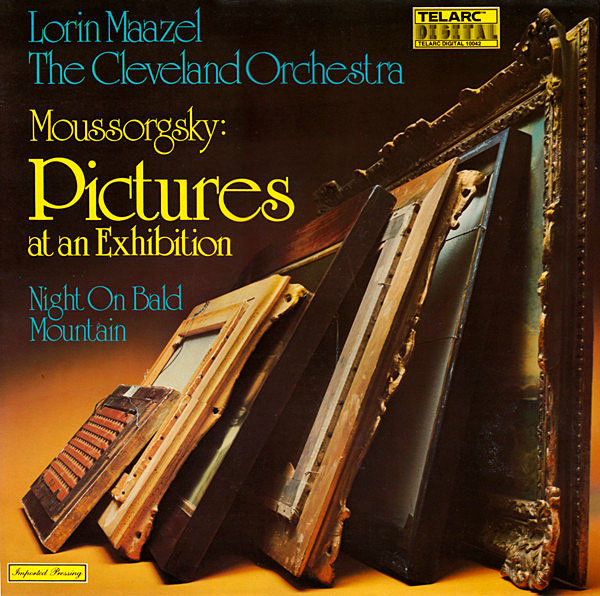
MOUSSORGSKY: Pictures at an Exhibition, Night on Bald Mountain
Cleveland Orchestra, Lorin Maazel, cond.
Telarc 80042 (LP). Recorded at Masonic Auditorium, Cleveland, OH. Edited at Soundstream, Inc. Mastered at JVC Cutting Center. Robert Woods, prod.; Jack Renner, eng.; Stan Ricker, mastering eng. DAA. This is unquestionably the best recording Telarc has done to date. It is almost impossible to fault. If I were to pick nits, I would complain about a slight lack of air in the strings. The rest is, simply, superlatives!
Cleveland Orchestra, Lorin Maazel, cond.
Telarc 80042 (LP). Recorded at Masonic Auditorium, Cleveland, OH. Edited at Soundstream, Inc. Mastered at JVC Cutting Center. Robert Woods, prod.; Jack Renner, eng.; Stan Ricker, mastering eng. DAA. This is unquestionably the best recording Telarc has done to date. It is almost impossible to fault. If I were to pick nits, I would complain about a slight lack of air in the strings. The rest is, simply, superlatives!
Recording of June 1987: Copland: Appalachian Spring, etc.
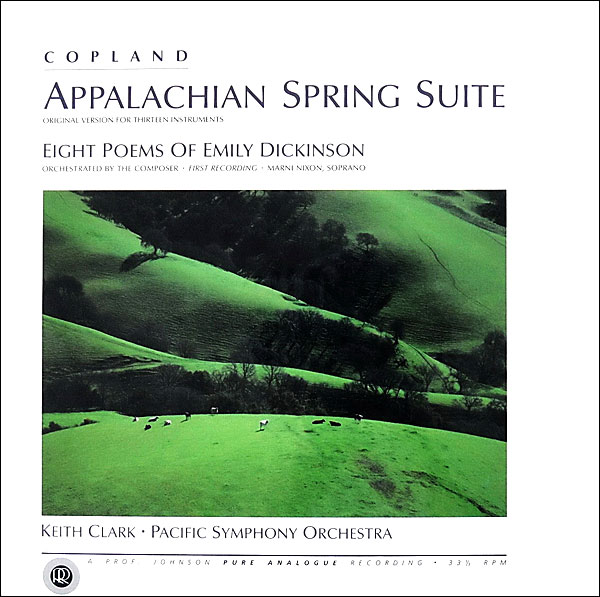
Copland: Appalachian Spring (Suite), Eight Poems of Emily Dickinson, An Outdoor Overture (CD only)
Pacific Symphony Orchestra/Clark/Marni Nixon (soprano)
Reference Recordings LP RR-2 and CD RR-22CD. Tam Henderson, prod.; Keith Johnson, eng. This is unquestionably one of the best recordings Reference Recordings has done. The sound of the LP is up-front and quite bright, giving the orchestra that peculiarly nasal quality I usually associate with small French orchestras. There is truly remarkable detail and naturalness here; I was about to write that the recording makes the orchestra sound very small and pinched in Appalachian Spring when I noticed on the record jacket that this is the "Original version for 13 instruments." Okay, so I know what it costs to hire musicians in the US, but I still prefer the version of this work scored for full, bombastic, overblown 108-piece symphony orchestra. The 13 instruments are superbly balanced, thougheven the piano, which is usually (and wrongfully) relegated to behind the orchestra. About a half a block behind it.
Pacific Symphony Orchestra/Clark/Marni Nixon (soprano)
Reference Recordings LP RR-2 and CD RR-22CD. Tam Henderson, prod.; Keith Johnson, eng. This is unquestionably one of the best recordings Reference Recordings has done. The sound of the LP is up-front and quite bright, giving the orchestra that peculiarly nasal quality I usually associate with small French orchestras. There is truly remarkable detail and naturalness here; I was about to write that the recording makes the orchestra sound very small and pinched in Appalachian Spring when I noticed on the record jacket that this is the "Original version for 13 instruments." Okay, so I know what it costs to hire musicians in the US, but I still prefer the version of this work scored for full, bombastic, overblown 108-piece symphony orchestra. The 13 instruments are superbly balanced, thougheven the piano, which is usually (and wrongfully) relegated to behind the orchestra. About a half a block behind it.
Recording of March 1963: Mahler: Symphony No.1
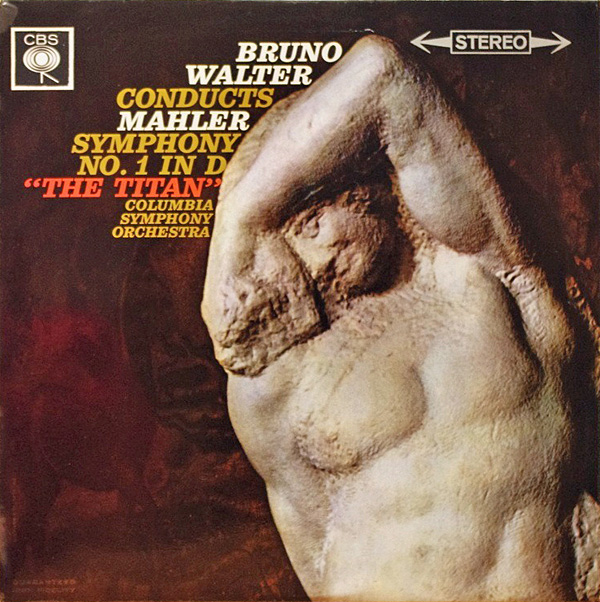
Mahler: Symphony No.1 in D ("The Titan")
Columbia Symphony Orchestra, Bruno Walter, conductor
Columbia MS-6394 (LP). John McClure, prod. TT: 52:15 This is one of those rare combinations of a superb recording and a stunning performance. As far as I'm concerned, it is the best Mahler First that Bruno Walter committed to discs during his lifetime, including the last one that he made with the New York Philharmonic. And the fact that this recording is far superior to that accorded Walter when he conducted the New York Philharmonic does not detract one bit from my feeling about this new release.
Columbia Symphony Orchestra, Bruno Walter, conductor
Columbia MS-6394 (LP). John McClure, prod. TT: 52:15 This is one of those rare combinations of a superb recording and a stunning performance. As far as I'm concerned, it is the best Mahler First that Bruno Walter committed to discs during his lifetime, including the last one that he made with the New York Philharmonic. And the fact that this recording is far superior to that accorded Walter when he conducted the New York Philharmonic does not detract one bit from my feeling about this new release.
Recording of March 1977: Direct from Cleveland
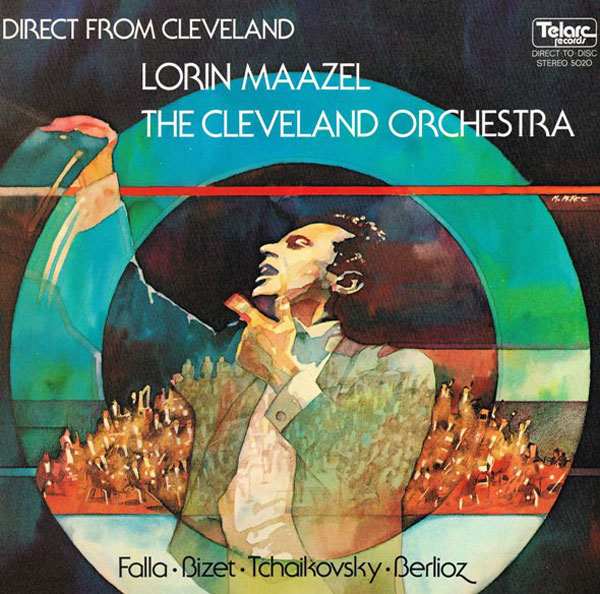
Direct From Cleveland
Orchestral works by De Falla, Bizet, Tchaikovsky, Berlioz
The Cleveland Orchestra, Lorin Maazel (cond.)
Telarc 5020 DD1 (LP). Robert Woods, prod.; Jack Renner, sound eng.; Glenn Glancy, Michael Bishop, disc-cutting engs. Potentially the best news for perfectionists in years is the announcement of the first stereophonic direct-to-disc recording (in the US, at least) of a major symphony orchestra. Advent records of Cleveland, in collaboration with Discwasher, Inc. of Columbia, MO put four complete and usable runsthrough onto two sets of lacquers. The program was a collection of potboilerswhat Sir Thomas Beecham used to call "lollypops"much of it musically rather trivial, but all ideally suited for demonstrating what a no-holds barred recording can do in terms of sonics: works with bass drum, percussion, deep double-bass material, rich string sonorities" and so on.
Orchestral works by De Falla, Bizet, Tchaikovsky, Berlioz
The Cleveland Orchestra, Lorin Maazel (cond.)
Telarc 5020 DD1 (LP). Robert Woods, prod.; Jack Renner, sound eng.; Glenn Glancy, Michael Bishop, disc-cutting engs. Potentially the best news for perfectionists in years is the announcement of the first stereophonic direct-to-disc recording (in the US, at least) of a major symphony orchestra. Advent records of Cleveland, in collaboration with Discwasher, Inc. of Columbia, MO put four complete and usable runsthrough onto two sets of lacquers. The program was a collection of potboilerswhat Sir Thomas Beecham used to call "lollypops"much of it musically rather trivial, but all ideally suited for demonstrating what a no-holds barred recording can do in terms of sonics: works with bass drum, percussion, deep double-bass material, rich string sonorities" and so on.
Recording of March 1982: Elgar: Orchestral Works
 Elgar: Orchestral Works
Falstaff, The Sanguine Fan, Fantasia and Fugue in c (transcribed from J.S. Bach), excerpt from The Starlight Express
London Philharmonic Orchestra, Sir Adrian Boult
Mobile Fidelity Sound Lab 2-501 (half-speedmastered LP, pressed in Japan, 1981). Originally released as HMV ASD 2970 (LP, 1974). Reissued as EMI CDM 7 63133 2 (CD, 1989). Christopher Bishop, prod.; Christopher Parker, Stuart Eltham, engs. We have never before bestowed an award on anyone for anything. We felt obliged to do it on Mobile Fidelity for their remastering of the EMI Elgar Falstaff recording because it is the first time to our knowledge that a single classical release has combined a performance and a recording which are both good enough that neither need be done again. Our congratulations to Mobile Fidelity's Gary Giorgi. Now, let's have some more, from Mobile Fidelity or any other source. We have more awards to hand out when and if.J. Gordon Holt
Recording of May 1966: Music to Listen to KLH By
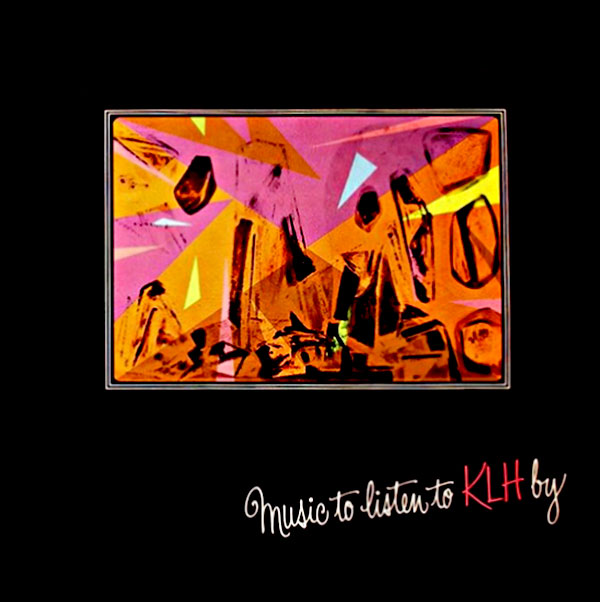
Music to Listen to KLH By
Excerpts from recordings by Everest and Concert-Disc.
KLH VSR-101 (LP). Don't be misled by the title of this. It's fine for listening to KLH by, and it is also fine for listening to any other top-notch reproducer by. It is, in fact, the best, and most musical, stereo demonstration disc that's come along to date.
Excerpts from recordings by Everest and Concert-Disc.
KLH VSR-101 (LP). Don't be misled by the title of this. It's fine for listening to KLH by, and it is also fine for listening to any other top-notch reproducer by. It is, in fact, the best, and most musical, stereo demonstration disc that's come along to date.