

Listening #177: Shindo Monbrison preamplifier
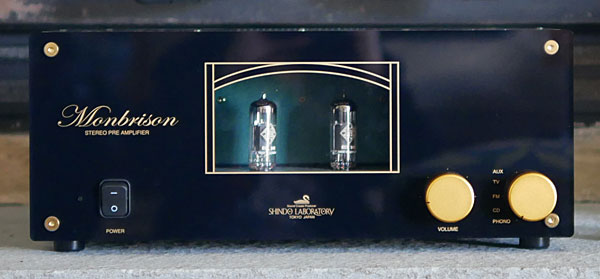
In January of 2014, some of us wondered if the sudden death of designer Ken Shindo would spell the end of the company he founded in 1977: It was hard to imagine Shindo Laboratory being led by anyone but its founder, a former Matsushita engineer who made it his life's work to study not only the designs of audio's golden age, but to learn the sound of every vacuum tube, every passive part, every circuit variation that he might reasonably press into service.
Listening #209: Luxman CL-1000 preamplifier
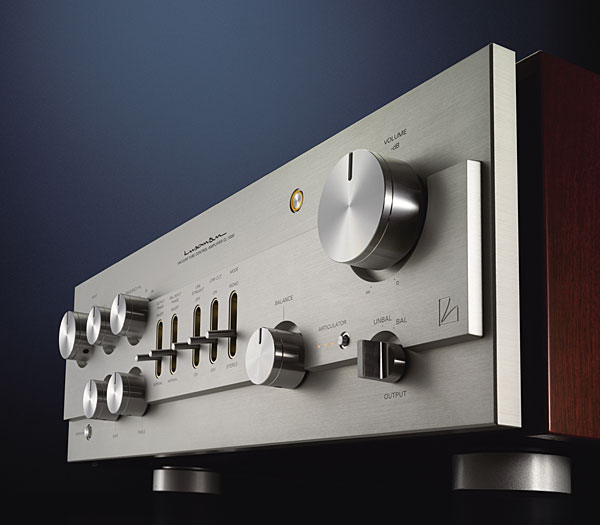
It may come as no surprise that the two Recommended Components issues we publish every year, in April and October, are Stereophile's most popular. Both go hand-in-hand with increases in single-copy sales and subscription requests, and it's worth noting that equipment and record suppliers line up to get their ads into those issues.
Listening #46
"It's a series of tubes."—Senator Ted Stevens (R-AK), explaining how the Internet works
Listening #54
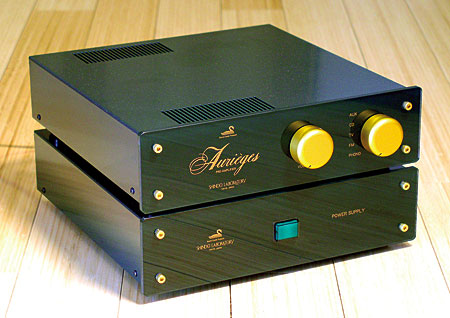
Just about any consumer-electronics product that needs to generate voltage gain can be made with a vacuum tube. It isn't hard to do. It's no big deal.
Listening #55
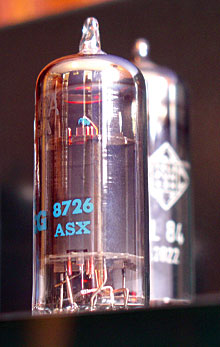
When audio designer Ken Shindo was a little boy, his father kept an enormous collection of 78rpm records in their home in Tokyo. During the final days of World War II, the Japanese authorities did their best to evacuate the city, but the elder Shindo was steadfast: He refused to leave, for fear that the records would be gone when he returned.
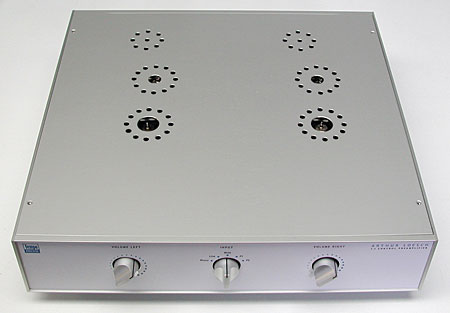
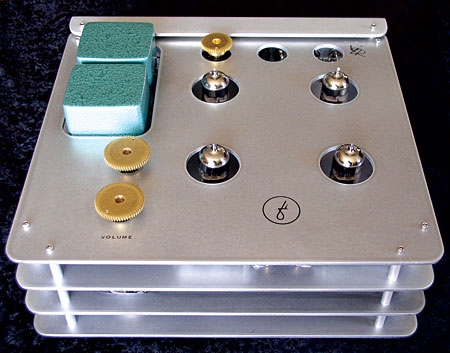
Listening #88 / Tempo Electric Arthur Loesch 1.1 Control Preamplifier
I am not in the mood for whirling.—the Beatles, "Revolution 9"
Listening #91
At our best, audiophiles are the selfless and generous custodians of a thousand small libraries, keeping alive not only music's greatest recorded moments but the art of listening itself. At our worst, we are self-absorbed, superannuated rich kids, locked in an endless turd-hurl over who has the best toys.
Listening #94
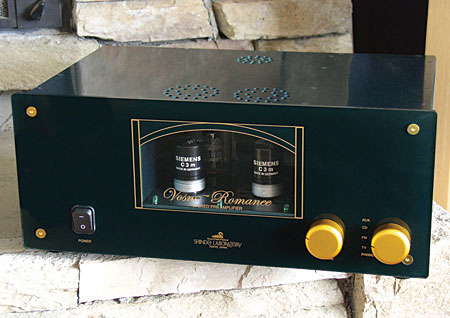
If you've followed their story here and elsewhere, you probably know that Tokyo's Shindo Laboratory (footnote 1) has a reputation for defying the two most monolithic of all high-end audio commandments.
Luxman Classic CL-38u preamplifier
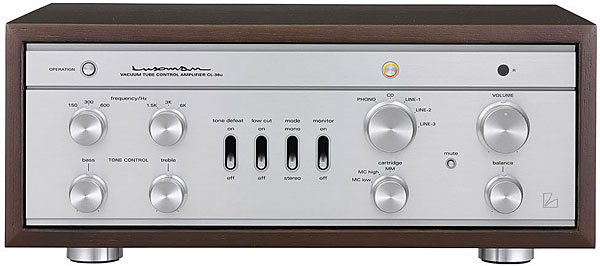
If you look at it from a distance and squint a little, Luxman's Classic CL-38u preamplifier ($4200) could almost be mistaken for that most classic of all classic hi-fi products, the Marantz Model 7C control center. The aluminum front panels of both models have, at their centers, a row of four distinctive toggle switches, flanked on each side by four control knobs. Even more noticeable are the stylish wood enclosuresstandard on the Luxman, optional on the Marantzwhich make both preamps appear ready for duty at the Playboy Mansion, ca 1963, or perhaps an appearance in a Life photo essay titled "At Home with Steve McQueen."
McIntosh C1000 preamplifier system
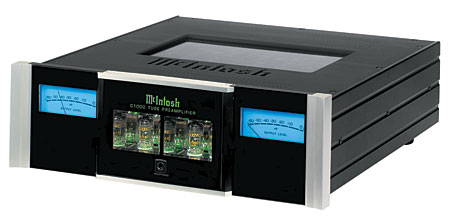
Still burning in my bank of childhood memories are misty images of the glowing green lettering on the McIntosh tube preamps and tuners that populated the windows of the audio stores that once lined lower Manhattan's Cortlandt Street. Leonard's and most of those other retailers are long gone—as are most of the audio brands that shared their windows with McIntosh, and that once symbolized the might of American innovation and manufacturing. Even the World Trade Center, the controversial complex that replaced Cortlandt Street's "Radio Row," where the hi-fi industry was born, is tragically gone.