

Noel Lee: The Monster is 10!
They say that time flies on faster wings once you pass 40, something that I have found to be more true than I care to think about. Yet even considering the unfortunately subjective nature of time, it hardly seems possible that it was 10 years ago, in those golden days of the first Conrad-Johnson preamplifier, Infinity">http://www.stereophile.com/floorloudspeakers/579infinity">Infinity RS4.5 and Hill Plasmatronic loudspeakers, Infinity class-A and Audio Research D110B power amplifiers, that a small San Francisco company, led by a drummer and mechanical engineer who had previously worked on laser-fusion target design at Lawrence Livermore Laboratory, virtually invented the high-end cable industry. I say "virtually," because Jean Hiraga in France, Robert Fulton in the US, and Saboru Egawa in Japan had laid down considerable experimental work in the mid-'70s showing that interconnects and speaker cables were hardly the passive devices conventional engineering considered them, and the highly capacitative Cobra Cable, distributed in the US by Polk and in the UK by Monitor Audio, was already destroying marginally stable power amplifiers in 1977.
Norman Chesky of HDtracks and Chesky Records

Both Chesky Records and HDtracks have a pair of co-founding partners, but the music-minded press has perpetually focused on one of them, pianist and composer David Chesky, while ignoring his younger brother, Norman. Mainstream reporters and photographers did converge on Norman Chesky once, when they spotted him rolling a bulky, rough-hewn, wooden artifact from the 2009 auction at which Bernard Madoff's personal effects were sold for the benefit of bilked investors. Leading newspapers ran photos of Norman with the tree-trunk table he'd bought after happening on the sale, and the New York Times identified him as "a music executive from Manhattan." As the exchange that follows shows, that description was a glaring oversimplification.
Pat Metheny: From His Place
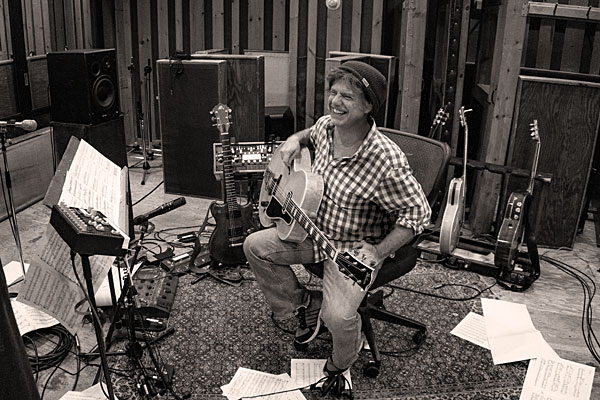
When Pat Metheny was growing up in the small Missouri town of Lee's Summit, his family's home stood within can't-even-hear-yourself-shouting distance of the Missouri Pacific railroad. trains, tornadoes, freezing winters, hot summers, small-town isolationall fed an imagination that (combined with plenty of practice) fed a legendary music career.
Paul Barton: It Doesn't Get Much Better Than That
Canadian loudspeaker company PSB">http://www.psbspeakers.com">PSB International celebrated both its 25th anniversary in July and the 10th anniversary of the introduction of its Stratus series. (I review the latest version of the flagship Stratus speaker, the Gold i, elsewhere in this issue.) Started by Paul Barton and two friends in the summer of 1972, PSB Speakers was named after Paul and his high-school sweetheart Sue (now his wife). Paul & Sue Barton Speakers is now part of Lenbrook Industries, which distributes NAD, Marantz, and Bang & Olufsen in Canada, and which in turn is part of the Canadian conglomerate Lenbrook Inc.
Paul Hales: A Passion for Speakers
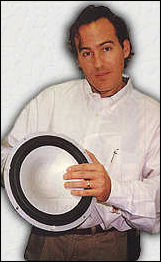
Audio designers may differ in their specific design approaches, but the best of them have in common a real passion for their craft. I certainly found this when I visited the Hales Design Group factory in Huntington Beach, California. Although still in his early 30s, Paul Hales has been involved in the design and manufacture of high-quality loudspeakers for almost a decade—first with the Hales Audio partnership, then with his own company, Hales Design Group. When he was just 23, an age when most people are still trying to figure out what they want to do with their lives, Paul had a speaker company and a speaker, the System Two Signature, that got a rave review in Stereophile (Vol.13 No.9, September 1990). Naturally, my first question was about beginnings...
Paul McGowan: High-End Survivor
"I don't believe it!"
Peter Wolf: A Hard Drivin' Man
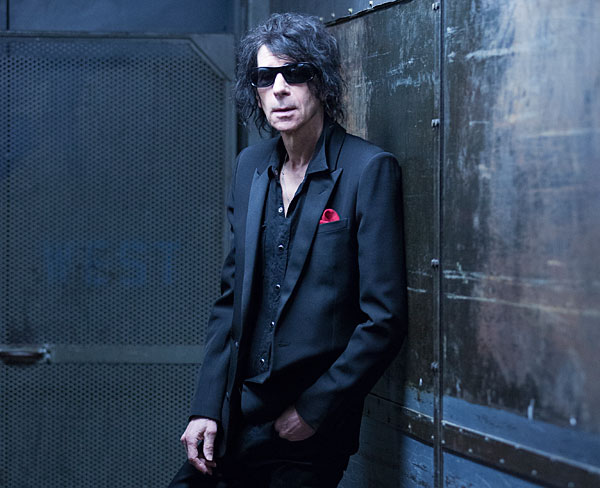
Don't get me wrongit was a nice surprise. It's always good to find another member of the cult, someone else interested in music and sound, and proud to be called an audiophile. But . . . Peter Wolf?
"What's John Atkinson like?"
"Here's the $64,000 question: What's in your system?"
Phil Muzio, Madrigal's CEO
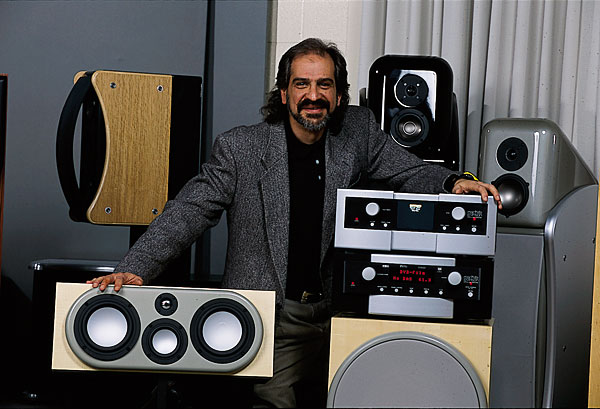
Photo: Mercury Pictures: Chris Fitzgerald
Madrigal's chief executive officer is known for working well into the night, but that's been a goal of his since boyhood. For many years he dreamed of becoming a professional guitarist, and even dropped out of Yale to satisfy a ravenous musical appetite. "Enough of trying to be a Renaissance man," Phil Muzio recalls thinking at the time. His aim was to be out there on the bandstand making music.
Pierre Lurne: Audiomeca's Turntable Designer
Someone, I forget who it was, once wrote a perceptive essay on how in any field of human endeavor, apparent perfection is attained only when that field is in the process of being superseded. The Palace at Versailles was built when the power of the French monarchy was well into decline; Wagner's "music of the future" was in fact the end of a particular line of development; the nuvistor was developed almost simultaneously with the silicon transistor which would render tubes almost obsolete; and six years after the commercial introduction of Compact Disc, with record shops increasingly filling up with silver discs, to the detriment of black, turntables exist which render LP playback pretty much on a level with CD technically (many audiophiles, of course, feel that the LP has always been musically ahead).
Poem: Stereophile Cuts an LP
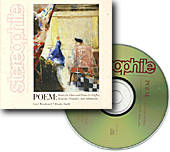
Why had a high-end hi-fi magazine felt the need to produce a classical LP when the thrust of real record companies in 1989 is almost exclusively toward CD and cassette? Why did the magazine's editors think they had a better chance than most experienced professional engineers in making a record with audiophile sound quality? Were they guilty of hubris in thinking that the many years between them spent practicing the profession of critic would qualify them as record producers?