

The Fifth Element #41
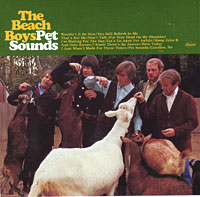
I have not seen Borat! Cultural Learnings of America for Make Benefit Glorious Nation of Kazakhstan, and I am not likely to. But the phrase cultural learnings of America is a good jumping-off point for an important topic: cultural literacy.
The Fifth Element #46
Another gosh-darn write-in competition! Sorry! They're like peanuts (or Campari and tonics). It's almost impossible to stop at just one.
The Fifth Element #47
US composer Morten Lauridsen's Lux Aeterna is one of the indisputable masterpieces of the 20th century. John Atkinson has recorded the male vocal group Cantus's performances of Lauridsen's O Magnum Mysterium (on Comfort">http://www.stereophile.com/musicrecordings/1105cantus">Comfort and Joy: Volume One, Cantus CTS-1204) and Ave Maria Dulcissima (on Cantushttp://www.stereophile.com/news/121007cantus">Cantus;, Cantus CTS-1207). (And great recordings they are—one engineer chum thinks JA's Cantus recording of OMM is the single best-engineered choral recording he's ever heard.)
The Fifth Element #54
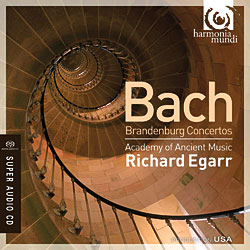
Back when there were bricks-and-mortar retail record stores to speak of in tenses other than past, I used to participate in new-release conferences. Retail-store buyers—the people who decided whether consumers would see your CDs as they browsed in the stores—would gather at a nice destination, such as Lake George, New York. The various labels would then make presentations about their upcoming new releases.
The Fifth Element #59
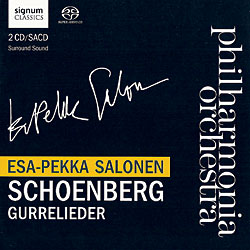
There's a fantastic new two-SACD/CD set of a demonstration-quality live recording of a rather obscure work you really should get to know, not only for its own merits, but also for what I believe is its underappreciated but major influence on music and on popular culture. The piece is by 20th-century composer Arnold Schoenberg, but trust me—it's more than "listenable." It (or, at least, the music on the first disc) is beyond engaging; it is compelling—a revelation, even. The work is Gurrelieder (Songs of Gurre), Gurre being a castle in medieval Denmark that was the setting of a real-life doomed love triangle, the story of which has since loomed large in the moodily brooding artistic consciousness of Danes. The 19th-century Danish poet Jens Peter Jacobsen wrote a collection of poems based on medieval legends, including this one, and a German translation by Robert Franz Arnold provided Schoenberg's dramatic texts.
The Fifth Element #61
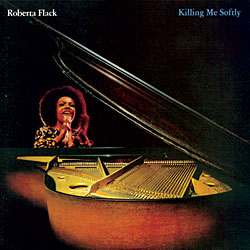
The phrase "the mystic chords of memory" comes from Abraham Lincoln's First Inaugural Address. Of course, larger issues than those addressed in this column occupied most peoples' minds just then. But it is nonetheless worthwhile for us to spend a moment or two thinking about how differently people experienced music in 1861, compared to how things are today.
The Fifth Element #73
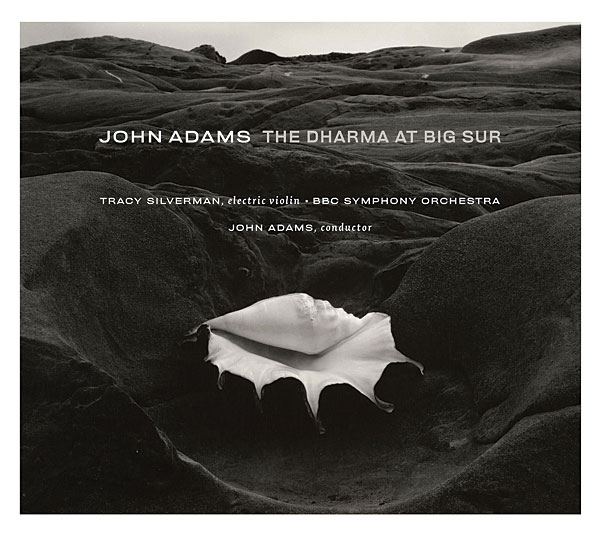
Don't waste yourself in rejection, nor bark against the bad, but chant the beauty of the good.Ralph Waldo Emerson
The Fantasy Symphony Season competition, announced in this column in February, has been a smashing successas far as I'm concerned, it's the most worthwhile write-in competition yet. The 13 winning entries and one hors-concours laureate are posted in the follow-up to February's column on Stereophile's website. The update lists the compositions in each winning Fantasy Symphony Season entry. I created a spreadsheet to determine the most popular composers and works in the winning entries.
The Fifth Element #9
I don't know who originated the idea of "desert island" recordings. I do know that for many years there was a BBC radio program in the UK that asked celebrities to list their choices. While reading quite a few of those lists, I had the sneaking suspicion that the respondents either hadn't entered fully into the spirit of the task, or were tailoring their choices with a view to what the radio or reading audience would think. (Interior monologue: "I am an anorak-wearing viola da gamba player. Hmmm. Birth of the Cool had better be on my list. London Calling, too, just to be safe.")
The Final Word: Yo Yo Ma Live
I sometimes do crazy things to experience live music. In my late teens I met a woman—a friend of a friend of my girlfriend—who was a flautist attending the Mannes School of Music in New York City. She was a classic New Yorker, from a classic New York family. Though apparently demure and retiring, she had fearlessly ridden the city subways since childhood, taking the Broadway line at any hour of day or night (her stop was Dyckman Street, above 200th). All of her parents' money and energy, such as it was, had gone into their daughter's musical career, and I was so inspired by this level of focus and devotion that I hitchhiked from Boston to New York and back in order to attend her first concert, a performance of the two Mozart flute concerti. My presence was remarked upon as the act of a true friend, but I was the beneficiary: It was a great concert, and a good start to a life of experiencing the "call" of live music.
The Forever Half-Life of Quadraphonics
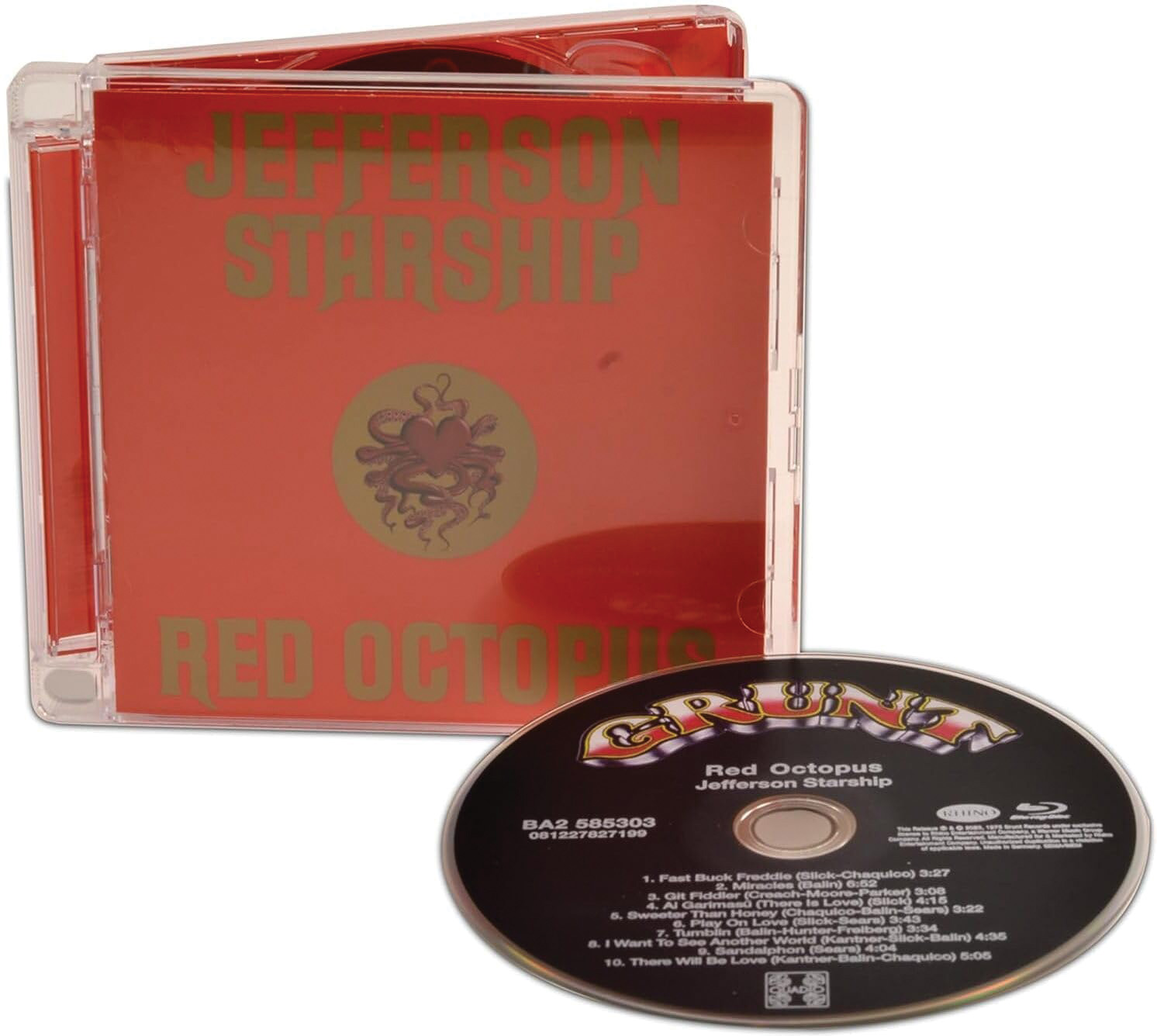
The popular history of quadraphonics (4-channel sound from LP records, tapes, and radio broadcasts) chronicles a spectacular failure. The major record labels, led by CBS/Columbia and JVC/RCA, invested millions in ill-fated schemes to convince music lovers to ditch 2-channel stereo for 4-channel surround sound. The concept was killed, so the story goes, by competing and incompatible LP formats, high prices on the better-sounding discrete-channel reel tapes, and a collective shrug by the buying public.
That story is mostly true, though the format thrived for a while in Japan and Germany, and it never fully died. Now, modern tech has made possible rereleases of 1970s quad albums on relatively common formats: multichannel SACD and Blu-ray discs (BD). No more "meh" LP formats, no more fussy 1970s-tech decoders.