

Rogers LS7t loudspeaker
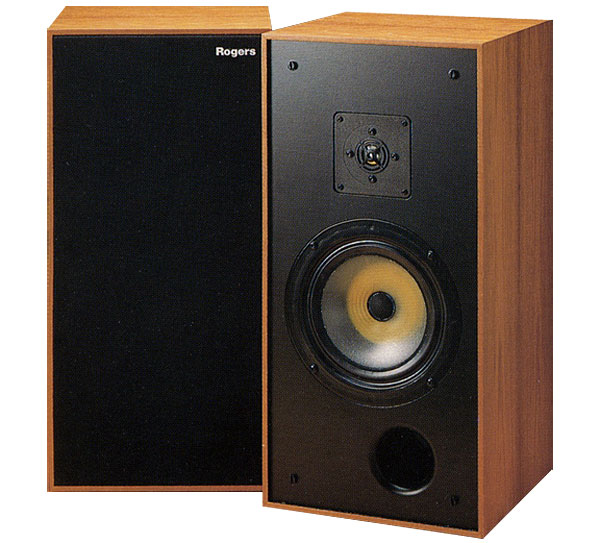
The English loudspeaker manufacturer Rogers [no connection with the contemporary US company Rogers High Fidelity] has had an illustrious history since being founded in 1947 by veteran designer Jim Rogers. Absorbed by the Swisstone company in 1976, it has since gone from strength to strength, the main creative work now being done by the respected English engineer Richard Ross. Noteworthy for keeping the miniature BBC LS3/5a design in continuous production for nearly 15 years, Rogers also makes a range of polypropylene-cone woofers and midrange units which are used in other models in its range.
Rogers Studio 3 loudspeaker
Back in the early 1970s, the BBC needed a physically unobtrusive, nearfield monitor loudspeaker for use in outside-broadcast trucks. Accordingly, they instructed their design department, which at that time featured such luminaries as Dudley Harwood (the "father" of the polypropylene cone, who went on to found Harbeth) and the late Spencer Hughes (the "father" of the Bextrene cone, who went on to found Spendor), to produce such a model. Thus, not only was what was then probably the finest collection of British speaker-design talent involved in its development, there were no commercial constraints placed on the design. The only limitations were intended to be those arising from the necessarily small enclosure and the absence of the need for a wide dynamic range under close monitoring conditions.
Ruark Equinox loudspeaker
Ever since the 1960s, when I built a pair of Altec A7 clones, I've had a preference for relatively big speakers. Yes, I was seduced by the Stax F-81 electrostatics because of their incredibly low coloration, but inevitably I felt the need to return to something that would move more air. Regardless of the type of music (I do like the big stuff) or the sound levels, unless the sound has solidity and size, I can't easily suspend disbelief.
Ruark Sabre-R loudspeaker
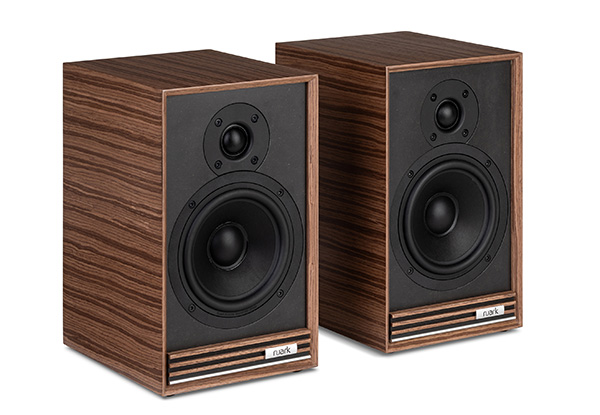
Like many aging American music lovers, my earliest memories include watching the televised supernova that was The Beatles performing on The Ed Sullivan Show in 1964. Immersion in various British pop groups followed, including the melodically graceful Chad & Jeremy, the polished Peter and Gordon, and sentimental pop purveyors Gerry and the Pacemakers.
Siefert Maxim III loudspeaker
 While it is not quite accurate to say that $500/pair loudspeakers are a dime a dozen, they are by no means unusual. And since this is a price area where major design compromises are mandatory (footnote 1), the sound of such loudspeakers tends to vary all over the map, from pretty good to godawfuldepending on what performance areas the designer chose to compromise and by how much.
I approached this latest half-grander with little enthusiasm, despite Siefert's persuasive literature, I have, after all, been reading such self-congratulatory hype abiout new products for longer than most Stereophile readers have been counting birthdays. This, I must admit, was ho-humsville.
While it is not quite accurate to say that $500/pair loudspeakers are a dime a dozen, they are by no means unusual. And since this is a price area where major design compromises are mandatory (footnote 1), the sound of such loudspeakers tends to vary all over the map, from pretty good to godawfuldepending on what performance areas the designer chose to compromise and by how much.
I approached this latest half-grander with little enthusiasm, despite Siefert's persuasive literature, I have, after all, been reading such self-congratulatory hype abiout new products for longer than most Stereophile readers have been counting birthdays. This, I must admit, was ho-humsville.
Signet SL280 loudspeaker
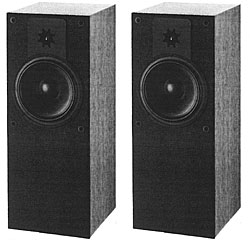 Audio journalists tend to wander the corridors of a CES in a minor state of shell-shock. There are no carnival-barkers outside the rooms enticing one to enter (not yet, at any rate), but the sounds and reputations oozing from the open doorways yield little to the "hurry, hurry, hurry" crowd. The Signet room has always, it seems, been one of the quieter oases, often eschewing sound altogether while contentedly displaying their phono cartridges, cables, and various accessories. On a recent CES hunt, I was therefore intrigued to find them demonstrating two new loudspeakers, of all things, to the milling throngs.
Silverline Audio Minuet loudspeaker
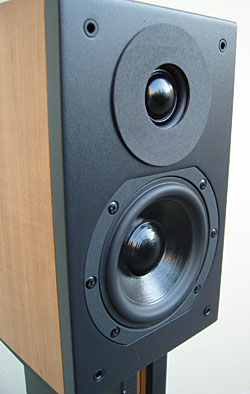
I always look forward to Stereophile's Home Entertainment Shows, where I scout out interesting new models of affordable loudspeakers. At HE2007">http://blog.stereophile.com/he2007">HE2007 in New York City, I was struck by the Silverline Audio room—not only by the sound I heard there, but by the way Showgoers reacted to that sound.
Sjöfn HiFi (the clue) loudspeaker
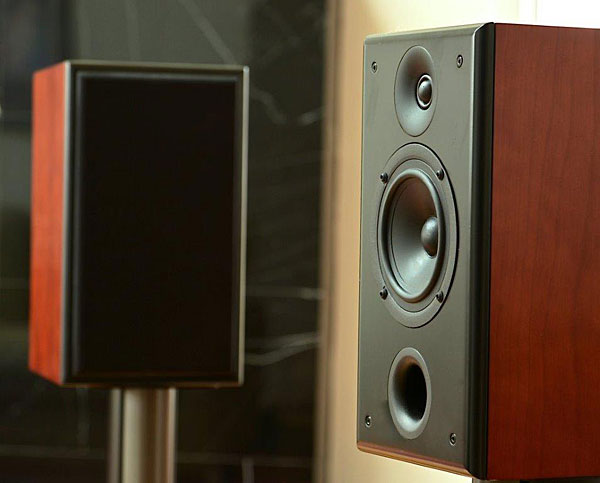
I was sitting in my high chair, eating strained peas. My father was walking around the kitchen with a wooden box in one hand and a cord with a plug in the other. The box and the cord were attached to each other. I was inspired to utter my first actual sentence: "Plug it in over there!" Moments later, a man with a disturbing voice began squawking from inside the wooden box. It was a radio. Schnapps, our dachshund, barked angrily. I started to cry. Ever since, I've been charmed, fascinated, and mostly annoyed by wooden boxes that talk to me.
Snell Acoustics LCR7 XL loudspeaker
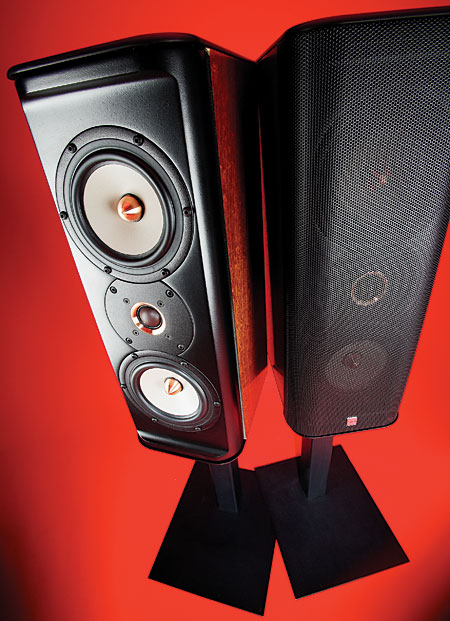
When someone is described as having "written the book" on a subject, it is generally taken as a figure of speech. But veteran speaker designer Joseph D'Appolito, PhD, quite literally "wrote the book." His Testing Loudspeakers (Audio Amateur Press, 1998) is an invaluable resource for those of us who, lacking any talent for designing speakers ourselves, nevertheless find the subject of speaker performance endlessly fascinating. So when Snell's PR consultant, Bryan Stanton, contacted me a while back about reviewing the LCR7, the first design D'Appolito had seen through from start to finish for the Massachusetts-based company since he had replaced David Smith as Snell's chief engineer, I suffered from more than a little anxiety.
Snell Type K/II loudspeaker
In some ways, building an inexpensive yet musical two-way loudspeaker is a greater design challenge than creating a cost-no-object reference product. Although the latter is a much more complex endeavor, the venerable two-way box seems to bring out the creativity and resources of the designer. Rather than throw money at the product in the form of more expensive drivers, enclosures, or components, the designer of a low-cost two-way is forced to go back to the basics, rethink closely-held tenets, and rely on ingenuity and sheer talent to squeeze the most music from a given cost. Consequently, the inexpensive two-way is the perfect vehicle for designers to develop their skills. If one has mastered this art form, one is much more likely to achieve success when more ambitious designs are attempted.