

Music Hall Marimba loudspeaker
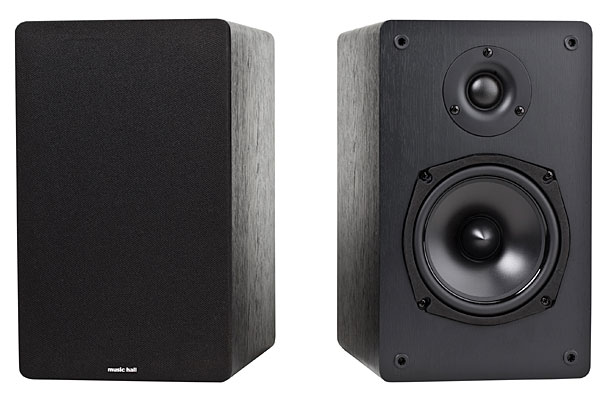
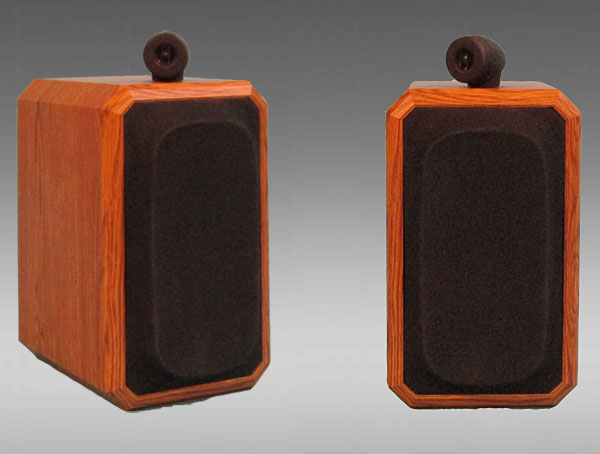
Late last year, when I first heard of the Music Hall Marimba, I was happily surprised: One of my favorite hi-fi manufacturers had finally introduced its first and (so far) only loudspeakerand it was seriously affordable at $349/pair. I wanted to review the Marimbas right away, but grumpy old Sam Tellig beat me to them.
Music in the Round #29
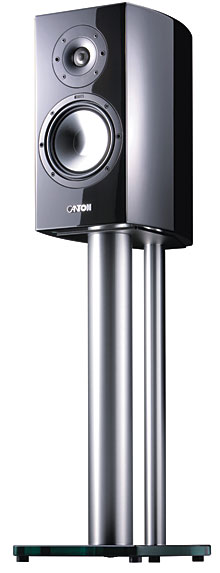
For years, I have espoused the use of the same speakers (except subwoofer) in all positions for multichannel music. To have no speaker in the system contributing a different voice to the choir seems as intuitive as having the room acoustics not color the sound. Of course, this still doesn't guarantee perfect timbral match—positioning and room acoustics usually impose some unique characteristics under all but the most perfect and symmetrical conditions. You can hear tonal imbalances even between the left and right speakers of most two-channel systems simply by switching pink noise between them. On the other hand, there's no reason to superimpose on these unavoidable differences the additional imbalances inevitable with using different speakers in a multichannel array.
Music in the Round #96: Roon & Dolby Atmos
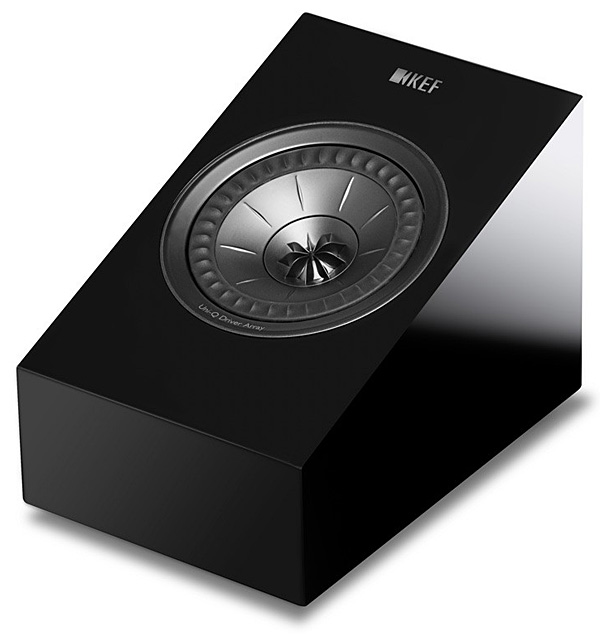
One of the recurring themes of this column has been my search for servers that will support the playback of high-resolution multichannel files with DSP for speaker/room equalization (EQ), as well as the format conversion and downsampling that are often part of those processes. Because most EQ software is PCM-based, format comversion is needed to convert DSD files to PCM. In addition, because most EQ products work within a limited range of sampling rates, PCM files sampled at high rates may have to be downsampled before being subjected to EQ. Those of us who use home-theater preamplifier-processors and audio/video receivers (AVRs) should be familiar with such constraints.
Naim Mu-so 2nd Generation music system
The fog hung ominously thick as I climbed the 194 steps leading up to Red Rocks Amphitheatre. I'd been in Denver for the 2018 Rocky Mountain Audio Fest, and the weather had suddenly turned damp and coldunusually so for early October. Due to dense fog and possible ice, my drive in from another Colorado city had been slowed. Though I'm in good shape, I was unaccustomed to the altitude, which also slowed my pace. So, I was arriving shortly after the opening act had started.
NHT Classic Three loudspeaker
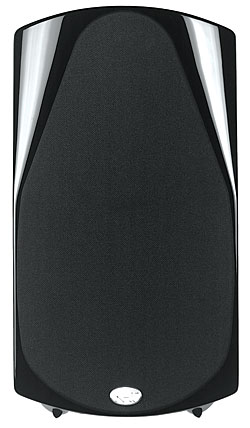
When reviewing affordable speakers, it's critical to have benchmarks and comparisons for various price points. Inexpensive speaker designs are exercises in tradeoffs and compromises, especially for the least costly products. In all of my reviews, I try to compare the speaker in question with other designs close to the review sample's price, chosen from my list of previously reviewed speakers. From time to time, if a speaker particularly impresses me, I ask the manufacturer if I can keep the speakers around a while longer, so that it can serve as a comparison reference for a certain price point. That's not to say that any speaker I don't keep around is less desirable—there's just not enough room in my house to keep a sample of every speaker I like. An audio reviewer's wife puts up with enough as it is.
NHT Model 1.3 loudspeaker
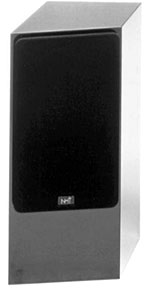 Now Hear This (NHT) was founded to produce low-cost loudspeakers a breed apart from the mass-market variety often found at the lower price points. Co-founder Ken Kantor has a long history in the hi-fi business as a designer at Acoustic Research, NAD, and as a design consultant to some large Japanese manufacturers. NHT's line ranges from the $180/pair Model Zero to the $1200 Model 100.
At $480/pair, the Model 1.3 is midway in NHT's product line. Finished in a gloss-black high-pressure laminate, the 1.3 is elegant, even beautiful, and is distinguished by its unusual angled front baffle. This design means that the rear baffle is nonparallel to the driver, thus reducing the amount of internal cabinet energy reflected back toward the woofer. This is said to improve imaging and midrange purity by reducing comb filtering. In addition, the angled baffle puts the listener directly on-axis with the loudspeakers pointing straight ahead. This increases the ratio of direct-to-reflected sound reaching the listener and further improves imaging.
Now Hear This (NHT) was founded to produce low-cost loudspeakers a breed apart from the mass-market variety often found at the lower price points. Co-founder Ken Kantor has a long history in the hi-fi business as a designer at Acoustic Research, NAD, and as a design consultant to some large Japanese manufacturers. NHT's line ranges from the $180/pair Model Zero to the $1200 Model 100.
At $480/pair, the Model 1.3 is midway in NHT's product line. Finished in a gloss-black high-pressure laminate, the 1.3 is elegant, even beautiful, and is distinguished by its unusual angled front baffle. This design means that the rear baffle is nonparallel to the driver, thus reducing the amount of internal cabinet energy reflected back toward the woofer. This is said to improve imaging and midrange purity by reducing comb filtering. In addition, the angled baffle puts the listener directly on-axis with the loudspeakers pointing straight ahead. This increases the ratio of direct-to-reflected sound reaching the listener and further improves imaging.
NHT SB-3 loudspeaker
I first met NHT co-founder Ken">http://www.stereophile.com//interviews/232/">Ken Kantor in 1975 when we were both undergraduates at MIT. Kantor was sponsoring an extracurricular class entitled "Musical Ideas." The concept was to stick a dozen or so musicians in a classroom for free improvisation and hope to create music à la Miles Davis' Bitches Brew. The result was a mess; although talented guitarist Kantor meant well, there was no common vision or consistency of musical talent. Nevertheless, I had a blast trying to simulate a tamboura drone with a Hohner Clavinet, phase shifter, and volume pedal.
NHT SuperZero loudspeaker & SW2 subwoofer
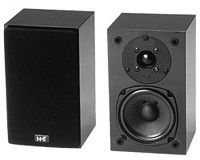
What makes someone a good hi-fi reviewer? A fine critical sensibility? A good technical background? Ears? Eyes? Nose? Throat? So many different people are reviewing audio gear these days that it's downright impossible to characterize a good reviewer. But I do know that Beavis and Butt-head would make killer hi-fi reviewers!
NHT Xd active loudspeaker system
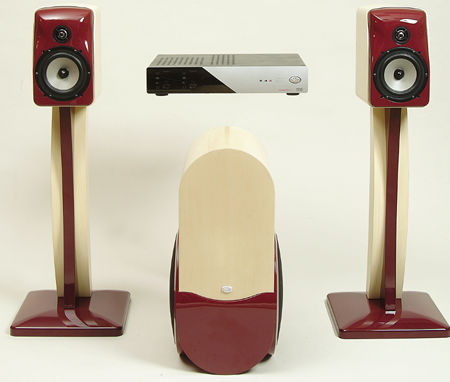
NHT's Xd system is what audiophiles have been saying they want: a matched loudspeaker system that optimizes the performance of its components for a real-world domestic listening environment. But with their dollars they've voted against just such systems for years. If we put our money where our mouths are, active speaker systems such as Meridian's DSP or those used in recording studios would dominate the High End.
Ohm Acoustics CAM 16 loudspeaker
I like Brooklyn. I even got married under the shadow of the Brooklyn Bridge! (Almost the exact spot where Cher's grandfather let his dogs howl at the moon in Moonstruck. And if you're ever in the Park Slope area, check out McFeeley's for brunch.) I could be forgiven, therefore, for having a soft spot for any Brooklyn manufacturer, including Ohm Acoustics. Except that the only Ohm model I have heard was the omnidirectional Ohm Walsh 5 (favorably reviewed by Dick Olsher in Stereophile in 1987, Vol.10 No.4, and 1988, Vol.11 No.8), and the omni principle is something that I have never found to work, or at least to give me what I feel necessary in reproduced sound. The Ohm Model 16, however, is one of three more conventional Coherent Audio Monitor (CAM) speakers intended to offer good sound at an affordable price: $300/pair