

Bowers & Wilkins 702 S2 loudspeaker
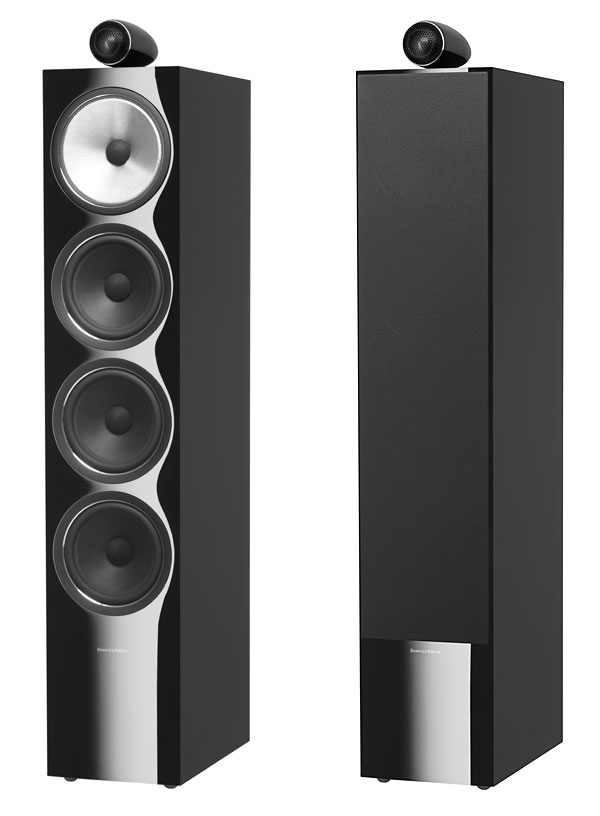
Late in the summer of 2015, I was one of the press representatives invited by Bowers & Wilkins to visit their R&D center in Steyning, West Sussex, England, and be given a detailed preview of the upcoming revision of their entire 800 series of loudspeaker models. Both the technical presentation and the tours impressively demonstrated the comprehensive redesign process that resulted in speakers that were superficially similar but entirely different from their predecessors. Of the new series, I reviewed the 802 D3 Diamond, a pair of which now sit in my listening room as my current reference speakers.
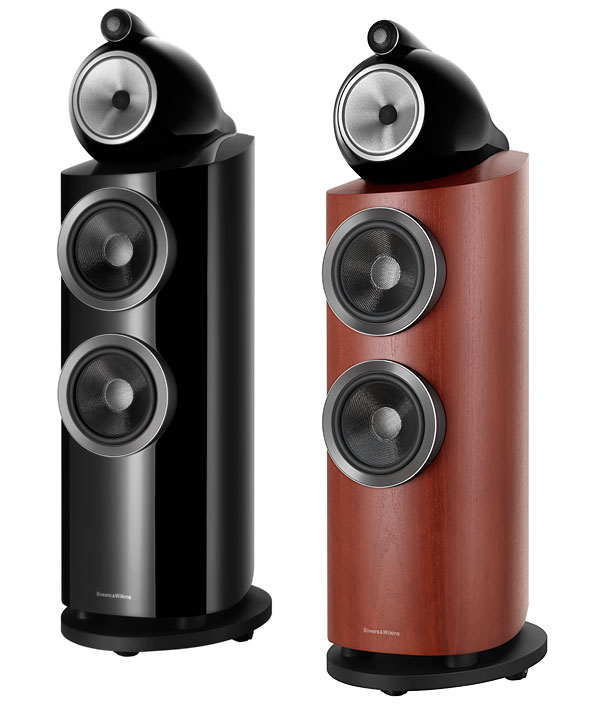
Bowers & Wilkins 802 D3 Diamond loudspeaker
"This is getting to be a habit."
That's how I ended the first paragraph of my review of Bowers & Wilkins' 800 Diamond speaker, in the May 2011 issue; apparently, Stereophile's habit of reviewing models from B&W's 800 series remains unbroken.
Later in that review, I said that "The 800 Diamond doesn't look radically different from its predecessors." That doesn't apply to the 802 D3 Diamond ($22,000/pair). It's still a three-way system with tapered-tube high-frequency and midrange enclosures, stacked and nestled into a generous bass enclosure that's vented on the bottom into the space between it and its plinth.
Bowers & Wilkins 804 Diamond loudspeaker
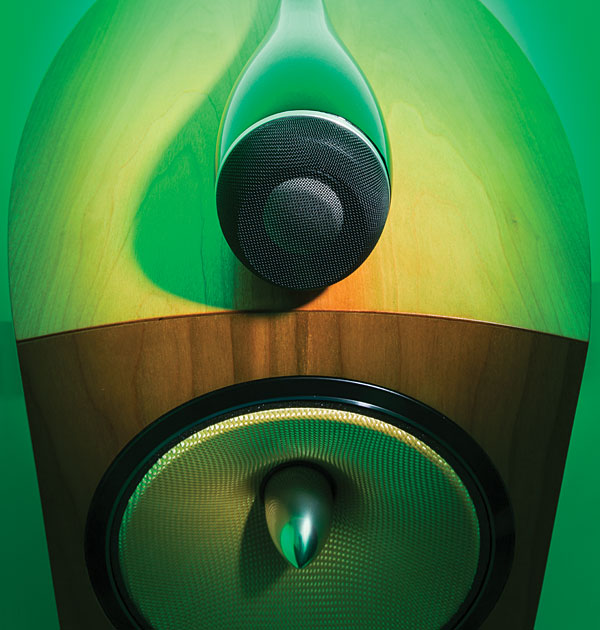
I don't think that the Bowers and Wilkins 804, in any of its incarnation, gets its due respect. As the smallest floorstander in B&W's elite 800 series, it has historically been overshadowed by its larger brethren and outmaneuvered by the smaller, stand-mounted 805. However, the 804 Diamond is unique, and deserves special attention for reasons I discovered when I chose the earlier 804S for the surround channels of my 5.1-channel surround system.
Bryston Middle T loudspeaker
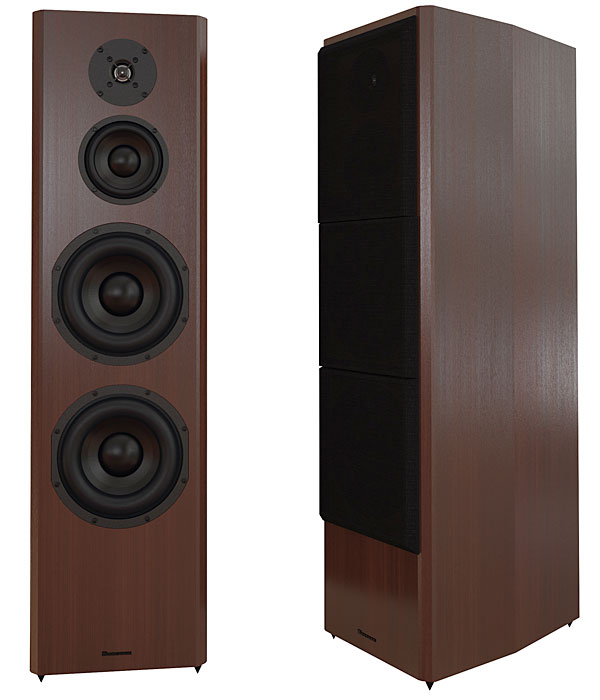
Readers of Stereophile need no introduction to Bryston, a venerable Canadian electronics manufacturer known for the quality and reliability of its amplifiers and preamplifiers, and for its unique 20-year warranty. In the past few years, Bryston has ventured into digital audio with notable success, producing D/A converters, multichannel preamplifier-processors, and music-file players. While an evolution from analog into digital audio would seem logical, their most recent expansion, into loudspeakers, is more surprising. Apparently, James Tanner, Bryston's vice president, designed a speaker for his own use, and it turned out well enough that the company decided to put it into production.
Burmester Audiosystems B99 loudspeaker
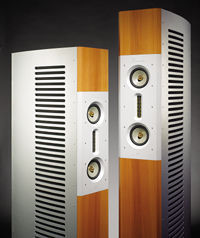
Sometimes it all comes down to the shape of the side panels. I was smitten by the gentle curves of the Burmester B99 loudspeaker's aluminum side grilles, which have uncommon grace. A love affair with an enclosure? Well, yes. After all, beauty is an intensely personal matter. In the words of Burmester's motto: "Art for the ear."
Burmester B25 loudspeaker
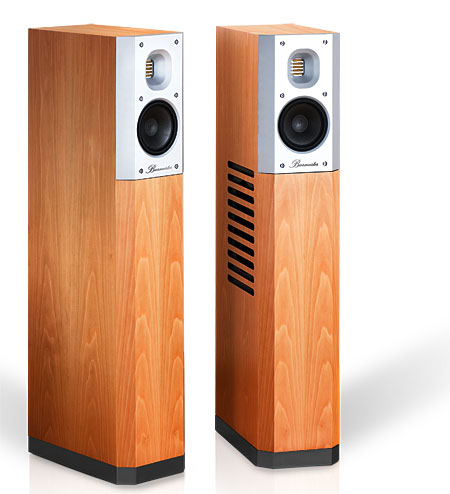
It's always fun to visit the Burmester Audio suite at the annual Consumer Electronic Show. Founder Dieter Burmester and CEO Udo Besser are upbeat, fun-loving personalities who enjoy demonstrating their latest home audio gear—that is, when they're not working on the latest updates to their sound system for the $2.1 million Bugatti Veyron 16.4 supercar. This past year they introduced their new B25 loudspeaker, an 88-lb floorstander. This "baby" Burmester's suggested retail price of $12,000/pair is only one-sixth that of Burmester's flagship speaker, the B100, only one-fourth its weight, and half its height. The design goals for the B25 were a less expensive, lighter speaker that was easier to set up, while retaining Burmester products' high-quality sound and good looks. Playing my own CDs through the B25s at the 2008 CES, I found them notably smooth and detailed; they also imaged well, and were particularly good at reproducing male voices.
Cabasse Artis Baltic II & Thor II loudspeaker system
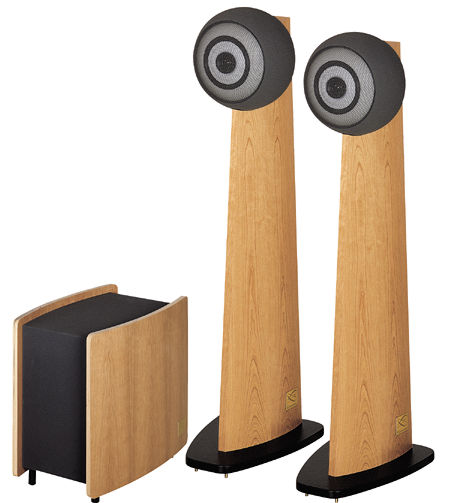
A proper speaker installation can take a full day and sometimes part of a second, even in a familiar room. But by the time the sun sets on Day One, the system should be almost there—wherever there is.
Calix Phoenix Grand Signature loudspeaker
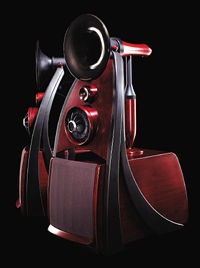
Of all the components to be seen and heard at an audio show or in a dealer's showroom, the most memorable and attention-grabbing are inevitably the super-speakers—bogglingly expensive, filled with cutting-edge engineering and exotic materials, of mammoth size and weight, with full-range reproduction that shakes building foundations and extends far enough up top to disrupt the navigation of bats. Survey the field, and the biggest Wilson, Aln, JMlab-Focal, Burmester, EgglestonWorks, and Nearfield Acoustics models, to name a few, fit that description.
Canton Karat Reference 2 DC loudspeaker
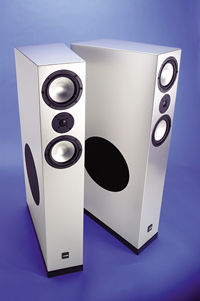
Despite my 26 years in audio journalism, the amount of stuff I need to know seems to increase faster than I can cope with it. Thus it didn't come as too much of a surprise for me to learn that speaker manufacturer Canton, the Teutonic equivalent of England's B&W, a) was 30 years old in 2002, and b) claims the dominant market share of the German market. Yes, I'd been peripherally aware of Canton through the years, but for various reasons had never auditioned any of their models. I was amenable, therefore, when Canton USA's Paul Madsen suggested to me last May, at Home Entertainment 2002 in New York City, that I review their flagship speaker.
Canton Reference 3.2 DC loudspeaker
Menu
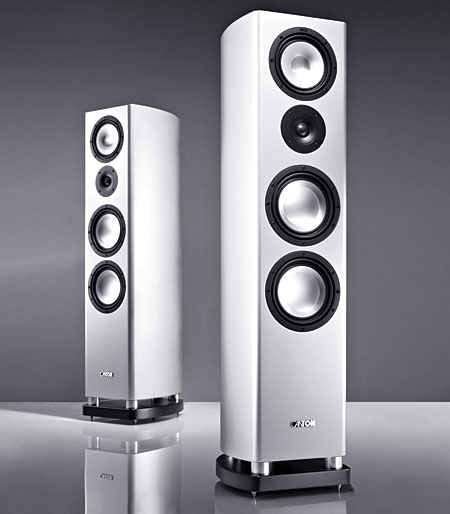
I was greatly impressed by the performance of the Canton Reference 9.2 DC loudspeaker, which I reviewedhttp://www.stereophile.com/standloudspeakers/308mitr">reviewed; in the March 2008 "Music in the Round" in the context of a 5.1-channel system. Those beautiful jewels not only sounded balanced and transparent, they had more sheer grunt in the low end than could be reasonably expected from their size. I wanted to hear more from Canton, but couldn't decide whether to go up in size or down in price. The problem I've always had with Canton is that they offer such a wide range of products that it's like choosing food from a multipage menu at a fine restaurant: everything looks good. It's especially difficult when your hunger is further piqued by your own past experience and the recommendations of others. (Check out the November">http://www.stereophile.com/floorloudspeakers/1106canton">November 2006 issue to learn how much Wes Phillips enjoyed Canton's flagship speaker, the Reference 1 DC.)
I was greatly impressed by the performance of the Canton Reference 9.2 DC loudspeaker, which I reviewedhttp://www.stereophile.com/standloudspeakers/308mitr">reviewed; in the March 2008 "Music in the Round" in the context of a 5.1-channel system. Those beautiful jewels not only sounded balanced and transparent, they had more sheer grunt in the low end than could be reasonably expected from their size. I wanted to hear more from Canton, but couldn't decide whether to go up in size or down in price. The problem I've always had with Canton is that they offer such a wide range of products that it's like choosing food from a multipage menu at a fine restaurant: everything looks good. It's especially difficult when your hunger is further piqued by your own past experience and the recommendations of others. (Check out the November">http://www.stereophile.com/floorloudspeakers/1106canton">November 2006 issue to learn how much Wes Phillips enjoyed Canton's flagship speaker, the Reference 1 DC.)