

EgglestonWorks Andra loudspeaker
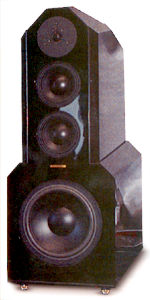
Bill Eggleston builds speakers because his father did. "My dad always told me that when he started, the only way you could get really good speakers was to build them yourself. We always had drivers and parts around, and I just began building my own so early I can't even remember. Much more important, my father passed on his wide-ranging approach to music. He listened to everything, and he taught me to be open-minded about music."
EgglestonWorks Viginti loudspeaker
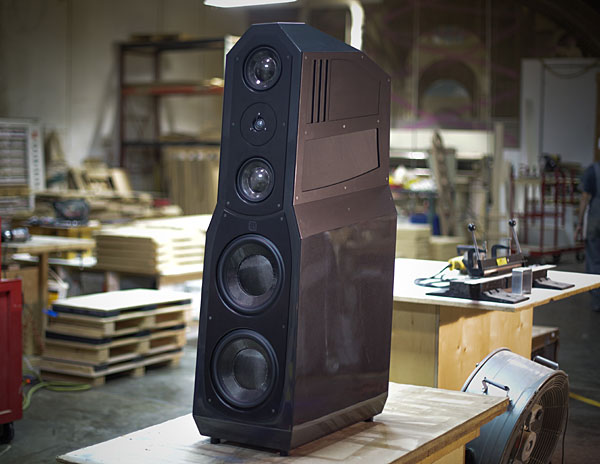
Viginti is Latin for twenty. It's also the name of a new loudspeaker from EgglestonWorks, to be produced in a limited edition of 250 pairs in celebration of the launch, 20 years ago, of the company's original Andra, on which the Viginti is based. The Viginti is a shapely and eye-pleasing 4' 2" tall, and weighs 255 lbkind of heavy for its size.
Elac Adante AF-61 loudspeaker
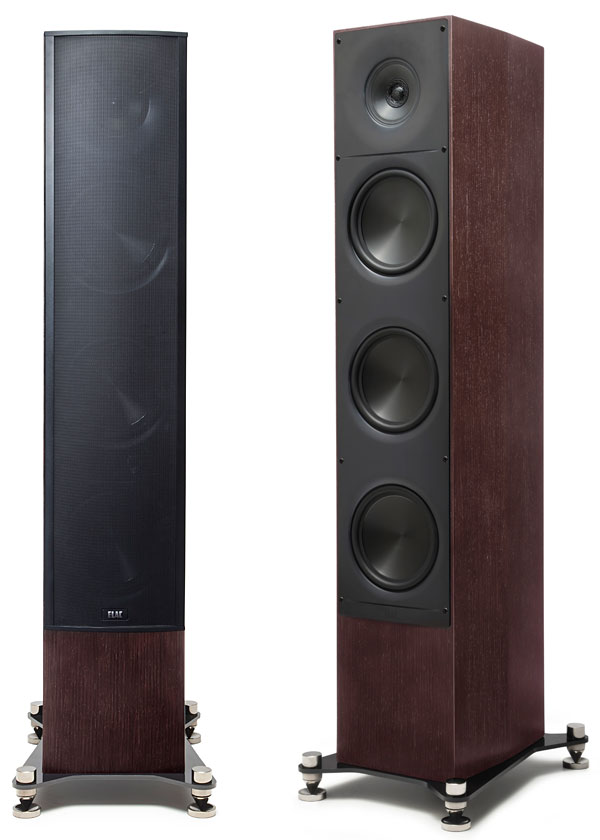
German manufacturer Elac had a significant North American presence in the 1960s and '70s, primarily with its Miracord automatic turntables. While it eventually disappeared from the US market, Elac never ceased to be a player in Europe, where it eventually shifted its primary focus from turntables to loudspeakers.
When Elac decided to reenter the US market a few years ago, its success was hardly assured. Faced with hundreds of brand names and thousands of models fighting for attention, it hired veteran speaker guru Andrew Jones to improve the odds. In his previous work, first for KEF and then for TAD and Pioneer, Jones had built a solid reputation on designing well-received, cost-no-object speakers as well as high-value budget designs.
Electro-Voice Model Two & Model Six loudspeakers
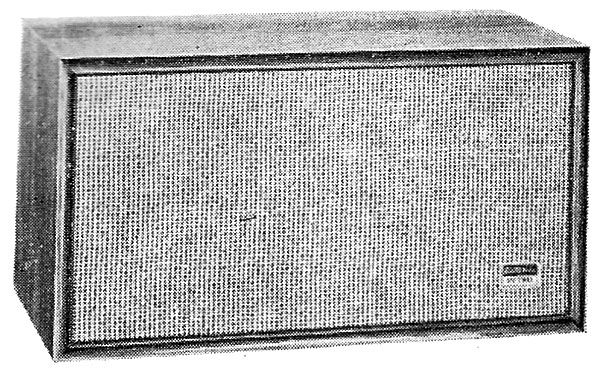
These are two of Electro-Voice's "middle-ground" speaker systems, filling the quality (and price) range between the huge Patrician 800 and the diminutive Coronet system.
Eminent Technology LFT-III loudspeaker
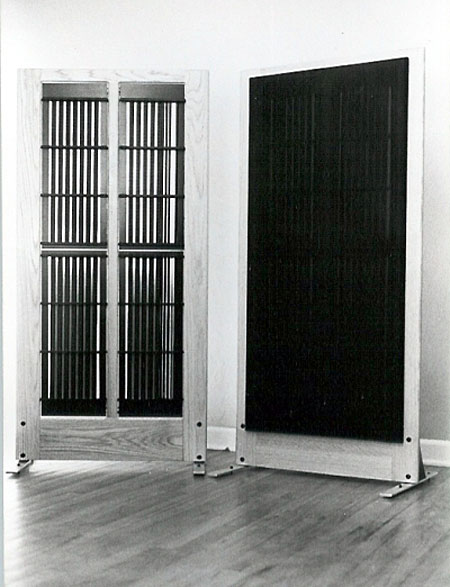
There is something especially exciting about a new loudspeaker design, if only because speakers are the component where one constantly hopes for the sonic miracle that will suddenly make it all sound real. No other component has the same overall impact in coloring the system, presents more room problems, or inspires more frustration on the road to the perfect system.
Eminent Technology LFT-VIII loudspeaker
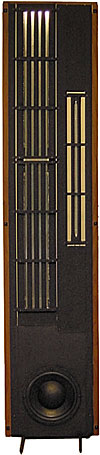
"And I say panel speakers can't rock'n'roll—"
Emotiva Audio Airmotiv T2 loudspeaker
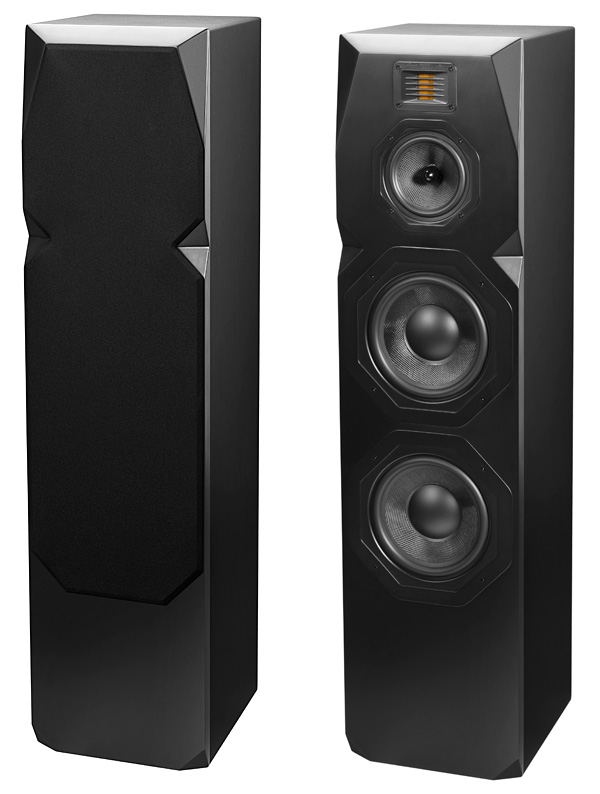
Visit any consumer audio show these days and you'll see rooms full of systems costing from six to seven figures. Manufacturers like to put their best foot forward, and demoing systems with loudspeakers designed to sell for $50,000/pair and up (often up) seems an obvious way to go.
It's also common for an audio company to launch its flagship models first, and only later release more affordable products, for a wider range of buyers. The hope is that the promotional shine of the dream products will be reflected onto the budget models.
Emotiva X-Ref XRT-5.2 loudspeaker
We've all read about how bookstores, appliance stores, and other bricks-and-mortar retailers are suffering with the increasing domination of Internet sales. That got me thinking about audio dealers. I've always believed that one can't really make an informed purchase of audiophile equipment without hearing it in a system properly set up by and at at a serious audio retailer. Here in New York City, we're blessed with six first-rate audio dealers in Manhattan alone, with more in the suburbs. I estimate that 90% of the products reviewed in Stereophile can be auditioned at a dealer or two within a two-hour drive of anywhere in the New York metropolitan area.
Energy Veritas v2.8 loudspeaker
If Canada has emerged as a hotbed of loudspeaker production in the past few years, the folks at Audio Products International must be positively sizzling. Of their three lines—Mirage, Energy, and Sound Dynamics—Mirage is perhaps the best known in the US, with Energy running a distant second. Mirage, at least in their flagship M series, features rather esoteric bipolar designs, while Energy sticks to the more conservative, forward-radiating approach. Stereophile has had extensive exposure to the various Mirages (a review of one of the M-series babies, the M-7si, is scheduled for a future issue); our exposure to Energy has been virtually nil, save for the odd Hi-Fi Show and CES. And thereby hangs a tale.
Epos ES25 loudspeaker
If reviewers can be believed, the diminutive, $995/pair Epos ES11 loudspeaker has been a phenomenal success worldwide since its 1990 introduction. Stereophile added its voice to this hallelujah chorus in Vol.14 No.7, when the '11 kicked butt in a blind-listening-panel evaluation of inexpensive small speakers. While the ES11 did plenty of things extremely well, it was inevitable that it was limited in terms of ultimate sound-pressure levels (spls), deep-bass extension, and dynamic persuasiveness. While the ES11 was an unqualified success given its modest size and price, one couldn't help but wonder what Epos might be capable of in a larger model. (While a larger Epos model already existed in the $1695/pair ES14http://www.stereophile.com/standloudspeakers/566">ES14;, it predated the technology of the ES11 by four years.)