PrimaLuna ProLogue Eight CD player

PrimaLuna ProLogue Eight CD player

There's a retro, Heathkit vibe to the curiously capitalized PrimaLuna ProLogue Eight CD player: a shelf of glowing tubes and a chunky transformer case perched atop a plain black chassis. But on closer inspection, it seems there's much more going on here. The chassis is made of heavy-gauge steel, with (according to the manual) a "five-coat, high-gloss, automotive finish," each coating hand-rubbed and -polished. The tube sockets are ceramic, the output jacks gold-plated. Inside, separate toroidal transformers power each channel. Custom-designed isolation transformers separate the analog and digital devices, to reduce noise. The power supply incorporates 11 separate regulation circuits. The output stage is dual-mono with zero feedback. Audio-handling chips include a Burr-Brown SRC4192 that upsamples "Red Book" data to 24-bit/192kHz, and one 24-bit Burr-Brown PCM1792 DAC per channel. Only the tiny silver control buttons (on the otherwise hefty faceplate of machined aluminum) betray a whiff of chintz.

Listening #67 Follow-Up, September 2008

Listening #67 Follow-Up, September 2008

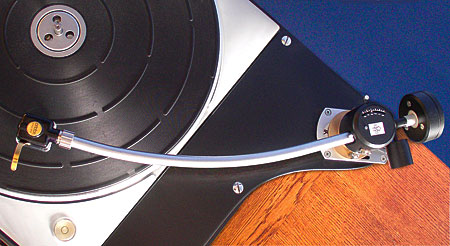
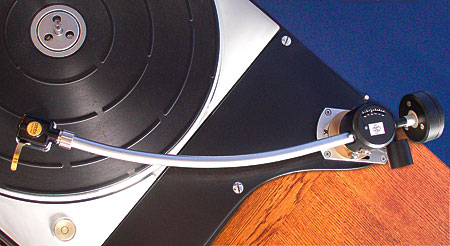
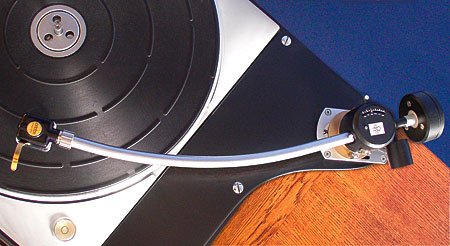
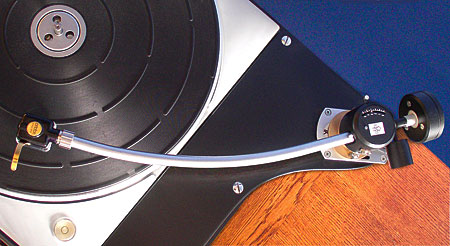
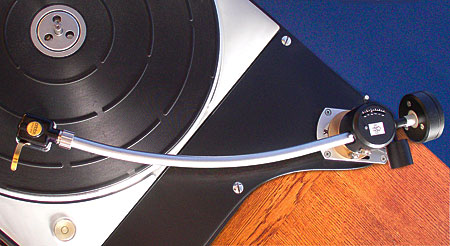
I can't help wondering: how did the mainstream audio press, cheered Dynaco and Marantz and McIntosh and Quad for switching to transistors a couple of generations ago, greet the first tube-revival products from Audio Research and the like? What was the reaction when moving-coil cartridge technology, considered all but dead by the early 1970s, became the perfectionist hi-fi norm just a few years later? And what would the same people make of the fact that a high-mass, transcription-length pickup arm—with interchangeable pickup heads, no less—is one of the most recommendable phono products of 2008? The mind boggles.

Listening #67 Associated Equipment

Listening #67 Associated Equipment

I can't help wondering: how did the mainstream audio press, cheered Dynaco and Marantz and McIntosh and Quad for switching to transistors a couple of generations ago, greet the first tube-revival products from Audio Research and the like? What was the reaction when moving-coil cartridge technology, considered all but dead by the early 1970s, became the perfectionist hi-fi norm just a few years later? And what would the same people make of the fact that a high-mass, transcription-length pickup arm—with interchangeable pickup heads, no less—is one of the most recommendable phono products of 2008? The mind boggles.

Listening #67 Page 3

Listening #67 Page 3

I can't help wondering: how did the mainstream audio press, cheered Dynaco and Marantz and McIntosh and Quad for switching to transistors a couple of generations ago, greet the first tube-revival products from Audio Research and the like? What was the reaction when moving-coil cartridge technology, considered all but dead by the early 1970s, became the perfectionist hi-fi norm just a few years later? And what would the same people make of the fact that a high-mass, transcription-length pickup arm—with interchangeable pickup heads, no less—is one of the most recommendable phono products of 2008? The mind boggles.

Listening #67 Page 2

Listening #67 Page 2

I can't help wondering: how did the mainstream audio press, cheered Dynaco and Marantz and McIntosh and Quad for switching to transistors a couple of generations ago, greet the first tube-revival products from Audio Research and the like? What was the reaction when moving-coil cartridge technology, considered all but dead by the early 1970s, became the perfectionist hi-fi norm just a few years later? And what would the same people make of the fact that a high-mass, transcription-length pickup arm—with interchangeable pickup heads, no less—is one of the most recommendable phono products of 2008? The mind boggles.

Listening #67

Listening #67

I can't help wondering: how did the mainstream audio press, cheered Dynaco and Marantz and McIntosh and Quad for switching to transistors a couple of generations ago, greet the first tube-revival products from Audio Research and the like? What was the reaction when moving-coil cartridge technology, considered all but dead by the early 1970s, became the perfectionist hi-fi norm just a few years later? And what would the same people make of the fact that a high-mass, transcription-length pickup arm—with interchangeable pickup heads, no less—is one of the most recommendable phono products of 2008? The mind boggles.

Now I know he's deaf

This LP sounds horrible, and the music is nothing like what EC did in the early years, when he had some life and energy. This album is a stinker. MF has to be either confused, deaf, or just makes stuff up. He didn't listen to this album if he draws an 8 conclusion. the music is dijointed, clutter. EC singing is lifeless, no emotion, horrible, and it was WARPED!!!$30 junk. http://www.musicangle.com/album.php?id=661

Anybody heard the new Sunfire XT CRM-2?

Forums

Saw a review in Stereophile's sister magazine, then saw the review in TAS, and now I'm intruiged.

To get an idea of what a barren audio landscape we have going on in Las Vegas, Sunfire lists a place in L.A. when I search for "local" dealers!

Anyhow, seems like it could be a fun toy. I'd be interested in any of y'all's take.
T.H.E. Show to Audiophile Societies: Come on In!

T.H.E. Show to Audiophile Societies: Come on In!

T.H.E. Show, aka <A HREF="http://theshowlasvegas.com/2009/">The Home Entertainment Show</A>, has put out a welcome mat for members of "authentic Audiophile Societies throughout the globe."1 Scheduled for January 9&#150;11, 2009, in Las Vegas, the same dates as the Consumer Electronics Show down the road, T.H.E. Show has for the first time offered members of audiophile societies paid access to over 100 anticipated active-display suites in both the St. Tropez and Alexis Park hotels.

Advertisement
Advertisement
Advertisement