Over the past two and a half years, I've auditioned and reviewed a number of digital audio products. It has been a fascinating experience both to watch digital playback technology evolve and to listen to the results of various design philosophies. The road to more musical digital audio has been a slow and steady climb, with occasional jumps forward made possible by new techniques and technologies. Making this odyssey even more interesting (and confounding), digital processors seem to offer varying interpretations of the music rather than striving toward a common ideal of presenting what's on the disc without editorial interjection.
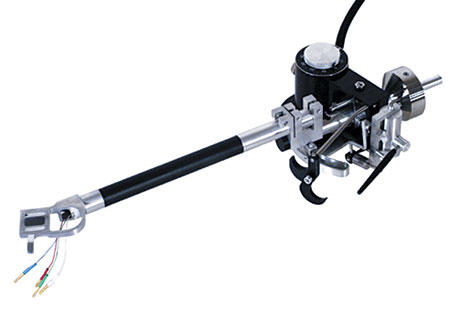
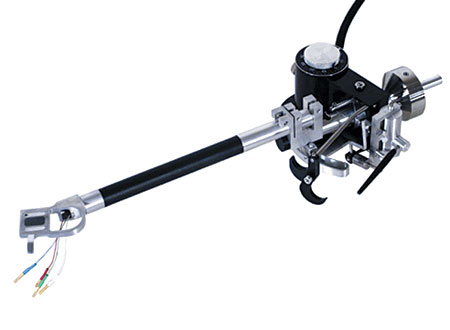
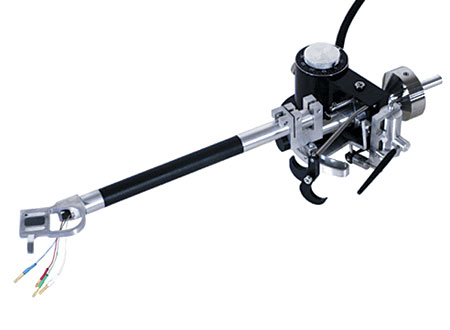
While brushing my teeth this morning, it occurred to me that there are significant similarities between a toothbrush and a tonearm/cartridge. The bristles would be analogous to the cartridge and the brush handle to the tonearm. In either case it is the business end of the device that does all the work. The bristles track the contours of your ivories in search of hazardous waste deposits, while the cartridge tracks the record groove transducing wall modulations into an electrical signal. I think that this is where the old adage came from: "A used cartridge is like a used toothbrush—nobody wants one!"
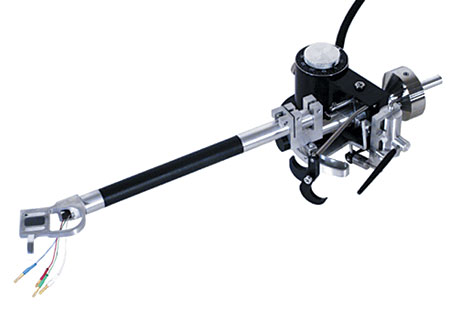
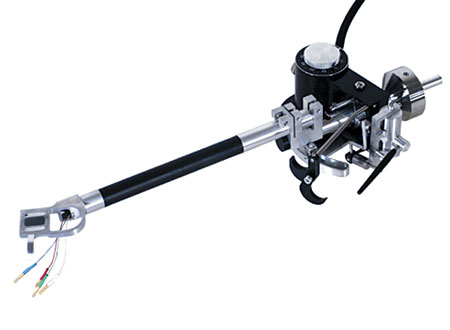
The Tri-Planar Tonearm Brian Damkroger on the Tri-Planar Precision Mk.VII, June 2010
While brushing my teeth this morning, it occurred to me that there are significant similarities between a toothbrush and a tonearm/cartridge. The bristles would be analogous to the cartridge and the brush handle to the tonearm. In either case it is the business end of the device that does all the work. The bristles track the contours of your ivories in search of hazardous waste deposits, while the cartridge tracks the record groove transducing wall modulations into an electrical signal. I think that this is where the old adage came from: "A used cartridge is like a used toothbrush—nobody wants one!"
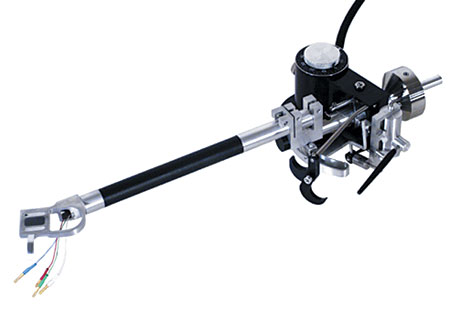
The Tri-Planar Tonearm Michael Fremer on the Tri-Planar Mk.VI Ultimate, July 2001
While brushing my teeth this morning, it occurred to me that there are significant similarities between a toothbrush and a tonearm/cartridge. The bristles would be analogous to the cartridge and the brush handle to the tonearm. In either case it is the business end of the device that does all the work. The bristles track the contours of your ivories in search of hazardous waste deposits, while the cartridge tracks the record groove transducing wall modulations into an electrical signal. I think that this is where the old adage came from: "A used cartridge is like a used toothbrush—nobody wants one!"
The Tri-Planar Tonearm Michael Fremer's Associated Equipment
While brushing my teeth this morning, it occurred to me that there are significant similarities between a toothbrush and a tonearm/cartridge. The bristles would be analogous to the cartridge and the brush handle to the tonearm. In either case it is the business end of the device that does all the work. The bristles track the contours of your ivories in search of hazardous waste deposits, while the cartridge tracks the record groove transducing wall modulations into an electrical signal. I think that this is where the old adage came from: "A used cartridge is like a used toothbrush—nobody wants one!"
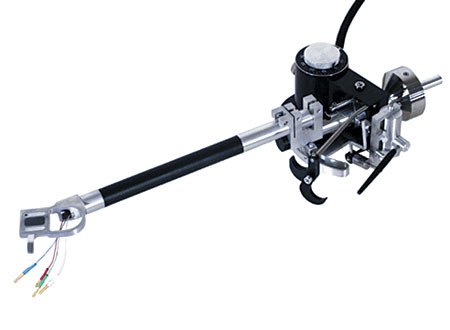
The Tri-Planar Tonearm Michael Fremer on the Tri-Planar V Ultimate, February 1998
While brushing my teeth this morning, it occurred to me that there are significant similarities between a toothbrush and a tonearm/cartridge. The bristles would be analogous to the cartridge and the brush handle to the tonearm. In either case it is the business end of the device that does all the work. The bristles track the contours of your ivories in search of hazardous waste deposits, while the cartridge tracks the record groove transducing wall modulations into an electrical signal. I think that this is where the old adage came from: "A used cartridge is like a used toothbrush—nobody wants one!"
While brushing my teeth this morning, it occurred to me that there are significant similarities between a toothbrush and a tonearm/cartridge. The bristles would be analogous to the cartridge and the brush handle to the tonearm. In either case it is the business end of the device that does all the work. The bristles track the contours of your ivories in search of hazardous waste deposits, while the cartridge tracks the record groove transducing wall modulations into an electrical signal. I think that this is where the old adage came from: "A used cartridge is like a used toothbrush—nobody wants one!"
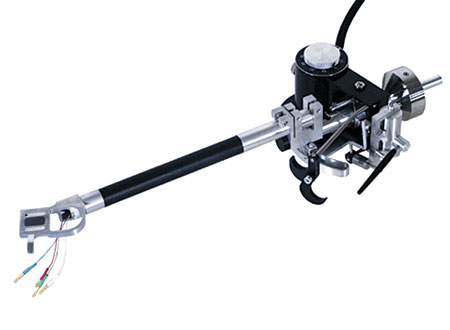
The Tri-Planar Tonearm Steven Stone on the Tri-Planar IV Ultimate, February 1995
While brushing my teeth this morning, it occurred to me that there are significant similarities between a toothbrush and a tonearm/cartridge. The bristles would be analogous to the cartridge and the brush handle to the tonearm. In either case it is the business end of the device that does all the work. The bristles track the contours of your ivories in search of hazardous waste deposits, while the cartridge tracks the record groove transducing wall modulations into an electrical signal. I think that this is where the old adage came from: "A used cartridge is like a used toothbrush—nobody wants one!"
While brushing my teeth this morning, it occurred to me that there are significant similarities between a toothbrush and a tonearm/cartridge. The bristles would be analogous to the cartridge and the brush handle to the tonearm. In either case it is the business end of the device that does all the work. The bristles track the contours of your ivories in search of hazardous waste deposits, while the cartridge tracks the record groove transducing wall modulations into an electrical signal. I think that this is where the old adage came from: "A used cartridge is like a used toothbrush—nobody wants one!"
It is a widely held belief that musicians do not assess hi-fi equipment in the same way as "audiophiles." I remember the British conductor Norman Del Mar—an underrated conductor if ever there was one—still being perfectly satisfied in 1981 with his 78 player, never having felt the need to go to LP, let alone to stereo. And some musicians do seem oblivious to the worst that modern technology can do. I was present at the infamous Salzburg CD conference in 1982, for example, where Herbert von Karajan, following one of the most unpleasant sound demonstrations in recorded history, announced that "All else is gaslight!" compared with what we had just heard. J. Gordon Holt proposed a couple of years back ("<A HREF="http://www.stereophile.com/asweseeit/348">As We See It</A>," Vol.8 No.1) that sound is not one of the things in <I>reproduced</I> music to which musicians listen. I have also heard it said that even the highest fidelity is so far removed from live music that a musician, immersed in the real thing, regards the difference between the best and the worst reproduced sound as irrelevant to the musical message: both are off the scale of his or her personal quality meter.