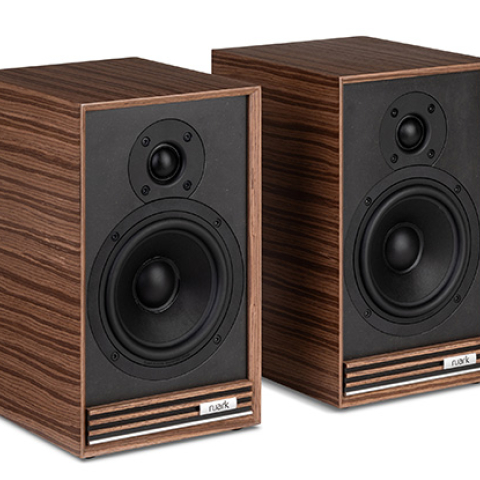
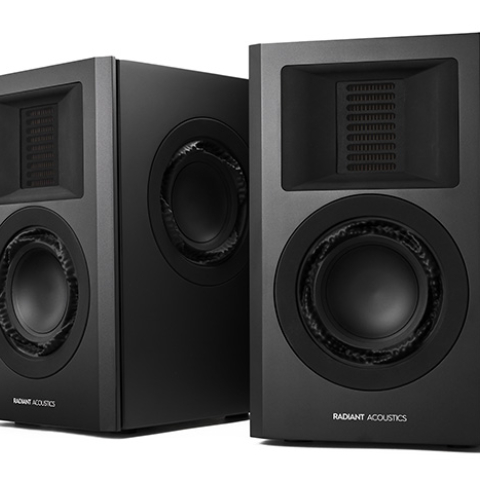
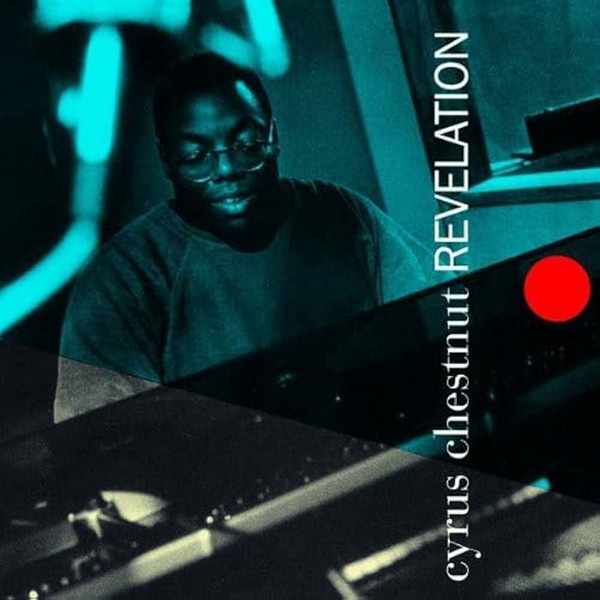
 One of my favorite and, hence, most familiar recordings is Cyrus Chestnut's 1994 debut album Revelation (16/44.1 WAV CD rip, Atlantic Jazz, 82518-2). Nicely recorded by our friend Jim Anderson, this whole album is a delight. In particular, I am fascinated by track 3, "Lord, Lord, Lord," where Chestnut's lilting, rolling expository interacts with bassist Christopher J. Thomas in bopping syncopation, underpinned by Clarence Penn's solid drive on drums. The piano is up front, the bass behind with drums over on the left, and there's just enough space for them to fit quite convincingly at the front of my room. The FR5s made it just big enough to be live—and so clear that they could be here.
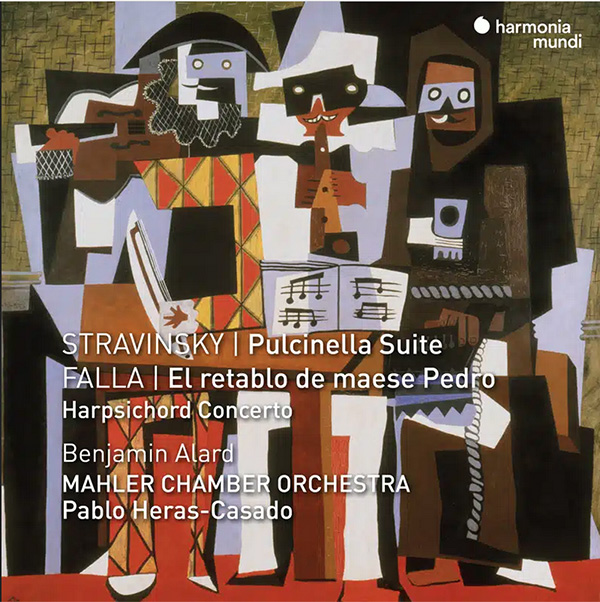
All's well with these small ensembles, but what about bigger soundstages? Consider the delightful El Retablo de Maese Pedro (Master Peter's Puppet Show), a chamber opera by Manuel de Falla, in a recent recording with the Mahler Chamber Orchestra led by Pablo Heras-Casado (16/44.1 CD rip, Harmonia Mundi HMM 902653). This recording features three voices—tenor, bass-baritone, and boy soprano (footnote 3)—and a 37-piece orchestra including timpani, percussion, and harp, all of which de Falla employs liberally. From the opening bell (literally: a bell) to the end, the FR5 presents this panoply of instruments set 6'–8' back and arrayed laterally widely beyond the speakers. I could discern the individual instruments of the ensemble, and the FR5s seemed to mitigate some of the forwardness I've heard from this recording with other speakers. The space (Auditori de Girona) seemed large and somewhat reflective; it is, I looked it up. The voices, too, were distinctive and natural.
One of my favorite and, hence, most familiar recordings is Cyrus Chestnut's 1994 debut album Revelation (16/44.1 WAV CD rip, Atlantic Jazz, 82518-2). Nicely recorded by our friend Jim Anderson, this whole album is a delight. In particular, I am fascinated by track 3, "Lord, Lord, Lord," where Chestnut's lilting, rolling expository interacts with bassist Christopher J. Thomas in bopping syncopation, underpinned by Clarence Penn's solid drive on drums. The piano is up front, the bass behind with drums over on the left, and there's just enough space for them to fit quite convincingly at the front of my room. The FR5s made it just big enough to be live—and so clear that they could be here.
All's well with these small ensembles, but what about bigger soundstages? Consider the delightful El Retablo de Maese Pedro (Master Peter's Puppet Show), a chamber opera by Manuel de Falla, in a recent recording with the Mahler Chamber Orchestra led by Pablo Heras-Casado (16/44.1 CD rip, Harmonia Mundi HMM 902653). This recording features three voices—tenor, bass-baritone, and boy soprano (footnote 3)—and a 37-piece orchestra including timpani, percussion, and harp, all of which de Falla employs liberally. From the opening bell (literally: a bell) to the end, the FR5 presents this panoply of instruments set 6'–8' back and arrayed laterally widely beyond the speakers. I could discern the individual instruments of the ensemble, and the FR5s seemed to mitigate some of the forwardness I've heard from this recording with other speakers. The space (Auditori de Girona) seemed large and somewhat reflective; it is, I looked it up. The voices, too, were distinctive and natural.
 All this seemed more than mildly surprising to me given the size of the FR5s. Also, it was quite easy to disassociate these small speakers from the big music they created.
 Reflections
I lived with the FR5s for several weeks, and they were equally pleasing with the Benchmark, NAD, and Buckeye amplifiers (footnote 5). My listening space, at 500+ft2, is probably larger than most spaces these speakers will end up in. Yet unless I pushed them hard or tortured them intentionally, say with organ music, their small size was not relevant. Similarly sized speakers I've experienced have had their own unique attractions but demand accommodations. These didn't. An example is the similarly sized and priced Bowers & Wilkins 705 S3, which I enjoyed, but as I noted in my review, with those speakers, "elevated upper midrange and treble contributes to its perceived clarity and soundstage." The FR5 does not offer such highlighting, yet it achieves equal clarity and an even more generous soundstage. The FR5 seemed completely smooth and natural throughout its frequency range, but I found it slightly depressed in the upper midrange when compared side by side with KEFs—both the Blade Two and the LS60. This characteristic became a virtue with forward recordings, such as with the de Falla described above. The boy soprano was almost tolerable.
 Conclusions
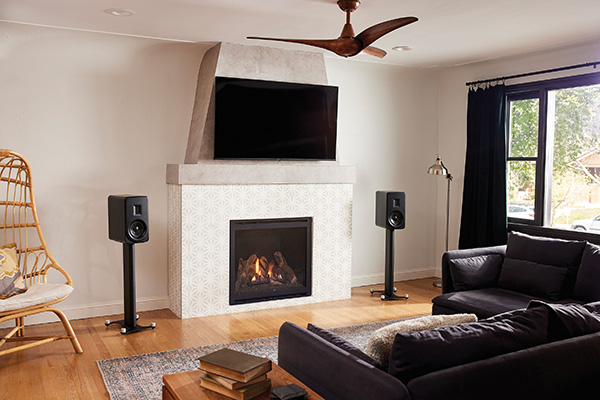
It is hard to criticize the performance of the Aspen FR5s. Placement is not difficult (although the rather specific setup instructions in the manual didn't work well in my room), and they are equally satisfying with a wide variety of music. They offer excellent treble detail without brightness, fine voice delineation without emphasis, and generous bass for their size.
Footnote 3 :I've heard this piece in a number of performances and I am always annoyed by the petulant whining of the boy soprano but, clearly, I cannot criticize any of them, including the young man on this recording, for performing what de Falla put in the score. Footnote 4: Readers with multichannel options are forthwith directed to Ludovic Morlot and the Seattle Symphony's spectacular recording on SSM1018 in the 24/96 5.1-channel format.