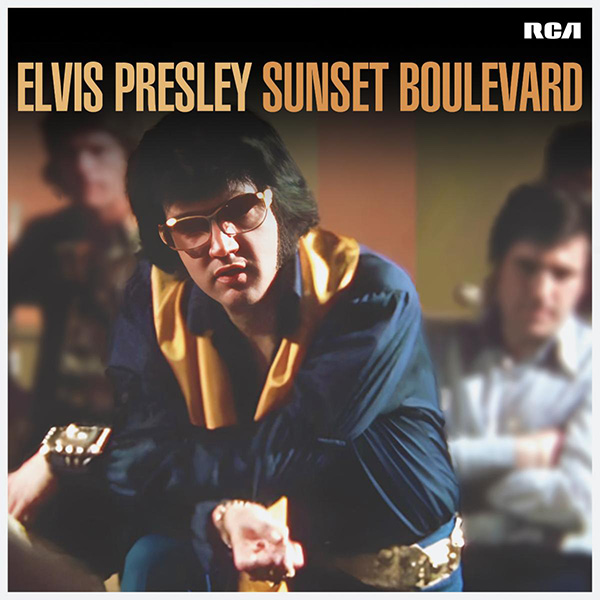
Elvis Presley: Sunset Boulevard
RCA/Legacy 19802905512 (5 CDs). 2025. Ernst Mikael Jørgensen, prod.; Matt Ross-Spang, Vic Anesini, engs.
Performance ****
Sonics **½ **** While Ozzy Osbourne's longevity despite a heroic effort at self-destruction was a near miracle, the audible proof of rockstar immortality lies in the seemingly endless trail of posthumous releases of long-dead stars like Jimi Hendrix and Elvis Presley. A barrel that may be nearing its bottom, the Presley RCA archives continue to be explored by the longtime, indefatigable Presley reissue producer Ernst Mikael Jørgensen. There's only one previously unreleased track in this new set, which collects everything Presley recorded at RCA's Hollywood Studios between 1972 and 1975. Included are the master takes from sessions held in 1972 and 1975, whose output later appeared on the studio albums Separate Ways (1972), Elvis (1973), Today (1975), and a variety of later compilations. Also included are rehearsals recorded leading up to his 1970 and 1974 Las Vegas residencies. Available in both a five-CD set and a double vinyl LP version, these tracks appear here without the overdubs that were added later.
By the mid-1970s, Elvis was constantly touring America but recording less and less, despite RCA's demand for a new studio album. When he did deign to enter a studio, he was primarily interested in recording sentimental, sometimes maudlin ballads. One of the greatest was "Always on My Mind," which was originally released in 1972 as the B side of the "Separate Ways" single. This impassioned mea culpa, which was recorded just after his divorce from wife Priscilla, went to the Top 20 in Hot Country Singles. Other warm and earnest performances from the 1972 session include "Where Do I Go from Here" and a heartfelt cover of Kris Kristofferson's "For the Good Times."
To his credit, Elvis was old-school about the recording process. He wanted sessions to go on without a time limit. He recorded live with the entire band playing with him on the studio floor; he did not overdub his vocals later.
Once he was done in the studio, however, Elvis had little interest in what happened to his recordings. He allowed his producer, most often Felton Jarvis, to mix and master the tapes and to choose the master takes. An outtakes disc collects extras from both the 1972 and 1975 album sessions, many them previously released on 2001's 6363 Sunset from the BMG Presley specialty label Follow That Dream.
Having come up in the 1950s, Presley thought in terms of singles—never in terms of coherent albums that tell a story. By the 1975 sessions, the song selection—what Elvis was interested in—had become slack and uninspired. His lifestyle had taken a toll on his voice. But for several of these tracks, he was able to rouse some of the old spirit. In his rendition of "Shake a Hand," a 1953 hit for Faye Adams, he calls for an extra chorus. Even lugubrious ballads like "Green, Green Grass of Home," which had already become a hit for Presley friend Tom Jones, and especially "And I Love You So," have their moments. He is obviously having fun in a loose, partial take on his onetime showstopper "Tiger Man," but his voice sounds thin and small, as if someone else is singing.
A huge factor in Elvis's live performances and on albums like Today is the professionalism of the TCB band. Anchored by guitarist James Burton, bassist Jerry Scheff, keyboardist Glen D. Hardin, and drummer Ronnie Tutt, they were engaged, adaptable, and hard to fool. Most of them later became part of Emmylou Harris's Hot Band. The discs documenting the rehearsals for the 1970 and 1974 Las Vegas residencies are both the high and low points of this set. In 1970, Elvis was still in the middle of his career resurgence ignited by his 1968 comeback special. The TCB band was brand new. In the 34 tracks from the 1970 rehearsals, he's the lighthearted Elvis fans love to imagine as he runs through covers of "Johnny B. Goode," "Polk Salad Annie," and "Sweet Caroline." While there are takes of "Suspicious Minds" and "Stranger in My Hometown," it's always striking how fast the material recorded with producer Chips Moman, which revitalized his career, disappeared from his live set list.
Overall, the sonics of the 1974 rehearsals are less than ideal. They were badly miked and not nearly as clear or full as the 1970 tracks. Elvis's vocals are often fuzzy and distorted, and when he turns to an upbeat number like "Proud Mary," the limits of his voice become obvious.
This is a well-done package collecting late-career Elvis, warts and all.—Robert Baird
 Paul Weller: Find El Dorado
Parlophone 5021732748935 (auditioned as CD). 2025. Steve Cradock, prod.; Jez Murphy, eng.
Performance ***
Sonics ***** Paul Weller is no stranger to covers. Across his career and in countless concerts, he's unearthed gems by overlooked artists and given them new life. His 2004 album Studio 150 proved how effective he was at making other people's songs his own, delivering them with the fiery bounce that matched the sound of that moment in his career. Known as "The Modfather," Weller has musical tastes that never sit still. After a brief foray into electronica, he circled back to music reminiscent of his mid-1990s output. That didn't last long. When he entered his mid-60s, his records took a mellower, lounge-inspired turn. That's why his new covers collection, Find El Dorado, isn't much of a surprise. While it has a few bright spots, much of it plays like an endless elevator ride.
Produced by longtime collaborator Steve Cradock of Ocean Colour Scene, the record has no shortage of star power: Noel Gallagher, Robert Plant, and Declan O'Rourke join the sessions. Together they revisit songs that shaped Weller's teenage years: Bobby Charles's 1972 track "Small Town Talk," dressed up with soulful vocals and a sharp brass section; White Plains' swaying 1971 ballad "When You Are a King"; "Pinball," a bluesy shuffle from 1974 that made Brian Protheroe a one-hit wonder.
The standout is "Lawdy Rolla," first released in 1969 by short-lived French outfit The Guerrillas. It's snappy, fast, and effortlessly cool—the kind of thing that recalls Weller's own best material.
There's a noticeable Irish influence throughout, adding a folk flavor that feels authentic. Weller's voice remains strong, fueled by his affection for these songs. Still, Weller has always been at his most compelling when he makes us want to move. Too often here, the material feels more like well-crafted lullabies than the kind of vital, forward-moving work we know he's capable of.—Ray Chelstowski
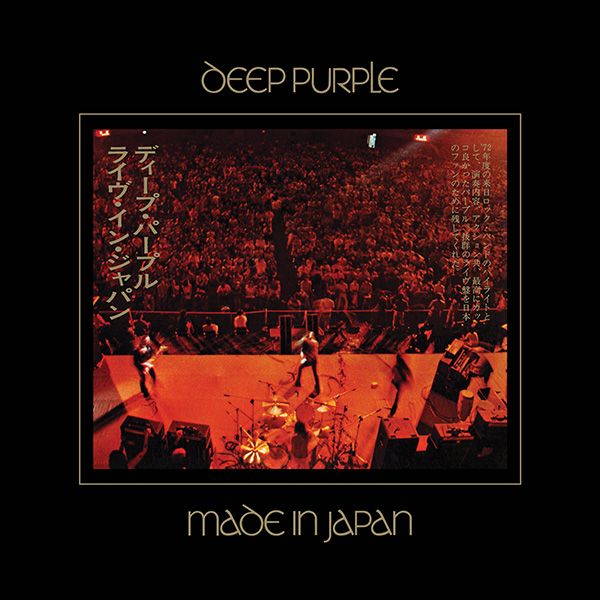 Deep Purple: Made in Japan
Rhino 081227813031 (10 LPs). 1972/2025. Deep Purple, prods.; Martin Birch, Steven Wilson, Richard Digby Smith, engs.
Performance ****
Sonics ****½ As the only official live recording of the 1969–73 Gillan-Glover Mark II version of Deep Purple, Made in Japan has always divided Purple fans. Some thought the resulting 1972 album was too short. The sound quality has always elicited complaints. There were questions over why more material from the band's blockbuster, Machine Head, was not included. Others found the long tracks too jammy, or thought the band had sabotaged familiar album tracks. The flip side holds that by doing more than merely reproducing studio recordings, these improvised jams kept things fresh. While not all of these issues have been settled, the new 10-LP set of everything recorded in Japan gives a complete picture of the shows in Tokyo and Osaka in May 1972. While all the Japan material was originally recorded by Martin Birch, who'd worked on previous Purple albums including Machine Head, the seven tracks of original album appear here in new stereo and Dolby Atmos mixes overseen by Steven Wilson, formerly of Porcupine Tree. His mix is punchier and more in-your-face with slightly better detail than the previous 2014 remastering. The mix is different though not superior to the original, which was done by bassist Roger Glover and drummer Ian Paice.
The heavy, quiet LP pressings are the work of Optimal in Germany. Three Mexican, German, and US single edits are also included. The three complete shows from which the original album was drawn have been remixed by Richard Digby Smith, who's best known as part of the engineering team behind the Led Zeppelin III and IV reissues. These sides have more depth than the 2014 European reissue, which featured unaltered original mixes of these shows. Having the complete shows with their identical set lists allows listeners to judge whether the takes included on the original album were the right choices.—Robert Baird
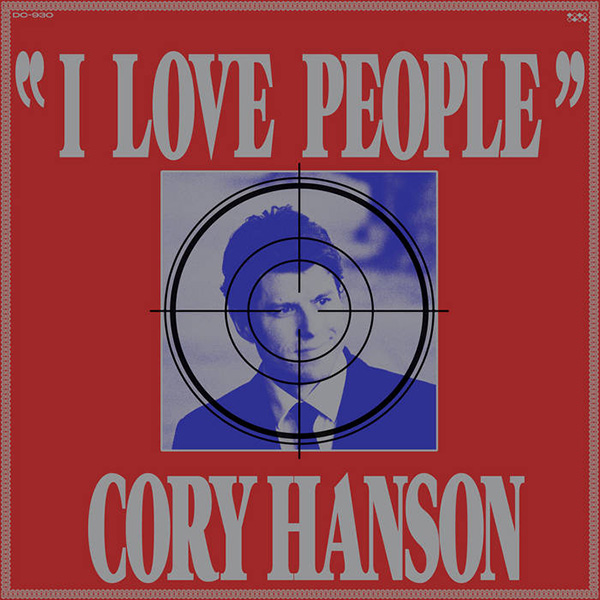 Cory Hanson: "I Love People"
Drag City Records (auditioned as LP). 2025. Robbie Cody, Hanson, prods.; Robbie Cody, Joe Bozzi, engs.
Performance ***
Sonics ***** As Wand's front man, Hanson produces tender vocals that float within the band's layered atmospherics. It's a blend that feels natural and balanced. As a solo artist, Hanson has stepped outside that framework to explore sounds that wouldn't fit into Wand's sonic world. On his album White, for example, seemingly random noises lock into place like Lego bricks to form music that's both original and compelling.
On his new record, "I Love People", Hanson shifts gears. Built from the piano up, the album never strays far from its folky, acoustic foundation. Its songs jingle and jangle, sometimes bouncing with cowpoke swagger. But too often, the arrangements get in the way, distracting from Hanson's gift for clever, incisive lyrics—lines that land with the sly knowingness of someone aware you're in on the joke, the lie, the truth.
Many reviews have pointed to the influence of Laurel Canyon, but "I Love People" feels closer to the Texas storytelling tradition of Guy Clark—where the tale comes first and the music provides support. The difference is that Clark's voice and guitar were all, inseparable from his characters, whereas Hanson's music works best when the sound around him has more dimension, as when punchy horns give the album's title track depth, elevating Hanson's delivery without overwhelming his voice or the song.
Despite the important differences between Wand and Hanson's solo work, this record was built with the same musicians who helped create Wand's Vertigo; Robbie Cody co-produced. Evan Backer played bass and did the arrangements for horns and strings. Evan Burrows played percussion. Their versatility underscores just how much range this collective has and how much potential Hanson's side projects still hold, much of it as yet unfulfilled.—Ray Chelstowski
RCA/Legacy 19802905512 (5 CDs). 2025. Ernst Mikael Jørgensen, prod.; Matt Ross-Spang, Vic Anesini, engs.
Performance ****
Sonics **½ **** While Ozzy Osbourne's longevity despite a heroic effort at self-destruction was a near miracle, the audible proof of rockstar immortality lies in the seemingly endless trail of posthumous releases of long-dead stars like Jimi Hendrix and Elvis Presley. A barrel that may be nearing its bottom, the Presley RCA archives continue to be explored by the longtime, indefatigable Presley reissue producer Ernst Mikael Jørgensen. There's only one previously unreleased track in this new set, which collects everything Presley recorded at RCA's Hollywood Studios between 1972 and 1975. Included are the master takes from sessions held in 1972 and 1975, whose output later appeared on the studio albums Separate Ways (1972), Elvis (1973), Today (1975), and a variety of later compilations. Also included are rehearsals recorded leading up to his 1970 and 1974 Las Vegas residencies. Available in both a five-CD set and a double vinyl LP version, these tracks appear here without the overdubs that were added later.
Paul Weller: Find El DoradoParlophone 5021732748935 (auditioned as CD). 2025. Steve Cradock, prod.; Jez Murphy, eng.
Performance ***
Sonics ***** Paul Weller is no stranger to covers. Across his career and in countless concerts, he's unearthed gems by overlooked artists and given them new life. His 2004 album Studio 150 proved how effective he was at making other people's songs his own, delivering them with the fiery bounce that matched the sound of that moment in his career. Known as "The Modfather," Weller has musical tastes that never sit still. After a brief foray into electronica, he circled back to music reminiscent of his mid-1990s output. That didn't last long. When he entered his mid-60s, his records took a mellower, lounge-inspired turn. That's why his new covers collection, Find El Dorado, isn't much of a surprise. While it has a few bright spots, much of it plays like an endless elevator ride.
Deep Purple: Made in JapanRhino 081227813031 (10 LPs). 1972/2025. Deep Purple, prods.; Martin Birch, Steven Wilson, Richard Digby Smith, engs.
Performance ****
Sonics ****½ As the only official live recording of the 1969–73 Gillan-Glover Mark II version of Deep Purple, Made in Japan has always divided Purple fans. Some thought the resulting 1972 album was too short. The sound quality has always elicited complaints. There were questions over why more material from the band's blockbuster, Machine Head, was not included. Others found the long tracks too jammy, or thought the band had sabotaged familiar album tracks. The flip side holds that by doing more than merely reproducing studio recordings, these improvised jams kept things fresh. While not all of these issues have been settled, the new 10-LP set of everything recorded in Japan gives a complete picture of the shows in Tokyo and Osaka in May 1972. While all the Japan material was originally recorded by Martin Birch, who'd worked on previous Purple albums including Machine Head, the seven tracks of original album appear here in new stereo and Dolby Atmos mixes overseen by Steven Wilson, formerly of Porcupine Tree. His mix is punchier and more in-your-face with slightly better detail than the previous 2014 remastering. The mix is different though not superior to the original, which was done by bassist Roger Glover and drummer Ian Paice.
Cory Hanson: "I Love People"Drag City Records (auditioned as LP). 2025. Robbie Cody, Hanson, prods.; Robbie Cody, Joe Bozzi, engs.
Performance ***
Sonics ***** As Wand's front man, Hanson produces tender vocals that float within the band's layered atmospherics. It's a blend that feels natural and balanced. As a solo artist, Hanson has stepped outside that framework to explore sounds that wouldn't fit into Wand's sonic world. On his album White, for example, seemingly random noises lock into place like Lego bricks to form music that's both original and compelling.