Tom Fine reviewed the Moon 891 in March 2025
The main focus of this Follow-Up will be the phono preamplifier on the Simaudio Moon 891 ($25,000). In his January 2025 review, JVS did not review the phono stage because he doesn't play vinyl. JA did examine the 891's phono section, declaring it of a piece with the preamp's overall "state of the art" measured performance. While I had the unit in-house, I also spent some time with the Moon MiND app, the 891's front-panel user interface, and streaming music through it with and without Roon.
Once I'd wrestled the fall-apart packaging to ground and gently removed the Moon 891, it was no problem to get it quickly up and running in my office. I removed the three travel bolts (which lock down the internal isolation platform), connected it to my network with an Ethernet cable, downloaded the MiND app to my iPhone, and went through the streamlined, app-directed process to mate the app to the 891's internal streaming computer.
Within minutes, I was playing an album from my network-attached server. The app displayed the album and song metadata and the streaming bitrate. The 891's front panel displayed the album name and track title.
Over the course of my equipment-reviewing career, I have mastered streaming-control apps from dCS, T+A, Hegel, Cambridge, WiiM, and Focal-Naim. MiND's user interface is somewhat different, so there was a learning curve to find and use many functions, such as selecting the preamp's input source (footnote 1). Some control functions, such as setting the phono input parameters, are not accessible through the app. It would be great for users if Simaudio would upgrade the app to control every function and parameter, including those now only accessible through the front-panel menu tree and buttons. Finger-pecking on a phone or tablet screen is easier than using the small pushbuttons and sensitive rotary control on the 891's front.
The Roon server in my house runs on my office computer. After opening the Roon desktop app and navigating to the Settings > Audio menu, I quickly found the Moon 891 listed as a Roon Ready device. I clicked the Enable button and thus was able to select it as a Roon endpoint. From then on, the 891 obeyed Roon's commands to the letter. It is definitely Roon Ready, and Roon is the most user-friendly way to find and stream music through it.
However, similar to what Jason reported, I noticed that tracks streaming from Qobuz through Roon sounded somewhat "blurred" or "fuzzed" compared to the same tracks streamed from Qobuz through the MiND app. Jason described the sound as "grayer, and less filled with life" when streamed via Roon. I heard it, too. I have heard similar differences between Roon streams and direct-to-device streams with my dCS Bartók streamer-DAC. With the Moon 891 in my main system in the living room, these sonic differences were audible with any track I used to compare.
Why? I don't know. Perhaps it's because with the MiND app, music data flows from Qobuz's servers to the Moon 891 with no server in between. When I play music from Roon, on the other hand, it must pass through the Roon server on my office computer, which could allow the computer to add noise that could increase jitter.
This cannot be the complete explanation, however, because Jason was running Roon directly on a high-end server. In his case, the music wasn't passing through a multipurpose computer but through the rough equivalent of the 891. Part of it anyway.
Listening to my system with the 891, my friend Dave reported hearing clearly audible, repeatable differences between Roon streaming and direct streaming with songs he is very familiar with. Intrigued, he tried the same comparison at home, on his KEF LSX II streaming amplified speaker system; he heard a difference there as well. His description, summarized in my words: Roon-streamed music had more pronounced low end and midrange. Direct-streamed music had a more distinct and detailed top end and perhaps a more percussive—quick—low end.
On the plus side, when I streamed music from my NAS through Roon, the album art was shown in bright color on the 891's front-panel screen. When I streamed the same content through the MiND app, no album art was displayed, though it should have; album art display is supported by MiND, so apparently this was an issue with my setup. Considering that the 891 is a large, shiny unit, conspicuous in an equipment rack, that pretty screen gets style points. And Roon provides a more information-rich music interface; that's true of every other proprietary streaming app as well.
To conclude: Using the 891 with its own MiND app, the music sounded different—to me at least, better—than when the same music was streamed to the 891 via my computer running Roon. But the difference is relatively small, and Roon offers other advantages.
So what about that phono preamp?
On to the main point of this Follow-Up: How does the Moon 891 sound spinning records? It sounds really nice. Using the front-panel menus, I configured it for a moving magnet cartridge, with 40dB gain, 47k ohms of load resistance, and 100pF of load capacitance. I plugged in the vintage SME RCA cable from my Technics SL-1200MK7 turntable, with my Ortofon 2M Blue mounted in the tonearm tracking at 1.75gm; my cartridge choices were dictated by what I had on hand, which is also what I like and what I routinely use: Relatively inexpensive moving magnet cartridges. I cranked the 891's volume all the way and heard no hum, buzz, hash, or anything else, aside from a faint hiss, ears up close to my Bowers & Wilkins 808 speakers. That was an aural way of confirming JA's measurement of a very low noisefloor when the preamp is set to 40dB gain. (The noisefloor will be more audible with a low-output cartridge and the higher preamp gain choices of 54, 60, or 66dB.)
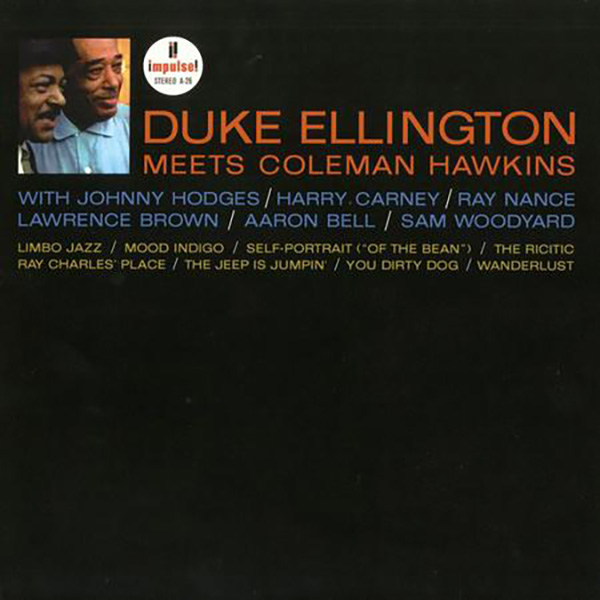 I began by spinning two familiar jazz LPs. On "Mood Indigo," from the Impulse! first pressing of Duke Ellington Meets Coleman Hawkins, the second cut on side 1, when Hawkins started playing, it was as if he appeared in the flesh in front of the right speaker. That was as I'd hoped. The effect is thrilling every time I spin that record on a properly resolving system.
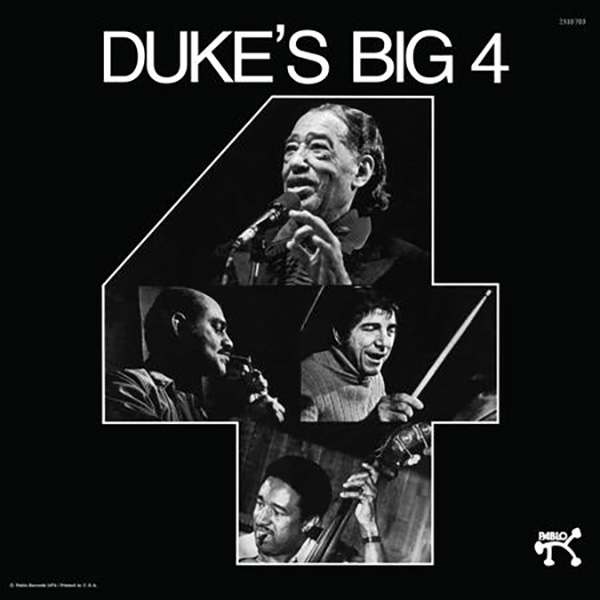 Next up was side 1, track 3 on the new Pablo–Analogue Productions cut of Duke's Big 4 on which Ellington is joined by Joe Pass (guitar), Ray Brown (bass), and Louie Bellson (drums). Each man takes a solo in "The Hawk Talks," but Bellson's solo is what I wanted to hear. Also in the right channel and toward the center, his drum kit came alive. Each pounding of the kickdrum included the beater/drum head and the resonance of the drum body. Again, like the man was in the room.
The next day, my friend Dave joined me for a trip into the new Beatles box set, 1964 US Albums in Mono. As soon as the needle dropped on the first side we selected, I noticed that the sound was exactly centered between the speakers, and precisely focused. JA measured excellent channel-to-channel balance in both level and frequency response of the 891's phono preamp—now confirmed by my ears.
Dave and I compared several songs from the Capitol box to their UK counterparts, cut to vinyl in the 2014 LP box The Beatles in Mono. The Capitol versions were definitely cut louder on the new records. (Shorter sides means more groove real estate, which makes it possible to have a higher average level.) Some songs sounded quite different after Capitol's EQ and "fold-down" mixing from two-track tapes provided by EMI. Other songs hewed closer to George Martin's UK mono mixes.
Next up was side 1, track 3 on the new Pablo–Analogue Productions cut of Duke's Big 4 on which Ellington is joined by Joe Pass (guitar), Ray Brown (bass), and Louie Bellson (drums). Each man takes a solo in "The Hawk Talks," but Bellson's solo is what I wanted to hear. Also in the right channel and toward the center, his drum kit came alive. Each pounding of the kickdrum included the beater/drum head and the resonance of the drum body. Again, like the man was in the room.
The next day, my friend Dave joined me for a trip into the new Beatles box set, 1964 US Albums in Mono. As soon as the needle dropped on the first side we selected, I noticed that the sound was exactly centered between the speakers, and precisely focused. JA measured excellent channel-to-channel balance in both level and frequency response of the 891's phono preamp—now confirmed by my ears.
Dave and I compared several songs from the Capitol box to their UK counterparts, cut to vinyl in the 2014 LP box The Beatles in Mono. The Capitol versions were definitely cut louder on the new records. (Shorter sides means more groove real estate, which makes it possible to have a higher average level.) Some songs sounded quite different after Capitol's EQ and "fold-down" mixing from two-track tapes provided by EMI. Other songs hewed closer to George Martin's UK mono mixes.
 I'm a Beatles fan, since age 10, but I'm not a Beatles snob. I prefer the Capitol LP sequences. Dave told me that listening to the new cut of Something New brought him back to seeing the Beatles on the Ed Sullivan Show and buying that album at a local store the next day. The Capitol albums—their sequences, cover art, and even the back-cover notes—hit the bullseye of American pop culture in 1964 and provided rocket fuel to the Beatles' quick ride to peak fame.
Later, I swapped in a vintage Shure V-15 Type III cartridge with a stock Shure hyperelliptical stylus, tracking at 1.25gm. Thinking it might need more capacitance to sound its best, I wished for an option between 100pF and 470pF; the Moon 891 offers just three choices: 0pF, 100pF, or 470pF. I tried them all and decided that 100pF was best (footnote 2).
As soon as I started spinning platters, familiar sonic differences emerged, writ large. The V-15 has a "lighter" or perhaps "more delicate" sound, more present and precise in the top end and a more percussive beat, with less-firm grounding and authority. The benefits include more audible "air" and "space" around instruments and more pronounced reverb tails, both of which fill out the stereo image and make it more 3D. The big drawback is that more surface noise comes through, to the point of distraction if the record isn't in great shape. When I dropped the needle on "Mood Indigo," before Coleman Hawkins could step into the room I was distracted by crackle and ticks and some groove whoosh. When his holographic apparition appeared in front of the right speaker, though, he was in sharp focus and the sounds of his exceptional breath control and his embouchure's full command of the reed and mouthpiece were apparent. Spinning "The Hawk Talks," I noticed that Bellson's drum set sounded less huge, but its location in relation to the other instruments, and the details of which parts of the kit were located where, came forward.
The point of all that: The 891's phono stage exposed differences, on the records and in attached equipment. Which suggests that it would also expose the benefits of more expensive and refined phono cartridges.
Wrapping up, the Simaudio Moon 891 did a great job with each of its many capabilities that I tried out. The MiND app, which I was told will soon be replaced, does an adequate job controlling the streaming engine and selecting music to play. Plus, music played with the MiND app sounded better than music played through Roon, with the 891 as a Roon Ready endpoint.
The Moon North 891's phono preamp is exceptional: quiet and fully revealing. I'm sure it will play well and sound great with cartridges more complex and expensive than mine. On my simple, blue-collar rig, it made vinyl listening fulfilling and fun.—Tom Fine
I'm a Beatles fan, since age 10, but I'm not a Beatles snob. I prefer the Capitol LP sequences. Dave told me that listening to the new cut of Something New brought him back to seeing the Beatles on the Ed Sullivan Show and buying that album at a local store the next day. The Capitol albums—their sequences, cover art, and even the back-cover notes—hit the bullseye of American pop culture in 1964 and provided rocket fuel to the Beatles' quick ride to peak fame.
Later, I swapped in a vintage Shure V-15 Type III cartridge with a stock Shure hyperelliptical stylus, tracking at 1.25gm. Thinking it might need more capacitance to sound its best, I wished for an option between 100pF and 470pF; the Moon 891 offers just three choices: 0pF, 100pF, or 470pF. I tried them all and decided that 100pF was best (footnote 2).
As soon as I started spinning platters, familiar sonic differences emerged, writ large. The V-15 has a "lighter" or perhaps "more delicate" sound, more present and precise in the top end and a more percussive beat, with less-firm grounding and authority. The benefits include more audible "air" and "space" around instruments and more pronounced reverb tails, both of which fill out the stereo image and make it more 3D. The big drawback is that more surface noise comes through, to the point of distraction if the record isn't in great shape. When I dropped the needle on "Mood Indigo," before Coleman Hawkins could step into the room I was distracted by crackle and ticks and some groove whoosh. When his holographic apparition appeared in front of the right speaker, though, he was in sharp focus and the sounds of his exceptional breath control and his embouchure's full command of the reed and mouthpiece were apparent. Spinning "The Hawk Talks," I noticed that Bellson's drum set sounded less huge, but its location in relation to the other instruments, and the details of which parts of the kit were located where, came forward.
The point of all that: The 891's phono stage exposed differences, on the records and in attached equipment. Which suggests that it would also expose the benefits of more expensive and refined phono cartridges.
Wrapping up, the Simaudio Moon 891 did a great job with each of its many capabilities that I tried out. The MiND app, which I was told will soon be replaced, does an adequate job controlling the streaming engine and selecting music to play. Plus, music played with the MiND app sounded better than music played through Roon, with the 891 as a Roon Ready endpoint.
The Moon North 891's phono preamp is exceptional: quiet and fully revealing. I'm sure it will play well and sound great with cartridges more complex and expensive than mine. On my simple, blue-collar rig, it made vinyl listening fulfilling and fun.—Tom Fine
Footnote 1: Moon provides a PDF instruction manual for the MiND app. See simaudio.com/wp-content/uploads/2018/04/5_en_ guide_v_mind-1.pdf. Footnote 2: In his 1974 review of the Shure V-15 Type III, Stereophile founder J. Gordon Holt discovered it was less susceptible to capacitance-loading issues than prior V-15 iterations.
On to the main point of this Follow-Up: How does the Moon 891 sound spinning records? It sounds really nice. Using the front-panel menus, I configured it for a moving magnet cartridge, with 40dB gain, 47k ohms of load resistance, and 100pF of load capacitance. I plugged in the vintage SME RCA cable from my Technics SL-1200MK7 turntable, with my Ortofon 2M Blue mounted in the tonearm tracking at 1.75gm; my cartridge choices were dictated by what I had on hand, which is also what I like and what I routinely use: Relatively inexpensive moving magnet cartridges. I cranked the 891's volume all the way and heard no hum, buzz, hash, or anything else, aside from a faint hiss, ears up close to my Bowers & Wilkins 808 speakers. That was an aural way of confirming JA's measurement of a very low noisefloor when the preamp is set to 40dB gain. (The noisefloor will be more audible with a low-output cartridge and the higher preamp gain choices of 54, 60, or 66dB.)
I began by spinning two familiar jazz LPs. On "Mood Indigo," from the Impulse! first pressing of Duke Ellington Meets Coleman Hawkins, the second cut on side 1, when Hawkins started playing, it was as if he appeared in the flesh in front of the right speaker. That was as I'd hoped. The effect is thrilling every time I spin that record on a properly resolving system.
Next up was side 1, track 3 on the new Pablo–Analogue Productions cut of Duke's Big 4 on which Ellington is joined by Joe Pass (guitar), Ray Brown (bass), and Louie Bellson (drums). Each man takes a solo in "The Hawk Talks," but Bellson's solo is what I wanted to hear. Also in the right channel and toward the center, his drum kit came alive. Each pounding of the kickdrum included the beater/drum head and the resonance of the drum body. Again, like the man was in the room.
The next day, my friend Dave joined me for a trip into the new Beatles box set, 1964 US Albums in Mono. As soon as the needle dropped on the first side we selected, I noticed that the sound was exactly centered between the speakers, and precisely focused. JA measured excellent channel-to-channel balance in both level and frequency response of the 891's phono preamp—now confirmed by my ears.
I'm a Beatles fan, since age 10, but I'm not a Beatles snob. I prefer the Capitol LP sequences. Dave told me that listening to the new cut of Something New brought him back to seeing the Beatles on the Ed Sullivan Show and buying that album at a local store the next day. The Capitol albums—their sequences, cover art, and even the back-cover notes—hit the bullseye of American pop culture in 1964 and provided rocket fuel to the Beatles' quick ride to peak fame.
Later, I swapped in a vintage Shure V-15 Type III cartridge with a stock Shure hyperelliptical stylus, tracking at 1.25gm. Thinking it might need more capacitance to sound its best, I wished for an option between 100pF and 470pF; the Moon 891 offers just three choices: 0pF, 100pF, or 470pF. I tried them all and decided that 100pF was best (footnote 2).
Footnote 1: Moon provides a PDF instruction manual for the MiND app. See simaudio.com/wp-content/uploads/2018/04/5_en_ guide_v_mind-1.pdf. Footnote 2: In his 1974 review of the Shure V-15 Type III, Stereophile founder J. Gordon Holt discovered it was less susceptible to capacitance-loading issues than prior V-15 iterations.