Sidebar 1: Tube Amplification Moves West
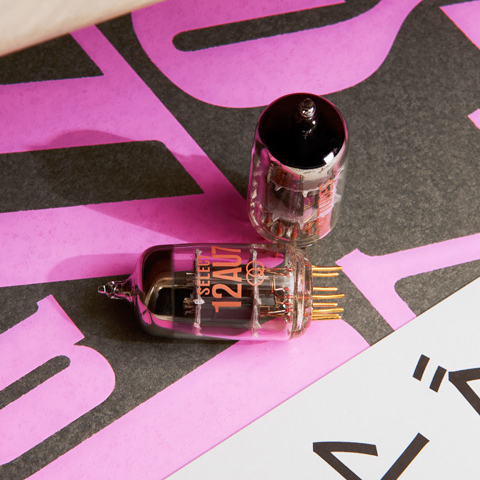
In the mid-1960s, as solid state amplifiers and acoustic-suspension speakers gained popularity in the US, low-power tube amplifiers and horn-loaded loudspeakers were abandoned. The recovery started almost immediately. Tube amps reappeared in the early 1970s, from Conrad-Johnson and Audio Research, followed by Cary Audio and others in the '80s. One of Julius Futterman's OTL (output transformerless) tube-amp designs from the mid-'50s (footnote 1) was reproduced by Harvey "Gizmo" Rosenberg (footnote 2) of New York Audio Laboratories in the form of the Futterman OTL-1 power amplifier. Rosenberg's hybrid tube/FET amplifiers and preamplifiers (footnote 3), and his gift for showmanship, made him a prominent audio influencer. Sumiko cofounder David Fletcher and Auditorium 23's Keith Aschenbrenner imported tube amplifiers from Japanese brands, and in the early 1990s, Peter Qvortrup of Audio Note UK marketed his tube amplifiers in the US as luxury goods, paving the way for contemporary luxury audio.
Audio magazines played a role as well, influencing the nascent tube amplifier sector in the US. In the early 1990s, Walt Bender's newsprint circular, Audiomart, and Japan's MJ and The Tube Kingdom magazines inspired a burgeoning cottage industry of DIY tube amplifiers in the US. The Japanese influence was strong. Joe Roberts started up his influential Sound Practices magazine in 1992.
Among the writers for Sound Practices were JC Morrison, Don Garber, Nori Komuro, Gordon Rankin, and Stereophile's own Herb Reichert—members of a maker community dubbed the "Triode Mafia," which grew out of Garber's Soho shop, Fi. The Triode Mafia experimented, invented, and designed many tube amplifiers.
"When Garber opened his store, I had just closed my Eddy Electric business, which imported Tango transformers and Black Gate capacitors," Reichert recalled in an email. "Garber and I met on a construction site at 500 Park Avenue. We shared a deep love for George Jones, so I invited him to my place and played 'He Stopped Loving Her Today' with some old Altec A5s and Flesh & Blood monos. After 30 seconds of George, Garber was in tears and completely 'got' what the triode-horn thing was trying to accomplish. He knew JC was into this too, and almost instantly Don was all in. That was the start.
"We were all seeking the simplest and the purest way of making audio that was direct and coercive and revealing of the human aspect of recordings," Herb continued. "Arthur [Loach] and [Nori] Komuro's smarts were a radioactive force that drew people like Gordon Rankin, Dick Sequerra, and Tim de Paravicini into the scene.
"... It all began at Fi. Fi was a crucible."—Ken Micallef
Footnote 1: See Julius Futterman's story at jacmusic.com/techcorner/ARTICLES/English/Harvey-Rosenberg/futterman.htm. Footnote 2: Harvey "Gizmo" Rosenberg passed away in July 2001. Footnote 3: Read more on Dr. Gizmo's hybrid amplifiers at meta-gizmo.org/Tri/nyal/moscode.html.
Footnote 1: See Julius Futterman's story at jacmusic.com/techcorner/ARTICLES/English/Harvey-Rosenberg/futterman.htm. Footnote 2: Harvey "Gizmo" Rosenberg passed away in July 2001. Footnote 3: Read more on Dr. Gizmo's hybrid amplifiers at meta-gizmo.org/Tri/nyal/moscode.html.