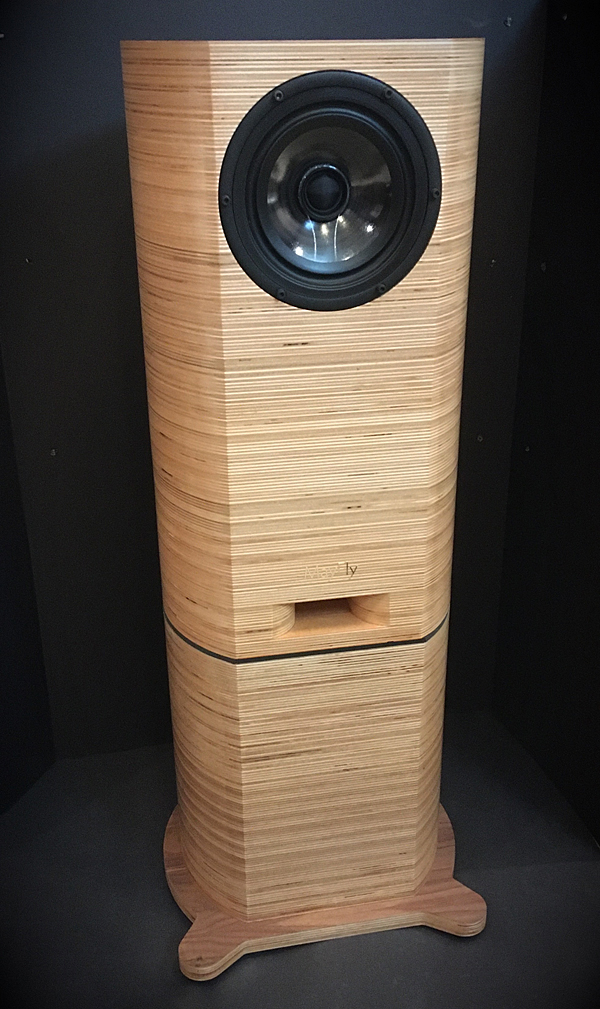
When I resumed listening a couple of days later, I focused on what I liked rather than what I didn't, and the picture brightened considerably. The 201s' imaging and soundstaging are impressive. Music filled the room in an enveloping way, 3D-like, instead of hanging in the space between the speakers.
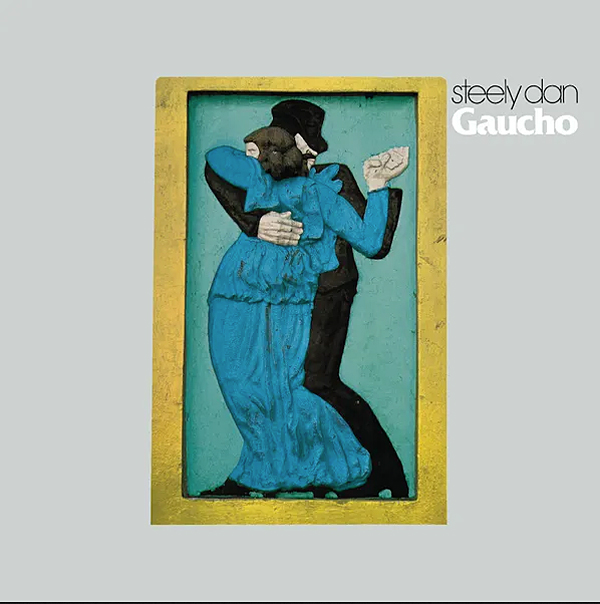 An excellent recording to judge soundstage width is Steely Dan's "Hey Nineteen," from Gaucho (24/96 FLAC, Qobuz). On speakers that image like champs, the guitar will appear two-plus feet outside the far boundary of the left cabinet, and that's where the MayFlys placed it with aplomb. Next up: Martial Solal's "Et si c'était vrai pt. 1" from his Big Band record (16/44.1 MQA, Tidal), in which an exuberant oboe does the same thing on the right. The 201s again delivered faithfully.
 "Gypsy Moth," a track from Andrew Bird's album Echolocations: River (16/44.1 FLAC, Qobuz), starts with a plaintive violin miked from a distance, conveying melancholy. Bird recorded much of the album standing ankle deep in the Los Angeles River, under a bridge, the sound of the babbling water mixing with the reflections coming off the walls. The 201s rendered this unique acoustic space convincingly, carrying the full emotional complement of Bird's rêverie.
Great transformation
"Gypsy Moth," a track from Andrew Bird's album Echolocations: River (16/44.1 FLAC, Qobuz), starts with a plaintive violin miked from a distance, conveying melancholy. Bird recorded much of the album standing ankle deep in the Los Angeles River, under a bridge, the sound of the babbling water mixing with the reflections coming off the walls. The 201s rendered this unique acoustic space convincingly, carrying the full emotional complement of Bird's rêverie.
Great transformation
The great transformation finally came after another day or two, when I heaved the 201s off the 14" matching stands May had sent along ($899/pair). Though they couple with the 201s in a visually pleasing way, seeming to extend the enclosure, making the tall bookshelf speakers look like towers, I figured perhaps the stands weren't doing the speakers any favors sonically. Their hollow form—essentially, an empty bucket (see photo)—may have produced resonances, which can rob sound of definition and clarity. Because I couldn't quickly procure 15 gallons of sand or birdshot, I swapped in a pair of 20" SolidSteel stands. Better, I thought. On a hunch, I schlepped out a pair of Perlesmith 26-inchers, which raised the coaxial drivers about 3" above my cranium as measured from the listening position. Trevor May advises positioning the speakers so that the coaxial drivers are at ear level. But in my room, the 201s reached new heights (ha!) when elevated, especially after I tipped them down by placing 1.5" Sorbothane feet under the rear of the enclosures, two per cabinet. This is one reason to love standmount speakers: endless placement possibilities in three planes, up and down included. (Best not try such vertical adjustments with the Focal Grande Utopia or Wilson Chronosonic—462lb and 900lb each, respectively!)
 At long last, the 201s sang. I had them 6' apart, slightly toed in, a good 4' from the side walls, 5' from the rear wall, and about 7' from my ears. They now turned in a holistic performance, resisting attempts to criticize aspects of the sound. I connected emotionally with a string of favorite tracks. Gladness and a touch of elation filled my hopeful heart when I listened to "Easy Money" by Rickie Lee Jones (Rickie Lee Jones, 16/44.1 FLAC, Qobuz), "You Gotta Move" by Parker Millsap (The Very Last Day, 16/44.1 FLAC, Qobuz), and Post Malone's "Stay" (beerbongs & bentleys, 24/44.1 MQA FLAC, Tidal).
My initial impression that these speakers are ever-so-slightly syrupy in the midbass wasn't wrong. (At least, I continue to feel that way.) But I realized that that sonic quality—possibly a boost in the 100–300Hz range?—might better be described as honeylike, and it's hard to dislike a skosh of honey.
Canada being part of the Commonwealth (and May having been influenced by that BBC paper), maybe it's not so odd that the 201s' sonic signature evokes the British no-nonsense sound of the Harbeth P3ESRs or the fabled BBC LS3/5a studio speakers of the 1970s and '80s, or maybe vintage Quads. That is to say, they sound refined and precise, with a touch of warmth but nothing obviously tipped up or toned down. There's a dignified, reserved quality to their presentation that some will mistake for stuffiness. My Moabs have more of an in-yo-face "Let's go!" attitude that doesn't shy away from spectacle. By contrast, the MayFlys sound less explosive but more pedigreed. Think dinner party, not rave. Dry martini, not IPA.
All the same, they played A Hero's Death, a raucous album by Irish post-punks Fontaines D.C. (24/96 FLAC, Qobuz), with plenty of bounce and energy. Compared to the Moabs, I'd say that the MayFlys boot posterior while the Moabs kick ass. It's the same thing of course, just a mite more restrained on the part of the 201s. The MayFlys are more Eagles than Whiskeytown, more Elvis than Iggy. Not that there's anything wrong with that.
At long last, the 201s sang. I had them 6' apart, slightly toed in, a good 4' from the side walls, 5' from the rear wall, and about 7' from my ears. They now turned in a holistic performance, resisting attempts to criticize aspects of the sound. I connected emotionally with a string of favorite tracks. Gladness and a touch of elation filled my hopeful heart when I listened to "Easy Money" by Rickie Lee Jones (Rickie Lee Jones, 16/44.1 FLAC, Qobuz), "You Gotta Move" by Parker Millsap (The Very Last Day, 16/44.1 FLAC, Qobuz), and Post Malone's "Stay" (beerbongs & bentleys, 24/44.1 MQA FLAC, Tidal).
My initial impression that these speakers are ever-so-slightly syrupy in the midbass wasn't wrong. (At least, I continue to feel that way.) But I realized that that sonic quality—possibly a boost in the 100–300Hz range?—might better be described as honeylike, and it's hard to dislike a skosh of honey.
Canada being part of the Commonwealth (and May having been influenced by that BBC paper), maybe it's not so odd that the 201s' sonic signature evokes the British no-nonsense sound of the Harbeth P3ESRs or the fabled BBC LS3/5a studio speakers of the 1970s and '80s, or maybe vintage Quads. That is to say, they sound refined and precise, with a touch of warmth but nothing obviously tipped up or toned down. There's a dignified, reserved quality to their presentation that some will mistake for stuffiness. My Moabs have more of an in-yo-face "Let's go!" attitude that doesn't shy away from spectacle. By contrast, the MayFlys sound less explosive but more pedigreed. Think dinner party, not rave. Dry martini, not IPA.
All the same, they played A Hero's Death, a raucous album by Irish post-punks Fontaines D.C. (24/96 FLAC, Qobuz), with plenty of bounce and energy. Compared to the Moabs, I'd say that the MayFlys boot posterior while the Moabs kick ass. It's the same thing of course, just a mite more restrained on the part of the 201s. The MayFlys are more Eagles than Whiskeytown, more Elvis than Iggy. Not that there's anything wrong with that.
 A bit of velour
For a change of pace after the Fontaines D.C. record, I cued up the world's greatest and saddest song about old age, loss, and loneliness. No, not "Eleanor Rigby," but close: I mean the Zombies' "A Rose for Emily" from their 1968 masterpiece Odessey and Oracle (24/96 FLAC, Qobuz). On the MayFlys, the vocal harmonies were lovely: wrapped in a bit of velour yet still presenting with precision and clarity. At the beginning of the third verse of "Time of the Season," the first percussive exhale of the backup singer (Rod Argent, probably) is just a smidge late, and the MayFlys let you know it. That see-through quality was also apparent during the song's outro, which features two interleaved organs, both easily distinguishable. The precision and delicacy that is part of the MayFlys' sonic character further showed on Nosaj Thing and Kazu Makino's How We Do (Parallels, 24/44.1 FLAC, Qobuz) with its incandescent waterfall of synth sounds. Here, the spaces between the notes are as meaningful as the notes themselves. Yin meets yang.
I was chuffed when I played "Bump," a track by the extraordinary London jazz ensemble Kansas Smitty's. The recording is built on a relaxed, bouncing snare beat. Every time the stick hits the head, drummer Jas Kayser lets it go into a controlled skitter so that it taps the skin another four, five times on the 16th notes, softer and softer. The MayFlys were exemplary in rendering the diminishing force of the hits, letting me follow the tail of each one.
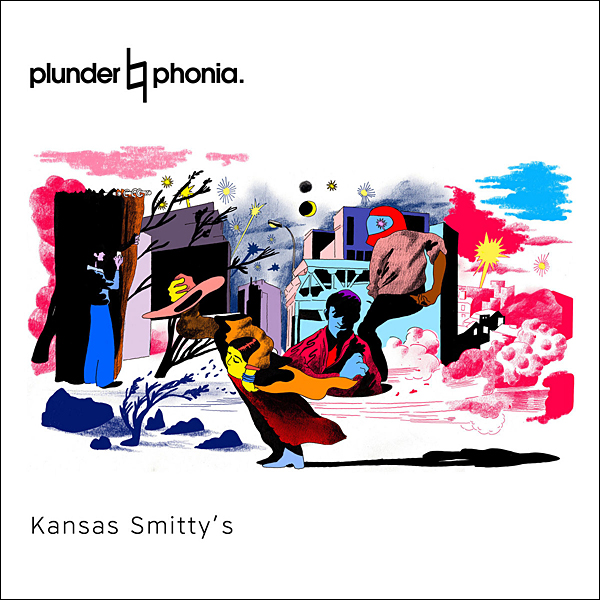 By the way, that entire Kansas Smitty's album, Plunderphonia (16/44.1 FLAC, Qobuz), is a creative and sonic treat. Listen to the languid-but-infectious "Jungle Blues" for its own sake, but note the sound of the splash cymbal while you're at it. The 201s don't quite give you the shimmering top end you get from electrostats and some horns, but the way they reproduce all manner of subtleties, like that decaying sound of hammered copper, was very enjoyable.
On the Duke Ellington soundtrack Paris Blues (Jazz Noir, 16/44.1 FLAC, Tidal), horns sounded smooth and sweet but not cloying, their timbre captured in a golden, burnished sound. The same was true for Paul McCandless's recurring saxophone on Yelena Eckernoff's Desert album (24/96 FLAC, Qobuz), a collection of 11 lush, painterly soundscapes. Though her grand piano was rendered with a touch less sparkle than I'd like, it took on a warm solidity that I took a shine to nonetheless.
By the way, that entire Kansas Smitty's album, Plunderphonia (16/44.1 FLAC, Qobuz), is a creative and sonic treat. Listen to the languid-but-infectious "Jungle Blues" for its own sake, but note the sound of the splash cymbal while you're at it. The 201s don't quite give you the shimmering top end you get from electrostats and some horns, but the way they reproduce all manner of subtleties, like that decaying sound of hammered copper, was very enjoyable.
On the Duke Ellington soundtrack Paris Blues (Jazz Noir, 16/44.1 FLAC, Tidal), horns sounded smooth and sweet but not cloying, their timbre captured in a golden, burnished sound. The same was true for Paul McCandless's recurring saxophone on Yelena Eckernoff's Desert album (24/96 FLAC, Qobuz), a collection of 11 lush, painterly soundscapes. Though her grand piano was rendered with a touch less sparkle than I'd like, it took on a warm solidity that I took a shine to nonetheless.
 Conclusion
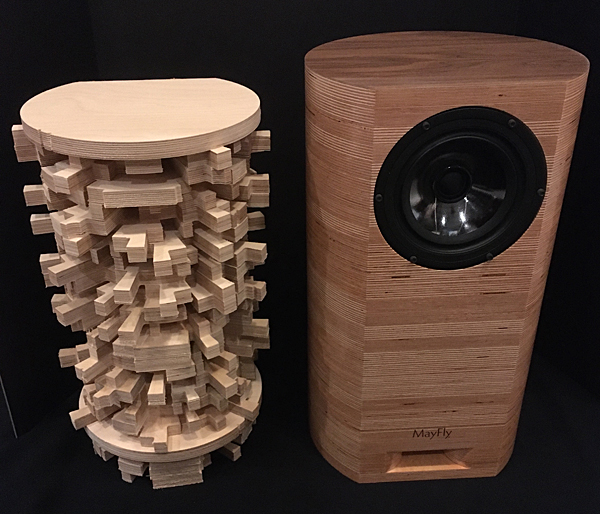
The 201s' internal skyline diffuser succeeds not just as an intriguing novelty but as a factor in the excellent sonics these speakers produce. How big that factor is, only Trevor May knows. It would be impossible for the rest of us to say until we listen to the standard MayFlys as well as to a neutered version, with that complex wave trap cut out and replaced by, say, fiberglass or acoustic foam. Not that it matters. For all anyone cares, the enclosures can be filled with tea leaves and old sneakers, as long as it sounds good. Happily, the sound of the 201s—diffuser and all—varies from very good to stellar. Though slow to quicken the pulse, these speakers are not shy or retiring, but you may have to take the time to find the right placement. Yes, sometimes I found myself wanting a little more bite from the MayFlys, to really convey the brainstem-shaking power of Led Zeppelin's "The Lemon Song" or Rage Against the Machine's "Bombtrack." Then again, with 95% of the recordings I played, muscular rock included, the MayFlys were satisfying and often beguiling. I won't compose an Iliad to sing their praises, but they garner an easy recommendation.
An excellent recording to judge soundstage width is Steely Dan's "Hey Nineteen," from Gaucho (24/96 FLAC, Qobuz). On speakers that image like champs, the guitar will appear two-plus feet outside the far boundary of the left cabinet, and that's where the MayFlys placed it with aplomb. Next up: Martial Solal's "Et si c'était vrai pt. 1" from his Big Band record (16/44.1 MQA, Tidal), in which an exuberant oboe does the same thing on the right. The 201s again delivered faithfully.
"Gypsy Moth," a track from Andrew Bird's album Echolocations: River (16/44.1 FLAC, Qobuz), starts with a plaintive violin miked from a distance, conveying melancholy. Bird recorded much of the album standing ankle deep in the Los Angeles River, under a bridge, the sound of the babbling water mixing with the reflections coming off the walls. The 201s rendered this unique acoustic space convincingly, carrying the full emotional complement of Bird's rêverie.
The great transformation finally came after another day or two, when I heaved the 201s off the 14" matching stands May had sent along ($899/pair). Though they couple with the 201s in a visually pleasing way, seeming to extend the enclosure, making the tall bookshelf speakers look like towers, I figured perhaps the stands weren't doing the speakers any favors sonically. Their hollow form—essentially, an empty bucket (see photo)—may have produced resonances, which can rob sound of definition and clarity. Because I couldn't quickly procure 15 gallons of sand or birdshot, I swapped in a pair of 20" SolidSteel stands. Better, I thought. On a hunch, I schlepped out a pair of Perlesmith 26-inchers, which raised the coaxial drivers about 3" above my cranium as measured from the listening position. Trevor May advises positioning the speakers so that the coaxial drivers are at ear level. But in my room, the 201s reached new heights (ha!) when elevated, especially after I tipped them down by placing 1.5" Sorbothane feet under the rear of the enclosures, two per cabinet. This is one reason to love standmount speakers: endless placement possibilities in three planes, up and down included. (Best not try such vertical adjustments with the Focal Grande Utopia or Wilson Chronosonic—462lb and 900lb each, respectively!)
At long last, the 201s sang. I had them 6' apart, slightly toed in, a good 4' from the side walls, 5' from the rear wall, and about 7' from my ears. They now turned in a holistic performance, resisting attempts to criticize aspects of the sound. I connected emotionally with a string of favorite tracks. Gladness and a touch of elation filled my hopeful heart when I listened to "Easy Money" by Rickie Lee Jones (Rickie Lee Jones, 16/44.1 FLAC, Qobuz), "You Gotta Move" by Parker Millsap (The Very Last Day, 16/44.1 FLAC, Qobuz), and Post Malone's "Stay" (beerbongs & bentleys, 24/44.1 MQA FLAC, Tidal).
My initial impression that these speakers are ever-so-slightly syrupy in the midbass wasn't wrong. (At least, I continue to feel that way.) But I realized that that sonic quality—possibly a boost in the 100–300Hz range?—might better be described as honeylike, and it's hard to dislike a skosh of honey.
Canada being part of the Commonwealth (and May having been influenced by that BBC paper), maybe it's not so odd that the 201s' sonic signature evokes the British no-nonsense sound of the Harbeth P3ESRs or the fabled BBC LS3/5a studio speakers of the 1970s and '80s, or maybe vintage Quads. That is to say, they sound refined and precise, with a touch of warmth but nothing obviously tipped up or toned down. There's a dignified, reserved quality to their presentation that some will mistake for stuffiness. My Moabs have more of an in-yo-face "Let's go!" attitude that doesn't shy away from spectacle. By contrast, the MayFlys sound less explosive but more pedigreed. Think dinner party, not rave. Dry martini, not IPA.
A bit of velourFor a change of pace after the Fontaines D.C. record, I cued up the world's greatest and saddest song about old age, loss, and loneliness. No, not "Eleanor Rigby," but close: I mean the Zombies' "A Rose for Emily" from their 1968 masterpiece Odessey and Oracle (24/96 FLAC, Qobuz). On the MayFlys, the vocal harmonies were lovely: wrapped in a bit of velour yet still presenting with precision and clarity. At the beginning of the third verse of "Time of the Season," the first percussive exhale of the backup singer (Rod Argent, probably) is just a smidge late, and the MayFlys let you know it. That see-through quality was also apparent during the song's outro, which features two interleaved organs, both easily distinguishable. The precision and delicacy that is part of the MayFlys' sonic character further showed on Nosaj Thing and Kazu Makino's How We Do (Parallels, 24/44.1 FLAC, Qobuz) with its incandescent waterfall of synth sounds. Here, the spaces between the notes are as meaningful as the notes themselves. Yin meets yang.
By the way, that entire Kansas Smitty's album, Plunderphonia (16/44.1 FLAC, Qobuz), is a creative and sonic treat. Listen to the languid-but-infectious "Jungle Blues" for its own sake, but note the sound of the splash cymbal while you're at it. The 201s don't quite give you the shimmering top end you get from electrostats and some horns, but the way they reproduce all manner of subtleties, like that decaying sound of hammered copper, was very enjoyable.
On the Duke Ellington soundtrack Paris Blues (Jazz Noir, 16/44.1 FLAC, Tidal), horns sounded smooth and sweet but not cloying, their timbre captured in a golden, burnished sound. The same was true for Paul McCandless's recurring saxophone on Yelena Eckernoff's Desert album (24/96 FLAC, Qobuz), a collection of 11 lush, painterly soundscapes. Though her grand piano was rendered with a touch less sparkle than I'd like, it took on a warm solidity that I took a shine to nonetheless.
ConclusionThe 201s' internal skyline diffuser succeeds not just as an intriguing novelty but as a factor in the excellent sonics these speakers produce. How big that factor is, only Trevor May knows. It would be impossible for the rest of us to say until we listen to the standard MayFlys as well as to a neutered version, with that complex wave trap cut out and replaced by, say, fiberglass or acoustic foam. Not that it matters. For all anyone cares, the enclosures can be filled with tea leaves and old sneakers, as long as it sounds good. Happily, the sound of the 201s—diffuser and all—varies from very good to stellar. Though slow to quicken the pulse, these speakers are not shy or retiring, but you may have to take the time to find the right placement. Yes, sometimes I found myself wanting a little more bite from the MayFlys, to really convey the brainstem-shaking power of Led Zeppelin's "The Lemon Song" or Rage Against the Machine's "Bombtrack." Then again, with 95% of the recordings I played, muscular rock included, the MayFlys were satisfying and often beguiling. I won't compose an Iliad to sing their praises, but they garner an easy recommendation.