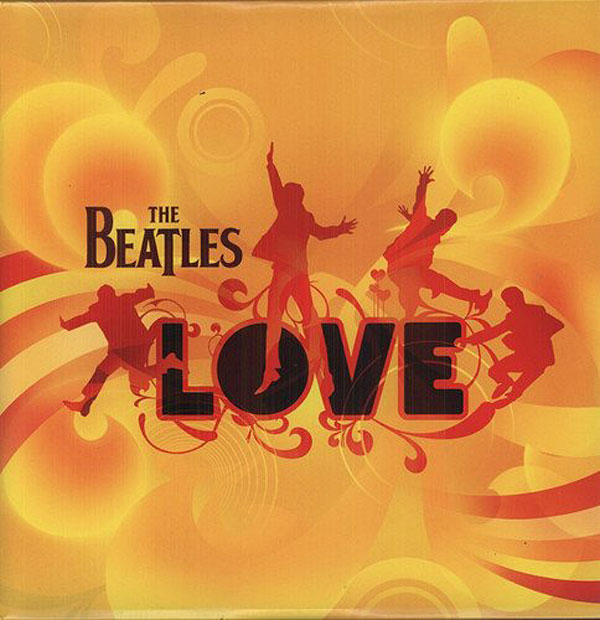
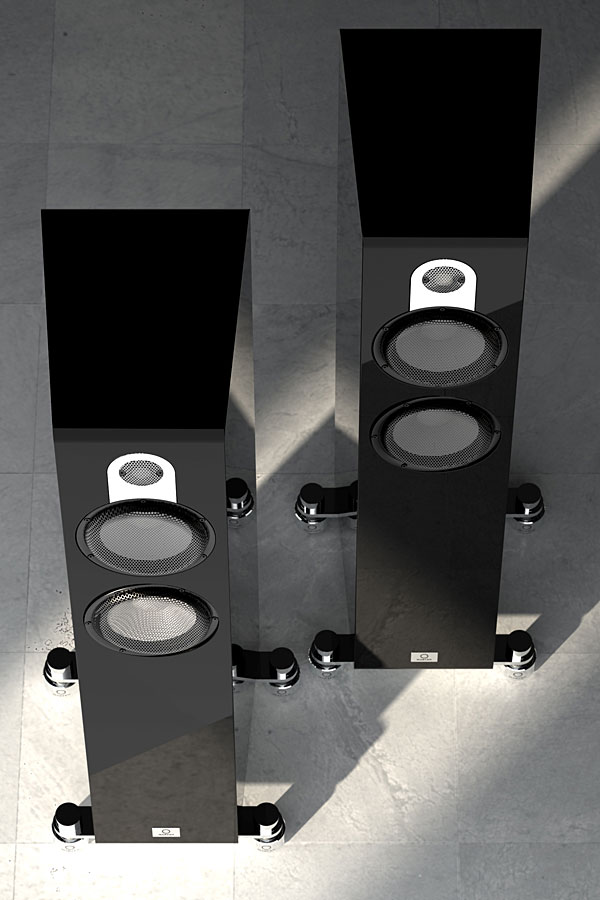
Belatedly watching that wonderful movie Yesterday had me hankering for some Fab Four. I cued up The Beatles' Love (24/96 ALAC, ripped from DVD-A, Apple/Capitol 3 79810 2 5). It's been many years since I listened to this album, and the transparency of the Parker Trio Diamonds drew me deep into George and Giles Martin's remixes. The opener, "Because," features the vocal track sans backing other than assorted ambient sounds at the very rear of the soundstage. As should be the case when a pair of high-end speakers are optimally set up, the Trio Diamonds disappeared, replaced by the images of those glorious voices—no Autotune half a century ago—spread between and behind the speakers within a dome of subtle reverb.
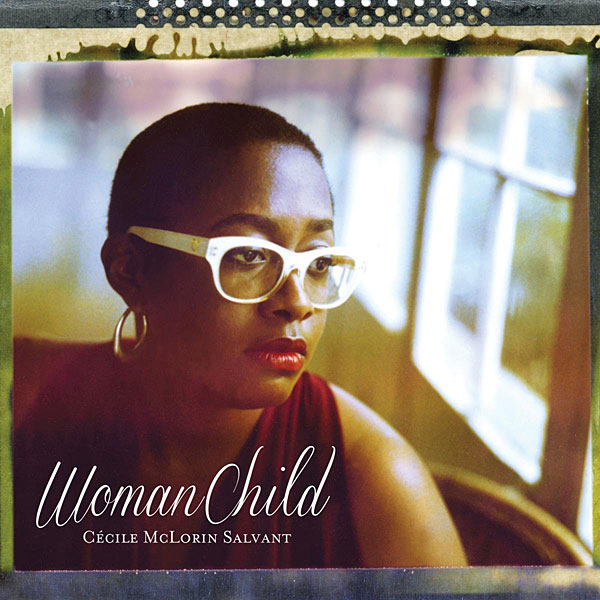
 These Martens loved voices. On "John Henry," from WomanChild (16/44.1k FLAC, Mack Avenue/Tidal), Cécile McLorin Salvant was in the room with me, her image hanging in space between and slightly in front of the speakers. Richard Lehnert's speaking voice as he introduced the channel ID and phase tracks on Editor's Choice was reproduced without coloration. I noted in the track with the channels out of phase that Richard's phantom image was stably positioned to my left, well beyond the position of the left-hand speaker. I usually experience this phenomenon with time-coincident speakers; the Parker Trio's stereo imaging capability is superbly accurate.
 Male voice tends to be revealing of problems in the lower midrange. To investigate problems in the upper midrange, I reach for piano recordings, where the sparseness of the frequencies in this region means that there is very little masking. A favorite piano recording is Mitsuko Uchida's 2010 performance of Beethoven's Piano Concerto No.4 with Simon Rattle conducting the Berlin Philharmonic (24/48k FLAC, Berliner Philharmoniker BPHR 180241). The sound of Uchida's piano was clean and uncolored, and, as she ran her fingers up and down the keyboard just after the start of the cadenza in the first movement, no notes stuck out beyond the others.
 However, while the Parker Trios' diamond tweeters never drew attention to themselves with the Beethoven concerto, the top octaves sounding clean and clear, I felt that the low treble sounded a little more forward than I anticipated from the vocal recordings. Playing "My Man's Gone Now" from Miles Davis's 1981 album We Want Miles (16/44.1k ALAC, ripped from a Columbia CD), which admittedly has rough-sounding highs, corroborated this feeling. The Pass Labs preamplifier is superbly transparent, but what vestigial signature it has is too similar to that of the Parker Trio Diamond. Connecting the MBL DAC directly to the Parasound amplifiers evened out the low treble. Without the preamp, though, the lower mids became a touch too warm.
Continuing my auditioning with this change in the setup, I focused on the low frequencies. My Fender bass guitar on the Editor's Choice tracks sounded well-defined, without any upper-bass boom. And again, the image of the out-of-phase instrument was unambiguously placed well beyond the position of the left-hand speaker.
Speaking of bass guitar: The Martens reproduced the young Marcus Miller's fuzzed instrument on "My Man's Gone Now" very well; Roon's Radio function followed this with Brian Bromberg's "Teen Town" from Jaco, his tribute to the late bass guitar genius Jaco Pastorius (16/44.1k FLAC, Mack Avenue/Tidal). Bromberg duets with himself on this track, playing the melody at half-speed on a full-bodied double bass and interjecting double-speed bass guitar lines. Both instruments were presented by the Parker Trios with superb weight and clarity. This was also true with the high-level kickdrum and double bass on Cécile McLorin Salvant's "John Henry." Too often, reflex-loaded speakers lack clarity in the midbass, but this was not the case with the Trios.
Unlike the small standmount speakers that work well in my room, which is why I like them, the Marten Parker Trio Diamonds got the physical scale of larger-scale music right, including orchestral recordings. As I was writing this review, Editor Jim Austin sent me a preview of Rob Schryer's review of Focal's Aria K2 936 loudspeaker. Rob mentions using the excerpt from my 1984 recording of Elgar's The Dream of Gerontius that appears on Stereophile's no-longer-available Test CD 2 (STPH004-2 footnote 1).
However, while the Parker Trios' diamond tweeters never drew attention to themselves with the Beethoven concerto, the top octaves sounding clean and clear, I felt that the low treble sounded a little more forward than I anticipated from the vocal recordings. Playing "My Man's Gone Now" from Miles Davis's 1981 album We Want Miles (16/44.1k ALAC, ripped from a Columbia CD), which admittedly has rough-sounding highs, corroborated this feeling. The Pass Labs preamplifier is superbly transparent, but what vestigial signature it has is too similar to that of the Parker Trio Diamond. Connecting the MBL DAC directly to the Parasound amplifiers evened out the low treble. Without the preamp, though, the lower mids became a touch too warm.
Continuing my auditioning with this change in the setup, I focused on the low frequencies. My Fender bass guitar on the Editor's Choice tracks sounded well-defined, without any upper-bass boom. And again, the image of the out-of-phase instrument was unambiguously placed well beyond the position of the left-hand speaker.
Speaking of bass guitar: The Martens reproduced the young Marcus Miller's fuzzed instrument on "My Man's Gone Now" very well; Roon's Radio function followed this with Brian Bromberg's "Teen Town" from Jaco, his tribute to the late bass guitar genius Jaco Pastorius (16/44.1k FLAC, Mack Avenue/Tidal). Bromberg duets with himself on this track, playing the melody at half-speed on a full-bodied double bass and interjecting double-speed bass guitar lines. Both instruments were presented by the Parker Trios with superb weight and clarity. This was also true with the high-level kickdrum and double bass on Cécile McLorin Salvant's "John Henry." Too often, reflex-loaded speakers lack clarity in the midbass, but this was not the case with the Trios.
Unlike the small standmount speakers that work well in my room, which is why I like them, the Marten Parker Trio Diamonds got the physical scale of larger-scale music right, including orchestral recordings. As I was writing this review, Editor Jim Austin sent me a preview of Rob Schryer's review of Focal's Aria K2 936 loudspeaker. Rob mentions using the excerpt from my 1984 recording of Elgar's The Dream of Gerontius that appears on Stereophile's no-longer-available Test CD 2 (STPH004-2 footnote 1).
 I had been invited by the late Peter J. Walker of Quad to record this performance by his local orchestra accompanying no fewer than 200 singers in England's Ely Cathedral, in a performance celebrating the 50th anniversary of the composer's death. I was eagerly anticipating making the recording in the cathedral's superbly supportive acoustic and had scoped out what I felt would be the optimal position for Calrec's then-new Soundfield single-point microphone. Using the controller for the microphone's four capsules, I was able to synthesize a crossed, coincident pair of figure-8 microphones to make the stereo recording. However, when I arrived to set up my gear, the cathedral staff insisted that I had to place the microphone 12' above conductor Christopher Brown's head.
As you can imagine, this position gave a very wide-angle view of the performers (footnote 2). This is exactly what I heard with the Marten Parker Trio Diamonds. The three vocal soloists, who were to the left and right of the conductor beneath the microphone, were set at the front of the soundstage, their positions stable and unambiguous. The orchestra appeared farther back, with every instrument or group of instruments again well-defined in space. The huge choir was spread left to right at the far rear of the soundstage. The accuracy of the imaging offered by these Martens was impressive.
I haven't mentioned dynamics. I kept being tempted to play music loud, though this meant that the huge bass drum hit 12 minutes before the end of Part Two of Gerontius scared the heck out of my cats, who were dozing on top of the speakers. The organ's low-frequency pedal notes in this work, played by the cathedral's music director, Arthur Wills, shook my room's walls.
I had been invited by the late Peter J. Walker of Quad to record this performance by his local orchestra accompanying no fewer than 200 singers in England's Ely Cathedral, in a performance celebrating the 50th anniversary of the composer's death. I was eagerly anticipating making the recording in the cathedral's superbly supportive acoustic and had scoped out what I felt would be the optimal position for Calrec's then-new Soundfield single-point microphone. Using the controller for the microphone's four capsules, I was able to synthesize a crossed, coincident pair of figure-8 microphones to make the stereo recording. However, when I arrived to set up my gear, the cathedral staff insisted that I had to place the microphone 12' above conductor Christopher Brown's head.
As you can imagine, this position gave a very wide-angle view of the performers (footnote 2). This is exactly what I heard with the Marten Parker Trio Diamonds. The three vocal soloists, who were to the left and right of the conductor beneath the microphone, were set at the front of the soundstage, their positions stable and unambiguous. The orchestra appeared farther back, with every instrument or group of instruments again well-defined in space. The huge choir was spread left to right at the far rear of the soundstage. The accuracy of the imaging offered by these Martens was impressive.
I haven't mentioned dynamics. I kept being tempted to play music loud, though this meant that the huge bass drum hit 12 minutes before the end of Part Two of Gerontius scared the heck out of my cats, who were dozing on top of the speakers. The organ's low-frequency pedal notes in this work, played by the cathedral's music director, Arthur Wills, shook my room's walls.
 The extended low end was not always a boon. The slow movement of my favorite recording of Elgar's Serenade for Strings, with Sir Adrian Boult conducting the London Philharmonic (16/44.1k ALAC, ripped from CD, EMI Classics 64013), was recorded in London's Kingsway Hall and is therefore plagued with noise from the nearby subway. The Parker Trios let me hear clearly how much rumble accompanies the music!
Conclusion
The extended low end was not always a boon. The slow movement of my favorite recording of Elgar's Serenade for Strings, with Sir Adrian Boult conducting the London Philharmonic (16/44.1k ALAC, ripped from CD, EMI Classics 64013), was recorded in London's Kingsway Hall and is therefore plagued with noise from the nearby subway. The Parker Trios let me hear clearly how much rumble accompanies the music!
Conclusion
Neutrally balanced with extended lows, an uncolored midrange, clean, transparent highs, and stable, accurate stereo imaging, Marten's Parker Trio Diamond Edition is one of the best-sounding full-range loudspeakers I have auditioned in my room. Yes, at $36,990/pair it is expensive, but the Parker Trio Diamond rivals significantly pricier floorstanders from Göbel, Magico, and Tidal that I have reviewed in the past few years as well as the similarly priced models from Rockport and Vimberg (footnote 3). It is fair to note that the regular Trio gets close to the performance of the Diamond Edition in the midrange and bass, and if you have a room that is the same size as mine or smaller, Marten's Oscar Duo will give you a taste of what the pricier Martens offer. But that diamond tweeter is something special indeed.
Footnote 1: Although Stereophile Test CD 2 is no longer available, you can download the complete performance of Elgar's The Dream of Gerontius here. Footnote 2: See the photos here. Footnote 3: The Rockport Avior costs $40,500/pair. The Vimberg Mino costs $31,000–$38,500/pair depending on finish.
These Martens loved voices. On "John Henry," from WomanChild (16/44.1k FLAC, Mack Avenue/Tidal), Cécile McLorin Salvant was in the room with me, her image hanging in space between and slightly in front of the speakers. Richard Lehnert's speaking voice as he introduced the channel ID and phase tracks on Editor's Choice was reproduced without coloration. I noted in the track with the channels out of phase that Richard's phantom image was stably positioned to my left, well beyond the position of the left-hand speaker. I usually experience this phenomenon with time-coincident speakers; the Parker Trio's stereo imaging capability is superbly accurate.
Male voice tends to be revealing of problems in the lower midrange. To investigate problems in the upper midrange, I reach for piano recordings, where the sparseness of the frequencies in this region means that there is very little masking. A favorite piano recording is Mitsuko Uchida's 2010 performance of Beethoven's Piano Concerto No.4 with Simon Rattle conducting the Berlin Philharmonic (24/48k FLAC, Berliner Philharmoniker BPHR 180241). The sound of Uchida's piano was clean and uncolored, and, as she ran her fingers up and down the keyboard just after the start of the cadenza in the first movement, no notes stuck out beyond the others.
However, while the Parker Trios' diamond tweeters never drew attention to themselves with the Beethoven concerto, the top octaves sounding clean and clear, I felt that the low treble sounded a little more forward than I anticipated from the vocal recordings. Playing "My Man's Gone Now" from Miles Davis's 1981 album We Want Miles (16/44.1k ALAC, ripped from a Columbia CD), which admittedly has rough-sounding highs, corroborated this feeling. The Pass Labs preamplifier is superbly transparent, but what vestigial signature it has is too similar to that of the Parker Trio Diamond. Connecting the MBL DAC directly to the Parasound amplifiers evened out the low treble. Without the preamp, though, the lower mids became a touch too warm.
Continuing my auditioning with this change in the setup, I focused on the low frequencies. My Fender bass guitar on the Editor's Choice tracks sounded well-defined, without any upper-bass boom. And again, the image of the out-of-phase instrument was unambiguously placed well beyond the position of the left-hand speaker.
Speaking of bass guitar: The Martens reproduced the young Marcus Miller's fuzzed instrument on "My Man's Gone Now" very well; Roon's Radio function followed this with Brian Bromberg's "Teen Town" from Jaco, his tribute to the late bass guitar genius Jaco Pastorius (16/44.1k FLAC, Mack Avenue/Tidal). Bromberg duets with himself on this track, playing the melody at half-speed on a full-bodied double bass and interjecting double-speed bass guitar lines. Both instruments were presented by the Parker Trios with superb weight and clarity. This was also true with the high-level kickdrum and double bass on Cécile McLorin Salvant's "John Henry." Too often, reflex-loaded speakers lack clarity in the midbass, but this was not the case with the Trios.
I had been invited by the late Peter J. Walker of Quad to record this performance by his local orchestra accompanying no fewer than 200 singers in England's Ely Cathedral, in a performance celebrating the 50th anniversary of the composer's death. I was eagerly anticipating making the recording in the cathedral's superbly supportive acoustic and had scoped out what I felt would be the optimal position for Calrec's then-new Soundfield single-point microphone. Using the controller for the microphone's four capsules, I was able to synthesize a crossed, coincident pair of figure-8 microphones to make the stereo recording. However, when I arrived to set up my gear, the cathedral staff insisted that I had to place the microphone 12' above conductor Christopher Brown's head.
As you can imagine, this position gave a very wide-angle view of the performers (footnote 2). This is exactly what I heard with the Marten Parker Trio Diamonds. The three vocal soloists, who were to the left and right of the conductor beneath the microphone, were set at the front of the soundstage, their positions stable and unambiguous. The orchestra appeared farther back, with every instrument or group of instruments again well-defined in space. The huge choir was spread left to right at the far rear of the soundstage. The accuracy of the imaging offered by these Martens was impressive.
The extended low end was not always a boon. The slow movement of my favorite recording of Elgar's Serenade for Strings, with Sir Adrian Boult conducting the London Philharmonic (16/44.1k ALAC, ripped from CD, EMI Classics 64013), was recorded in London's Kingsway Hall and is therefore plagued with noise from the nearby subway. The Parker Trios let me hear clearly how much rumble accompanies the music!
ConclusionNeutrally balanced with extended lows, an uncolored midrange, clean, transparent highs, and stable, accurate stereo imaging, Marten's Parker Trio Diamond Edition is one of the best-sounding full-range loudspeakers I have auditioned in my room. Yes, at $36,990/pair it is expensive, but the Parker Trio Diamond rivals significantly pricier floorstanders from Göbel, Magico, and Tidal that I have reviewed in the past few years as well as the similarly priced models from Rockport and Vimberg (footnote 3). It is fair to note that the regular Trio gets close to the performance of the Diamond Edition in the midrange and bass, and if you have a room that is the same size as mine or smaller, Marten's Oscar Duo will give you a taste of what the pricier Martens offer. But that diamond tweeter is something special indeed.
Footnote 1: Although Stereophile Test CD 2 is no longer available, you can download the complete performance of Elgar's The Dream of Gerontius here. Footnote 2: See the photos here. Footnote 3: The Rockport Avior costs $40,500/pair. The Vimberg Mino costs $31,000–$38,500/pair depending on finish.