Room At The Table For One More
You knew it was coming—or at least you should have known. In my July 2019 Listening column, I wrote about the then-most-recent iteration of the classic BBC-designed LS3/5a, the 12"-tall location monitor that has, in the 45-plus years since its introduction, gained a following for its suitability as a domestic loudspeaker. That newly introduced speaker was the Graham Chartwell LS3/5a ($2990/pair)—by my count, the 12th-ever commercial version of this classic design— which is offered alongside the same company's slightly different LS3/5 ($2990/pair), also BBC-designed. Thus, for a while, and taking into consideration the enduringly available Falcon LS3/5a ($2995/pair), lucky consumers could choose between three different contemporary versions of the most influential minimonitor in history. Now I have in hand the 13th LS3/5a, which is manufactured by Rogers International UK Ltd. (footnote 2). As it happens, the very first commercially produced LS3/5a was manufactured by Rogers—or, more accurately, it was made under the name Rogers by British manufacturer Swisstone. But in the early 1990s, Rogers was sold to Wo Kee Hong Holdings Ltd. of Hong Kong—and later that same decade, owing to the economic turndown, Wo Kee Hong shut down their UK manufacturing facility. And that was it: There would be no more Rogers LS3/5a's.
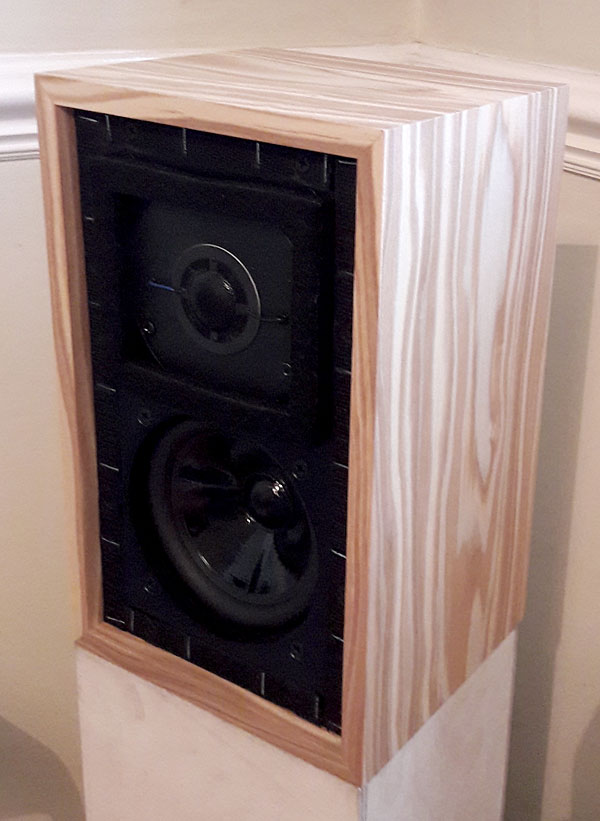 Or so it seemed. But then, in 2018, an engineer named Andy Whittle approached Wo Kee Hong with an idea: Whittle, who had served as Rogers's technical director prior to working for Exposure HiFi and then serving a 10-year stint at Audio Note UK, believed that Rogers should once again manufacture the LS3/5a in the UK. The owners agreed, a plan was drawn up, and in March 2019 the first new samples went on sale (footnote 3).
The new Rogers LS3/5a ($3350/pair), like the one manufactured by Falcon Acoustics, adheres to the pre-1987 BBC specification: It is a 15 ohm loudspeaker that connects to its partnering amplifier by means of banana-only sockets installed flush to the rear panel, and whose 19mm tweeter has a doped Mylar-dome tweeter. For its part, the Graham Chartwell LS3/5a is an 11 ohm (post-1987 spec) unit with a fabric dome tweeter and multiway connectors of the more common sort. Beyond those distinctions, the design brief is more or less the same: Both speakers employ a balance-veneered enclosure made of 12mm plywood, a 110mm midrange/woofer with a doped Bextrene cone, a fabric grille, and a slightly complex phase-correcting crossover network made to the BBC's very precise specifications.
Or so it seemed. But then, in 2018, an engineer named Andy Whittle approached Wo Kee Hong with an idea: Whittle, who had served as Rogers's technical director prior to working for Exposure HiFi and then serving a 10-year stint at Audio Note UK, believed that Rogers should once again manufacture the LS3/5a in the UK. The owners agreed, a plan was drawn up, and in March 2019 the first new samples went on sale (footnote 3).
The new Rogers LS3/5a ($3350/pair), like the one manufactured by Falcon Acoustics, adheres to the pre-1987 BBC specification: It is a 15 ohm loudspeaker that connects to its partnering amplifier by means of banana-only sockets installed flush to the rear panel, and whose 19mm tweeter has a doped Mylar-dome tweeter. For its part, the Graham Chartwell LS3/5a is an 11 ohm (post-1987 spec) unit with a fabric dome tweeter and multiway connectors of the more common sort. Beyond those distinctions, the design brief is more or less the same: Both speakers employ a balance-veneered enclosure made of 12mm plywood, a 110mm midrange/woofer with a doped Bextrene cone, a fabric grille, and a slightly complex phase-correcting crossover network made to the BBC's very precise specifications.
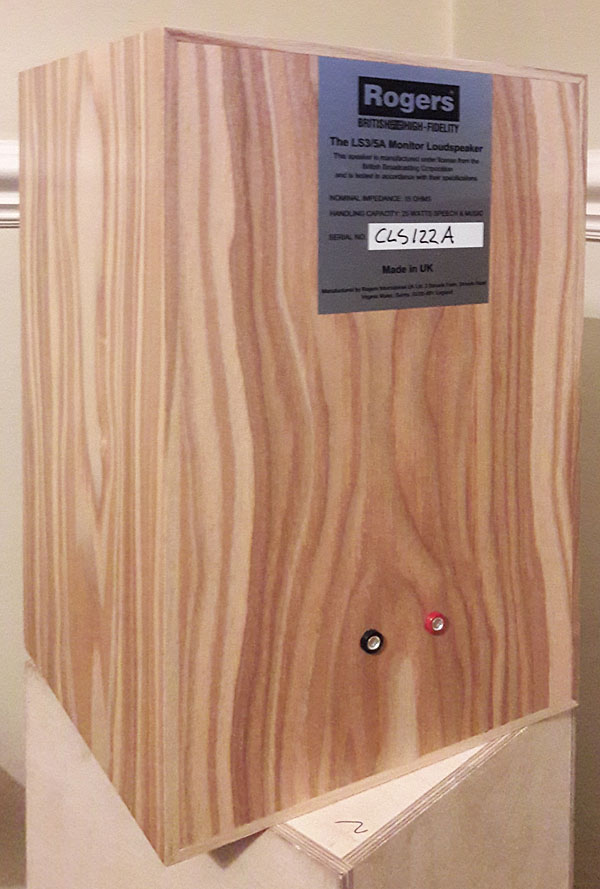 Other, subtler distinctions exist. On the Graham Chartwell speaker, the tweeter's perforated-metal cappello saturno grilles were held in place magnetically; on the Rogers speakers they are cemented in place. The banana sockets on the Rogers speakers, which I happen to like a lot, are silver plated, in contrast with the gold plating used on the Graham Chartwell (and most other manufacturers') connectors. The Tygan-fabric grilles on both speakers are held in place with Velcro, yet the grilles on the Rogers speakers are far easier to remove, thanks to the addition of fabric pull loops.
There are also differences in the sourcing of the drivers. Loudspeaker manufacturer KEF no longer offers the exact same tweeter and mid/woofer originally specified by the BBC—so, Graham Audio commissioned well-known designer Derek Hughes to engineer their replacement drivers, the provenance of which I don't know. For the new Rogers LS3/5a, Andy Whittle reverse-engineered both drivers. He told me via email: "The bass unit has the correct Bextrene cone and is made in Asia. The bass units come to the UK, where they are QC'd and then hand-doped with two layers of damping and then pair-matched. The tweeter is the correct Mylar material; the coil/ dome assembly is made in Asia and comes to the UK where we assemble it into the magnet system, QC [it], and then pair-match." The manufacturing of the crossovers and cabinets, and all loudspeaker assembly work, is performed in the UK, at Rogers's facility in Virginia Water, which sounds like an ingredient in Mountain Dew but is actually a very posh suburb to the south of London.
Other, subtler distinctions exist. On the Graham Chartwell speaker, the tweeter's perforated-metal cappello saturno grilles were held in place magnetically; on the Rogers speakers they are cemented in place. The banana sockets on the Rogers speakers, which I happen to like a lot, are silver plated, in contrast with the gold plating used on the Graham Chartwell (and most other manufacturers') connectors. The Tygan-fabric grilles on both speakers are held in place with Velcro, yet the grilles on the Rogers speakers are far easier to remove, thanks to the addition of fabric pull loops.
There are also differences in the sourcing of the drivers. Loudspeaker manufacturer KEF no longer offers the exact same tweeter and mid/woofer originally specified by the BBC—so, Graham Audio commissioned well-known designer Derek Hughes to engineer their replacement drivers, the provenance of which I don't know. For the new Rogers LS3/5a, Andy Whittle reverse-engineered both drivers. He told me via email: "The bass unit has the correct Bextrene cone and is made in Asia. The bass units come to the UK, where they are QC'd and then hand-doped with two layers of damping and then pair-matched. The tweeter is the correct Mylar material; the coil/ dome assembly is made in Asia and comes to the UK where we assemble it into the magnet system, QC [it], and then pair-match." The manufacturing of the crossovers and cabinets, and all loudspeaker assembly work, is performed in the UK, at Rogers's facility in Virginia Water, which sounds like an ingredient in Mountain Dew but is actually a very posh suburb to the south of London.
 I made my stand
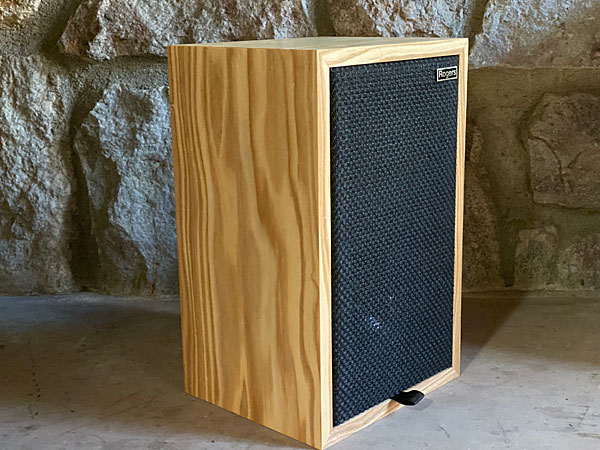
Unfortunately, by the time I requested a review pair of the Rogers LS3/5a, the excellent 24" Gig Harbor loudspeaker stands ($599/pair), which I used in my earlier review, were no longer in my possession; likewise the undeniably complementary Naim NAIT 2 integrated amplifier (footnote 4), reconditioned by AV Options, which I also used with the other LS3/5a's: gone, gone, gone. For the former, I had to improvise, pressing into service a pair of 20"-tall open-frame metal stands that have followed me through one apartment and four houses—and I have no recollection whatsoever who made them. These I topped with stacked-plywood scraps from some long-ago plinth project, to bring their height near to the required 24": an imperfect solution but a solution nonetheless. Amplification was more straightforward: I had already been running in my review sample of the Naim NAIT XS 3 integrated amp ($2999 including built-in phono stage; review coming soon), and I felt sufficiently familiar with its contribution to the sound that I could use it to describe, with confidence, the character of the new speakers. Speaker cables were the same 21' pair of AV Options Twisted 56 speaker cable I used for the earlier review ($674 plus $195 for the Deep Cryo treatment).
From the first notes of the first song I played through the Rogers speakers—the Byrds' "Eight Miles High," from the David Crosby box set Voyage (3 CDs, Atlantic/Rhino R2 77628)—I was enchanted by the combination of the NAIT's rhythmic forthrightness and speed (what some wags refer to as the Naim Audio happy sound) and the trippy explicitness of the Rogers speakers. The latter also performed the archetypal LS3/5a trick of fooling my ears into thinking that Chris Hillman's electric bass sounded deeper and more powerful than those tiny woofers could ever manage, and presented the singing voices of Crosby, Gene Clark, and Roger McGuinn with utterly convincing spatial presence.
Rest assured, here was that LS3/5a explicitness at its smoothest and easiest to take. There was no sonic edge tagging along with those crisply realistic and perfectly aligned note attacks. One song into the game, and I already felt uplifted.
Turning to one of my favorite collections of shorter orchestral pieces by Elgar—that by Paul Goodwin and the English Chamber Orchestra (CD, Harmonia Mundi HMU 907258)—the composer's Nursery Suite sounded especially fine, with great momentum (not to mention an appropriate degree of clatter) in Part Five ("The Wagon Passes"), decent if not astonishingly tactile pizzicato notes in Part Six ("The Merry Doll"), and nice string tone and texture in Part Seven ("Dreaming–Envoy"). As for the last bit, yes, Shindo tubes and DeVore O/93 speakers gave better texture and color, but the Naim/Rogers combo almost made up for it with their non-sterile details of playing and conducting technique. The Suite sounded so good that I left the disc in all the way to the end—Elgar's Elegy, composed in response to the death of his dear friend (and "Nimrod" inspiration) August Jaeger—and again the LS3/5a gave refreshingly good insight into Goodwin's conducting and the manner in which he kept the poignant little piece from bogging down.
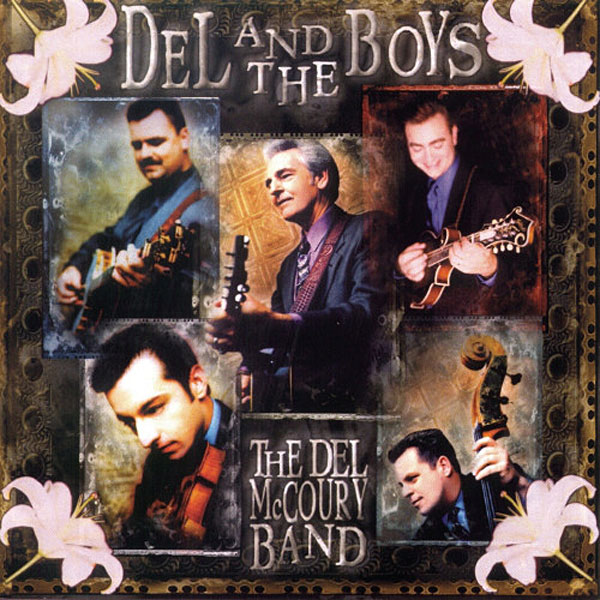 Richard Thompson's "1952 Vincent Black Lightning," in the masterful version by the Del McCoury Band (Del and the Boys, CD, Ceili CEIL2006), along with the same album's "All Aboard," provided more examples of how well the Rogers LS3/5a served up a convincing illusion of extended low-frequency response. Mike Bub's double bass had nicely rounded tone and surprising weight. Far less surprisingly, the sound of that instrument had tremendously good rhythmic snap: Through this amplifier/ speaker combination, it drove the song to a fare-thee-well. At the other end of the spectrum, Del's wonderful tenor voice came across with all its texture intact—an iota more would have been too much. Imaging specificity (not to mention the presence and wholeness) of the lead vocal were exceptional.
 Stereo imaging is all very nice, but I get more force and touch from some of my favorite mono recordings, so I turned to my favorite Mahler Symphony No.1, by Dimitri Mitropoulos and the Minneapolis Symphony Orchestra (CD, Sony Classical MHK 62342). The pizzicato strings at 2:44 were wonderfully tactile, and the colors of the woodwinds and the lower strings in particular were well-saturated. Better still, even with such a microscopic perspective on the recording, the glories of the sound did not detract from the flow of the music. And here, as with most other recordings I tried through the Rogers LS3/5a's, scale was shockingly good for such a tiny speaker. Scale was also huge on another mono favorite: Django Reinhardt's "Body and Soul" from The Art of Django (CD, BGO Records BGOCD 198). The sound was also in perfect tonal balance, and again I heard relentless musical momentum.
The only recordings I played through the speakers with less-than-enjoyable results were contemporary (and mostly digitally recorded and/or mixed) pop recordings. For example, the lead voice and autoharp on the title song from PJ Harvey's Let England Shake (CD, Vagrant VR651) were brittle. Here was the only time this speaker's pro-audio origin raised its techy little head and intruded upon the music making—although I suppose that's what you want if you're a recording engineer who needs to hear what's going on in the mix. (Would that they might act on that information from time to time.)
Pressed to offer a quick'n'dirty sum-up of the new Rogers LS3/5a, especially with an ear to its standing among other contemporary examples of the breed, I would describe this one as closer in character to the Falcon than the Graham Chartwell LS3/5a: It was every bit as open and detailed as the former, with perhaps slightly more freedom from audible stress at the loud end of the dynamic spectrum—without having both on hand for a side-by-side comparison, it's impossible to say for sure—and not as rounded and forgiving as the latter. But the Rogers speaker was consistently free from unnatural texture: Those wide-open trebles were never the least bit distorted. And although its bass range was less powerful-sounding and rich than that of the Graham Chartwell LS3/5, the Rogers had the clearest, most explicit, and most temporally involving bass range of any minimonitor of my experience.
Yes, any so casual a comparison puts the reviewer at risk of the sort of bias that favors the newer, more recently experienced sample. As I write this, although I could live happily ever after with any one of the three extant true LS3/5a's—the Falcon, the Graham, and the Rogers—it seems the Rogers produced the most smiles, an impression that might be colored by my pro–banana-jack bias, the samples' distinctive olivewood veneers, or any number of other nonessentials. So, compare them yourself if you can manage it. I guarantee that time spent comparing these three superb speakers will be a hell of a lot of fun.
Stereo imaging is all very nice, but I get more force and touch from some of my favorite mono recordings, so I turned to my favorite Mahler Symphony No.1, by Dimitri Mitropoulos and the Minneapolis Symphony Orchestra (CD, Sony Classical MHK 62342). The pizzicato strings at 2:44 were wonderfully tactile, and the colors of the woodwinds and the lower strings in particular were well-saturated. Better still, even with such a microscopic perspective on the recording, the glories of the sound did not detract from the flow of the music. And here, as with most other recordings I tried through the Rogers LS3/5a's, scale was shockingly good for such a tiny speaker. Scale was also huge on another mono favorite: Django Reinhardt's "Body and Soul" from The Art of Django (CD, BGO Records BGOCD 198). The sound was also in perfect tonal balance, and again I heard relentless musical momentum.
The only recordings I played through the speakers with less-than-enjoyable results were contemporary (and mostly digitally recorded and/or mixed) pop recordings. For example, the lead voice and autoharp on the title song from PJ Harvey's Let England Shake (CD, Vagrant VR651) were brittle. Here was the only time this speaker's pro-audio origin raised its techy little head and intruded upon the music making—although I suppose that's what you want if you're a recording engineer who needs to hear what's going on in the mix. (Would that they might act on that information from time to time.)
Pressed to offer a quick'n'dirty sum-up of the new Rogers LS3/5a, especially with an ear to its standing among other contemporary examples of the breed, I would describe this one as closer in character to the Falcon than the Graham Chartwell LS3/5a: It was every bit as open and detailed as the former, with perhaps slightly more freedom from audible stress at the loud end of the dynamic spectrum—without having both on hand for a side-by-side comparison, it's impossible to say for sure—and not as rounded and forgiving as the latter. But the Rogers speaker was consistently free from unnatural texture: Those wide-open trebles were never the least bit distorted. And although its bass range was less powerful-sounding and rich than that of the Graham Chartwell LS3/5, the Rogers had the clearest, most explicit, and most temporally involving bass range of any minimonitor of my experience.
Yes, any so casual a comparison puts the reviewer at risk of the sort of bias that favors the newer, more recently experienced sample. As I write this, although I could live happily ever after with any one of the three extant true LS3/5a's—the Falcon, the Graham, and the Rogers—it seems the Rogers produced the most smiles, an impression that might be colored by my pro–banana-jack bias, the samples' distinctive olivewood veneers, or any number of other nonessentials. So, compare them yourself if you can manage it. I guarantee that time spent comparing these three superb speakers will be a hell of a lot of fun.
Footnote 2: Rogers International UK Ltd., Unit 2 Stroude Farm, Virginia Water, Surrey GU25 4BY, UK. Tel: 07768 697429 Web: rogers-hifi.uk. US distributor: Robyatt Audio Tel: (866) 576-3912. Web: robyattaudio.com.
Footnote 3: There is no connection between Rogers International and American amplifier manufacturer Rogers High-Fidelity.—Ed.
Footnote 4: That's a joke. Sort of.
You knew it was coming—or at least you should have known. In my July 2019 Listening column, I wrote about the then-most-recent iteration of the classic BBC-designed LS3/5a, the 12"-tall location monitor that has, in the 45-plus years since its introduction, gained a following for its suitability as a domestic loudspeaker. That newly introduced speaker was the Graham Chartwell LS3/5a ($2990/pair)—by my count, the 12th-ever commercial version of this classic design— which is offered alongside the same company's slightly different LS3/5 ($2990/pair), also BBC-designed. Thus, for a while, and taking into consideration the enduringly available Falcon LS3/5a ($2995/pair), lucky consumers could choose between three different contemporary versions of the most influential minimonitor in history. Now I have in hand the 13th LS3/5a, which is manufactured by Rogers International UK Ltd. (footnote 2). As it happens, the very first commercially produced LS3/5a was manufactured by Rogers—or, more accurately, it was made under the name Rogers by British manufacturer Swisstone. But in the early 1990s, Rogers was sold to Wo Kee Hong Holdings Ltd. of Hong Kong—and later that same decade, owing to the economic turndown, Wo Kee Hong shut down their UK manufacturing facility. And that was it: There would be no more Rogers LS3/5a's.
Or so it seemed. But then, in 2018, an engineer named Andy Whittle approached Wo Kee Hong with an idea: Whittle, who had served as Rogers's technical director prior to working for Exposure HiFi and then serving a 10-year stint at Audio Note UK, believed that Rogers should once again manufacture the LS3/5a in the UK. The owners agreed, a plan was drawn up, and in March 2019 the first new samples went on sale (footnote 3).
The new Rogers LS3/5a ($3350/pair), like the one manufactured by Falcon Acoustics, adheres to the pre-1987 BBC specification: It is a 15 ohm loudspeaker that connects to its partnering amplifier by means of banana-only sockets installed flush to the rear panel, and whose 19mm tweeter has a doped Mylar-dome tweeter. For its part, the Graham Chartwell LS3/5a is an 11 ohm (post-1987 spec) unit with a fabric dome tweeter and multiway connectors of the more common sort. Beyond those distinctions, the design brief is more or less the same: Both speakers employ a balance-veneered enclosure made of 12mm plywood, a 110mm midrange/woofer with a doped Bextrene cone, a fabric grille, and a slightly complex phase-correcting crossover network made to the BBC's very precise specifications.
Other, subtler distinctions exist. On the Graham Chartwell speaker, the tweeter's perforated-metal cappello saturno grilles were held in place magnetically; on the Rogers speakers they are cemented in place. The banana sockets on the Rogers speakers, which I happen to like a lot, are silver plated, in contrast with the gold plating used on the Graham Chartwell (and most other manufacturers') connectors. The Tygan-fabric grilles on both speakers are held in place with Velcro, yet the grilles on the Rogers speakers are far easier to remove, thanks to the addition of fabric pull loops.
I made my standUnfortunately, by the time I requested a review pair of the Rogers LS3/5a, the excellent 24" Gig Harbor loudspeaker stands ($599/pair), which I used in my earlier review, were no longer in my possession; likewise the undeniably complementary Naim NAIT 2 integrated amplifier (footnote 4), reconditioned by AV Options, which I also used with the other LS3/5a's: gone, gone, gone. For the former, I had to improvise, pressing into service a pair of 20"-tall open-frame metal stands that have followed me through one apartment and four houses—and I have no recollection whatsoever who made them. These I topped with stacked-plywood scraps from some long-ago plinth project, to bring their height near to the required 24": an imperfect solution but a solution nonetheless. Amplification was more straightforward: I had already been running in my review sample of the Naim NAIT XS 3 integrated amp ($2999 including built-in phono stage; review coming soon), and I felt sufficiently familiar with its contribution to the sound that I could use it to describe, with confidence, the character of the new speakers. Speaker cables were the same 21' pair of AV Options Twisted 56 speaker cable I used for the earlier review ($674 plus $195 for the Deep Cryo treatment).
Richard Thompson's "1952 Vincent Black Lightning," in the masterful version by the Del McCoury Band (Del and the Boys, CD, Ceili CEIL2006), along with the same album's "All Aboard," provided more examples of how well the Rogers LS3/5a served up a convincing illusion of extended low-frequency response. Mike Bub's double bass had nicely rounded tone and surprising weight. Far less surprisingly, the sound of that instrument had tremendously good rhythmic snap: Through this amplifier/ speaker combination, it drove the song to a fare-thee-well. At the other end of the spectrum, Del's wonderful tenor voice came across with all its texture intact—an iota more would have been too much. Imaging specificity (not to mention the presence and wholeness) of the lead vocal were exceptional.
Stereo imaging is all very nice, but I get more force and touch from some of my favorite mono recordings, so I turned to my favorite Mahler Symphony No.1, by Dimitri Mitropoulos and the Minneapolis Symphony Orchestra (CD, Sony Classical MHK 62342). The pizzicato strings at 2:44 were wonderfully tactile, and the colors of the woodwinds and the lower strings in particular were well-saturated. Better still, even with such a microscopic perspective on the recording, the glories of the sound did not detract from the flow of the music. And here, as with most other recordings I tried through the Rogers LS3/5a's, scale was shockingly good for such a tiny speaker. Scale was also huge on another mono favorite: Django Reinhardt's "Body and Soul" from The Art of Django (CD, BGO Records BGOCD 198). The sound was also in perfect tonal balance, and again I heard relentless musical momentum.
The only recordings I played through the speakers with less-than-enjoyable results were contemporary (and mostly digitally recorded and/or mixed) pop recordings. For example, the lead voice and autoharp on the title song from PJ Harvey's Let England Shake (CD, Vagrant VR651) were brittle. Here was the only time this speaker's pro-audio origin raised its techy little head and intruded upon the music making—although I suppose that's what you want if you're a recording engineer who needs to hear what's going on in the mix. (Would that they might act on that information from time to time.)
Footnote 2: Rogers International UK Ltd., Unit 2 Stroude Farm, Virginia Water, Surrey GU25 4BY, UK. Tel: 07768 697429 Web: rogers-hifi.uk. US distributor: Robyatt Audio Tel: (866) 576-3912. Web: robyattaudio.com.