Once in a blue moon, something happens in my listening room that feels like a full-circle event of rare occurrence, like a solar eclipse but indoors. It's when, following some change to my system, the soundstage suddenly appears so locked in, so unaffected by my oddly shaped room and its furnishings, it's as if it had been pushed out of the speakers and given a life of its own, one existing on a plane of self-sufficient ease. This holographic, out-of-(room-and-speaker)-body effect happened with the Leak in my system.
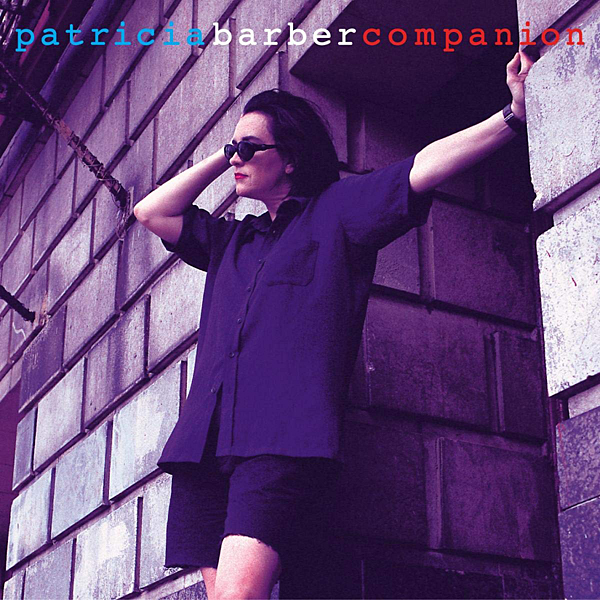
That same sense of soundstage integrity was evident on Patricia Barber's live recording
Companion (CD, Blue Note 5229632). Even the flurry of echoes originating from the instruments seemed unusually connected, moving across the ceiling in interlaced patterns that shifted and swirled like a flock of starlings. On this CD, Barber's sibilants can sound hot, but the Leak did a good job of reducing their sizzle by increasing their textural density.
Across its tracks,
Companion sounded full-bodied, full-scale, and viscerally alive. Michael Arnopol's bass notes were burly and agile. I liked how the Leak brought his notes into relief. At times, it felt as if I was watching the bass-note equivalent of a paddleball ball bopping straight at my face. The Leak emphasized the bass's string elasticity, plucked force, tonal weight variations, and the volume of energy striking the microphone's diaphragm.
Something else that stood out was how wide the Leak would sometimes depict the distance between two sources of sound. It happened during the double-bass solo that opens the album's second track, "Use Me," when an audience member starts clapping during a quiet passage two-thirds in, sustained by the trail end of a note. Gauging by its tunneling echo, that clap appeared much farther away from the stage than I remembered it. Despite the distance, the sound was continuous; there was no gap between the clap and the stage, no missing space or sonic suckout. Sound floated from one end to the other along a harmonically saturated path.
Barber's keyboard work was laid bare, her finger action on-the-key specific, revealing the notes being pushed into existence and flowing into each other like spreading ink.
Separation and imaging of instruments was very good. Contours were softly etched but well-defined. The soundstage was expansive, almost billowy in its airiness and scale, while instruments popped out from Chicago's Green Mill stage with the kinetic energy of a live event. I had the impression of hearing all the notes on the recording—of hearing a lot of them as plain as day—drawing my attention to the structure of the melodies.
On the third track, "Like JT," the Leak couldn't summon the seismic weight of the piano's lower registers, but it emanated enough of their dark-toned, sonorous warble to sound authentic. And when the claps at the end of songs erupted, they sounded realistic, distinct, and plentiful, flashing like fat raindrops splattering on a moonlit street—dozens of fat raindrops.
At a certain point, as I was listening to
Companion, I thought: "I can hear the simplicity of the design." It sounded direct. Unobstructed. Lucid. I asked Jamie whether he could explain what might be at the source of this purity I was hearing. "This is a tricky one to elaborate on in isolation," he replied. "But the design is as per the original Leak philosophy: There's no need to complicate matters in the pursuit of quality hi-fi. So, outside the EQ, the signal path is as close to 'direct' as possible."
He continued: "We kept the preamp simple to maintain signal purity and away from noise as much as possible—a simple theory with effective results."
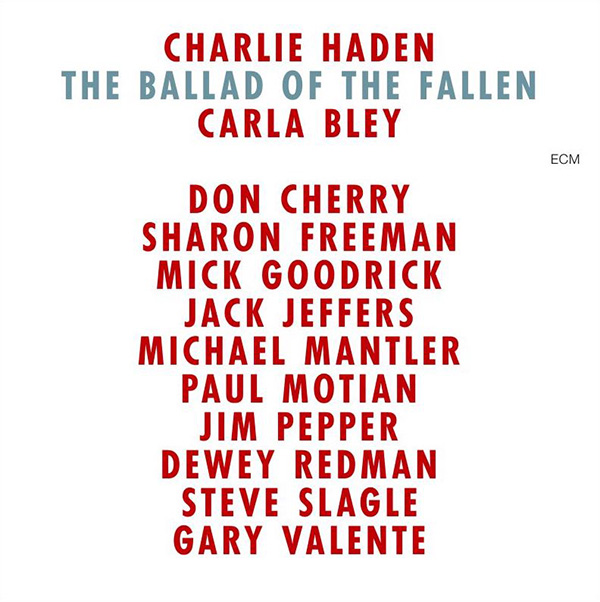
The next CD I played was
DownBeat magazine's 1984 pick for Jazz Album of the Year,
The Ballad of the Fallen, a collaboration among Charlie Haden, the newly departed, lamented Carla Bley, saxophonist Dewey Redman, trumpeter Don Cherry, and Haden's Liberation Music Orchestra. The album opens with the Catalan national anthem: "Els Segadors," a stately, Latin-flavored multibrass motif. It's beautiful, but this CD isn't one of ECM's best-sounding ones. It's a bit flat and clinical in an early-digital way. On many a system I've heard them on, the louder brass parts can turn into a shredded steel mass that has desiccated the real thing of all life. Not this time. The brassy bursts were reproduced with a quivering, burnished tone with metallic bite and glistening texture, but they stayed earthbound and composed. Transparency was very good:
I could easily distinguish the various brass lines being played simultaneously, along with their respective air expulsions and echo trails. The track ends with a solo by Haden. It was captivating—the finger-sweeps across the fingerboard, the perfectly-in-tune finger landings, the clear-toned vibratos, the protracted pitches.
Segueing into the titular second track, what was once a soaring anthem was now a tango-powered parade. The music was festive, vivid, and palpable—it even made my room palpable, turning it into an animated zone festooned with glinting colors and harmonic flourishes. It confirmed what I'd suspected: that the Leak had a knack for making up-tempo music sound like an event, something happening in the moment, fresh and feral. The Leak blew the air of life into this early CD recording, a sweetness-tinged breeze that elevated notes and allowed the music to sound more fleshed out and limber.
I played another track with double bass, one I like to use to see how well a system can resolve different instruments crammed into a murky central image: Medeski Martin & Wood's "Chubb Sub," from the compilation album
Last Chance to Dance Trance (perhaps): Best of (1991-1996) (CD, Gramavision GCD 79520). The song plows forward on a rollercoaster rail of a rambunctious, fat-bodied bass riff that threatens to overwhelm the rest of the music but instead holds back just enough to let the other instruments shine through. The Leak nailed that dynamic, delivering Chris Wood's onrushing bass lines with the right mix of bulging attitude and tempered restraint to allow Billy Martin and John Medeski to show off their drumming and keyboard chops, respectively, in open view.

The title track offered a transparent spread of percolating tones and detail: the hollowed-out consistency of the individual shaker beads at the beginning of the track, the finger flutters on the bass strings, the gurgling rumbles of the organ chords, the clanging punctuations of the piano notes, all of it timbrally graphic.
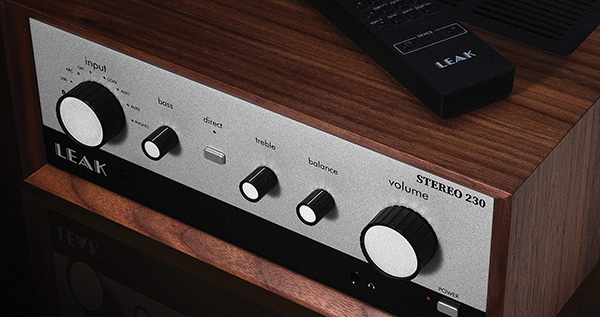
Curious, I disengaged the direct-mode button to activate the equalizer's tone controls, for bass, balance, and treble. I moved the bass knob a quarter-turn to the left and replayed "Chubb Sub." This resulted in a slight loss of touch and purity compared to before, and a shift in tonal balance across the frequency range. I returned the bass knob to "neutral" and did the same with the treble button, with similar results.
Reengaging the direct-mode button underscored how tonally natural and of-a-piece the Leak sounded without the EQ in the signal path.
Those qualities extended to the unit's dedicated JFET-based MM/high-output MC phono stage, via which my stereo version of
Thelonious Monk With John Coltrane (LP, Craft Recordings CR00611) served up tonally rich, first-row views of skilled musicianship and a good sense of space and depth between instruments on the more center-filled cuts. On the more spacious, stereo-panned ones, the sound was luminous and dynamic, with in-room extension that nearly enveloped the sweet spot.
On Alice Coltrane's
Journey in Satchidananda (LP, Impulse! IMP-228), Coltrane's harp flickered with touch and texture while Pharoah Sanders's angular saxophone phrasings sounded creamy and polished, illuminating the studio space around them. This album is bursting with sounds—from an oud, double bass, sax, harp, tamboura, bells, tambourines, often all of them at once. The Leak's phono stage presented the whole intelligibly, teeming with wriggling, swarming detail against a harmonically plush, layered backdrop. The phono stage, I concluded, would make a terrific standalone unit.
I'm going to end this "Listening" section with the cherry on the sundae, or maybe this part is the sundae and what came before was the cherry—that's how favorable my listening impressions were when I streamed native DSD64 files through the Leak from a laptop. I realize I'm late to the native-DSD party—this was my first time streaming native DSD—but boy was I missing out! For helping to make it happen, I'm grateful to erstwhile
Stereophile scribe Tom Gibbs for his guidance and to Roon for being such a versatile music-management system when I was stumped by the instructions provided in Leak's "USB and DSD Setup Guide." It could have gone sideways, but the story had a happy ending.
The fun began with Thelonious Monk's
Straight, No Chaser (DSD64 download). It sounded sublime—fuller, richer, meatier, with more sumptuous tones and natural warmth than I'd heard from the other formats through the Leak. Charlie Rouse's tenor sax sounded bold, butter smooth, expressive, and lap-dance intimate. I didn't hear digital; I heard an absence of it—a rich musical consistency devoid of an electronic undercurrent. Sounds from drums, double bass, and piano were vibrant, substantial, and overflowing with harmonics, with tone existing on another level of realism from what I normally hear from my front-end components.
I got similar results with Bill Evans's
You Must Believe in Spring (DSD64 download). While not quite up there soundwise with
Straight, No Chaser, this recording offered playback I could easily sink into, which instantaneously put my mind in a high state of musical receptiveness.
Native DSD through the Leak sounded like expensive audio—in the high-end category—and this was just with standard, lowest-grade DSD—DSD64, 2.8MHz—and not with one of the higher DSD sampling rates. It sounded better than when I compared it to DSD downconverted to 32/352.8 PCM, which was still very good but lacked the harmonic complexity, instrumental weight, and sense of musical ease of the native DSD files.
This may not sound sexy, but there's something to be said about streaming music from a laptop. I can only imagine what native DSD sounds like through a dedicated server, but I aim to find out. Isn't the audio journey grand?
Conclusions
Like the Cambridge EVO 150 I
reviewed in 2021 and the plethora of midpriced marvels I've heard at audio shows, the 230 is an example of how far the sound quality and versatility of affordable audiophile gear has come in the last few years.
The class-AB Leak provided a sense of color, ease, purity, and expressiveness I don't normally associate with class-AB topology. Maybe with class-A? Maybe with tubes?
Any nitpicks? Bend my arm, and I might concede that the 230's highs might not have been as airy or extended as those from some of the more expensive gear I've heard, but the Leak brings so much to the table—quality sound, sturdy build quality, functional versatility, a 3-year warranty—that I feel a bit cheap nitpicking. I didn't hear a $1500 product; I heard a well-designed product regardless of price. The Stereo 230 exceeded my expectations. But you probably expected me to say that.