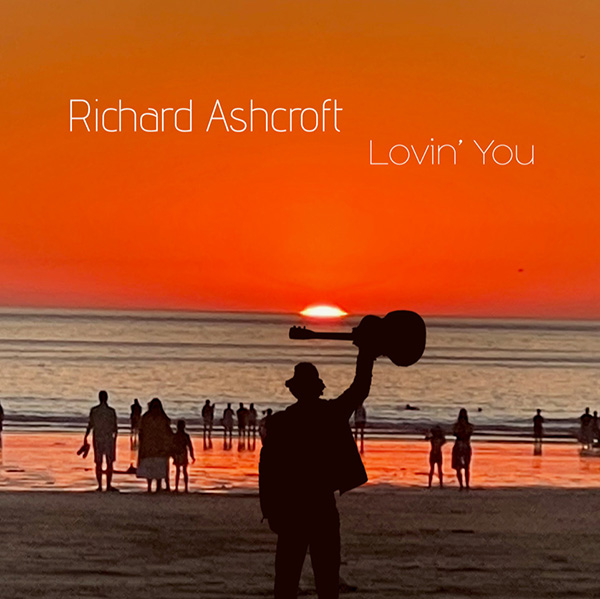
Richard Ashcroft: Lovin' You
BMG (auditioned as LP). 2025. Ashcroft, Chris Potter, Emre Ramazanoglu, prods.; Miles Showell, eng.
Performance ****
Sonics ***** Richard Ashcroft, the opening act for the new global Oasis reunion tour, remains forever linked to The Verve. That band's blend of Brit pop and neo-psychedelic haze gave Ashcroft a wide emotional canvas to explore. But when he struck out on his own in 2000 with Alone with Everybody, his music took on deeper resonance. That record was a critic and fan favorite, full of sonic things to explore. In the years since, his solo work has struggled to capture that same spark—until now. With Lovin' You, Ashcroft returns to form. Like Alone with Everybody, this album finds balance between sweeping, string-laden anthems (eg, the title track) and slow-burning ballads such as "Fly to the Sun," where space, restraint, and melody strut in time.
"I'm a Rebel," a collaboration with Mirwais (Taxi Girl, Madonna), stands out for its modern edge; it's a pulsing, club-ready groove that expands Ashcroft's sonic palette without sacrificing his introspective core. The world music–tinged title track shimmers with rhythmic complexity and unexpected grandeur.
"Out of These Blues" steals the show. Reminiscent of Alone with Everybody's "You on My Mind in My Sleep," it floats on pedal steel textures that weave through the mix with a dreamy, cinematic grace.
Ashcroft's voice has lost some of its youthful power, but these songs make room for that shift. It sits naturally within the mix, lending the music more character.
Ashcroft's sweet spot sits somewhere between the widescreen sound of The Verve and the intimacy of his debut solo record. With Lovin' You, he gets closer to that spot than he has in years. The result is a confident, well-paced record that knows where it's going. Lovin' You is evidence that Ashcroft's songwriting might have found its true footing.—Ray Chelstowski
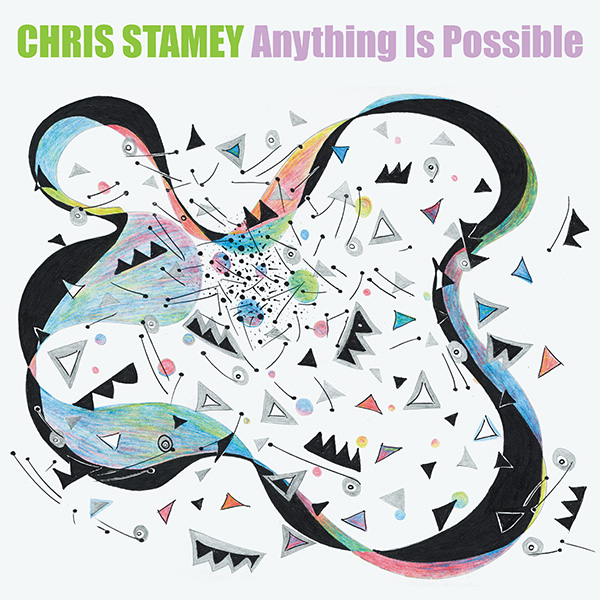 Chris Stamey: Anything Is Possible
Label 51 LAB 51041 (LP). 2025. Chris Stamey, prod. and eng.
Performance ***½
Sonics ***½ Through his time in the dBs and his solo work, Chris Stamey has built a proud career as a power-pop auteur. Here he adds another worthy contribution to that legacy. The power-pop title track and its chorus hook benefit from guests Pat Sansone (Wilco) and the brothers D'Addario (the leaders of The Lemon Twigs). There's more well-crafted power pop in the guitar-rock number "When My Ship Comes In."
In recent years, Stamey has indulged the side of his musical character that worships Tin Pan Alley and the bright 1960s vocal pop originating in the Brill Building: He can write and (especially) arrange in that vein. Consequently, the North Carolinian (whose musical consciousness now haunts California even as his body resides in New York City) can pull off fresh retro looks like the snappy "Meet Me in Midtown," which he says is his companion/answer to Tony Hatch's "Downtown," which became a hit for Petula Clark in 1964. The lyrics salute the busiest part of Manhattan and expertly fit the tempo: "There's a singer on the stage with an Irish band/There's a Toucan in a cage on the baby grand/There's no one who will greet you with a frown."
The only problem on Anything Is Possible is that increasingly, Stamey's ambitions to be a pop-vocal stylist get the better of his musical judgment. When a song is in his range and upbeat—"Midtown," for example—it works. But near the end of two songs—the album's only cover, of Brian Wilson's "Don't Talk (Put Your Head on my Shoulder)," and in the original ballad "After All This Time," his voice strains in uncomfortable ways. The higher notes elude him. Vocalists must have confidence in their own ability to sing. They also need to know where their voice cannot take them. While he gets an A for ambition, Stamey needs to remember where his greatest strengths lie.—Robert Baird
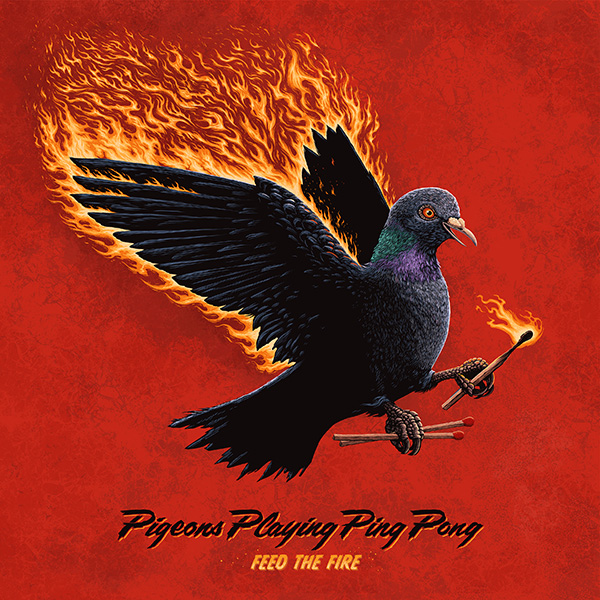 Pigeons Playing Ping Pong: Feed the Fire
No Coincidence Records (auditioned as LP). 2025. Pigeons Playing Ping Pong, prods.; Steve Wright, Tony Eichler, engs.
Performance ****
Sonics *****
With Feed the Fire, their eighth studio album, Pigeons Playing Ping Pong open the door to collaboration. The result is their tightest record yet.
The Baltimore-based quartet, long known for its high-octane blend of psychedelic funk and jam-band elasticity, sound newly focused and sonically mature. Deep-pocket grooves like "Fantasy" and "Calm Before the Storm" benefit from two muscular horn sections: Here Come the Mummies and West End Blend. The horns' brassy jolt recalls Tower of Power's classic "Oakland Soul," lending a new dimension to Pigeons' rhythmic precision and infectious energy.
Feed the Fire captures a sharper edge than the band's earlier work. The mixes are clean and spacious, with drums sitting forward and guitars cutting through the low-end funk. The polish here complements rather than restrains the band's improvisation and improvisational instincts.
For the first time, front man Greg Ormont steps back from full creative control, handing vocal and writing duties on "Hit the Ground Runnin'" to bassist Ben Carrey. The track proves a highlight—steady, grounded, and confident—signaling a broadening of the band's voice.
Lyrically, Feed the Fire is evidence that the group is committed to growth. It carries an open confidence that can only come from years of relentless touring and a willingness to evolve. Each track carries the confidence of a band seasoned on the road and sharpened in the studio, an evolution forged through years of earning top slots at major jam festivals.
Pigeons Playing Ping Pong have always thrived on joy and groove. Here, they channel that spirit into something tighter, deeper, and collaborative. Feed the Fire doesn't just celebrate where the band is, hinting at how far they're ready to go, showing that they have escaped the cage.—Ray Chelstowski
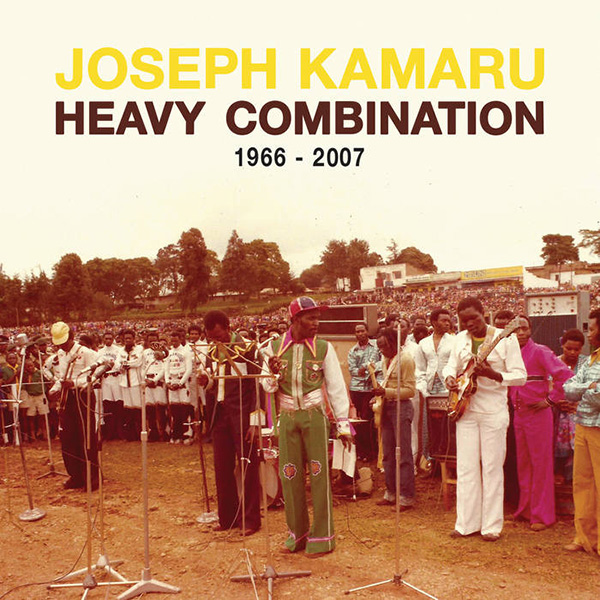 Joseph Kamaru: Heavy Combination 1966–2007
Disciples DISC32CD (CD; also available in vinyl, digital download, and streaming formats). 2025. KMRU, prod.; Kassian Troyer, remastering.
Performance ****
Sonics **** Little known outside East Africa, Joseph Kamaru was a major star in his native Kenya, both ally and adversary of the country's presidents, celebrated for political activism and music. He is routinely categorized as a benga artist, but his folk-oriented, hook-heavy sound is rawer than the sleek benga style that typifies Kenyan pop. Compiled from Kamaru's huge catalog by his grandson, the Germany-based ambient musician known as KMRU, these 17 tracks have been remastered from the original recordings at Dubplates & Mastering in Berlin. The fidelity is uneven—inevitable given the four-decade time span—but overall the music is remarkably vivid. Benga is associated with Kenya's Luo people, but Kamaru, a member of the larger Kikuyu ethnic group, sings in Kikuyu and Swahili. He employs the typical benga instrumentation of guitars, bass, and percussion, but most of the songs here hardly sound like benga at all; the exception is "Karolina," with its exhilarating benga beat that belies its sobering message. Other songs repeat catchy, sometimes bluesy guitar riffs over vamping rhythmic grooves as Kamaru, backed by a female chorus, sings obliquely about love, education, urbanization, alcoholism, sexual harassment, class struggle, and morality with distinctive, irresistible, sugar-sweet melodies.
Among Kamaru's more controversial songs are "J.M. Kariŭki," eulogizing a politician presumably assassinated by Kenya's first president, Jomo Kenyatta, and "Ndari Ya Mwarimŭ Pt. 2," the folkish sequel to a song criticizing teachers, which was banned from state radio at the behest of the national teachers' union until Kenyatta reversed the ban. The album's long final track, "Nĭ Kƈrume," is a somber prayer for a people betrayed by Kenya's leaders within a traditional dance form used by elderly women.—Larry Birnbaum
BMG (auditioned as LP). 2025. Ashcroft, Chris Potter, Emre Ramazanoglu, prods.; Miles Showell, eng.
Performance ****
Sonics ***** Richard Ashcroft, the opening act for the new global Oasis reunion tour, remains forever linked to The Verve. That band's blend of Brit pop and neo-psychedelic haze gave Ashcroft a wide emotional canvas to explore. But when he struck out on his own in 2000 with Alone with Everybody, his music took on deeper resonance. That record was a critic and fan favorite, full of sonic things to explore. In the years since, his solo work has struggled to capture that same spark—until now. With Lovin' You, Ashcroft returns to form. Like Alone with Everybody, this album finds balance between sweeping, string-laden anthems (eg, the title track) and slow-burning ballads such as "Fly to the Sun," where space, restraint, and melody strut in time.
Chris Stamey: Anything Is PossibleLabel 51 LAB 51041 (LP). 2025. Chris Stamey, prod. and eng.
Performance ***½
Sonics ***½ Through his time in the dBs and his solo work, Chris Stamey has built a proud career as a power-pop auteur. Here he adds another worthy contribution to that legacy. The power-pop title track and its chorus hook benefit from guests Pat Sansone (Wilco) and the brothers D'Addario (the leaders of The Lemon Twigs). There's more well-crafted power pop in the guitar-rock number "When My Ship Comes In."
Pigeons Playing Ping Pong: Feed the FireNo Coincidence Records (auditioned as LP). 2025. Pigeons Playing Ping Pong, prods.; Steve Wright, Tony Eichler, engs.
Performance ****
Sonics *****
Joseph Kamaru: Heavy Combination 1966–2007Disciples DISC32CD (CD; also available in vinyl, digital download, and streaming formats). 2025. KMRU, prod.; Kassian Troyer, remastering.
Performance ****
Sonics **** Little known outside East Africa, Joseph Kamaru was a major star in his native Kenya, both ally and adversary of the country's presidents, celebrated for political activism and music. He is routinely categorized as a benga artist, but his folk-oriented, hook-heavy sound is rawer than the sleek benga style that typifies Kenyan pop. Compiled from Kamaru's huge catalog by his grandson, the Germany-based ambient musician known as KMRU, these 17 tracks have been remastered from the original recordings at Dubplates & Mastering in Berlin. The fidelity is uneven—inevitable given the four-decade time span—but overall the music is remarkably vivid. Benga is associated with Kenya's Luo people, but Kamaru, a member of the larger Kikuyu ethnic group, sings in Kikuyu and Swahili. He employs the typical benga instrumentation of guitars, bass, and percussion, but most of the songs here hardly sound like benga at all; the exception is "Karolina," with its exhilarating benga beat that belies its sobering message. Other songs repeat catchy, sometimes bluesy guitar riffs over vamping rhythmic grooves as Kamaru, backed by a female chorus, sings obliquely about love, education, urbanization, alcoholism, sexual harassment, class struggle, and morality with distinctive, irresistible, sugar-sweet melodies.