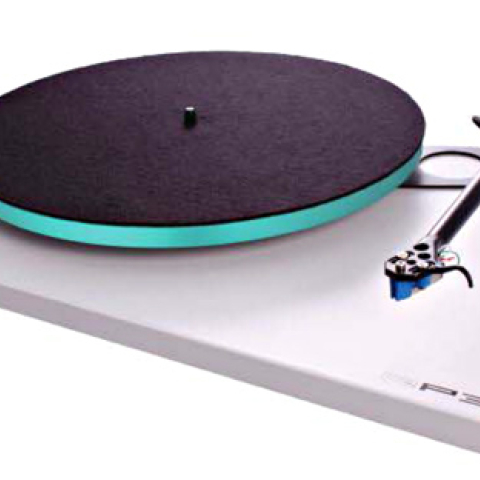
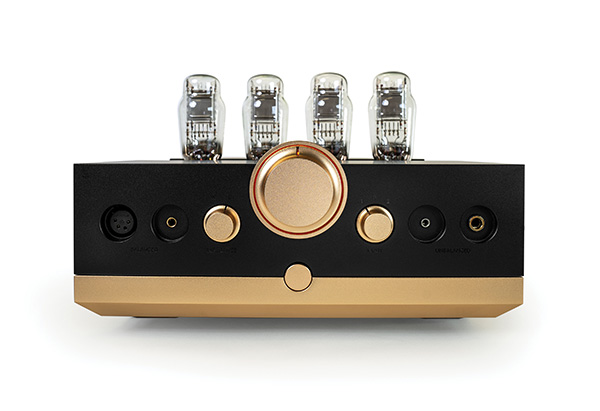
 While driving the Vérité with the Woo amp, I became bored of streaming and got revved to play an exotic LP with the Lyra Delos on the Dr. Feickert Blackbird: American violinist Michael Rabin playing Ravel's Tzigane with Sir Adrian Boult conducting the Philharmonia Orchestra on a pressed-in-England Columbia violet-label LP (33CX 1597). Whenever I switch from streaming to black discs, I instantly notice how much more bite analog transients have and how much more raw drive and intensity LPs pump out.
This was an important spin-my-head moment. With this high-purity analog source—the Lyra Delos mounted in a DS Audio headshell, the Sorane SA-1.2 tonearm, the AudioQuest Yosemite cable, the MoFi MasterPhono loaded at 100 ohms—the Woo WA24 produced vividness and transparency of a sort few people have experienced. I'm sure of it. It was goosebumps out of the gate.
Ravel's Tzigane is a super-intricate showpiece, packed with power and inner detail. And when its complexity comes out precisely focused and neatly sorted, as it did with the Vérité, it's thrilling. Best I could tell, the Delos found everything on the record, and the WA24 + Vérité kept all of it. Detail felt like splendor. Rabin felt divinely inspired.
While driving the Vérité with the Woo amp, I became bored of streaming and got revved to play an exotic LP with the Lyra Delos on the Dr. Feickert Blackbird: American violinist Michael Rabin playing Ravel's Tzigane with Sir Adrian Boult conducting the Philharmonia Orchestra on a pressed-in-England Columbia violet-label LP (33CX 1597). Whenever I switch from streaming to black discs, I instantly notice how much more bite analog transients have and how much more raw drive and intensity LPs pump out.
This was an important spin-my-head moment. With this high-purity analog source—the Lyra Delos mounted in a DS Audio headshell, the Sorane SA-1.2 tonearm, the AudioQuest Yosemite cable, the MoFi MasterPhono loaded at 100 ohms—the Woo WA24 produced vividness and transparency of a sort few people have experienced. I'm sure of it. It was goosebumps out of the gate.
Ravel's Tzigane is a super-intricate showpiece, packed with power and inner detail. And when its complexity comes out precisely focused and neatly sorted, as it did with the Vérité, it's thrilling. Best I could tell, the Delos found everything on the record, and the WA24 + Vérité kept all of it. Detail felt like splendor. Rabin felt divinely inspired.
 But could it drive the Abyss?
These days, some hard-to-drive premium headphones are being upgraded to something fancier-looking and easier to drive. For example, HiFiMan's Susvara was upgraded to a snazzier looking "Susvara Unveiled," and the JPS Labs Abyss Diana TC, which was the 2023 Stereophile Headphone of the Year, has been deleted and replaced by the Diana DZ. Designwise, it looks a little more MoMA store. The specifications suggest that it is easier to drive, but it is still not easy to drive. I keep using the JPS Labs Diana TC because at their best, the sound I get from them driven by dCS's Lina headphone amp is what my blind Russian neighbor calls "choregraphed hallucination" and what I call "sound pictures." To light up and dance, the Diana TC needs more torque and horsepower than most headphone amps are designed to provide. Unusually, the dCS Lina's amplifier was engineered with the even-harder-to-drive JPS Abyss AB1266 Phi TC (50 ohms, 88dB at 1mW) in mind, so the Lina smiles knowingly and powers the Diana with ease and elan. I doubted the Woo could match that.
 Powering my Diana, the Woo played Beethoven's Sämtliche Klaviertrios with Pinchas Zukerman (violin), Jacqueline du Pré (violoncello), Daniel Barenboim (piano), and Gervase de Peyer (clarinet) (LP, EMI C 163-02046/50) smoothly and charmingly, with infinite detail and a deep, dark transparency but no varoom or fireworks.
The Woo Audio 20th Anniversary WA24 must be viewed as a highly refined, purist-level tube amplifier designed for evolved headphone aficionados. In my opinion, this transformer-coupled triode amplifier, with no feedback, no resistors, and no capacitors, represents a pinnacle of commercial tube-amp design, one that should be experienced by all audiophiles.
More cartridge stories
Powering my Diana, the Woo played Beethoven's Sämtliche Klaviertrios with Pinchas Zukerman (violin), Jacqueline du Pré (violoncello), Daniel Barenboim (piano), and Gervase de Peyer (clarinet) (LP, EMI C 163-02046/50) smoothly and charmingly, with infinite detail and a deep, dark transparency but no varoom or fireworks.
The Woo Audio 20th Anniversary WA24 must be viewed as a highly refined, purist-level tube amplifier designed for evolved headphone aficionados. In my opinion, this transformer-coupled triode amplifier, with no feedback, no resistors, and no capacitors, represents a pinnacle of commercial tube-amp design, one that should be experienced by all audiophiles.
More cartridge storiesI did not come of age in high school. Or college. I came of age in my 20s living in SoHo (the one in New York, not London) between 1975 and 1980. American troops had pulled out of Saigon, and the edgiest music was playing every night in the East Village. My brain was on fire, and my life was revved to redline following the Ramones, the Contortions, and the whole No Wave film and music scene swirling around the Pyramid Club and CBGB.
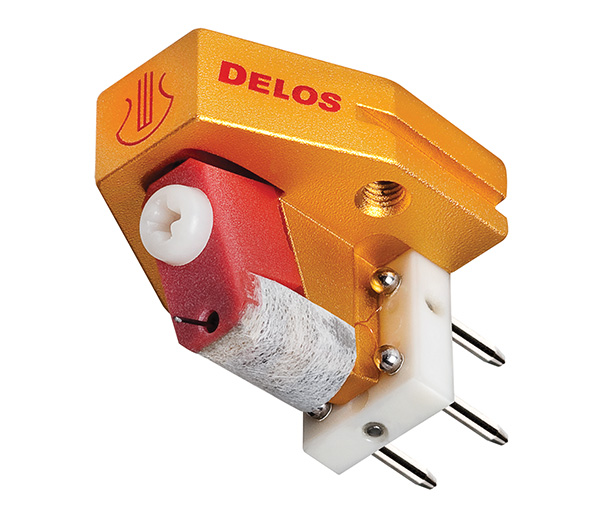 Before I streamed this chilling masterpiece for my Fezz DAC review, I played both sides of my first US pressing twice with Lyra's Delos moving coil (footnote 3). I am fascinated by Lyra's lowest-priced ($2195) cartridge because every day it communicates more music to the right side of my brain than I ever thought it would or could. With the Lyra and the Voxativ Hagen2s, every little crackle and shiver of Faithfull's voice was a tear-pulling moment. Every time Marianne sang "The Ballad of Lucy Jordan," I sobbed and shivered all the way through.
Everyone knows the Delos scratches out an extraordinary amount of low-level data, then uses those tiny voltages to construct unusually dimensional sound pictures, with bones, matrices, scaffolding, and puffy clouds of reverb ricocheting against stone walls and over audiences' heads. But no one told me it did goosebumps, tears, and sadness like it's been doing in my system. Say amen brother.
Before I streamed this chilling masterpiece for my Fezz DAC review, I played both sides of my first US pressing twice with Lyra's Delos moving coil (footnote 3). I am fascinated by Lyra's lowest-priced ($2195) cartridge because every day it communicates more music to the right side of my brain than I ever thought it would or could. With the Lyra and the Voxativ Hagen2s, every little crackle and shiver of Faithfull's voice was a tear-pulling moment. Every time Marianne sang "The Ballad of Lucy Jordan," I sobbed and shivered all the way through.
Everyone knows the Delos scratches out an extraordinary amount of low-level data, then uses those tiny voltages to construct unusually dimensional sound pictures, with bones, matrices, scaffolding, and puffy clouds of reverb ricocheting against stone walls and over audiences' heads. But no one told me it did goosebumps, tears, and sadness like it's been doing in my system. Say amen brother.
If you're one of those who think that digital recording is technically superior to analog, I dare you to play Sibelius: Symphony No.1 in E Minor (Opus 39) with Anthony Collins conducting the London Symphony Orchestra (Decca LXT 2694), a 180gm orange-label Decca recording from 1956. Played through the Mobile Fidelity Electronics MasterPhono, the Lyra Delos played this pre-RIAA recording a touch bright and hard. But based on previous listenings, with a variety of cartridges, I figured that's probably how this old Decca sounds. That slight brightness was easy to overlook because the Lyra delivered incredibly deep spaces with glittering transparency, light-speed transients, and unfettered dynamics.
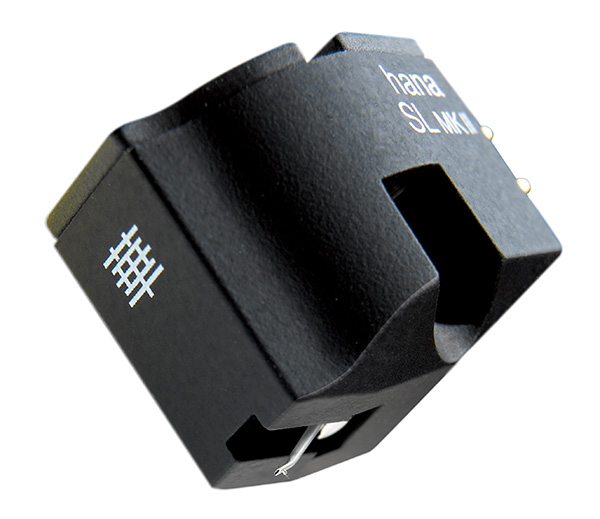 Thirty minutes later, through the MK II, Rabin's violin was sounding tight and bright—brighter than with the Lyra. Holy mountains of joy, I could now feel Rabin's expressive bowing scraping on the surface of my skin as much as in my mind. The sound was brightly lit, with substantial presence. I played this for my friend Beau, and we were both wowed by the bite, resolution, and air coming out of this old mono. We both heard the room the orchestra was playing in. Notes felt tight and right.
After four stiffish unbroken-in sides, the SL Mono MK II sounded like a dead ringer for the stereo SL MK II I described last fall in GD90. This is not surprising because the MK II Mono is the same cartridge as the stereo MK II, but with its coils rotated 45° so that electrically it favors horizontal groove modulations. It retains its vertical compliance, so no damage is done playing stereo records.
Most days, I play my mono recordings using whatever stereo cartridges are on my tonearms, and I am never dissatisfied.
Thirty minutes later, through the MK II, Rabin's violin was sounding tight and bright—brighter than with the Lyra. Holy mountains of joy, I could now feel Rabin's expressive bowing scraping on the surface of my skin as much as in my mind. The sound was brightly lit, with substantial presence. I played this for my friend Beau, and we were both wowed by the bite, resolution, and air coming out of this old mono. We both heard the room the orchestra was playing in. Notes felt tight and right.
After four stiffish unbroken-in sides, the SL Mono MK II sounded like a dead ringer for the stereo SL MK II I described last fall in GD90. This is not surprising because the MK II Mono is the same cartridge as the stereo MK II, but with its coils rotated 45° so that electrically it favors horizontal groove modulations. It retains its vertical compliance, so no damage is done playing stereo records.
Most days, I play my mono recordings using whatever stereo cartridges are on my tonearms, and I am never dissatisfied.
Footnote 3: Lyra Co., Ltd., Tokyo, Japan. Web: lyraaudio.com. US distributor: MIBS Distro LLC, Gig Harbor, WA. Tel: (253) 209-6792. Web: mibsdistro.com.