Moreover, I noticed a newfound well-sortedness and a new form of dark quiet—a silence quite unlike any I'd experienced before. Switching from Cardas's budget-priced, $125-per-meter Iridium to Cardas's $4250-per-meter Clear Beyond changed my system's sound character as much as changing phono cartridges or DACs: The Bartók DAC became more silent, grainless, full-spectrum, and beautiful-sounding than it had been with any of my other cables. Right away I wondered how much of this radical quiet was the result of the Cardas cable's extensive shielding.
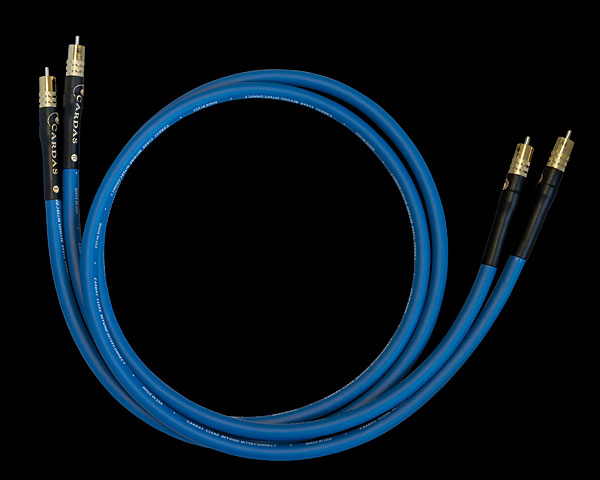 I notice things like grain and noise most easily when they suddenly go away. When I installed the Cardas Beyond cables, it was instantly clear how foggy and restrained the gray-sheathed Iridium had been. This large upgrade in clarity and quiet was similar to the effect I encountered when, in Gramophone Dreams #61, I switched from AudioQuest's budget Red River interconnects to their not-budget Mythical Creatures ThunderBird. The main difference in sound quality between these two popular cable brands was that the AudioQuest ThunderBird made recordings sound dramatic, rapturous, spread out (soundstage-wise), and transparent, while the Cardas Clear Beyond endowed the sound from the Genelecs with a sublime quiet, a grand spaciousness, and seemingly infinite LSD detail. Both cables endowed recordings with an aura-like radiance similar to what I experienced with analog tape and silver cables.
The finest audio systems are admired for their ability to resolve ambient detail and let music emerge from black, silent backgrounds. The Cardas interconnects specialized in both capabilities. But those are just hi-fi traits. The Clear Beyond accomplished something I feel is more important: It gave consistently clear structure to the sounds it reproduced, emphasizing the interconnectedness of harmonic forms. This, in turn, made the music feel whole and easy to connect with.
The sonic effects of interconnects I've just described, while possibly capturing a glimpse of the innate "personality" of two different cable geometries and two different approaches to cable design, represent nothing more objective than what I observed with my own specific system in my own room. When I used these wires in differently configured systems, the degree and nature of these effects varied noticeably.
Setup two
I notice things like grain and noise most easily when they suddenly go away. When I installed the Cardas Beyond cables, it was instantly clear how foggy and restrained the gray-sheathed Iridium had been. This large upgrade in clarity and quiet was similar to the effect I encountered when, in Gramophone Dreams #61, I switched from AudioQuest's budget Red River interconnects to their not-budget Mythical Creatures ThunderBird. The main difference in sound quality between these two popular cable brands was that the AudioQuest ThunderBird made recordings sound dramatic, rapturous, spread out (soundstage-wise), and transparent, while the Cardas Clear Beyond endowed the sound from the Genelecs with a sublime quiet, a grand spaciousness, and seemingly infinite LSD detail. Both cables endowed recordings with an aura-like radiance similar to what I experienced with analog tape and silver cables.
The finest audio systems are admired for their ability to resolve ambient detail and let music emerge from black, silent backgrounds. The Cardas interconnects specialized in both capabilities. But those are just hi-fi traits. The Clear Beyond accomplished something I feel is more important: It gave consistently clear structure to the sounds it reproduced, emphasizing the interconnectedness of harmonic forms. This, in turn, made the music feel whole and easy to connect with.
The sonic effects of interconnects I've just described, while possibly capturing a glimpse of the innate "personality" of two different cable geometries and two different approaches to cable design, represent nothing more objective than what I observed with my own specific system in my own room. When I used these wires in differently configured systems, the degree and nature of these effects varied noticeably.
Setup two
My second cable-review system added one more interconnect and two new components. Genelec's G Three speakers were connected to HoloAudio's incredibly uncolored and uber-transparent Serene line-level preamplifier, fed by the Denafrips Terminator Plus DAC, to form a very revealing system. I tried AudioQuest's ThunderBird and Cardas's Clear Beyond in two positions: between the DAC and preamp and between the preamp and speaker. The cables accomplished slightly different things in each position. This was an important experiment, because I am currently trying to find the most beautiful and excitement-inducing interconnect to use at the output of the Terminator Plus DAC. At this point in my reviewing journey, Denafrips's flagship DAC is delivering reference-level audio splendor: It makes recordings feel vivid, present, sensuous, and stoner-level hypnotic. The T-Plus makes soundwatching a nightly habit; it makes recorded sounds "look" like they are emerging from a black, before-the-universe-began abyss. The extreme tactile quality of this darkness is the Terminator Plus's biggest plus.
Before the Cardas Beyond arrived, I had been completely happy using the sounds-like-its-name ThunderBird out of the Terminator Plus. The T-Bird goosed up the T-Plus's dynamics, drive, and clarity in a way that made it sound more awake. After liking the Bartók with Clear Beyond so much, I felt certain the flagship Cardas would allow the T-Plus to expose even more recorded beauty—and in its own way, it did. But the Cardas Clear Beyond's beauty added to the Denafrips's beauty felt like too much beauty. Like a Rococo boudoir. Like a Fragonard painting. I quickly missed the just-right brightness, bounce, and rhythmic drive the ThunderBird extracted from the T-Plus.
The sonic differences I've alluded to are not subtle. Subtle differences are not interesting. The only sonic differences I care about are those that affect every recording, every time I listen. I believe the differences I've described would be obvious to anyone who listened for them (footnote 2).
Most cable manufacturers would like users and reviewers to perceive their products as best employed in full-system looms. I cannot fault them for that except that electrical conditions can vary radically between connected components. Because I view audio cables as active, component-level participants in the electrical impedances drama, I continue to examine each connection separately.
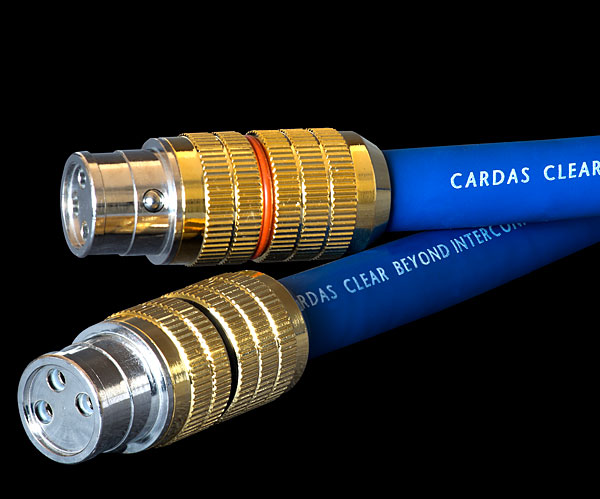
My reference system consists of many different brands, and because I switch components frequently, I tend to associate specific cables with specific components. For example, I have a favorite tonearm cable (the energy-preserving AMG reference), an MC SUT to RIAA preamp favorite (the texture-preserving Auditorium 23), and a phono pre to line-level preamp favorite (the invisible Black Cat). Now, for my system's most important connection—the Bartók DAC to the Serene preamp—my favorite is the Cardas Clear Beyond, balanced. I have also just observed that the Denafrips Terminator Plus becomes enjoyably strong and alive with AudioQuest's ThunderBird.
So, I am hesitant to throw a single-brand house-sound blanket over the whole, constantly evolving system. I fear that if I weave my system with a single cable brand, it will (a) look like a product endorsement and (b) influence the outcome of every component I review. That said, many of the finest audio systems I've encountered consisted of amps, speakers, and cables from a single manufacturer.
 The Cardas Loom
In later installments of this ongoing cable study, I will describe and compare the diverse construction and design strategies of the brands I have auditioned. I will also compare speaker cables by brand and outline the drama of their difficulties. But for now, I want to describe how my bunker system responded to a full loom of fully broken-in Cardas Audio Beyond cables.
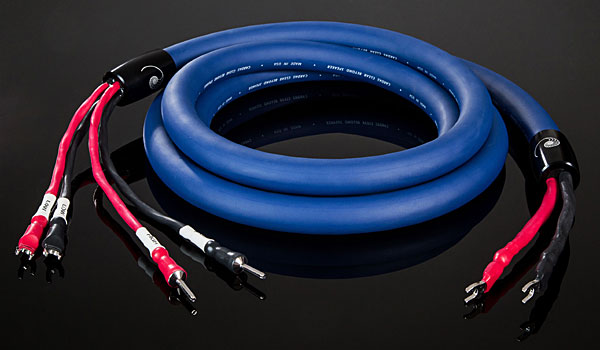
 I ran balanced Clear Beyond from the Bartók DAC to the HoloAudio Serene preamp and single-ended Clear Beyond from the Serene to Pass Labs XA-25 amplifier. I used Clear Beyond speaker cables from the XA25 to my Falcon LS3/5a "Gold Badge" speakers. The effect of the full Clear Beyond loom was to saturate the entire playback chain with a markedly luminous character. The first words that came to mind when I played "Pierre" from Alexandre Tharaud's album Barbara (16/44.1 MQA, Erato/Tidal) were breathy, intimate, and dreamlike. That accurately describes my visual impression of the Cardas's soundspace. The Clear Beyond endowed this moody, exquisitely performed homage to Monique Andrée Serf (a popular French cabaretière who worked under the stage name Barbara) with that radiant, halo-like aura, transporting my mind to the smoky footlights in a wartime cabaret. My experience suggested that the Cardas cables delivered more low-level information than any other copper cables I've used.
I do not regard this attractive, dream-like vibrancy as a coloration or deviation from neutrality. The Clear Beyond was never soft, hazy, or unfocused; its saturated tones were not exaggerated. It had finely detailed imaging, near-infinite depth of field, and exquisitely subtle dynamics. After a week of listening, my brain adapted to the Cardas loom. Its dreamlike qualities slipped into the background, replaced by a day in, day out sense of focus and precision. My Falcons played more sensuously—more breathily—than ever. Pianos and sopranos sounded as I thought they should. What more could I want?
Now
I ran balanced Clear Beyond from the Bartók DAC to the HoloAudio Serene preamp and single-ended Clear Beyond from the Serene to Pass Labs XA-25 amplifier. I used Clear Beyond speaker cables from the XA25 to my Falcon LS3/5a "Gold Badge" speakers. The effect of the full Clear Beyond loom was to saturate the entire playback chain with a markedly luminous character. The first words that came to mind when I played "Pierre" from Alexandre Tharaud's album Barbara (16/44.1 MQA, Erato/Tidal) were breathy, intimate, and dreamlike. That accurately describes my visual impression of the Cardas's soundspace. The Clear Beyond endowed this moody, exquisitely performed homage to Monique Andrée Serf (a popular French cabaretière who worked under the stage name Barbara) with that radiant, halo-like aura, transporting my mind to the smoky footlights in a wartime cabaret. My experience suggested that the Cardas cables delivered more low-level information than any other copper cables I've used.
I do not regard this attractive, dream-like vibrancy as a coloration or deviation from neutrality. The Clear Beyond was never soft, hazy, or unfocused; its saturated tones were not exaggerated. It had finely detailed imaging, near-infinite depth of field, and exquisitely subtle dynamics. After a week of listening, my brain adapted to the Cardas loom. Its dreamlike qualities slipped into the background, replaced by a day in, day out sense of focus and precision. My Falcons played more sensuously—more breathily—than ever. Pianos and sopranos sounded as I thought they should. What more could I want?
Now
Some audiophiles select their system's cables not on the basis of comparative listening but through ill-conceived notions about how certain cables affect a system's character. I know this to be true because I too am guilty of it.
 Until lately, my strategy, as a blue-collar Stereophile reviewer, has been to choose solid, well-built cables costing less than $1000 per set from popular, long-established brands. My comparative listening experiments with different brands and different models within brands had been limited and inconclusive. They centered mostly on whether a given budget cable made my system, or the component it was connected to, more or less clear and engaging. I simply had no idea how much flavor and excitement got lost in those pedestrian wires. Each of my chosen cables made recordings sound clear, tone-correct, and alive, which was all that concerned me. The ones I deemed most invisible—those that appeared to affect the sound the least—I put in the most important places. It never occurred to me that the cables that affected the sound the most might be the best for my system. Even after a decade of using expensive silver cables, I still didn't fully grasp a point that is now obvious: We might just get what we pay for.
Postscript
Until lately, my strategy, as a blue-collar Stereophile reviewer, has been to choose solid, well-built cables costing less than $1000 per set from popular, long-established brands. My comparative listening experiments with different brands and different models within brands had been limited and inconclusive. They centered mostly on whether a given budget cable made my system, or the component it was connected to, more or less clear and engaging. I simply had no idea how much flavor and excitement got lost in those pedestrian wires. Each of my chosen cables made recordings sound clear, tone-correct, and alive, which was all that concerned me. The ones I deemed most invisible—those that appeared to affect the sound the least—I put in the most important places. It never occurred to me that the cables that affected the sound the most might be the best for my system. Even after a decade of using expensive silver cables, I still didn't fully grasp a point that is now obvious: We might just get what we pay for.
Postscript
Some audio cable manufacturers explain their technologies in great detail, with high-quality photos, videos, and diagrams. Cardas has one of the most informative websites in audio. I encourage readers to visit it—and also the company's YouTube channel. On the website, in addition to information about their engineering, you will find sounds and images of the company's home in breathtaking Bandon, Oregon, of the people behind the scenes, and of the beautiful machines that make Cardas's wires.
Footnote 2: It's worth pointing out that we all hear differently, with—importantly—a different sense of proportion. To Herb, these changes are not subtle, but others may perceive them as subtle—yet, even so, subtle changes can be very important in conveying the life and emotion in music.—Jim Austin
I notice things like grain and noise most easily when they suddenly go away. When I installed the Cardas Beyond cables, it was instantly clear how foggy and restrained the gray-sheathed Iridium had been. This large upgrade in clarity and quiet was similar to the effect I encountered when, in Gramophone Dreams #61, I switched from AudioQuest's budget Red River interconnects to their not-budget Mythical Creatures ThunderBird. The main difference in sound quality between these two popular cable brands was that the AudioQuest ThunderBird made recordings sound dramatic, rapturous, spread out (soundstage-wise), and transparent, while the Cardas Clear Beyond endowed the sound from the Genelecs with a sublime quiet, a grand spaciousness, and seemingly infinite LSD detail. Both cables endowed recordings with an aura-like radiance similar to what I experienced with analog tape and silver cables.
The finest audio systems are admired for their ability to resolve ambient detail and let music emerge from black, silent backgrounds. The Cardas interconnects specialized in both capabilities. But those are just hi-fi traits. The Clear Beyond accomplished something I feel is more important: It gave consistently clear structure to the sounds it reproduced, emphasizing the interconnectedness of harmonic forms. This, in turn, made the music feel whole and easy to connect with.
My second cable-review system added one more interconnect and two new components. Genelec's G Three speakers were connected to HoloAudio's incredibly uncolored and uber-transparent Serene line-level preamplifier, fed by the Denafrips Terminator Plus DAC, to form a very revealing system. I tried AudioQuest's ThunderBird and Cardas's Clear Beyond in two positions: between the DAC and preamp and between the preamp and speaker. The cables accomplished slightly different things in each position. This was an important experiment, because I am currently trying to find the most beautiful and excitement-inducing interconnect to use at the output of the Terminator Plus DAC. At this point in my reviewing journey, Denafrips's flagship DAC is delivering reference-level audio splendor: It makes recordings feel vivid, present, sensuous, and stoner-level hypnotic. The T-Plus makes soundwatching a nightly habit; it makes recorded sounds "look" like they are emerging from a black, before-the-universe-began abyss. The extreme tactile quality of this darkness is the Terminator Plus's biggest plus.
The Cardas LoomIn later installments of this ongoing cable study, I will describe and compare the diverse construction and design strategies of the brands I have auditioned. I will also compare speaker cables by brand and outline the drama of their difficulties. But for now, I want to describe how my bunker system responded to a full loom of fully broken-in Cardas Audio Beyond cables.
I ran balanced Clear Beyond from the Bartók DAC to the HoloAudio Serene preamp and single-ended Clear Beyond from the Serene to Pass Labs XA-25 amplifier. I used Clear Beyond speaker cables from the XA25 to my Falcon LS3/5a "Gold Badge" speakers. The effect of the full Clear Beyond loom was to saturate the entire playback chain with a markedly luminous character. The first words that came to mind when I played "Pierre" from Alexandre Tharaud's album Barbara (16/44.1 MQA, Erato/Tidal) were breathy, intimate, and dreamlike. That accurately describes my visual impression of the Cardas's soundspace. The Clear Beyond endowed this moody, exquisitely performed homage to Monique Andrée Serf (a popular French cabaretière who worked under the stage name Barbara) with that radiant, halo-like aura, transporting my mind to the smoky footlights in a wartime cabaret. My experience suggested that the Cardas cables delivered more low-level information than any other copper cables I've used.
I do not regard this attractive, dream-like vibrancy as a coloration or deviation from neutrality. The Clear Beyond was never soft, hazy, or unfocused; its saturated tones were not exaggerated. It had finely detailed imaging, near-infinite depth of field, and exquisitely subtle dynamics. After a week of listening, my brain adapted to the Cardas loom. Its dreamlike qualities slipped into the background, replaced by a day in, day out sense of focus and precision. My Falcons played more sensuously—more breathily—than ever. Pianos and sopranos sounded as I thought they should. What more could I want?
NowSome audiophiles select their system's cables not on the basis of comparative listening but through ill-conceived notions about how certain cables affect a system's character. I know this to be true because I too am guilty of it.
Until lately, my strategy, as a blue-collar Stereophile reviewer, has been to choose solid, well-built cables costing less than $1000 per set from popular, long-established brands. My comparative listening experiments with different brands and different models within brands had been limited and inconclusive. They centered mostly on whether a given budget cable made my system, or the component it was connected to, more or less clear and engaging. I simply had no idea how much flavor and excitement got lost in those pedestrian wires. Each of my chosen cables made recordings sound clear, tone-correct, and alive, which was all that concerned me. The ones I deemed most invisible—those that appeared to affect the sound the least—I put in the most important places. It never occurred to me that the cables that affected the sound the most might be the best for my system. Even after a decade of using expensive silver cables, I still didn't fully grasp a point that is now obvious: We might just get what we pay for.
PostscriptSome audio cable manufacturers explain their technologies in great detail, with high-quality photos, videos, and diagrams. Cardas has one of the most informative websites in audio. I encourage readers to visit it—and also the company's YouTube channel. On the website, in addition to information about their engineering, you will find sounds and images of the company's home in breathtaking Bandon, Oregon, of the people behind the scenes, and of the beautiful machines that make Cardas's wires.
Footnote 2: It's worth pointing out that we all hear differently, with—importantly—a different sense of proportion. To Herb, these changes are not subtle, but others may perceive them as subtle—yet, even so, subtle changes can be very important in conveying the life and emotion in music.—Jim Austin