 Down in the weeds, evaluating the many needles
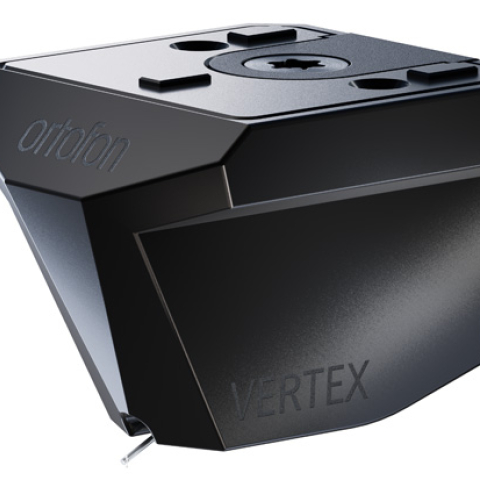
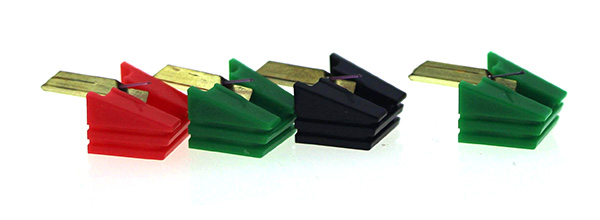
And now we move into a nerdy region of phonography: comparing styli and cantilevers. Leaving out the wide-groove conical option, a Vessel buyer has eight options for playing LPs. One thing that sets the Vessel system apart is that you can get the same stylus with different cantilevers or the same cantilever with different styli. In contrast, Ortofon's 2M Black LVB 250 has the same Shibata stylus as the regular 2M Black, with a boron cantilever instead of aluminum. The rest of the 2M line and all of the Audio-Technica VM95 cantilevers are aluminum. Among The Vessel cantilever options, boron is the most rigid material and also the lightest in weight, so it is said to be optimal for precision tracing of the grooves. Boron is only offered with a Shibata stylus, which makes sense considering its properties. A ruby cantilever is more rigid than aluminum and less rigid than boron. Aluminum is least rigid but is lightweight and has been the primary cantilever material for decades; an aluminum cantilever can be formed for very low mass or made heavy-duty for jobs like tracking wide grooves with a conical stylus at heavy weights. (Wide-groove tracking generally starts at 3gm and goes up from there.) For The Vessel, ruby and aluminum cantilevers are available with the three nude stylus types: Shibata, microline, and hyperelliptical. The bonded elliptical stylus comes with an aluminum cantilever only. To make the comparison somewhat systematic, I decided to focus on five LP tracks (footnote 6):
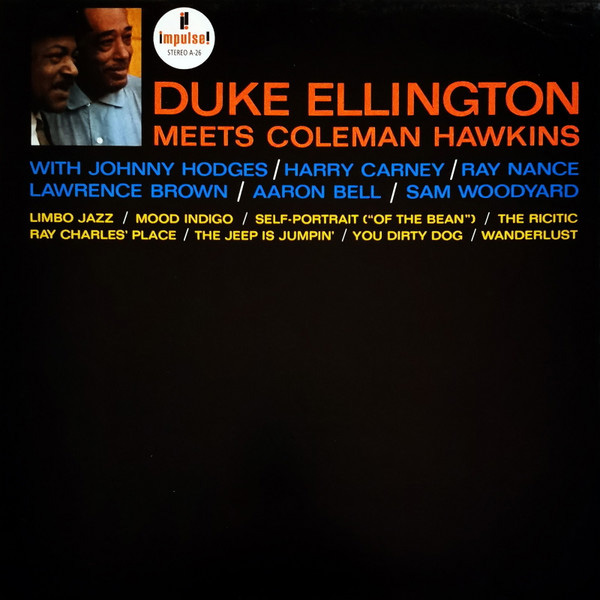 • "Mood Indigo," track A2 on Duke Ellington Meets Coleman Hawkins, original Impulse! AS-26, recorded and mastered by Rudy Van Gelder. I chose this cut because, if it's played well, the aural illusion of Hawkins himself steps forward from the right speaker when his solo begins. There are also points of comparison in the tonal textures of the cymbals, the plucked bass, and Ellington's piano.
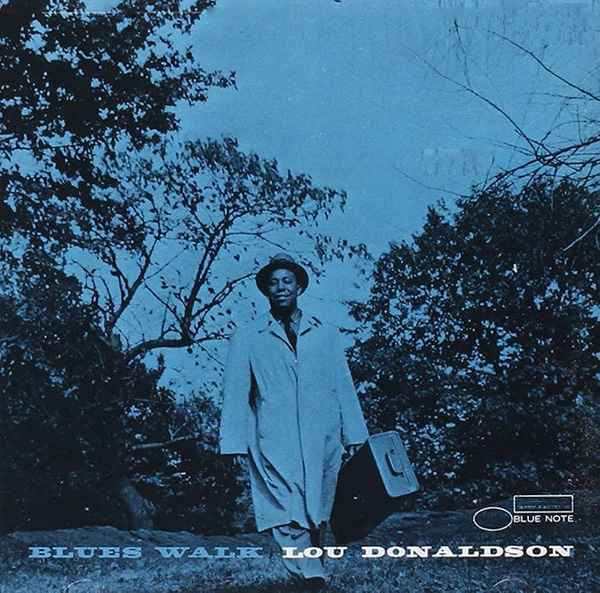 • "Play Ray," track B1 on Lou Donaldson's Blues Walk, Blue Note Classic Vinyl Series ST-81593, remastered by Kevin Gray. Ray Barretto's conga in the left channel is hard to track cleanly. Its fast and sharp percussives, with both high- and low-frequency overtones, make for a challenging groove, especially the beats that are simultaneously struck by the drums in the right channel. Donaldson's tenor sax, also left channel, has a red-blooded tone to it that's typical of Van Gelder recordings for Blue Note. Same with the boxy and bright piano sound, also in the left channel.
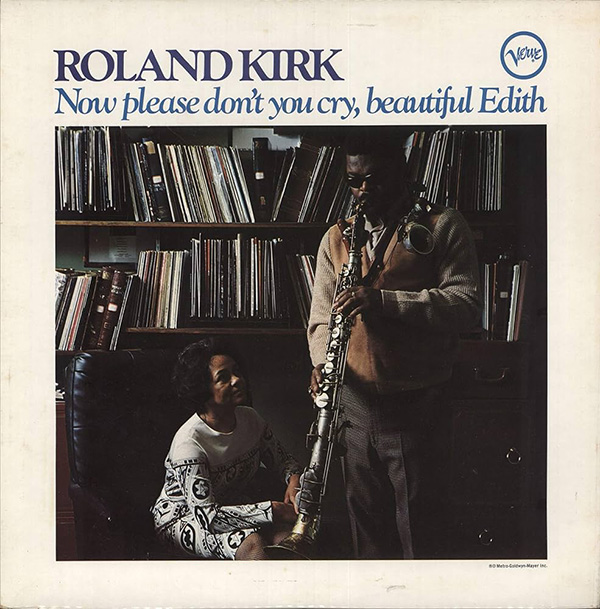 • "Silverlization," track A4 on Now Please Don't You Cry, Beautiful Edith by Roland Kirk (Verve/Acoustic Sounds V6-8709, remastered by Ryan K. Smith). Kirk plays three horns, sometimes at the same time, yet their sounds are clearly delineated when the track is played well. The drums in the right channel are dynamic, especially so for the inner diameter/end of side, and some cartridges won't play them cleanly. The bassline should be distinct and cement everything together musically.
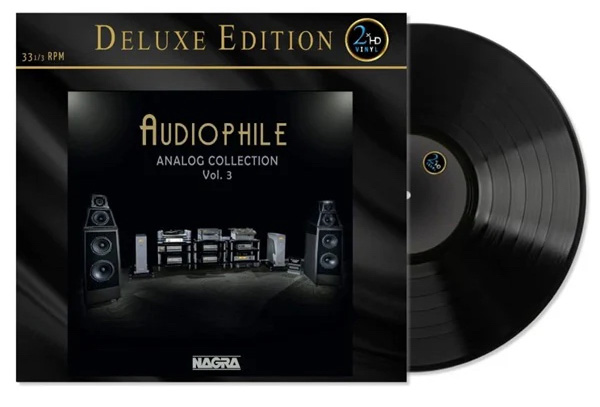 • "Travesia" by Marie Saintonge, track A5 on 2XHD's Audiophile Analog Collection Vol.3 (2XHDFT-C V1260, mastered by Chris Bellman). Recorded by René Laflamme, this track is definitely audiophile-demo material and also quite musical. There are many percussive textures, sometimes happening at the same time, from different instruments. The guitar plays a big part and should be distinctly audible throughout. Saintonge's flute is lifelike, and the reverb of the large recording space fills in a detailed and large stereo image.
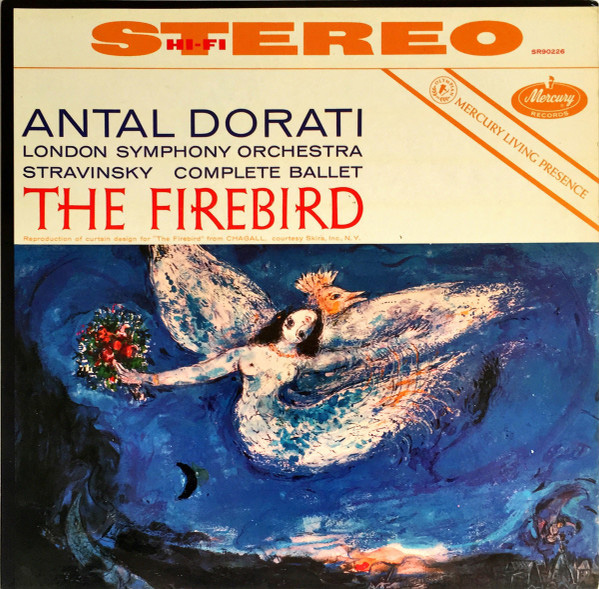 • The final three minutes or so of Stravinsky's complete Firebird, Antal Doráti conducting the London Symphony Orchestra (Mercury Living Presence/Classic Records SR90226). Mastered by Bernie Grundman from a live mix from the three-track master tape, the highly dynamic end of the ballet, from the "Profound Darkness" that closes the first tableau through the entire brief second tableau, is a full-range playback challenge. The massive bass drum hits, near the inner diameter, will propel some styli from the groove. Beyond the dynamics is the deep and wide 3D soundstage. I've remastered this album, for CD, HD streaming, and vinyl. For record playing, I still prefer the Classic Records reissue my mother (the original producer) made with Grundman in the mid-'90s. I don't think it can be bested.
My first comparison point was stylus shape. I played the tracks with the aluminum cantilever version of each profile. As I expected, switching from bonded elliptical (A3SE, $129) to nude hyperelliptical (A3SV, $249) made the most drastic sonic difference. The bonded elliptical did best with "Play Ray," emphasizing the song's perky beat and staying well in the groove throughout. But even here I thought the A3SV version of The Vessel sounded more life-like, bringing out a fuller musical picture while maintaining all the momentum and life force.
The nude hyperelliptical Vessel is priced a bit higher than most workingman's nude ellipticals like the Ortofon 2M Blue ($189) or Audio-Technica AT-VM95EN ($129), so it's a luxury option according to the "90% rule." However, its sonic profile is different, especially versus the AT-VM95EN, which I think sounds overly bright in the upper midrange. The 2M Blue has a chunkier low end and higher output level.
• The final three minutes or so of Stravinsky's complete Firebird, Antal Doráti conducting the London Symphony Orchestra (Mercury Living Presence/Classic Records SR90226). Mastered by Bernie Grundman from a live mix from the three-track master tape, the highly dynamic end of the ballet, from the "Profound Darkness" that closes the first tableau through the entire brief second tableau, is a full-range playback challenge. The massive bass drum hits, near the inner diameter, will propel some styli from the groove. Beyond the dynamics is the deep and wide 3D soundstage. I've remastered this album, for CD, HD streaming, and vinyl. For record playing, I still prefer the Classic Records reissue my mother (the original producer) made with Grundman in the mid-'90s. I don't think it can be bested.
My first comparison point was stylus shape. I played the tracks with the aluminum cantilever version of each profile. As I expected, switching from bonded elliptical (A3SE, $129) to nude hyperelliptical (A3SV, $249) made the most drastic sonic difference. The bonded elliptical did best with "Play Ray," emphasizing the song's perky beat and staying well in the groove throughout. But even here I thought the A3SV version of The Vessel sounded more life-like, bringing out a fuller musical picture while maintaining all the momentum and life force.
The nude hyperelliptical Vessel is priced a bit higher than most workingman's nude ellipticals like the Ortofon 2M Blue ($189) or Audio-Technica AT-VM95EN ($129), so it's a luxury option according to the "90% rule." However, its sonic profile is different, especially versus the AT-VM95EN, which I think sounds overly bright in the upper midrange. The 2M Blue has a chunkier low end and higher output level.
 Evaluating the cantilevers
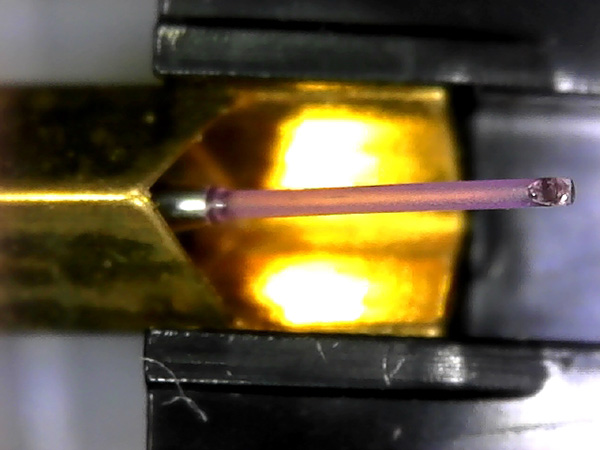
Only the Shibata stylus is offered with all three cantilever materials, so I confined my evaluations to that stylus type. The ruby cantilever (R3SS, $649) retained the fine top-end detail but seemed to have less bass boom than the aluminum. Hawkins, Donaldson, and Kirk sounded particularly alive and present in the room. The Saintonge track also sounded extremely lifelike. Although the Firebird horns sounded a tad etched, the dynamics seemed extra colorful. To my ears, the ruby cantilever/Shibata stylus combo excelled at portraying a sense of living musicians, humans doing their art at a high level. The Shibata on a boron cantilever (B3SS, $679, above) sounded even quicker and clearer, not always to best end. Hawkins was less a full man playing a saxophone and more a sum of well-reproduced sounds. Perhaps everything was too polite, even clinical. It seemed like my brain wasn't as turned on to the summed forces of music. But then I dropped the needle on The Firebird, and playback was perfect.
Using only the Saintonge track, I compared the bonded elliptical version of The Vessel to an Audio-Technica AT-VM95E and an Ortofon 2M Red. As with prior comparisons, I used the Analogue Productions test LP to calibrate output level and channel balance, using the meters in my Tascam DA-3000 digital recorder. At 5.5mV output, the 2M Red is much hotter than The Vessel A3SE (3mV). The AT-VM95E (4mV) is in between. For the Ortofon and Audio-Technica cartridges, I turned the phono preamp gain down to 40dB to make sure there was no risk of overload. Of the three entry-level MM cartridges, The Vessel offered the most realistic sound of the acoustic guitar toward the left and handclaps right and center during the song's last minute. Its sound profile seemed most evenly distributed between low and top ends. Both the AT-VM95E and, to a lesser extent, the 2M Red shaved off some percussive sounds that The Vessel reproduced. The acoustic bass sounded bigger through the 2M Red, but the fingers plucking it sounded gloved in comparison to through The Vessel. Saintonge's flute was more pronounced through the AT-VM95, and the guitar was more in the background.
 Conclusions
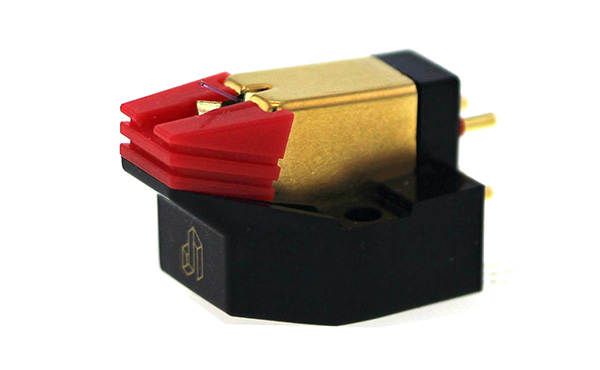
The weeks I spent hearing and studying The Vessel cartridge system are the most focused evaluation I've done on stylus profiles and cantilever materials. I haven't played records with another cartridge offering so many options. This is a most flexible platform, one that offers an upgrade path that can keep a listener satisfied from first dipping ears into the vinyl pool via a starter turntable and preamp all the way to a fancy rig. The amount of information the fine-profile styli can retrieve throws some hard truth at conventional wisdom, especially the bit about MM cartridges being inherently less resolving than MCs. I was very impressed by The Vessel's tracking ability; that in itself is a big selling point. By the end of the evaluation, I preferred the microline and hyperelliptical styli, but that Shibata stylus/ruby cantilever combination is hard to beat if you're willing to take the time and effort to set it up just right.
Footnote 6: The comparison tracks can be heard at open.qobuz.com/playlist/32851385. Streaming versions are from different playbacks/mastering, so they don't sound exactly like the vinyl versions.