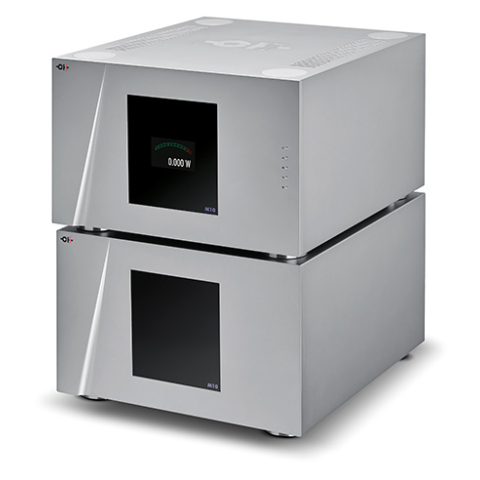
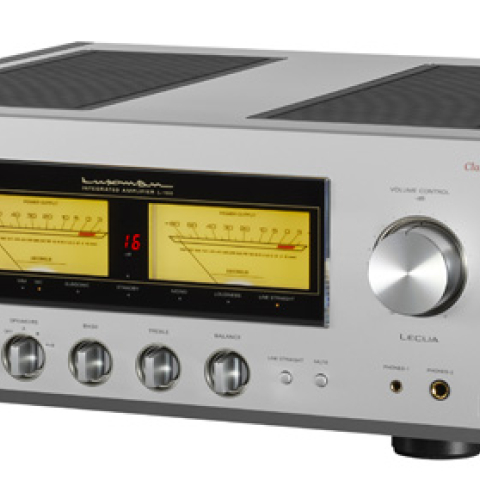
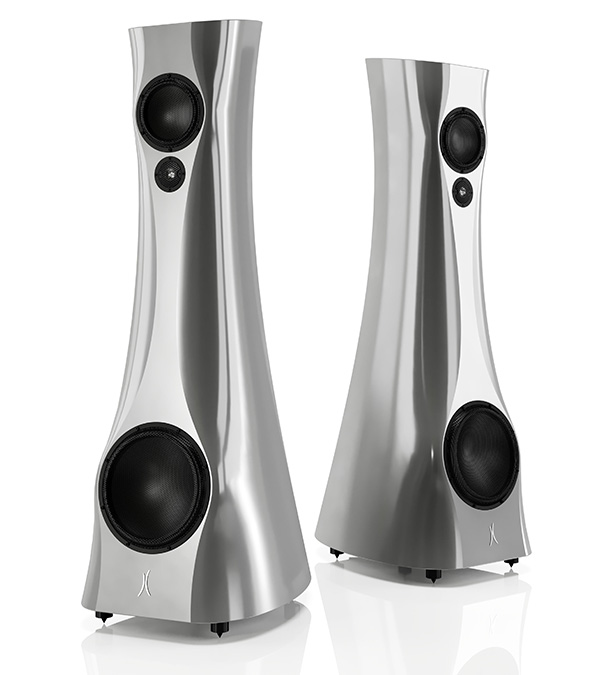
 As recommended by Aldo Filippelli, Estelon's amiable VP of sales and business development for the Americas, I had intended to drive the Estelons with the new Vitus SM-025 monoblock amplifiers, at least for a spell. He feels that pairing the Baltic beauties with the Danish power amps results in unusually good synergy. The release of the Vitus product was postponed, however, which frankly made my job a little easier. I used my reference Krell FPB-200c amplifier, a known quantity instead of a wild card. For most of the duration, my hyperclean Benchmark HPA4 line stage served as a preamp.
During the second half of the three-month evaluation period, I used the Audia Flight FLS10 integrated amplifier (to be reviewed in the February issue) and found that I preferred it by a slim margin. For the final five days before this review was due, I coupled the Estelons with Pathos's beastly new InPol Legacy amplifier (review to come).
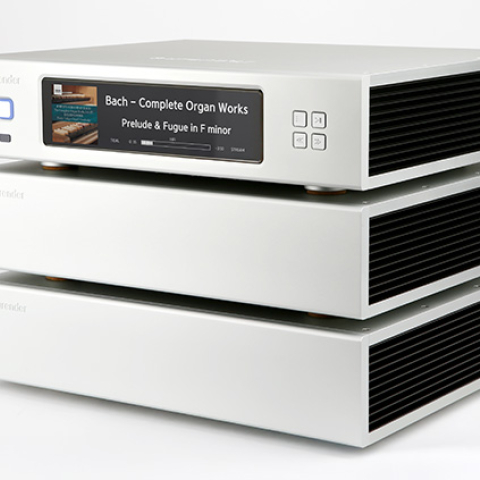
Digital sources were an Aurender A20, a Grimm Audio MU1, and an Eversolo DMP-8, all controlled via an M2 MacBook Air. Roon 2.0, tapping into Tidal and Qobuz, was my music program of choice.
As recommended by Aldo Filippelli, Estelon's amiable VP of sales and business development for the Americas, I had intended to drive the Estelons with the new Vitus SM-025 monoblock amplifiers, at least for a spell. He feels that pairing the Baltic beauties with the Danish power amps results in unusually good synergy. The release of the Vitus product was postponed, however, which frankly made my job a little easier. I used my reference Krell FPB-200c amplifier, a known quantity instead of a wild card. For most of the duration, my hyperclean Benchmark HPA4 line stage served as a preamp.
During the second half of the three-month evaluation period, I used the Audia Flight FLS10 integrated amplifier (to be reviewed in the February issue) and found that I preferred it by a slim margin. For the final five days before this review was due, I coupled the Estelons with Pathos's beastly new InPol Legacy amplifier (review to come).
Digital sources were an Aurender A20, a Grimm Audio MU1, and an Eversolo DMP-8, all controlled via an M2 MacBook Air. Roon 2.0, tapping into Tidal and Qobuz, was my music program of choice.
The X Diamonds impressed right off the bat with a sound that was pure and seductive. I started with Duke Ellington's Masterpieces (16/44.1 FLAC, Columbia Legacy/Tidal), an almost 75-year-old album that is better recorded than most modern jazz—though there's no doubt that the stellar sound is due in part to Sony's 1998 remaster, which used the company's 20-bit–based Super Bit Mapping scheme. The smoothness and truthfulness of the instruments was off the charts. Jimmy Hamilton's languorous clarinet, Yvonne Lanauze's slow-cooking voice, the waves of energy coming off Sonny Greer's drums during the faster-paced passages, ... it all added up to a thrilling kind of virtual reality, no goggles needed. The Estelons painted all of it with panache, even suggesting a better approximation of the recording space than we have any right to expect from a mono recording.
 I moved on to "Wabash Blues," from Ellington's Back to Back collaboration with alto saxophonist Johnny Hodges (24/192 FLAC, Verve/Qobuz). This time I swooned to the stereo interplay between Harry Edison's clear-as-water trumpet (left channel) and Hodges's caramel-tinged instrument (right channel). There was a marvelous continuousness and flowiness to the recording (I know that's not a word; work with me here). The notes emerged without strain or effort. Drummer Jo Jones's kit appeared palpably several feet behind Edison.
In search of more jazz bliss, I cued up Arturo Sandoval's Latin-flavored version of "A Night in Tunisia," off his Dizzy Gillespie tribute Dear Diz (16/44.1 FLAC, Concord/Qobuz). The track features two trumpets that are close to each other in the mix. With the Estelons, it was a cinch to tell them apart. The instrument that's slightly more to the right sounded rich and dark and a bit more closed-in (Sandoval); the one next to it was brighter and less "cuppy" (that's Wayne Bergeron, footnote 4).
I moved on to "Wabash Blues," from Ellington's Back to Back collaboration with alto saxophonist Johnny Hodges (24/192 FLAC, Verve/Qobuz). This time I swooned to the stereo interplay between Harry Edison's clear-as-water trumpet (left channel) and Hodges's caramel-tinged instrument (right channel). There was a marvelous continuousness and flowiness to the recording (I know that's not a word; work with me here). The notes emerged without strain or effort. Drummer Jo Jones's kit appeared palpably several feet behind Edison.
In search of more jazz bliss, I cued up Arturo Sandoval's Latin-flavored version of "A Night in Tunisia," off his Dizzy Gillespie tribute Dear Diz (16/44.1 FLAC, Concord/Qobuz). The track features two trumpets that are close to each other in the mix. With the Estelons, it was a cinch to tell them apart. The instrument that's slightly more to the right sounded rich and dark and a bit more closed-in (Sandoval); the one next to it was brighter and less "cuppy" (that's Wayne Bergeron, footnote 4).
 "Walking on Air," off THRAK by King Crimson (16/44.1 FLAC, Discipline Global Mobile/Qobuz), could be a Paul McCartney composition but avoids death-by-cloying-sweetness, a fate that often befalls Macca's own songs. The recording is as lovely and understated as Robert Fripp's usually frenetic band has ever been, but it's also a standout for its engineering and production artistry. Vocal clarity was fab on the Estelons, and the width of the presentation hinted at soundstaging possibilities that were realized on the album's next track, "B'Boom," on which Pat Mastelotto unleashes a wickedly grooving tom-tom exercise. His drum kit sounded as wide as my room. Was such a picture strictly accurate? I suppose not. Was it impressive and exhilarating? Most definitely. With apologies to Rodgers and Hammerstein, the skins came alive with the sound of music.
During one listening session, Roon Radio started playing "I Was Made for Loving You," a recording off chanteuse Maria Mena's Cause and Effect album (16/44.1 FLAC, Columbia/Qobuz). I was struck by the sound of the beautifully woody double bass, and came to believe that a sharp-eared hermit who's never seen the instrument could guess its size, material, and approximate shape if he heard it through speakers as sonically and artistically aloft as the X Diamond Mk IIs.
Crucially, the Estelons are versatile to a T. The delicate dream pop that is Beck's "Morning" and Billie Eilish's "Wildflower" was as satisfying to listen to as "Down on the Street" by the Stooges, from 1970's Fun House album (16/44.1 FLAC, Rhino/Electra, Qobuz). Like the trumpets in Arturo Sandoval's band, the two punktastic guitar solos, played simultaneously, were well-separated and easy to distinguish.
"Walking on Air," off THRAK by King Crimson (16/44.1 FLAC, Discipline Global Mobile/Qobuz), could be a Paul McCartney composition but avoids death-by-cloying-sweetness, a fate that often befalls Macca's own songs. The recording is as lovely and understated as Robert Fripp's usually frenetic band has ever been, but it's also a standout for its engineering and production artistry. Vocal clarity was fab on the Estelons, and the width of the presentation hinted at soundstaging possibilities that were realized on the album's next track, "B'Boom," on which Pat Mastelotto unleashes a wickedly grooving tom-tom exercise. His drum kit sounded as wide as my room. Was such a picture strictly accurate? I suppose not. Was it impressive and exhilarating? Most definitely. With apologies to Rodgers and Hammerstein, the skins came alive with the sound of music.
During one listening session, Roon Radio started playing "I Was Made for Loving You," a recording off chanteuse Maria Mena's Cause and Effect album (16/44.1 FLAC, Columbia/Qobuz). I was struck by the sound of the beautifully woody double bass, and came to believe that a sharp-eared hermit who's never seen the instrument could guess its size, material, and approximate shape if he heard it through speakers as sonically and artistically aloft as the X Diamond Mk IIs.
Crucially, the Estelons are versatile to a T. The delicate dream pop that is Beck's "Morning" and Billie Eilish's "Wildflower" was as satisfying to listen to as "Down on the Street" by the Stooges, from 1970's Fun House album (16/44.1 FLAC, Rhino/Electra, Qobuz). Like the trumpets in Arturo Sandoval's band, the two punktastic guitar solos, played simultaneously, were well-separated and easy to distinguish.
 More wild musical swings were ahead. Thanks to a shuffled playlist, the gauzy "Dreamland" by Glass Animals gave way to Control Machete's "Si Señor," an uproarious Mexican rap that I've loved since it was featured in Amores Perros, the Alejandro González Iñárritu movie. Next up was David Poe's spare, devastating ballad "You're the Bomb," followed by the electrifying EDM slam of Hedegaard's "Ratchets," a pile-driving pleasure in its own right as well as my most-played test track of 2024 on account of its brutal, infectious bass notes. The Estelons, protean shapeshifters that they are, rendered every musical part and every dynamic change with admirable ease and composure.
On the subject of deep bass: Yello's "Takla Makan," off Touch (16/44.1 FLAC, Polydor/Tidal), starts with an ominous, subterranean synthesizer note that's felt more than heard. When I finally disconnected the REL No.31 subwoofers I'd been auditioning, it was still there, powerful and menacing. That's how low the Estelons go: down to 22Hz, says the company's spec sheet, but it may just reach a little deeper outside the lab, in a real-world room.
More wild musical swings were ahead. Thanks to a shuffled playlist, the gauzy "Dreamland" by Glass Animals gave way to Control Machete's "Si Señor," an uproarious Mexican rap that I've loved since it was featured in Amores Perros, the Alejandro González Iñárritu movie. Next up was David Poe's spare, devastating ballad "You're the Bomb," followed by the electrifying EDM slam of Hedegaard's "Ratchets," a pile-driving pleasure in its own right as well as my most-played test track of 2024 on account of its brutal, infectious bass notes. The Estelons, protean shapeshifters that they are, rendered every musical part and every dynamic change with admirable ease and composure.
On the subject of deep bass: Yello's "Takla Makan," off Touch (16/44.1 FLAC, Polydor/Tidal), starts with an ominous, subterranean synthesizer note that's felt more than heard. When I finally disconnected the REL No.31 subwoofers I'd been auditioning, it was still there, powerful and menacing. That's how low the Estelons go: down to 22Hz, says the company's spec sheet, but it may just reach a little deeper outside the lab, in a real-world room.
 Promise not to laugh? I'll confess that I probably played more air drums during my time with the Estelons than with any other audio product I've had in my room. As I gave the speakers a workout, they often worked me out at the same time.
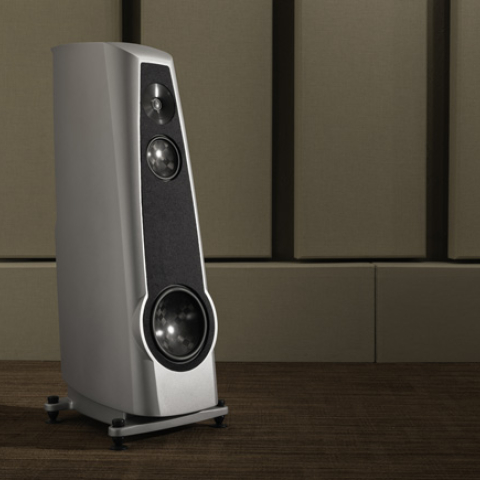
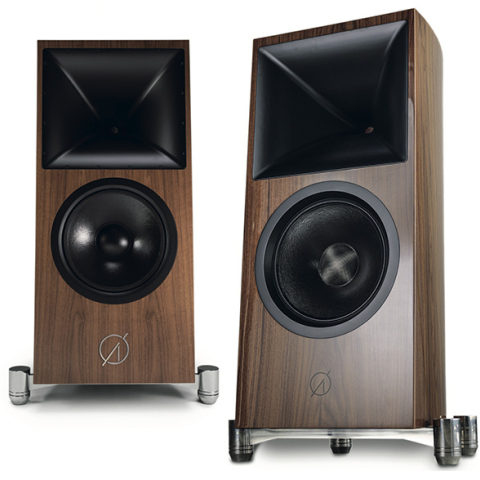
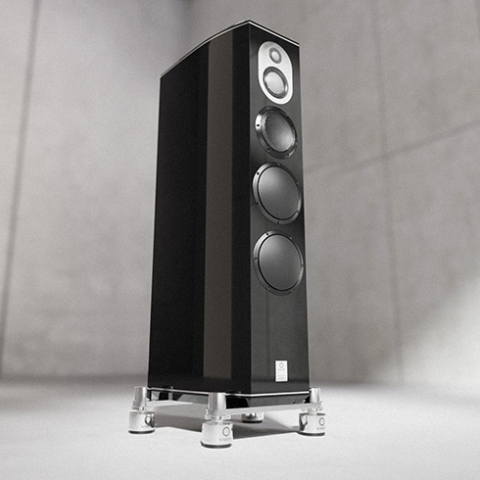
Balanced, engaging, and multifaceted, the Estelons took me through many moods. I felt not just in sync with the music but blessedly affected by it too. It's true that sonically, in my room, the X Diamond Mk IIs were a notch past the midpoint between earthy and analytical. They have a slightly more pronounced mid-treble region than my Focal Scalas do. That means that they paired well with the Aurender A20 and the Grimm Audio MU1, and not as successfully with the otherwise excellent Eversolo DMP-A8 (which doesn't sound sharp or strident per se but can't boast perfect fluidity either). The A20 and the MU1 are both a touch mellower, less forward, more "analog" perhaps. That suits the Estelons. In a historic account of a love triangle that I read recently, the femme fatale seduced her lover with a suggestive dance. The sentence that stood out was "When she danced, the concealed was revealed." That's also a very fitting description of the X Diamond Mk IIs. For speakers at this price level, you'd expect impeccable beauty inside and out, visually and sonically, and that's what you get with these comely Estonians. They ooze detail and resolution and naturalness, unveiling what remains hidden—or is sloppily sketched—through lesser contenders. It's hard to think of higher praise
Footnote 4: Bergeron is also the lead trumpeter in Gordon Goodwin's Big Phat Band. The track "Years of Therapy" from the terrific Life in the Bubble album is a five-star showcase of his abilities. Check it out.