

 Setup
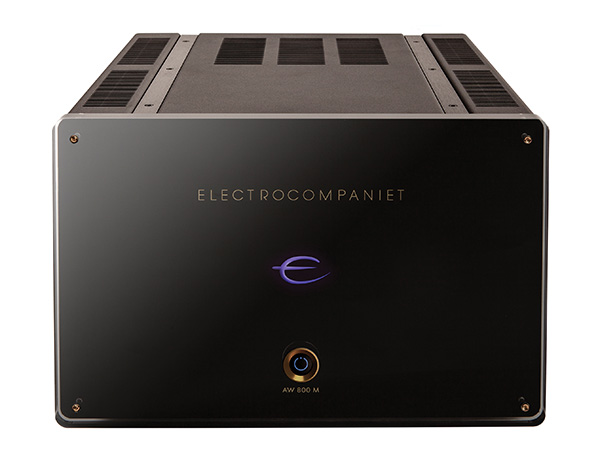
SetupAs I placed the amps on my Grand Prix Monza amp stands, I noted their special feet, from SuperSpikes, a Norwegian company owned by Norwegian speaker-driver manufacturer SEAS. "You are free to change these to whatever you are familiar with or keep the original ones," Danielsen emailed after our talk. When I listened to the same recording and switched between those spikes and Wilson Audio Pedestals, the latter supplied a bit more air without changing the amp's sonic signature. I went back and forth between these supports during the review period. Electrocompaniet's well-thought-out manual offers seven clearly illustrated setup scenarios that allow you to connect up to four AW 800 Ms in various mono, stereo, and biamp configurations. Connecting speaker cables for mono use is simple if you follow the hook-up instructions for "mono" on the back of the amp. I have little fondness for the European Union–mandated plastic safety shields on speaker cable connections, which on my review pair forced me to insert spades from below. I got it done. It is generally unwise to plug a power filter into a power filter, and the Electrocompaniet amps have their own RF and DC filtering. So I ruled out plugging them in to the AudioQuest Niagara 7000 power conditioner I use for the front-end components. The remaining choices were directly into the wall or into the Stromtank S 2500 Quantum MK-II, which is not a filter but a battery power source/AC regenerator that can operate disconnected from the electrical grid. The S 2500, though, is not equipped to power two monoblocks that deliver 800W each into 8 ohms or 1500W into 4 ohms (footnote 1). Wall power was the only way to go (footnote 2).
 Listening
The sound / the mystery?
The watery suns / Of those hazy skies?
Hold for my spirit / The same mysterious charms?
As your treacherous eyes / Shining through their tears ... .
The world falls asleep / In a warm light.
There, there is nothing except order and beauty,
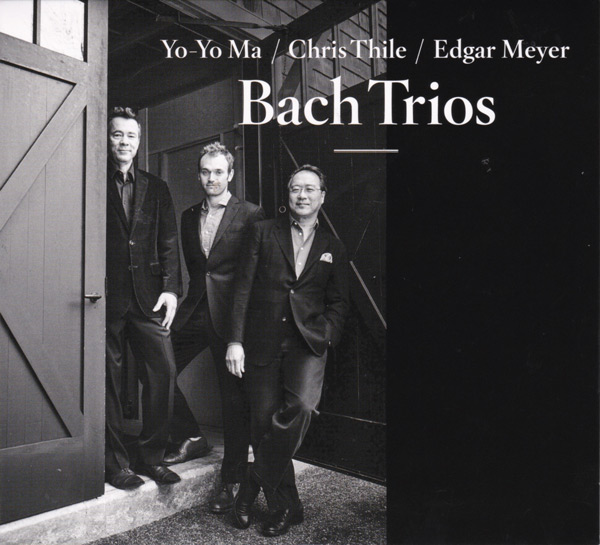
Luxury, calm, and sensual pleasure. Those perfumed words, imperfectly translated from Charles Baudelaire's poem "L'invitation au Voyage" and translated into music by Henri Duparc in his unforgettable setting of two of its verses, sang in my head as the Electrocompaniet AW 800 M mono amplifiers wove their spell. On Bach Trios (24/96 FLAC, Nonesuch/Qobuz), Yo-Yo Ma's cello sounded warm, beautiful, full, and uncannily real as he played J.S. Bach's "Wachet auf" ("Sleepers Awake"), with Edgar Meyer (bass) and Chris Thile (mandolin). I felt I was in a dream state. Coltrane's sax sounded so gorgeous on his performance of "Nancy (With the Laughing Face)," from Ballads (24/96 MQA, Impulse!/Tidal), and the core of Matthias Goerne's baritone was so filled with marvelous warmth and beauty in his recordings of "Schlafen, schlafen, nichts als schlafen!" ("Sleep, sleep, to do nothing but sleep!") from Alban Berg's Songs (4) for voice & piano, Op.2 with Daniel Trifonov (24/96 FLAC, DG/Qobuz) and Beethoven's "Adelaide" with Jan Lisiecki (24/96 FLAC DG/Qobuz) that I felt I could sink into their sounds forever and live the rest of my life in a suspended state, bathed in sonic warmth.
 After we shared a 6-mile hike, my friend Anna Frank requested Pink Floyd's Dark Side of the Moon (24/192 MQA, Legacy Recordings/Tidal). We reveled in the strong, resonant bass and warm and smooth middle on the 2023 50th Anniversary remaster. Neither DSotM nor Giles Martin's acclaimed 2017 remix of Sgt. Pepper's Lonely Hearts Club Band (24/96 FLAC, UMC/Qobuz) sounded as transparent as I'm accustomed to, but the surprising warmth of "When I'm 64" warmed the cockles of my aging heart.
As arresting as the Electrocompaniets' bass jolts were, I longed to return to the mysteries of their warm, seductively veiled sound. I did not wish to awake from the dream. Turning away from percussion-rich music, I delighted in visits with singers and songs I cherish. Through the AW 800 M monos, soprano Véronique Gens had never sounded so plush, or the violin in her string quartet accompaniment so warm, as on her recording Nuits, with I Giardini (24/96 FLAC, Alpha/Qobuz). Turning back the clock more than 80 years, I found myself more enchanted than ever by the sound of the great, precious Elisabeth Schumann's "My Lovely Celia, heav'nly fair" (16/44.1 FLAC, Warner/Tidal), from her priceless Icon collection. I was so astounded by the dynamic variation and nuance the AW 800 M monos extracted from this less-than-great digital transfer from an old 78 that I kept on wanting more.
Late on a full-moon night proved the perfect opportunity to revisit Duparc's setting of "L'invitation au voyage." Sopranos Maggie Teyte and Victoria de los Angeles both left unique versions of this song with haunting orchestral accompaniment. Searching Tidal, Qobuz, and my own music library, I discovered what is undoubtedly its first recording of the electrical era: Charles Panzéra's, with Piero Coppola and orchestra, from 1926. As I continued to explore, the first verse of baritone Pierre Bernac's 1945 rendition (with Francis Poulenc on piano) stood out as the epitome of refinement and elegance. Among modern versions, François le Roux's won me over. Electrocompaniet's magic carpet ride delivered joy upon joy.
After we shared a 6-mile hike, my friend Anna Frank requested Pink Floyd's Dark Side of the Moon (24/192 MQA, Legacy Recordings/Tidal). We reveled in the strong, resonant bass and warm and smooth middle on the 2023 50th Anniversary remaster. Neither DSotM nor Giles Martin's acclaimed 2017 remix of Sgt. Pepper's Lonely Hearts Club Band (24/96 FLAC, UMC/Qobuz) sounded as transparent as I'm accustomed to, but the surprising warmth of "When I'm 64" warmed the cockles of my aging heart.
As arresting as the Electrocompaniets' bass jolts were, I longed to return to the mysteries of their warm, seductively veiled sound. I did not wish to awake from the dream. Turning away from percussion-rich music, I delighted in visits with singers and songs I cherish. Through the AW 800 M monos, soprano Véronique Gens had never sounded so plush, or the violin in her string quartet accompaniment so warm, as on her recording Nuits, with I Giardini (24/96 FLAC, Alpha/Qobuz). Turning back the clock more than 80 years, I found myself more enchanted than ever by the sound of the great, precious Elisabeth Schumann's "My Lovely Celia, heav'nly fair" (16/44.1 FLAC, Warner/Tidal), from her priceless Icon collection. I was so astounded by the dynamic variation and nuance the AW 800 M monos extracted from this less-than-great digital transfer from an old 78 that I kept on wanting more.
Late on a full-moon night proved the perfect opportunity to revisit Duparc's setting of "L'invitation au voyage." Sopranos Maggie Teyte and Victoria de los Angeles both left unique versions of this song with haunting orchestral accompaniment. Searching Tidal, Qobuz, and my own music library, I discovered what is undoubtedly its first recording of the electrical era: Charles Panzéra's, with Piero Coppola and orchestra, from 1926. As I continued to explore, the first verse of baritone Pierre Bernac's 1945 rendition (with Francis Poulenc on piano) stood out as the epitome of refinement and elegance. Among modern versions, François le Roux's won me over. Electrocompaniet's magic carpet ride delivered joy upon joy.
 Back in the soup
"Just like one singer has one voice and the other singer has a different voice, different amplifiers have different voices," Danielsen explained before my first listen to the Electrocompaniet AW 800 M mono amplifiers. "That doesn't mean that one is out of tune; they just sound different.
Footnote 1: Stromtank's Wolfgang Meletzky believes that his S-4000 and S-5000 models can power high-power amps without a problem. Footnote 2: It's worth mentioning that a single 120V circuit, even one rated for 20A, can only supply 2400W continuous, insufficient to support the maximum rated output power of two AW 800 Ms. If you want to drive both amps to full power, you'll need two circuits.















